Middle East North Africa Afghanistan Pakistan
Challenges of Conflict, Industrial Policy for Development in MENAAP

- ABOUT THE EVENT
- AGENDA
- Transcript
GO TO SPEAKERS
Conflict is reshaping the economic landscape of the Middle East, North Africa, Afghanistan, and Pakistan (MENAAP) with consequences being felt far beyond the front lines.
Join Indermit Gill, Ousmane Dion, Roberta Gatti, Karen Young, and Ishac Diwan, for a timely discussion on the economic toll conflict is having across the MENAAP region — and what it will take to build a more resilient future.
Drawing on the World Bank Group's latest MENAAP Economic Update, the conversation explores a stark picture: regional growth forecasts for 2026 have been cut from a 4.2% projected in January 2026, to 1.8%, as the closure of the Strait of Hormuz disrupts oil and gas exports from the Gulf, infrastructure damage erodes productive capacity, and inflationary pressures mount across the region. Rising energy costs, weaker tourism, declining remittances, and financial market volatility are compounding the strain — while displacement and food insecurity deepen the human cost.
Going beyond the immediate crisis , panelists examine how industrial policy can address the region's longer-standing structural challenges — chronic low growth, a sluggish private sector, high unemployment, and an economic over-reliance on oil and gas sectors — and what its limitations are.
Follow us on Facebook @WorldBankMiddleEastNorthAfrica
and X @WorldBankMENA
Welcome | 2 min
- Colleen Gorove-Dreyhaupt, Manager, Corporate & External Relations, MENAAP, World Bank Group
Report Presentation | 25 min
- Roberta Gatti, Chief Economist, MENAAP, World Bank Group
Panel Discussion | 25 min
Moderated by Colleen Gorove-Dreyhaupt
Panelists:
- Karen Young, Senior Research Scholar at the Center on Global Energy Policy, Columbia University and Senior Fellow at the Middle East Institute
- Ishac Diwan, Professor of Economics at American University of Beirut and Research Director of the Finance for Development Lab at the Paris School of Economics
- Indermit Gill, Chief Economist and Senior Vice President, Development Economics, World Bank Group
Closing Remarks | 8 min
- Ousmane Dione, Vice President, MENAAP, World Bank Group
[Colleen Gorove-Dreyhaupt]
Good morning and good evening. Welcome to this event on the World Bank's recent Middle East, North Africa, Afghanistan, and Pakistan update: Challenges of Conflict, Industrial Policy for Development. My name is Colleen Gorove-Dreyhaupt. I'm the Manager of External Relations for the Middle East, North Africa, Afghanistan, and Pakistan region, MENAAP for short, at the World Bank in Washington, D.C. I'm delighted to be the moderator today for this event, which is being broadcast on World Bank Live. I would like to welcome our viewers from around the world. I would encourage you to take part in the conversation using the hashtag #MENAAPUpdate. To kick off the event today, we will first hear from Indermit Gill, the World Bank's Chief Economist and Senior Vice President for Development Economics. Over to you, Indermit.
[Indermit Gill]
Thanks, Colleen. Actually, you won't hear from me because I think it's much better that we hear from Roberta, and then Karen, and Ishac. So over to you, Roberta.
[Roberta Gatti]
Thank you, Indermit, and thank you, Colleen, for this opportunity. Let me share my screen. Here we are with the chance of discussing together Challenges of Conflict and Industrial Policy for Development. This is the product of the work of many, including Çaglar Özden, Federico Roberto Bennett, Asif M. Islam, Sumin Chun, Nelly Elmallakh, Yuting Fan, Rana Lotfi, Ilias Suvanov, and Richard Newsome. We worked together with all the country economists of the MENAAP region. Before I delve into the economics of this conflict for our region, I want to say that numbers cannot really capture the devastating human toll that we saw in the region. Lives have been lost, livelihood has been shattered, infrastructure has been destroyed, homes have been destroyed, people have been displaced. I just wanted to put that as the big picture on which the numbers that I'll discuss and the channels of impact that we will see together will play out. Without further ado, let me go into the global and regional effects of this conflict. I'll start with the global. On February 28, we all knew that the world was shaken by massive uncertainty. What you see here is the geopolitical risk index, which reached some of the highest levels recorded in the past 20 years during this conflict. This level were at par with what we saw in the Russia's invasion of Ukraine. And this uncertainty, as measured by this index, has really persisted for significantly longer than in that case. Markets took notice. What you see here are oil and gas prices. If we look at where oil prices are today, they are 50% higher than they were before the conflict started. You see the spot prices on the left-hand side in the black solid line, and you see future prices in the dashed colored line. What are future prices? These are oil prices for delivery at some point in the future. And I wanted to point your attention to two facts. The first one is that oil futures see oil prices eventually tapering off, but at levels higher than what we saw in January. The second one is the yellow dashed line, which is the line of oil future prices on April 8. And that's where just the prospect of peace brought a downward shift in oil prices. On the right-hand side, you see prices of natural gas. Also, we saw there significant increases, but they were primarily for European and Asian markets, which are the markets that were the most affected and most dependent on imports from the Gulf. While we see that prices for natural gas in the US were more— The impact of the conflict was more muted on them because the US is now self-reliant on gas. Globally, we focused a lot on prices, but we see this impact coming from what we, the economists, would call in textbooks a “supply shock”. And this was all driven primarily by the blockade of the Strait of Hormuz. What you see here are the number of ships that have transited the Strait of Hormuz since the beginning of the conflict. You see that on the blue line, essentially a sort of almost vertical drop at the beginning of March and a drop that hasn't recovered since. While in the orange line, you see the traffic as it was the same period, but a year ago. Now, if we want to move from global to regional, what has determined the impact of the conflict on our region? And if we think about the Gulf first, we really think about the concept of exposure and exposure on two fronts: economic and geographical. All of the countries surrounding the Gulf are dependent somehow on oil. But they do that to a different extent, granted. The countries that you see here, listed on the left-hand side panel, are all in the top 20, and 7 out of 8 of these are in the top 10 countries in the world depending on hydrocarbons. At the same time, the dependence on hydrocarbons is quite different across these countries in the Gulf. It's the highest in Iraq, Qatar, Kuwait, Oman, and Iran, while it's quite a bit lower in Bahrain, the United Arab Emirates, and to some extent also the Kingdom of Saudi Arabia. This is a concept of economic exposure, which is most maps one-to-one to how diversified these economies are in terms of what they produce. On the right-hand side, you see a concept of geographical exposure depicted, and it's depicted through the share of total production of crude oil and gas that traverses the Strait of Hormuz. The number is very high for Iraq, Kuwait, and Qatar, while a country like Saudi Arabia was able to diversify its export routes thanks to the East-West pipeline that brings oil from the Gulf all the way to the Red Sea and the port of Yanbu. Oil is very dominant and it's very important in terms of determining the impact of the conflict, but it's not the end of the story. Other channels of impact are affecting the region. And let's think first about people. Up to 3 million people in Iran fled their homes in the first 2 weeks of the conflict. One-fifth of the population in Lebanon has been displaced. And I'm very glad that we can discuss some of these impacts also in the conversation that we will have later with one of our discussants. But if we keep thinking about people, food security is a significant concern for our region. When oil prices increase, also the prices of goods that are intensive in hydrocarbon for their production increase. One such good is fertilizers. Fertilizers took a double hit in this case, not only because of the cost-push inflation that comes from higher oil prices, but also because 35% of urea, which is an important fertilizer, is being exported through the Strait of Hormuz, primarily coming from Saudi Arabia. This is likely to reflect in higher food prices in the next crop season. With higher food prices, countries that are importing a lot of food and cereals are likely to see potential pressures on their balance of payments, and possibly with them, even pressures for depreciation of their currencies. Why does this matter particularly for our region? Because our dependency ratio in terms of cereals is very high for almost all countries. Our particular concern is for the poorest countries and, across all countries, for the poorest families because these are the ones that spend the largest share of their budget on food and energy. Now, tourism is also an important channel of transmission. A country like Jordan relies significantly on tourism. It makes up about 15% of GDP. Tourism is very important for Lebanon, about 30% of its GDP. The immediate impact that we might see now might also persist over time. If we think about the previous conflict that was centered in Gaza, it took 2 years for tourism flows in neighboring countries to normalize. You can see this here. You have it on the left-hand side. You have a sense of how the geographic proximity to the hostility had an impact on the drop in daily arrivals for flights to the region. A largest drop for the countries that were at the epicenters and virtually no drop, although there was a slight downturn in the recent 2 weeks, for countries that were further away from the conflict. Financial markets also took notice of the conflict. They reflected it, but so far, fortunately, they have not amplified it. What you see here are net foreign trading positions for equities and fixed income bonds. In Pakistan, you see that there is a slightly muted response since the beginning of the conflict, which you see marked by a vertical dashed line. You see quite a lot of movement in the negative, but also in the positive in Egypt, and a significant downward movement in the United Arab Emirates, which is, however, tapering off at the moment. It's not only trading equities that moved in response to the conflict, but also sovereign bonds spreads and credit default swaps, which means that markets took notice of potential fiscal and debt vulnerabilities. And this had been the case particularly for increases for Pakistan, Egypt, Bahrain, and also for Iraq, which faces a significant drop in GDP coming from the conflict. This is a sort of preview that the hit on Iraq was large, but let me now move to a sort of more comprehensive view of the regional outlook for our countries. Overall, the region was growing quite robustly in 2025, and our country economists were forecasting even a little bit of an increase for growth in 2026 as of January. As a result of the conflict, the forecast for the region had been basically halved, and our forecast now for the whole region is at 1.8% of real GDP growth. Where did this come from? Primarily from downgrades in countries in the Gulf Cooperation Council and in the developing oil exporters. However, there is significant heterogeneity across our countries. In Qatar, Kuwait, and Iraq, the drops are the most significant. These are the countries that are both less diversified economic wise and also in their trading export routes. You see Qatar moving from a forecast of 5.3% to minus more than 5% to Kuwait from a positive outlook to a significantly negative outlook. Iraq from a positive 6.5% to minus more than 8%. Next come more muted downgrades, but still significant for Bahrain and the United Arab Emirates. These are countries that are more diversified in their production structure. And similarly, we see also more limited downgrades for Saudi Arabia and Oman. This is because these countries are both diversified in their export routes. Oman faces directly the sea. Saudi Arabia can rely on the east-west pipeline, but those are more diversified in terms of their set of products. On the upper quadrant, you see Libya and Algeria, which are oil and gas exporters, not close to the hostilities and not facing the constraint of the blockade of the Strait of Hormuz, for which prospects are inching towards the positive because they are likely to benefit from the persistence of high oil and gas prices. What is happening instead in our oil importers? Before the conflict, we were forecasting for them a higher GDP growth than we had in 2025. At the moment, we see that our forecast keep level, and it's because the conflict has basically offset those with prior positive outlook. At the same time, these countries face risks that are tilted towards the negative for all of them. And this is because of those channels that we highlighted earlier. Oil prices translated into higher fertilizer prices and higher food prices, hits on financial markets, and riskiness of their net positions, and also potential higher interest rates to be paid on their debt. Now, vulnerability runs deep in our region, also beyond that group of countries. An assessment by the World Bank and other UN institutions had put at $72 billion the need for reconstruction in the West Bank & Gaza. In Yemen, 64% of households are food insecure. In Afghanistan, the significant influx of people has brought a real GDP growth that would have otherwise been positive to being significantly negative in terms of per capita income. In Lebanon, that was sort of coming out from one of the worst economic crisis of the century, the share of population living below $4 day, was already 16% before it was hit by this conflict. I talked about many numbers, but we know that the name of the game is uncertainty. Uncertainty is significant across the economic prospects of these countries, and it is reflected in the large bands that forecasters put around the forecast for this region. You see it particularly evident on the right-hand side of this graph where you see the bands around the forecast for Iraq, Qatar, Kuwait being particularly wide, while uncertainty is a bit more muted and contained for countries that are not directly impacted by the oil channel and the supply side shock that has been determined by the blockade of the Strait of Hormuz. When you're faced with a conflict, the urgency always takes prominence. However, our region, even before this conflict, was already suffering by structural challenges: chronic low growth, a private sector that is not dynamic, a large footprint of the state, and a lack of level playing field between the public and the private. That's why when facing the urgent, it's crucial to always keep in mind the importance of the region. And it is in this spirit that the second part of the report and of this presentation focuses on industrial policy for development, on how some policy tools can be used for long-term growth. The joke goes that if you put 3 economists in the room and you ask them “what is industrial policy?”, you're going to get 6 different definitions. Let me just start with what we mean by industrial policy in this report. We mean government action that is expected to increase strategic business activity. And if you're interested in industrial policy, there is a policy research report that is global, that is issued by our Research Department, that you should definitely take a look at. It really delves into the details and the economics of industrial policy. Many of us are economists, and, you know, we think that industrial policy can be useful in correcting market failures, which is what happens when markets don't work efficiently. However, if we try to look at industrial policy from the lens of a policymaker, we see including from national development plans in our region, that industrial policy is used to directly address economic challenges. These two views are not necessarily disjointed. Market failures may be one of the drivers of the challenges that are identified by policymakers. It's very possible that lack of economies of scale, lack of proper public goods are the reason why we see weak job creation, why we see low productivity growth. However, there might be other fundamental drivers that determine those outcomes. Think about weak macrofundamentals, think about government issues, think about poor institutions. I'm talking about this because, as I talk about industrial policy, I want to be clear that industrial policy is not a silver bullet. It is really no panacea for generating all those outcomes that we see as objective and goals for our policymakers, particularly when fundamental drivers end up being the main constraints and the main determinants of what we see. That said, let me just present to you quickly how industrial policy is being deployed, and we see already there, spoiler alert, increasingly in the region. First of all, what do our countries use as industrial policy tools? Well, developing oil exporters and developing oil importers and exporters, you see DOI and DOE, tend to use more import policies or export policies. This is because these countries tend to have limited fiscal space, while countries from the GCC region, which are richer, tend to use more subsidies. How did we measure this? We looked at a public policy announcement, and this is a count of different types of policies that have been announced. If we don't look at the type, but we look at the number, we see that the MENAAP region, high-income countries and middle-income countries alike, have been using industrial policy significantly more in the past decade. And you see this in the right-hand side graph. Industrial policy has been used more, but it's also been used with different conduits, with different vehicles in the MENAAP region. And these are not necessarily captured by these announcements. Think about the presence and the footprint of state-owned enterprises, which are very important in the region and part of the policy debate, they are actually considered more of a challenge and a problem than a solution for long-term development. Another conduit that is very important, particularly in oil-rich countries, are sovereign wealth funds. What you see on the left-hand side is the size of the sovereign wealth funds. And you see that our countries are among the ones that have largest sovereign wealth funds. This is depicted on the y-axis, that the sovereign wealth funds are relatively more tilted within countries than outside its countries, if you compare countries in the Gulf with other countries in the world. Now, the left-hand side panel is like a snapshot, one point in time. The right-hand side panel looks at the public investment fund in the Kingdom of Saudi Arabia. You can see that in the past 6 years, it has been investing proportionally more within country than outside, indicating that the sovereign wealth funds are actually important tools for industrial policy. And what you've seen from the snippets of text at the bottom of the slide is that they pursue goals that are consistent with the national development plans. You would probably like to have some granularity of what do we really talk about when we talk about industrial policy? Unfortunately, I don't have time to get into the details. And this is where I would like to encourage you to look at the report where we develop case studies on the automotive industry in Morocco, on the tourism sector in Egypt, on digital sector in Dubai, on the soccer ball cluster in Pakistan. You'll find that these case studies are quite granular and very business oriented. We have developed them with the International Finance Corporation as our partner. That said, let me conclude on an image that looks busy because it depicts a complex reality. Industrial policy takes engagement of the government and engagement of the private sector. It takes coordination among the two. It can be deployed through different tools, be them subsidies, special economic zones, industrial parks, workforce training. Here you see depicted for the case of the automotive industry in Morocco. But for industrial policy to succeed and effectively be a tool for long-term development, governments need to have the capacity to engage. They need to have the capacity to coordinate. They need to have the capacity to tailor to the industry country context. And they need to have the willingness to measure results and to course correct when needed. On this note, let me conclude, and I very much look forward to the conversation that we will have with our discussants, our chief economists, and our regional Vice President. Thank you everyone, and over to you, Colleen.
[Colleen Gorove-Dreyhaupt]
Thank you, Roberta, for that excellent presentation. Now over to our panel discussion. I would like to welcome our esteemed panelists. Their biographies may be found on the World Bank Live page, so I'll keep the introduction short. We're joined by two distinguished speakers, Karen Young, Senior Research Scholar at the Center for Global Energy Policy at Columbia University and Senior Fellow at the Middle East Institute, and Ishac Diwan, Professor of Economics at the American University of Beirut and Research Director of the Finance for Development Lab at the Paris School of Economics. So let me start with you, Karen. As a senior scholar who studies energy markets, you have seen the ups and downs of these markets for years. How different is it this time?
[Karen Young]
Well, thank you, Colleen, and thank you especially to Roberta and your team at the Bank for this excellent report again. I don't know how you do it so many times, but it's especially difficult because we are in the midst of this extremely disruptive supply shock. And it is the largest supply shock to oil markets historically that we've experienced. And the problem is we're still in it, right? We're sort of measuring this disruption of sort of lack of supply, what's not able to be diverted through the pipelines, which Roberta explained, through Saudi Arabia and the UAE. And the impact of that disruption continues to build. Some of what we're seeing now is that countries outside of the region, particularly in Asia, but in the Middle East as well, now on Europe, are having to draw into inventories, whether that's strategic reserves from governments or from commercial inventory supplies. That's going to create a backlog or a tail end to this conflict that becomes increasingly difficult to measure and quantify as the duration of the conflict continues, or the stalemate in terms of traffic flow through the Strait of Hormuz. We are dealing with that, and that means that we'll see inflationary pressure across a number of products that contain oil, but particularly refined oil products like diesel and jet fuel, marine transit fuels. And then that goes into petrochemical products as well. That is going to be pressure globally, but it will hit more vulnerable economies, of course, in a much more difficult way. The other sort of shock or difficult thing about this crisis, which we have not experienced before, is that the states that are affected, the oil exporters, particularly across the GCC, but also Iraq, really have different buffers in order to deal with the crisis in terms of their fiscal responsibilities and outlays, particularly for social services to citizens. Roberta described the differences in sovereign wealth funds as a piece of industrial policy. But sovereign funds are also, and central bank reserves, important in a moment like this to provide buffers for the continuation of government spending. And these governments are having to look for capital from other places. We're seeing the weekly borrowing needs, particularly across the GCC, essentially doubling. And they can do that through bond issuance, through debt issuance, also approaching private credit markets. And that's fine. They have different resources and have been able to do that. But it creates, again, this sort of longer tail end, the longer kind of repercussions of government finance for that borrowing. So, thank you, Colleen. I think that's just a little bit of a snapshot of some of the effects we're seeing and really the difficulty in measuring and understanding because we are not quite sure what the duration of the disruption to flows will be and how long it might take to recover in terms of resumption of production. We've got shut-ins, particularly in Kuwait and Iraq, that could take months to restart. And then the ability of refineries to restart production of fuels like diesel and jet fuel.
[Colleen Gorove-Dreyhaupt]
Okay. Thank you for those insightful remarks, Karen. Ishac, let me turn to you now. You're a scholar of the region, and there is more to this conflict than the oil markets for our countries. Displacement, destructions of homes and infrastructure, food insecurity, tourism, the loss of remittances, the list goes on. So, let's be optimistic for a moment and imagine that the conflict ends in the next couple of weeks. How would you prioritize across so many fronts?
[Ishac Diwan]
Well, first of all, good to be with you, Colleen, Roberta, and Karen. Good to see you all. It's a very useful report because it documents the very painful facts of the day. Plus, we'll speak later also about the part about industrial policy, which is innovative and very important for the region. But it's tough to be optimistic, right? It's a painful moment. The document says this quite well, and it's not over. We don't know how painful it will end up being. But okay, let me try to be optimistic. I'll focus on Lebanon, on the GCC, on the middle-income countries, a few words for each. In Lebanon, in addition to oil, as you said, there is a big displacement of population, 20% of the country, a million people are on the road. We see pain everywhere, all around us. As you showed, GDP is likely to fall by up to 7% to 10%. There is immense destruction. 55 border towns and villages are being systematically demolished actually by Israeli troops right now. It's a pretty bad situation. But what's worse to me is the prospects for the future. We have a new regime that's very keen on reforming the policy and the economy. And this situation makes it much harder with dwindling international reserves to engage in the next important reform, such as the restructuring of the banking sector. It is this weakening of the momentum that I find really hurtful. Now, to start being optimistic in a country like that, you would want the war to end with a weakening in Lebanon of Israel and Iranian influence. You would want the regime to be stronger, which would allow it to move in reforming the economy and creating our economy of the future, which needs to be more productive, really counting on our comparative advantage, the Lebanese people, diaspora, and nature. And I insisted a bit on the politics because I think this is a general point in the region. It's the dominance of politics over economics is a fact which makes the economic situation more complicated everywhere. Now moving to the GCC, Karen described what's happening to the oil markets, really a watershed in history of the oil market. As the report says, countries that are less diversified are hurt more and will be probably more hurt in the future unless they adjust, because really two things will happen over time to the oil market. First of all, the global transition away from oil is no doubt going to be faster. And second, the demand from the region is going to be weaker, while the region was thinking that it will be the marginal producers because its cost of production is the lowest in the world. But now it's riskier, and so overall we would expect oil revenues to fall quite rapidly in the medium term. And that's a problem, especially for the less diversified countries. And also diversification is going to be not just more necessary but harder because areas that you described, Roberta, tourism or trade,
[unintelligible], are very vulnerable to risk. The challenge is harder. Optimism for the Gulf is going to be about really security arrangement in the region, reducing the risk of insecurity flare-up, diversification of trade routes, and also going faster on diversification even though it is hard. A last word on the mix, the middle income, especially the oil importers. You talked about the various shocks, oil is higher, tourism is lower, remittances are lower. Their debt problem, which was bad for the past several years, very difficult time refinancing their debt. It is getting harder given that interest rates are already going up. The optimistic view here is this mega crisis will serve as a wake-up call that would finally convince more regimes, more governments to start to become more serious about reforms. Despite the challenges that it brings, but instead of sticking to the status quo that will, that is surely and slowly leading to economic decline. Maybe a last note of optimism, if I may. There is destruction, massive destruction in Gaza, in Syria, in Lebanon, in Yemen, in Sudan. This is really… The optimistic wish is this proposal by Nasser Saidi recently made, that to see the creation of a bank, a regional bank for reconstruction and development, to really be able to face that very large challenge of reconstruction. Back to you, Colleen.
[Colleen Gorove-Dreyhaupt]
Thank you, Ishac, for those very thoughtful comments. Now that we've heard Roberta's presentation and we've had the reflections from you, Ishac and Karen, I'd like to turn to Indermit Gill and ask Indermit, would you have some thoughts you would like to share on what you've heard so far?
[Indermit Gill]
All of this is very, very useful. I think that from a global picture, there are 2 or 3 features about this crisis that stand out. The first one, of course, is that it comes at a very bad time. Because— I mean, all crises come at a bad time, but this one was really bad because things were starting to look up, especially during the first few months of this year. We were actually updating our forecasts for growth in emerging markets as well as in advanced economies, even compared to January. By the end of February, we were doing that, and then you get this other shock. So, essentially what we ended up doing was we ended up downgrading our forecast for the world, from close to like 3% down to about 2.4%. So, it's a big drop. And that's spread across both the advanced economies, in which case we sort of downgraded it to about 1.6% this year. And then for emerging market economies, which grow faster naturally, but that was also down to 3.6%. This is much lower than last year. It's much lower than the amounts that these economies grew at in the 10 years before the coronavirus crisis. That's the first observation. The second observation is that a big part of this crisis is an Asian crisis still. So of course, West Asia is affected the hardest. But then you look at South Asia, which has oil, gas, and remittances linkages, as well as through metals and minerals and so on. And then as you go towards Southeast Asia, it's still pretty bad and so on. So, it's an Asian crisis first and foremost but very quickly, as you start to sort of move from fertilizer prices, you start to talk about food prices, and then it'll become very, very quickly, it'll start to sort of affect other countries, especially countries in Africa and so on, many of which already have great food insecurity. So that's the second thing. The third part, I think that, we actually do get questions. We say, well, the world economy has proved to be much more resilient than what people say, or than economists have said. And actually, the world economy will actually do fine with this one too. I've been looking at that. And I think one of the problems is that with each of these shocks, you find that the fiscal buffers of these countries are actually getting weaker and weaker. If what happens is that you start to see financial effects of all of this in terms of higher inflation, higher policy rates, and so on, you're going to start to sort of see fiscal stress and stress in terms of actually refinancing debt and things like that. So that's the first one. The second one is that it's a bit of an exaggeration to say that the global economy is very resilient. I think that a more accurate point of view would be, if you sort of look at the largest high-income country, which is the US, it has proved to be resilient. If you look at the largest upper-middle-income country, which is China, it has proved to be resilient. If you look at the largest lower-middle-income country, which is India, that has proved to be resilient too. But once you go beyond these top 3 economies— these are 3 of the 4 largest economies in the world, and this is about 50% of world GDP. Once you start to look beyond these countries, you actually find that there isn't as much resilience. In fact, there is a lot more concern for worry. I suspect that the US economy is going to do fine, the Chinese economy will actually motor on, and the Indian economy will manage too, and, and they will continue to grow. But there'll be a lot of other countries, many of which actually Ishac mentioned, as well as in Africa and Latin America and others, that will actually get hit really hard by this crisis because it's going to have— the first-round effects are, of course, going to be on fuels and fertilizers. The second-round effects are going to be food. And then the third-round effects are going to be much more financial and global. Over to you.
[Colleen Gorove-Dreyhaupt]
Thank you for those thoughtful comments, Indermit. Karen, let me turn back to you and let's talk more specifically about the Gulf region. World Bank projections indicate this conflict has had disparate impacts on countries in the Gulf, critically hinging on how diversified they are and on whether they have alternative trade routes. What's your take on this?
[Karen Young]
Thank you, Colleen. Yes, that's right. I mean, just as we're seeing disparate effects across regions of this crisis, even within the Gulf region, there are really differing effects. And based on the factor of diversions, like what pipelines are, the alternative routes for exporting oil and gas. We didn't say much about gas, but Roberta had a very good chart in the report that showed the kind of price differentials. We have not seen the same level of price shock in natural gas markets, but Qatar as an exporter has experienced an extreme shock because it's basically getting no LNG exports right now and extensive damage to facilities which will take years to recover and recoup. The impact is about those export routes and the diversion routes through pipelines and the availability of buffers, whether that's through central bank assets or sovereign wealth fund assets. And the effects of even within those countries with the diversion opportunities, take Oman, for example, sitting outside of the Strait of Hormuz, has seen an increase in hydrocarbon revenues. Their oil revenues are up about 80%. So, a very good opportunity in some ways for Oman. For the UAE, they've seen basically a 60% reduction in the volume of oil that they're able to export. But the hit to revenue generation has only been about 25% because the price of oil has been higher. Same thing for Saudi Arabia. They're able to export significantly through the East-West pipeline, but still at a reduced volume than what they would've been able to export through the Strait of Hormuz. Those states are weathering, I would say, in a better position, but it creates real difficulties as we saw in the report, certainly, for Iraq. Iraq has just one small pipeline able to exit through the Kurdistan region. Not getting any volume out of the Strait, and Kuwait with significant shut-ins, damage and difficulty in their refined product. And Bahrain doesn't really export crude, but does export refined products. And so that revenue is not coming in at all. Kuwait, Qatar, very different buffers than a country like Bahrain. Moody’s did a very interesting study looking at if you take government financial assets and look at the 2026 proposed spending budgets of the six GCC states, some of them can continue spending as is, meeting debt obligations for years without really having a problem with reduced or flat hydrocarbon revenues. But others have real stress points, and Bahrain being the country with the highest stress point there. So that's just an idea of some of the differentiation between the six GCC states and their ability to weather the crisis. And of course, yesterday we saw this announcement from the UAE that they intend to leave OPEC on May 1st. The tension points also spread into thinking about future oil production policy and how these states want to prepare themselves for the environment that is yet to come.
[Colleen Gorove-Dreyhaupt]
Thank you, Karen, for those insights. Ishac, let me turn back to you and let's address the long term again. The thematic portion of the report takes a long-term perspective and looks to industrial policy as an option for long-term prosperity. As an ex-World Bank Country Director yourself, what is your view on industrial policy in the context of the MENAAP region?
[Ishac Diwan]
Thank you, Colleen. Tough question. I welcome it clearly. The World Bank came up with a big report a few weeks ago, kind of coming on board with industrial policy, which has become quite popular around the world these days. The MENAAP report follows that trend and explores what that might mean for the Middle East. I think this is really kind of very useful and it breaks the ice, and we would need to think much more about industrial policy in the future. That's the opener, I think, for the World Bank. It's interesting to note that the World Bank large report notes that this works best in countries that have high administrative capacity, good market size, and fiscal space. And these are themes that the report developed. The first part of the text is pretty classical, I would say. It's what I teach in class, and I have some of my students that enjoyed your presentation, Roberta. They're online. You know that it's not a question of whether but how to do IP, that it works best to correct market failures and not to substitute for good horizontal policies, that it complements basically good policies, and that there are risks of state failure, of corruption, of cronyism. Fine. And so how relevant really is this approach at this stage for thinking about IP in the region? I mean, surely we have lots of market failures in the Gulf. You know, you need a lot of coordination to create new value chains. In the middle-income countries, we have weak institutions and market failure in the capital market, very polarized dual labor markets where we don't have enough training. Enough good jobs. It's very relevant, IP. But is, is this what the government— I mean, are our governments in the region doing industrial policy? That's the question. Let's look at the Gulf and then at the middle-income countries. Clearly in the Gulf, governments are extremely voluntaristic in terms of intervening in the economy. But what is it they're doing exactly? You said that they are using subsidies measures and state procurement. It's true, but it's not by far the main interventions that they are doing. Actually, what we see happening a lot is the creation of state-owned enterprises, and you speak about it in the report. But as an afterthought, while I think it should be the main starting point, actually. We have historically successful Aramco, successful Emirates Airlines, and this has become the trend. And now we have state-owned enterprises being developed into champions in utilities, in heavy industry, in finance, in real estate, in renewables, in tourism. I mean, you name it, in agribusiness also, they're investing at home and abroad. It seems to me that what we're seeing is the emergence of state capitalism. It'd be useful to name it and to try to understand what is it, because truly it's unique in the world. I mean, this is not the Chinese model. We don't have competition and innovation. It's not the Russian model which is not productive. This is a model with very ambitious aims. We don't hear about Khaliji private capital that we used to hear so much about 10 years ago. It's become kind of dormant. We need to look at the advantages. These young princes want to move things fast. They don't have the patience for slow private sector. There's speed, there is scale, and it seems that there's good enough performance. But then, you know, there are weaknesses in terms of white elephants. We have Neom. Do we have enough checks and balances? It seems to me we need a slightly more adapted framework to understand what's happening there. And the labor market is interesting. I mean, clearly the goal, as you state, is to create jobs for nationals, good jobs for nationals. But this is a place with millions of expats, so there are lots of jobs. I mean, are we talking about just replacing them or having complementary jobs? It seems to me there's so much kind of analytics to think about, and it is so interesting. That's GCC. Now, for the MECs, we don't see a lot of industrial policy. Your case study picked tourism in Morocco and in Egypt and car industry in Morocco and footballs in Pakistan, and this is basically most of what we can think about. Basically, these regimes, as we've developed in other reports, dislike the private sector, and this leads to this middle-income trap, which is a political economy trap. Again, political dominance is very important there. We have few examples, it seems to me, and maybe we need to encourage good IP. And the Morocco example is very interesting. I mean, we should develop it more. Try to understand, try to put it also in the broader development context, it seems to me. Is this a cost-effective way of creating jobs? Is it distributionally interesting? You start developing some arithmetic of jobs, how much it costs to create a job, direct and indirect job. I find this arithmetic really interesting. It'd be great to develop it more. You speak about the database of industrial policy. I think researchers will be super interested to understand more what's in there, how to make it richer, and how to build on the Moroccan experience and try to interest other countries to make them lose a bit their fear of the private sector by showing that actually good policies can give you good results. And, maybe it is politically difficult to reform, but it's worth their while. I'll stop there.
[Colleen Gorove-Dreyhaupt]
Great, thank you so much, Ishac. Let me just quickly turn back to Roberta. So many interesting reflections, she may want to come in herself.
[Roberta Gatti]
Indeed, not enough time to tackle all the fantastic comments and ideas and threads that have come from this discussion. But I just wanted to say, Ishac, we're with you. And the question of state-owned enterprises is a fundamental one for the region, both for high-income countries and for middle-income countries. If I were to point out one thing that would be fundamental for our policymakers to sort of embrace more strongly is that of measurement, data access and measurement that would really allow them to make decisions along the way, to course correct or double down in a way that is based on evidence and in a timely way. A second thread that would be fantastic to develop from this discussion is the one of resilience. Indermit talked about resilience globally. Karen was talking about resilience vis-à-vis oil. And the one thing that I wanted to say is that resilience is built in good times. We are thinking about resilience in terms of buffers, and it is an infrastructure buffer. But if we think about, for example, the example of Iraq and the sort of pipeline from Kirkuk to the Mediterranean Sea, the reason why it is underutilized is not because infrastructure is not there, but because the maintenance, because of quibbles about the revenues, it made it less usable. It is about buffers in infrastructure, but fundamentally it is about institutions. I think this is a conversation to be continued, and thank you so much to all of you for being here. Thank you, Colleen, for giving me 2 minutes of this precious time towards our conclusion. Colleen, back to you.
[Colleen Gorove-Dreyhaupt]
Thank you, Roberta. This has been such a rich discussion today. I want to really thank every one of our speakers. Do I see a hand up there? Two-hands for Indermit. Go ahead.
[Indermit Gill]
Very, very briefly. We just published our commodity markets outlook yesterday, and I would really urge Karen and others to actually take a look at it if they haven't already. So besides looking at the forecasts and all of not just oil, but also gas as well as metals and so on, it has a special focus on the behavior of oil markets during periods of high geopolitical risks. And as a result of that— I mean, basically what it finds is that when you have high geopolitical risk, a 1% reduction in oil production generates a peak oil price increase of about 10%, which is nearly twice the increase reported for oil supply shocks in general. And this leads to all kinds of precautionary behavior, which is very destabilizing for commodity markets. So please do take a look at it. It's on the web. Don't take a look only at the forecast. Also take a look at the special focus. Back to you, Colleen.
[Colleen Gorove-Dreyhaupt]
OK, great. Thanks, Indermit. To conclude our session today, let me turn to Ousmane Dione, our Vice President for the Middle East, North Africa, Afghanistan, and Pakistan region, who will share some final thoughts and reflections. Over to you, Ousmane.
[Ousmane Dione]
Thank you very much, Colleen, and thank you so much, colleagues, and all those who are joining this very interesting discussion and the presentation which was put forward by Roberta Gatti and her team. This is a highly, highly relevant report as we speak. I want to thank Karen Young and Ishac Diwan and of course, my dear friend Indermit Gill. When I listen to the discussion, when I look at this report being put forward by Roberta, I want first to stress the importance of the one World Bank Group coming together because this has been also a way of collecting information from the economic policy team, from the distributional impact of policy team in the region, but also the Global Economic Prospects Group, Development Economic Vice Presidency, as well as even our colleagues from the International Finance Corporation. All of them have contributed to this report. This is truly one World Bank Group endeavor, and I want to thank everyone. And there are a handful of takeaways from the presentation and the discussions of today. First, the impact of the conflicts across the region is not uniform. It presents different challenges to each country through a number of distinct channels. Second, the World Bank stands ready to support economies in addressing these challenges. Third, the region must double down on strengthening its resilience by improving macroeconomic and governance framework, by providing enabling environment to foster investment and job creation. This is really not the moment to reverse the gain which we have done on reform, but instead of finding ways to strengthen them and to push them further. And the fourth is peace will remain the foremost condition for the region to be a durable region, but also to be able to look at long-term developments. What all of this is telling us is that we are living in very difficult times in the region. And we have heard about the toll of the conflicts on people and economies in MENAAP. And while disruption on hydrocarbon markets are having largest impact on economic activities, especially on the Gulf, and through inflationary pressures across the region, the conflict impact span multiple additional channels. On displacement of people, and we have seen this in Lebanon, we have seen this in Iran, on travel across the region and beyond, on tourism, which is a critical sector for job creation, on food security because of the implication of fertilizers, and on financial and fiscal flows. These challenges faced by countries across the region are therefore numerous and various. Each economy will have its distinct priorities based on the different constraints they are facing. But despite these challenges, I remain optimistic about the future of the region. Our message during the Spring Meetings to all our client countries was very clear. The World Bank Group is committed to using all the tools, and I want to repeat, all the tools at our disposal to help the countries’ economies, and people of MENAAP in this critical time. And speed matters, and we are moving quickly to help countries meet their urgent needs. This includes flexible instruments such as the Rapid Response Option, which will allow countries to draw up to 10% of their disbursed balances across their portfolio to address the emergency crisis they are facing. We are eager at the World Bank to engage with each client on a case-by-case basis to tailor support to their specific context. But the current crisis— and there is never a right moment for a crisis, as mentioned by my friend, Indermit— the current crisis is a stark reminder of the work ahead. Not only to weather the shocks, which is going to be absolutely crucial, but also to rebuild more resilient economies with stronger macroeconomic fundamentals, to innovate, to improve governance, to invest in infrastructure, and above all, to boost jobs because that is also going to be one of the bases for the stability going forward. But more than anything, peace and stability are preconditions for our region's durable development. And the report shows that, as we heard in the Spring Meetings, with peace and the right actions, countries in the region can build the institutions, the capabilities, and competitive sectors that will create opportunities for their people in the years to come. And this is where the whole discussion of the industrial policies is fundamentally important. How is the region going to innovate? How is the region going to reform further? How is the region going to introduce new policies which clearly are going to support what industrial policy development for the region would look like? To conclude on this extremely important discussion, let me quote an Arabic saying: Times of perils are also moments of new promises. And perhaps with the challenges which we are currently facing, which are really perils in many ways if you consider it, because of the multifaceted dimension of the crisis, this can hold also new promises on how the region will be able to bounce back, bring better industrial policies, build resilience, and in doing so, create really the fundamentals which hopefully will be grounded into peace and stability. And then we can see a much better future for our region and the people across MENAAP. Thank you everyone for joining. Thank you again to Karen and to Ishac, and congratulations to Roberta and all her team, and to our moderator Colleen. Thank you so much. Very good morning to everyone from Washington.
[Colleen Gorove-Dreyhaupt]
Thank you, Ousmane, for those very thoughtful reflections to close out our program today. And a big thank you again to all of our panelists and distinguished speakers. This concludes our event. Thank you.
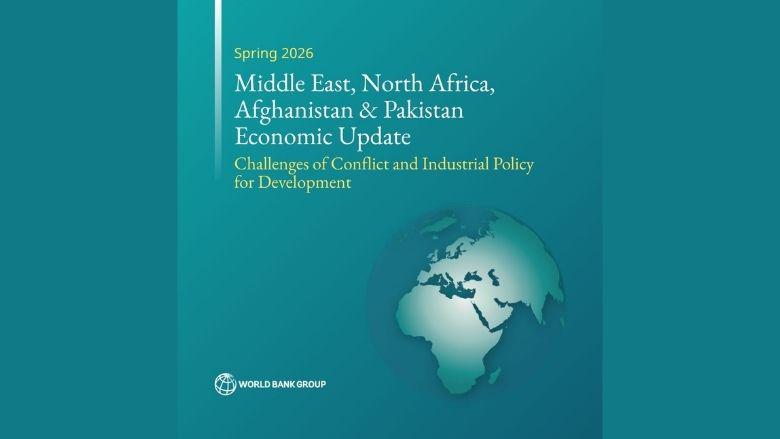
The Middle East and North Africa, Afghanistan, and Pakistan (MENAAP) economic update is released twice a year in April and October by the Office of the MENAAP Chief Economist, assessing growth prospects and providing in-depth analysis on topical economic policy issues for the region. This update provides timely insights on the region's economic trends, challenges, and opportunities, helping to shape strategic economic priorities.
Speakers
-
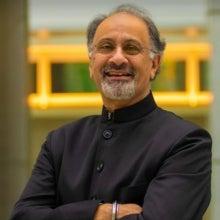
Indermit Gill
Chief Economist and Senior Vice President for Development Economics, World Bank Group
@IndermitGill -
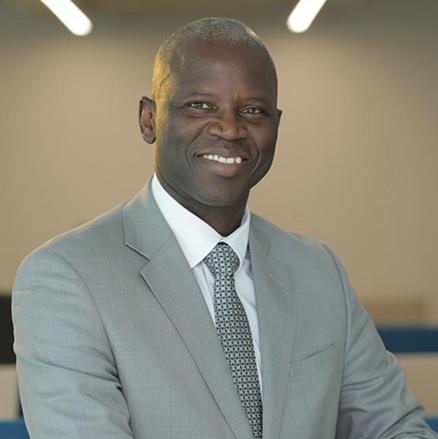
Ousmane Dione
Vice President, Middle East & North Africa, Afghanistan, and Pakistan Region, World Bank Group
@ousmanedione -
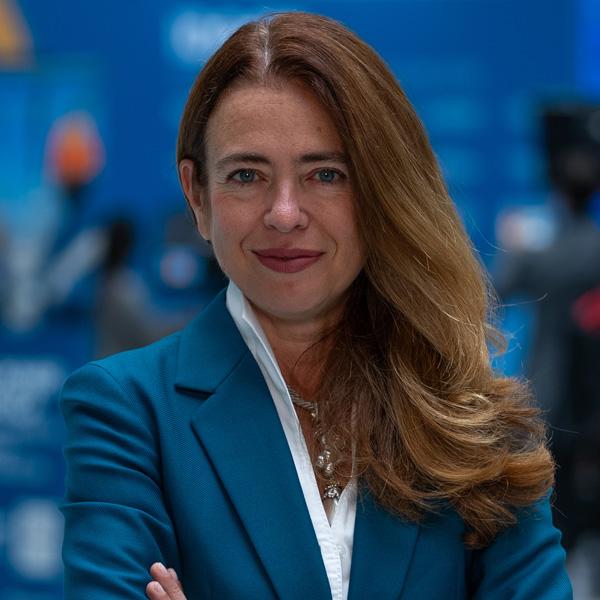
Roberta Gatti
Chief Economist of the Middle East, North Africa, Afghanistan & Pakistan region, World Bank Group
@RobertaGattiECO -
-
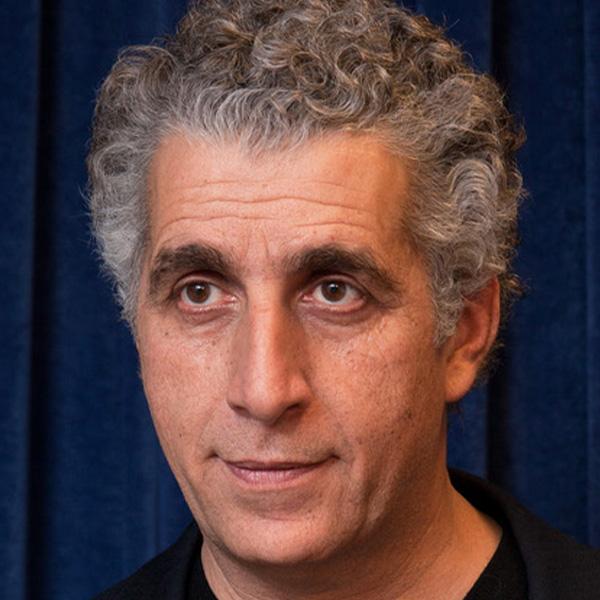
Karen Young
Senior Research Scholar, Center on Global Energy Policy, Columbia University
@ProfessorKaren
Moderator
-
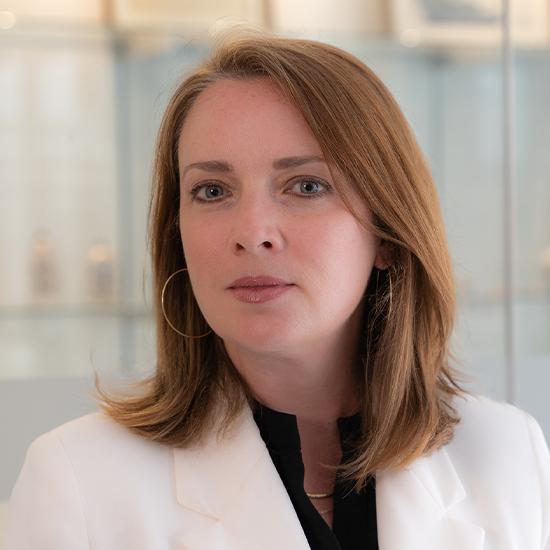
Colleen Gorove-Dreyhaupt
Manager, Corporate and External Relations, World Bank Group
Middle East North Africa Afghanistan Pakistan
Learning Resources
Middle East North Africa Afghanistan Pakistan