[Faïçal Tadlaoui]
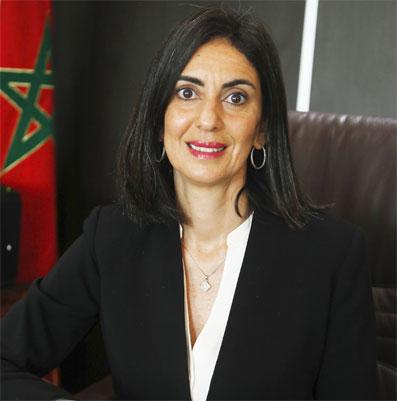
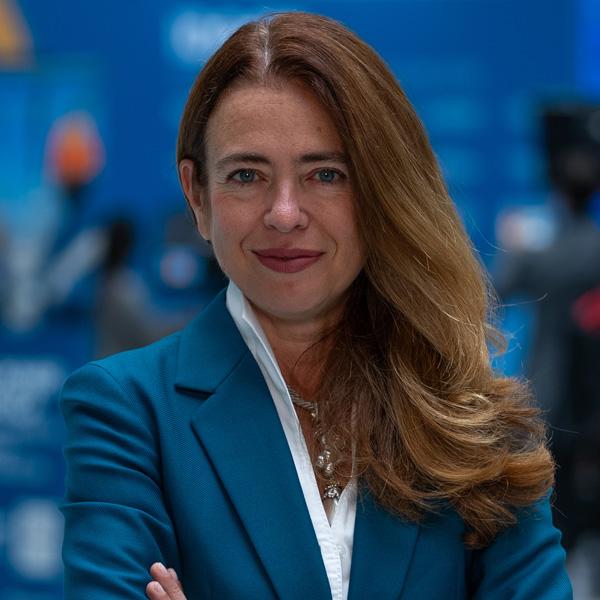
Please welcome Her Excellency, Minister of the Economy and Finance of the Kingdom of Morocco, Mrs. Nadia Fettah.
[Lively music] [Applause]
[Nadia Fettah]
[Speaking in French: "Mr. Vice President of the World Bank, dear Ousmane, ladies and gentlemen, I am delighted and"]
I'm thrilled to be amongst you today for the first forum in Morocco of the World Bank. And thank you very much for sharing these great moments with us. Thank you very much for drafting this report about the employment and the untapped potential of women in employment, which is an extremely important theme and we’ll be tackling it during the proceedings. You’ll see that there’s a report that’s been drafted in this direction, and it’s worth seeing and watching it. It talks about what’s going on in the region with all its detail. I don’t have any papers here.
[Speaking in French] [...] we’ll have 4.8% growth this year, and we’re aiming at 6% next year. 4.6% is not enough for a level of prosperity that we wish for. His Majesty, the King has paved the way for all that. He said that we need 5% or 6% of the growth. The second pillar of the law of finance is the territorial development programs of integrated nature. Four, Morocco, with strong will, with some Morocco with two speeds, the rural, the urban, the mountains, and the coastline, the big cities and the small cities, and men and women. So, these are two dichotomies. And also, the social protection is another issue to be discussed in this law of finance. Our government has done a lot of work for the households and for women in particular, we talk about a rate of activity of 20%. The added value of domestic work represents 80%, and it’s been carried out by women. Society, we talk about the washing, the wash-up, the housework in general is important. It’s done by women, and we have to do something to protect this type of work that is done within the household, exclusively by men and women sometimes, and will be reformed. That’s the other pillar of this law of finance. It’s reform. If we have a woman without a household, so we have to create something for her to include her as a woman. In the fourth chapter, we talk about reform, as I said. In this way, we’ve focused on two subjects, justice and the family code that’s been submitted to His Majesty, the King, who is the biggest defender of human rights in the country. Then we have a new family code and the reforms, the justice system reform, also that is taking place, and the public institutions reform. We’ve reformed lots of things in terms of governance. Women will be stakeholders in the advising boards of those institutions. And I’m also defending the finance law here, the amendments. I’m defending them here. And there are not so many for women. We’ve found only two from 350 amendments. So, we have only two for women, and we lack imagination. There are lots of subjects that cover women, like transport, the kindergarten, entrepreneurship. We have experts here, combined in this room. I’ll let you discuss this later on. I’m just paving the way for this discussion. The diagnosis is not enough in this direction. If we conduct a study, we learn from it, we extract from it. There are studies conducted by economists. We belong to families, of course, and we have certain elements that should be discussed. The report said that there’s 30% of the GDP that should be achieved. There’s a huge responsibility on our shoulders in this direction, this country. [Speaking French]
[Applause]
[Faïçal Tadlaoui]
We have a 20-minute presentation that will give us the highlights and the key figures, the key findings of this report.
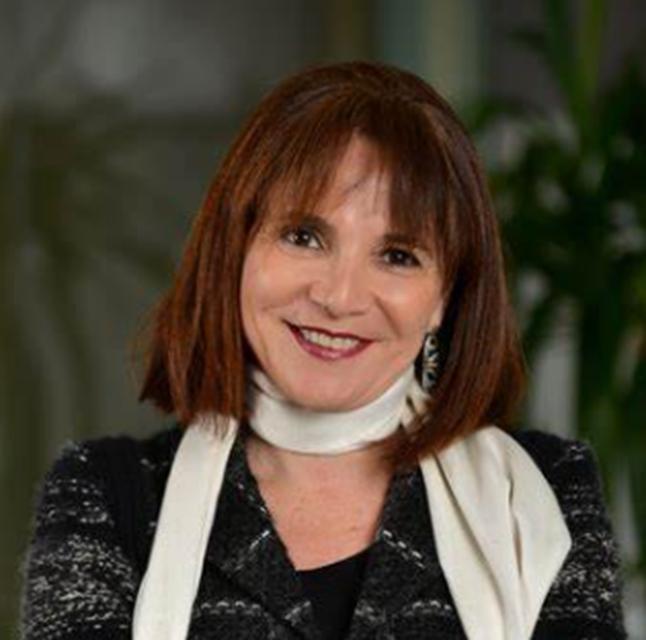
[Roberta Gatti]
Your Excellency, ladies and gentlemen, it is such an honor for me to be here. Let me first thank you, Her Excellency, Madame Fettah, for this incredible introduction and for her commitment to this cause, which is as much a cause of inclusion as it is a cause for growth and prosperity. I love how you talked about it as expanding the horizon of our countries. I will be presenting… And let me see. Oh, yes. I will be presenting the Economic Update, which is a report that we issue twice a year at the regional level, and it’s titled Jobs and Women. I hope that it will become clear during my presentation why we put a subtitle, “Untapped Talent, Unrealized Growth.” The connection between female labor force participation and growth is two ways. We will start talking about the macroeconomic outlook, which is something very conjunctural of the past six months; but then we’ll move to a very important structural challenge, which is also, as Madame Fettah has indicated, connected with growth, and we’ll see how. But let me start with some numbers. I think that we are in a situation of cautious optimism. The Middle East, North Africa, Afghanistan, and Pakistan region is set to grow at 2.8% in 2025. Yes, thank you. Thank you very much. It’s set to grow at 2.8% in 2025, up from 2.3% in 2004. This is a significant downgrade. I hear an echo. Is that okay? Let me try this way. Better? This is a significant downgrade from October 2024 forecast, but an upgrade from April 2025. What happened in between? A massive increase, 60-fold in policy uncertainty, which was driven by trade uncertainty. During the spring--[Crosstalk]. Oh, that’s better. Thank you. Very good. Can you hear me? Perfect. What happened in between? A massive increase in economic uncertainty. We showed up 60-fold from January until the Spring, and then a decrease in macroeconomic uncertainty, as driven all by trade policy uncertainty. If we look at this number of 2.8%, this is just an average, and averages don’t tell the full story. So, let’s look at what happens in our region, which is a very diverse one. This growth is driven by what’s happening in Gulf Cooperation Council countries and developing oil importers countries, among which, Morocco. In the GCC, all countries are seeing an acceleration in growth, and it is driven by two factors. One, the oil sector is growing, and what’s happening there is just the rollback of the OPEC production cuts, but also the non-oil sector is growing and very robustly in construction, in finance, in tourism. What’s happening in developing oil importers? Well, the countries that have high inflation, so a decrease in inflation, consumption is increasing, investment is increasing, and also, we’re facing a better agricultural year. You can see this is translating in a significant uptick since 2024. By contrast, developing oil exporters are seeing a significant drop. What’s happening is that Iran is facing a recession in the wake of the conflict, and also Iraq is facing a significant decrease in growth because of adjustment of oil quotas. How did we fare vis-a-vis the forecast in April? Well, we were more pessimistic for both GCC and developing oil importers and relatively more optimistic for developing oil exporters. While this landscape gives us reason to be cautiously optimistic, poverty continues to remain a concern. What you see here is the percentage of people living with less than 4 dollars a day. Think about it, 4 dollars a day. The share of people living with less than 4 dollars a day has increased since 2010 and kind of remained stagnant since before the pandemic, contrary to a trend of significant decrease in the world. We don’t have data for all countries, and unfortunately, this aggregate does not include data for Morocco. However, when we unpack this average, we see that poverty has decreased in Iran and in Egypt post-pandemic, with great consumption at the bottom quintile, so great growth in the bottom quintile of China. [Audio cuts off] Unfortunately, it is rising significantly in conflict countries. Look at what’s happening in Syria. Now, poverty is at 40%, estimated at 40% from just about 6% in 2010. In Lebanon, this rate has gone up to 16%, a country that used to be an upper middle-income country from less than 1% about 10 years ago. We all know the conflict has a significant footprint in our region, a footprint that is also geographically concentrated. We did here a very simple exercise. We calculated the number of people who live in proximity of conflict when conflict is defined as an episode having at least more than 10 fatalities. We see that just in 2024, 36 million people were living in proximity to conflict. There are many repercussions of conflict, I want to focus on a fundamental one, which is food insecurity. In Gaza, in the summer, the UN estimated that more than a half million people lived in conditions of full-blown famine. More than one million people were living in conditions of extreme hunger. Unfortunately, the situation of food insecurity is not unique to Gaza, but it has repercussions on other fragile countries because the price index for food has gone up dramatically, also in Lebanon and Syria. The economic repercussions of the conflict, and I’m really focusing [on the] economic [issue] here because we know that the human toll of conflict cannot be captured by these numbers. But the economic repercussions of conflict in the region writ large have been relatively modest, reflecting a modest level of integration within the region. However, there are moments and localized shocks that keep on creating concern. For example, starting December 2023, the traffic of ships across the Suez Canal and Bab el-Mandeb decreased dramatically. You see them in blue and orange, and you see a mirroring increase in the traffic across the Cape of Good Hope. This trend has persisted since, and it had cost Egypt something like around 11 billion dollars between December 2023 and last summer. So, important reflections that need to be made for our region vis-a-vis conflict; but as I had a quick overview of the more conjunctural aspects and the more recent trend, I would like now to turn to the structural challenges of our region. The French philosopher Auguste Comte said, “Demography is destiny.” I would like to point at two trends in our region. That will bring us to understand, I hope, why it is important to increase, excuse me, female labor force participation. The first one, and Her Excellence has already highlighted it, is that our region is at the heart of the global jobs challenge, a challenge that each and every country in the region is facing in a very important way. What you see here is that the growth in the working-age population in our region will be 40% between 2025 and 2050, only second to the growth in sub-Saharan Africa. A labor market that will be very rich of people coming in, where job creation should be more dynamic than it is now. But there is a second looming demographic crisis out there. Drops in fertility have been very rapid in our region, in almost all countries. This means that the number of working people per elderly is decreasing also very rapidly. You see it here, and by 2050, it will reach the number of about 3.5. And public finance experts put at three the critical threshold after which health systems and pension systems start cracking the seams. So, this is not a situation that is unique to our region. It’s very common in other middle-income countries. Think about East Asia, think about Eastern Europe, think about advanced countries. So, they are trying different policies, but none of them is a silver bullet. Something that is instead almost a natural policy for our region would be the one of increasing labor force participation. And what is the reservoir of labor that can really stave off this crisis is women. So, we just see this simple exercise of bringing the current female labor force participation, which is the lowest in the world on average, 20% to the world average. You see already that this curve, which is the inverse of dependency ratio, is moving upwards and is moving much more forward in time, this crisis. But let me just give you a sense of what’s happening now, what’s the landscape of female labor force participation in the region? A few facts. I already mentioned it’s the lowest in the world. Here you see female labor force participation for each of our countries in the region compared to their income peers. Almost all of them, without exception, are below their income peers. The second one is to try to understand what happened over time. I have to say that the progress has been uneven. In some countries, female labor force participation went up, Pakistan, Tunisia, Algeria, and notably in the Kingdom of Saudi Arabia, very rapidly as a result of the many reforms that have been brought to bear for nationals. In some countries, it has been stagnant. Look at the data for Jordan and Iran. And in some countries, it has decreased. And that’s the case of Morocco and Egypt. It has decreased also as women were getting more educated, and even more women were getting more educated, really thinking that our region is leaving money on the table. Women are getting more educated, but they do not participate or even participate less in the labor market. And that has been even the case for younger cohorts. So, what happens when women participate instead in the labor force? Well, when they do, they’re quite likely to be employed, 20% of them; but when they find jobs, they tend to have jobs that are more likely formal than informal. And that’s a big difference with men. So, it could also be because many of them choose the public sector, and because since there is such a big selection into participation, these women, the women who work, are really very talented. What about wages? A lot of the literature on female labor force participation and women working is about the wage gap. Well, we have a wage gap in the region, and it’s particularly high for low skills occupation at 23%, and it is on par with the world for high skills occupation. But if you remember my remark before, which is the selection of highly talented women is very high into work, it’s possible that this wage gap that we see here is highly underestimated for our region. So, what is shaping the decision to participate in the workforce? Of course, you will hear me mention generalizations, and each country has its own profile and its own trajectory. However, some common themes are emerging. Constraints to participation in the labor market come from different fronts. From the labor supply side, which really means the individual decision, the household decision, the contract that you can have in the family to make it possible for both partners to participate in the economic activity. It can also come from the private sector. For any of you who have read the work that we’ve done in the past, you’ll know that there is an important agenda out there in some countries for leveling the playing field between the public sector and the private sector to allow the private sector to grow in a dynamic way. This demand and supply factor play out in context with social norms, are more restrictive, and legal provisions reflect these restrictions. Let me just give you a few data. These are data taken from a household survey where we look at social norms and we find that attitudes toward considering the men as the prime earner, and household expenses being the primary responsibility of the men, or the role of the woman being the traditional one of taking care of children are particularly strong in our countries, much more so their income comparators around the world. When we look at the law, with the sole exception of Morocco, all of our countries are below where they would be predicted to be by their income level in terms of a composite index, which is the women, business and the law that looks at equal treatment between men and women in different aspects of legality. There’s also an interesting interaction between social norms and services. For example, many countries have a strong report, a strong preference, and this comes from the World Values Survey for children being taken care of in the home. Together with limited supply and affordability of childcare, we see one of the lowest enrollment ratios for pre-primary education for children in the world. Although we need to note that some countries have made significant progress, and one of these is really Morocco. If we think about other decisions that can bring or prevent a woman from participating in the labor market, harassment and safety really come on top. The other barometer, and these are data from a few years back, 2019, reported in a country like Egypt, about two-thirds of women report having been harassed. When we look at where they are harassed, it can happen at the bus stop, it can happen on the bus, it can happen in the workplace. There’s an agenda of safety that is very important out there. Now, if we think about the labor demand, which means jobs being created, I think the big picture that we need to keep in mind is that our region does not create as many jobs as it could because the private sector isn’t as dynamic as it could. This is really an agenda of leveling the playing field with the public sector and really investing in those enabling environment requirements that can allow firms to start and to grow in a robust way. However, to this general situation, there are also gender-specific constraints. A very [audio cuts off] large percentage will say they would like to hire men, preferably than women. This is something that in the literature is known as taste-based discrimination. Then there is another agenda to which I hinted, which has to do with potentially the fact that women choose to work in the public sector because it’s safer. But in the end, the public sector ends up absorbing the labor force from women who are extraordinarily talented. Just a data point, two out of three women with tertiary education in Egypt work for the public sector, and we are an outlier in the world. Now, let me conclude with two considerations. What does it take to remove gender-based distortions? And how much do we gain from it? Her Excellency, you already pointed to a big number which is there and it comes from different papers highlighting that countries can gain anywhere between 20% to 30% of GDP per capita from removing this distortion, but what does it take? Here I conclude, it takes going about it in a comprehensive way. It would take providing better services for women. Think about accessible, affordable, and high-quality childcare. You just want that high quality to be able to feel comfortable as a mother to have a child taken care of by someone else. Enablers, think about flexible work arrangements and the ability not to be discriminated for needing to work part-time if you are a working mother. It creates a private sector that grows and creates jobs, and it takes an investment to support the egalitarian attitudes in the household, at work, by the government. This is something that is not only an information campaign, but it’s also education in school. It’s also a way to correct misperceptions between what people hold as individual beliefs and social norms that they think that others would hold. It also takes a lot of strength and political will to make legal reforms. Many countries have made progress, and between 2010 and now, countries such as the UAE, Bahrain, Pakistan, and Tunisia made tremendous reform. I know that many are also along the way and being discussed here in Morocco. But things such as expanding parental rights or arriving to a pension equity in social security law can really level the playing field now between men and women. Thank you for the opportunity to present the findings of this work, and I look forward to our discussion.
[Applause]
[Faïçal Tadlaoui]
Thank you. Thank you so much, Roberta. You will be with us for your Q&A session after the quick discussion.
[Speaking in French]
I would like to ask you to welcome Her Excellency, the Minister Nadia Fettah, who will participate through this panel. I will ask you to applaud her once again.
[Applause]
[Faïçal Tadlaoui]
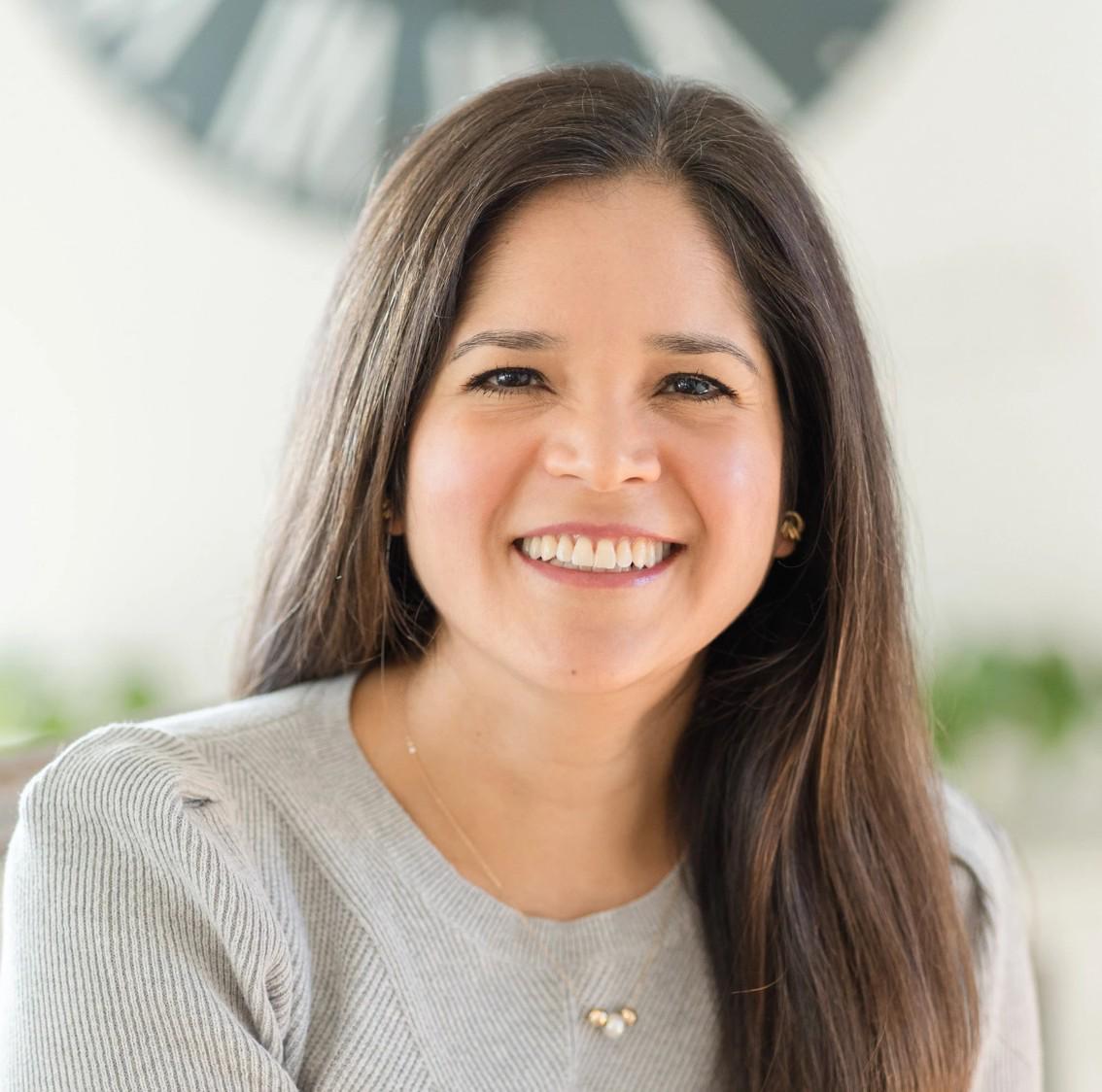
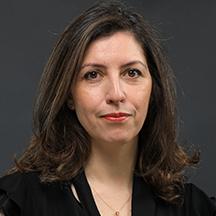
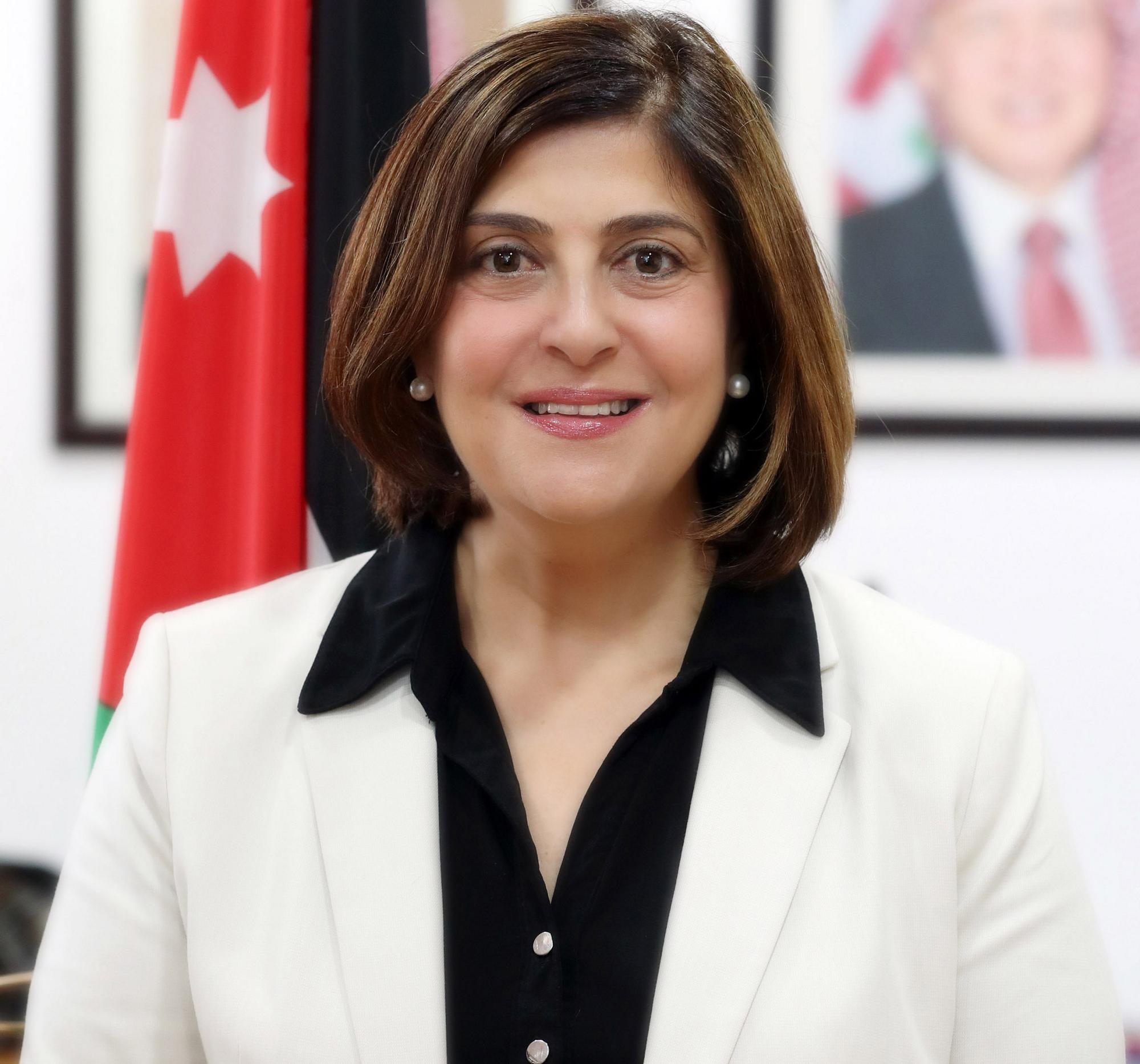
Please, welcome Dr. Mary Kawar, Director of the UNDP Regional Hub in Amman from Jordan, please, and former Minister of Planning and International Corporation with Jordan. Thank you for being with us today. Mrs. Ghita Lahlou, Vice President of the CGEM and Head of the Les Citoyens from Morocco.
[Applause]
[Faïçal Tadlaoui]
[Speaking in French]
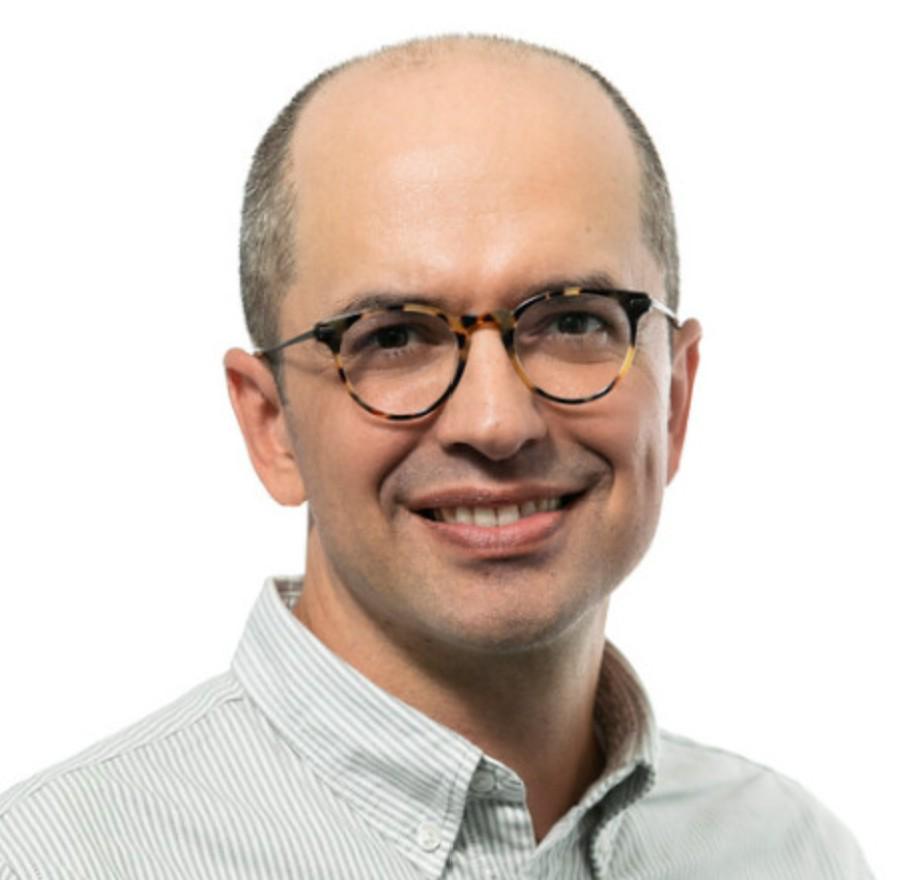
And Dr. Selim Gulesci, Associate Professor at Trinity College of Dublin.
[Applause]
[Faïçal Tadlaoui]
I don’t want to start this discussion panel without asking each of you very quickly, among all the key figures that you have seen, and thank you again, Roberta, for presenting this report [unintelligible]. Do you have some figures that struck you up, especially, Madame Minister?
[Nadia Fettah]
I think the figure of nine women out of 100 that end up in the formal sector, this is a sad number for many reasons, but definitely a very sad number.
[Mary Kawar]
I forgot the figure, but it struck me. How many women face harassment and sexual harassment. In work or to work.
[Faïçal Tadlaoui]
Ghita.
[Ghita Lahlou]
For me, it’s the potential of between 20% and 30% that we can win by women employment.
[Faïçal Tadlaoui]
That’s the figure that the Minister told at the beginning of this event. And Selim.
[Selim Gulesci]
Also, for me, the most striking figure was the prevalence of sexual harassment. I found it very shocking.
[Faïçal Tadlaoui]
All right. Thank you. Minister, the first question, you started this event by telling you’re just right now working on the budget. I’ve been struck, too, by the fact that only two amendments or two articles of the budget were about women. My first question is, what policy framework can we implement in Morocco? Well, I know that’s a big question, but to fill this gap and to add, we have this problem of a non-inclusion of women in the economy. What is the policy framework that you could give us?
[Nadia Fettah]
If I had the recipe, I would be very famous worldwide. I think that, to be fair to Morocco, we have a good policy, I would say public policies frameworks, because we have so many of them happening already, from the Ministry of Economy, that we have a budget that is sensitive to gender. We have policies for financial inclusion, we have policies also today for having pre-scholarships, etcetera. I think that we’ve been very disciplined, and we listened to the good policies that should be implemented, but still, we are decreasing in the... So, I think the question is the sponsorship of this policy making. And who is in charge? Who is, I would say, accountable for this number? When we have a deficit or when the growth is decreasing, I am in charge and I am accountable. Who is accountable? I think this is the question. Is this a complex topic? But I’ve never seen a minister fired because we are not doing well for women’s economic inclusion or the number of jobs.
[Applause]
[Faïçal Tadlaoui]
Mary Kawar, you have a background in both government and development institutions. My question is what policy levers are most critical to overcome all these structural barriers that we can notice in every country that we have in this region? Just to repeat what has been told by Roberta, we can’t make everything general. Each country is specific, but could you give us just regarding some use cases you have in Jordan?
[Mary Kawar]
Thank you very much. First of all, I’m humbled to be next to Her Excellency, the Minister. I want to also thank the World Bank for including us. I think Roberta’s presentation told us what it needs,
[which]
is we need economies that are creating jobs, jobs for everybody. But when it comes to women, we need to find how do they find these jobs, and most importantly, how can they stay in those jobs? The reason that they cannot stay in those jobs for a very long time are the structural barriers that we are facing. Some of the structural barriers are related to family-friendly policies, infrastructure, transport, childcare, etcetera. But some are legal in terms of access to finance, inheritance laws, custody laws, civil laws that affect women’s personal lives. To have the headspace to invest in your career, you need to have all your other rights in place. Now, in terms of my experience and the role of government, what is needed here it’s a big agenda, it’s many policies that need to take place in tandem at the same time, consistently, and over a very long period of time. On top of that, you need the vision and the political will, which Madame Minister has mentioned. This is not an easy feat for any government and partners. Allow me just to say one experience in Jordan, and this experience spans I was in the ILO, then I was a Minister in Planning, and then in UNDP. As far back as 2010, I started a very small study with my colleagues, saying, “Okay, let’s do a study with the Social Security Corporation on what it takes so that maternity leave is funded by Social Security rather than borne by the employer,” which is a cause of discrimination that women “cost” more. We started with a study. This developed into a law. Then the parliament got involved, then civil society got involved, then the government got and won, but it was only operational in 2020. It took 20 years for a very solid maternity protection law, operational framework, and fund. Over the years, it became better and better because at the end, in 2020, it actually included a paternity leave, which we did not think about in 2010. It also included vouchers for childcare, which we did not think about in 2010. Everybody had ownership because in this decade, so many people got involved. So, this is it. It’s just not the multiple interventions that take place at the same time. It just takes a very long time to have an impact.
[Faïçal Tadlaoui]
Ghita, you’re between private sector, civil society. I’ve been struck by the one figure in Egypt, I think, Roberta. “I would rather hire a man than a woman.” I’ve seen the figures, and I was shocked by this, but that shows something. That’s a reality that in the private sector, in private companies, there is still discrimination for hiring women, maybe depending on the sector represented. In the Moroccan example, how can we overcome all this and have more access to jobs for women in the private sector?
[Ghita Lahlou]
Okay. First of all, I think that employment can’t be decreed, and it’s one of our problems. The employment, women’s employment, it’s the result of many things, a vision, a strategy, an agility, a strong commitment from all the economic actors. And the state can’t create this job. The state has, or the government has, the role of the government is to coordinate, is to facilitate, is to co-build with the different sectors, the strategy and the public policies to create the condition for this women’s autonomy. First of all, and globally, we have to have global job creation, not just for women. Regarding women, more practically, I think that we need three main priorities. First of all, we must build an entrepreneurial framework for them, a real entrepreneurial
[framework], and we must provide crowding, funding, technical support, mentorship to help these women to create and develop their own businesses. The second priority is to improve the work conditions for women employees, essentially through measures like flexible and remote work, part-time work, as we see, childcare facilities, security, transportation, safety, etcetera. The third priority is to increase the opportunities for young women, essentially in the rural areas. During the new model, the development, it has considered that the significant potential of the… [Speaking in French].
[Faïçal Tadlaoui]
Social economy.
[Ghita Lahlou]
Social economy is fundamental for development. However, the law governing this sector has still not been adopted.
[Faïçal Tadlaoui]
Been affected. Yeah.
[Ghita Lahlou]
We consider that with a good one, we could increase the GDP contribution from the 2.3 current percent to approximately 8% over the next decade. So, we think that these main priorities require a very strong commitment from everywhere, but also a legislative support. And the state must step in with laws reform and essentially a measured labor code, and of course, implementation of measures. And the financial sector has to also be implicated and create new kinds of mechanisms to help and to push the businesses which perform and promote women’s employment. Thank you.
[Faïçal Tadlaoui]
Laws are very important. The frames are very important.
[Ghita Lahlou]
Laws and reforms.
[Faïçal Tadlaoui]
For many times, it has been men making laws for men, okay? Now we have women in governance. But we can say that we can be very proud. I told [them], I have three daughters. One is 19 years old. And really, that’s not because you are here. But last time... Well, no, yesterday, I told her, I’m going to be [interviewing]
Minister Fettah. Okay, Minister of Economy and Finance in Morocco, it’s a woman. And we have to say that. We have to emphasize on this because that’s something that’s not common worldwide. And I know that’s not easy.
[Applause]
[Faïçal Tadlaoui]
Selim. Yesterday, too, I asked my very close AI friend to sum up some of your studies that you’ve done because you did a lot of studies in Tanzania, Uganda, India. We’ve seen that one of the reasons why we have this situation is social norms in many countries. In this area, we know that social norms can be very restrictive and are real barriers. You have developed a concept, an approach of a stepping stone approach, trying to change social norms, but it’s very difficult to change social norms. Can you explain to us how does it work? How did you discover this?
[Selim Gulesci]
Of course. Thank you. As you said, social norms in our region, including Turkey where I’m from, are unfortunately… [They] tend to be conservative when it comes to women working outside the home. But having said that, we have to tackle them, we have to change them. That’s difficult, but it’s not impossible. For example, the report shows that there is overwhelming data that often these norms tend to be misperceived. People tend to be pessimistic about what they believe others think and how others will judge them. There’s, for example, a very interesting recent research from the Kingdom of Saudi Arabia that shows that men, on average, think that other men will judge them very negatively if their wives are working outside the house. But that’s actually not true. When you do a survey amongst men, typically they say they wouldn’t think so badly. When you tell this to other men, then they change their minds, and then later on, their wives are more likely to apply for work. That shows that identifying and changing these misconceptions can be one way to address these norms. In my work, I also have talked a lot about the idea of stepping stones. When we need to tackle these difficult issues, sometimes it helps to break it into pieces. For example, we mentioned flexible jobs. Again, the report talks about this. Having jobs that women can do from home or maybe part-time more easily can be a stepping stone to allow them, then, to access more easily other types of jobs. So once families and people see, “Oh, women can do jobs easily from home and earn an income.” Then in the next generation or in a few years that can allow them to access other job opportunities as well.
[Faïçal Tadlaoui]
Minister, could you give us some examples of what has been done, achieved so far in Morocco to promote women inclusion in the economy?
[Nadia Fettah]
I think a lot of things have been done. First, maybe on this constraint of pre-scholarship and I would say childcare, I think that I’m so happy that the [unintelligible] is with us today because it’s the Minister of Interior with other stakeholders that have been in charge of this. We are now achieving very, very impressive numbers of children that are offered child pre-scholarship. Hopefully, we are also going to accelerate childcare because this is number one, I would say, as an example. And we are having in the roadmap for jobs 2025 and finishing next year. Transport also is one issue that we want to include in the public policy. This is one example. For the financial, I would say inclusion, we’ve been doing a lot. Also, for, I would say, giving guarantees for macrofinance for the banking sector. But here, again, what I want to say is that whenever we put an amount on the table for these types of programs, it goes well, and then it stops. It means that we have a problem. We have a discussion to build with the financial sector because they know that there is, I would say, a real demand for this. Then anytime they come with this project funded by the government or the partner, it works. Why shouldn’t they take the initiative to do more of this? This is very interesting because the numbers are very good, the risk is very low. It works. I’m just calling upon the financial sector to say, “Do more money for women entrepreneurship and women inclusion.” I think the biggest thing that the government and Morocco have been successful in is schools and universities, because at schools, we have 50% girls. At universities, we have 50% of women. I think the duty of the government is probably to accelerate change in the laws. But I think that the biggest achievement, and I’m proud that Morocco is doing this and even improving in this is that girls and boys are given equal chances, and by 22, 23, they have the same level of education. Then the other stakeholders should be taking care of this massive asset that the governments have been funding for decades and are doing more effort. We have the same brain, guys, and the government has been taking care of our brains, and we can be, I would say, we try to get rid of these social constraints. Just trust women, hire them or fund them because they are ready for this.
[Applause]
[Faïçal Tadlaoui]
We maybe have the same brain, but it doesn’t work the same way. You can do a lot of things at the same time. We cannot. Yes? Yeah. Tell me yes. Mary, in many countries, and we can notice, even in Morocco, that we have some scattered efforts that can be done by the government, by civil society, by development partners, even by foundations, philanthropic organizations. How can we make all these people work together to be more effective?
[Mary Kawar]
Thank you for this question. Actually, in today’s world, we cannot afford not to be effective. We have a common agenda to work together. As international partners and national partners, we have a responsibility today with what’s going on all around us to promote multilateralism and ensure that it survives and that it’s healthy. What can be done? I do think that it is actually a chain, and we cannot break this chain. The first part is to have the government in the driver’s seat. I don’t mean the government in the driver’s seat in the sense that they develop and they don’t dialogue with others. In the driver’s seat in the terms of political commitments, unwavering political commitment. This can be translated into the next parts of the chain, which is [that] we need national capacity to do the coordination with everybody and have consistent healthy democratic dialogue all the time. Finally, we need to ensure that we have the data and the statistics. Here is where the international community can support national officers, can work with national researchers, etcetera. After that, the elephant in the room is actually how do we manage and coordinate financing? This is where everybody has a role. Everybody has a role so that for international partners, financing has to be long term. As the example I mentioned on the maternity protection in Jordan that took years. We cannot depend on funding that is short term. To have a change at scale, you need to have long term commitment from the international community for national level transformations. You need to have concrete, organized public-private partnerships, and you need to understand what is the role of philanthropy and how can we develop Arab philanthropy towards development. I think this is a very important area that I am sensing in the Arab region. I know more [about] the Levant than North Africa, but in the Levant, we have so many philanthropies that are now led by young people and are looking into how can they have an impact to be part of development? My final issue is, at the end of the day, we need to always ask ourselves, why is it that we are promoting women’s economic participation? Yes, it’s good for the economy. Yes, it’s good for the country. But it’s also good for equality. It’s also good for poverty eradication. It’s also good for inclusion. I think this is where we want our countries to head. We want women to participate. My final point here is something that I was very happy that exists in the report and Roberta mentioned. A lot of women in our region are living in conflict and wars. Economic participation is not the priority right now, but how can we build better? If you are in a conflict, in early recovery, or in peace building, these three levels of pre-post-conflict, how do we ensure that we are addressing women’s participation, voice, and agency so that when peace comes, they can participate equally and we build a better society?
[Faïçal Tadlaoui]
Ghita, we talked earlier about social norms. I mean, some talked about that. Do you think that we can change things using communication? We know we’re in Morocco, we have our social norms. We’re a complicated and simple country because we know how it runs, but we have some very complex behaviors. That’s what makes this country so beautiful, but sometimes so weird. Do you think we can change this only by communication? Do we have any other means to go beyond that?
[Ghita Lahlou]
I would say that we have no choice [but] to change because if we want to move into the category of the recognized emerging nations, we have to change, and the society has to change. And the paradox of Morocco is, Morocco despite having one of the highest proportion of women with higher degrees, the majority don’t work. So, these social norms exist, and they are here, and we must change them. I see personally with our confederation four main avenues. The first one is education, really. From early childhood through to the end of high school, we must overcome the stereotypes. What persist, and we see them in the textbook, we see them in curricula as a whole. Now, we think that the current reform of education with the pioneering colleges, they seem to address this issue correctly. So, let’s hope that they will change things substantially. Secondly, the media, we must transform and challenge the stereotypes which are perpetuated by the press, the television, film, advertising and the obstacles that stop women in access to some traditional male profession, and the disproportionate burden of domestic work must be publicly addressed and transformed into clear arguments to change. Third, the female role models. I think we need very strong female models from all the social and the professional backgrounds, women who succeed and can inspire others to follow their model, their example. Fourth, the quotas. Even if personally, I don’t like the non-equity of the system, the system has proved today its effectiveness. So, I think we need more quotas.
[Faïçal Tadlaoui]
We have to go through that.
[Ghita Lahlou]
Yeah, we have. We have to. So, with these four things I think we can substantially change, and we have no choice.
[Faïçal Tadlaoui]
And finally, Selim, in your studies, you have noticed the aftermath, the consequence of the access for some women to reliable, affordable child care. I guess that’s obvious, but you’ve been measuring it. Can you tell us how can the access, when you improve the access to childcare, you improve the inclusion of women for job employment?
[Selim Gulesci]
Yes. Of course, access to reliable, good quality, and affordable childcare is a necessity for female labor force participation to increase. There is no doubt about that. Having said that, on its own, like many of these challenges, it can’t be a magic bullet. We need to tackle multiple things at the same time. For example, there’s research in Egypt that shows providing childcare subsidies, the take-up of them was very low, and the researchers think it’s because there’s this norm, this idea in general that a child would be better at home instead of in preschool, in daycare. Maybe also people didn’t trust the quality that much. It’s not on its own, therefore, it wasn’t enough. In my work, in a different context in Uganda, we, again, provided access to good quality childcare, and there was good take-up. But instead of mothers, fathers ended up working more. Why? Because there’s a huge gender wage gap. Roberta mentioned this, and the report talks about this. When there are more jobs and if employers are more willing to hire men, again, just childcare alone cannot be enough. So, we need to tackle all of these things at the same time. And childcare is definitely one of them.
[Faïçal Tadlaoui]
Thank you, Mrs. Minister. Thank you, Ghita. Thank you, Mrs. Roberta. Thank you all. We are at the end of this session.
[Applause]
[Faïçal Tadlaoui]
Thank you. You can applaud them. Thank you very much for your presence. I will let you join the room, of course. By welcoming the Vice President for the Middle East, North Africa, Afghanistan, Pakistan, and the World Bank, Mr. Ousmane Dione.
[Applause]
[Ousmane Dione]
Thank you so much, and a very good morning to everyone. Let me first start by thanking the panelists, Her Excellency, Minister Nadia Fettah. Thank you so much for hosting us. Thank you so much for leading this agenda, a difficult agenda, but a necessary agenda. I just want to reiterate the commitment of the World Bank to be on your side, to be on the side of all Moroccans to advance this cause, which I believe is the right one. Thank you, Minister. I want to thank Professor Selim Gulesci for being here. Thank you. Thank you, Dr. Mary Kawar and Ms. Ghita Lahlou, both of you, for joining us and for sharing your experience, your expertise throughout today’s discussions. And of course, none of this would have been possible without Roberta Gatti and her outstanding team. Thank you, Roberta. Thank you for the hard work. Thank you for the dedication in bringing this report to life given an ever-changing context in the region of MENAAP. I would say at the outset, I’m biased when it comes to gender, when it comes to the female labor force, simply because I have the chance and sometimes also the misfortune, depending on which context, of having grown up with four sisters.
[Audience laughs]
[Ousmane Dione]
I do see it, though, as a strength. Our gathering today reminds us of how economic development isn’t a sprint, but really a marathon. Our half-yearly economic update, which continues to be much anticipated and greatly appreciated, gives us not just a snapshot of where the region stands today, but also a sense of where the region could go and should go positively. In other words, today’s discussion shows a cautious optimism of what tomorrow’s boom would be. But as we have heard today, everyone pays the economic cost of excluding women from the economic active participation in the workforce. Everyone pays the price. And both the private and the public sectors, each can play a valuable role in reducing barriers and creating jobs. So, the region’s working age population is projected to be about 220 million over the next quarter of a century. 220 million will be coming to the job markets. That is close to a 40% rise, the second largest across all regions in the world. That could be a demographic dividend, but if the female labor force is not fully included, it could be a demographic liability with all the consequences. The challenge we do have in MENAAP is the region is not yet creating enough jobs to meet this growth. At the center of the challenge lies the most powerful [room] for growth. We have yet to fully unlock women’s economic participation. Amplifying women’s economic participation is the largest, it is the fastest, and the most durable source of growth available to the MENAAP region. The discussion today makes the case unambiguous. When more women work and advance, economies expand their talents, [business], accelerate innovations, raise household income, and build economic resilience. This is not only a matter of economics. This is not only a matter of fairness. It is an economic necessity. In reality, [speaking in French]. There is no wealth, neither prosperity, sustainable without women. So, the question we need to ask, all of us is, how will we get there? What will it take? And let me reiterate five pillars of a comprehensive approach. Pillar one, first is social norms matter. Any durable policy agenda must engage with the region’s prevailing social norms. It is a reality which we need to take into account first. Second, level the legal and regulatory playing field. Without leveling the regulatory field, it is going to be a challenge and impediment. We need to remove those barriers that impact women’s work, enforce equal pay for equal work, and strengthen anti-discrimination and anti-harassment statutes. We have seen the numbers. This is a matter not only of enacting the law, but also enforcing the law. It is extremely important. Third is to invest in care, mobility, and safety. This means affordable, accessible, and quality childcare, safe and reliable transport, stronger measures to create a safe working environment, and that is the enabling environment which needs to be put in place. Fourth is to catalyze a dynamic private sector for job creation. Foster a competitive business environment so that firms will be motivated to hire more women. Especially encourage women to pursue management and entrepreneurial roles since it has significant spillover. Firms led by women hire more women and shape workplace culture. It is important we put an emphasis on this agenda. Fifth, and not the last, use incentives such as flexible work arrangements that support the advancement of women. When firms see clear returns through inclusion, behaviors change at scale. Now, the good news is that action is happening on all of these fronts in the region. We heard this today from our esteemed panelists. Minister Fettah spoke about several reforms the Moroccan government has prioritized that will help reduce the unfair burden placed on women, but [it shows us] [women are] in need of childcare or recent graduates [are] in need of safe transport home after a long shift. We heard Professor Gulesci reminding us that social norms matter, and it is a journey. And that like a stone skipping across the water, changing opinions, changing mindsets happens step by step and over time. It is a process, but we need to start and to continue to move on that journey. And time is of essence, of course. Mrs. Mary Kawar pointed out the most important step to remove obstacles that prevent women from fully participating in the economy. And Madame Lahlou, of course, offered a direct observation and analysis illustrating that increased flexibility and working arrangements during the pandemic did not only result in decreased productivity or output. And that is really important, despite all of that productivity did not decrease. Instead, we have a better understanding of the future of work. The decision-making table is no longer made of oak. It is a laptop, it is a video, and it is a link. So, the world has changed, and the world is changing fast, and we need to adapt and we need to move. We at the World Bank, we have been supporting countries on this journey for many decades. Going back to 2012, our World Bank Development Report on Gender and Development had this main message, “Promoting gender equality is smart economics.” This was back in 2012. Fifteen years have passed, and we’re still discussing a number of these challenges. We need to move fast. We need to do better. Some of our projects at the World Bank are supporting ground-breaking programs in some countries like Jordan. That encompasses the spirit of a comprehensive approach with the immense support of women’s labor force participation. The Enhancing Women’s Economic Opportunities Project in Jordan. It is a 226 million program, the first of this kind in the Middle East and North Africa region, designed to tackle the structural barrier that keeps women out of the labor force. Throughout a multi-sectoral approach, the project focuses on four critical areas: improving workplace conditions for women, expanding financial inclusion and entrepreneurship for women, ensuring safe and affordable public transportation for women, and increasing access to quality childcare services for women. These initiatives are intended to achieve a two-fold increase in female labor force participation in Jordan by the year 2033. This is not only an investment in women, it is an investment in Jordan’s future, economic resilience and inclusive growth. This is a path we believe every single country in the region must embrace, push forward, and expand. To close this discussion, a brighter future for the region’s private sector is within reach. I believe deeply in the potential of this region. While I remain optimistic, I’m fully aware of the significant challenges ahead. There are still concerns. We have heard them; we have seen them. There are still barriers. But we must be determined. We must work together. We must work together with determination. We must work together to support the region, seize the opportunities that lie before [us]. Many thanks, everyone. Many thanks for coming this morning. For those who contributed to this report, thank you for being also here for the launch. The MENAAP Economic Update is available. It is available online for reading and for sharing. Let me again thank the panelists, all of you, for being here this morning for sharing with us your experience, your expertise. Let me congratulate, thank again, Minister Nadia Fettah, for all the work you are championing, but the game is not over. It’s just starting. It is a long run, but it is a long run which you must be sure you’re not alone. And from our side at the World Bank, we will always be with you. We will be with all Moroccans, and we will be with all the females across the MENAAP region in accelerating this agenda. Thank you, everyone, and a very good afternoon.
[Applause]
[Faïçal Tadlaoui]
Thank you. Thank you so much, Mr. Dione.