[Boutheina Guermazi]
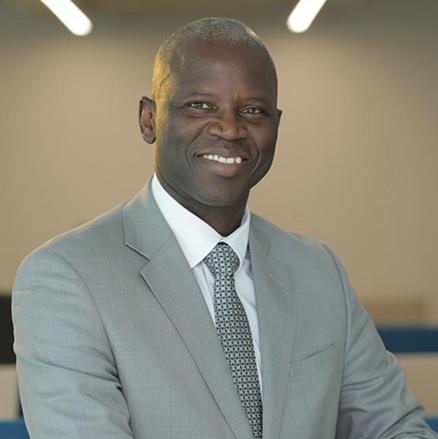
Good morning, good afternoon, and good evening to all of you connecting to our event today. My name is Boutheina Guermazi. I’m Director for Strategy and Operations in the MENAAP region. This is the Middle East, North Africa, Afghanistan, and Pakistan. It is my distinct pleasure to moderate today’s session. This is the launch event of our HD Flagship Report, Embracing and Shaping Changes: A Human Development for a MENAAP Region in Transition. This report is a significant milestone in addressing the challenges, but also the opportunities for human development in the MENAAP region. A human development that is at a turning point, deeply impacted by three important megatrends. These are technological advancements, climate change, and demographic shifts. Our distinguished panelists will discuss the implication of these megatrends on human development and the necessary policy and institutional challenges for a future-fit human capital. How do we harness opportunities? How do we mitigate negative impacts? How do we shape these megatrends to increase resilience and readiness for uncertain scenarios? We aim to foster a dialog that will inform policy directions and strengthen client engagements on priority areas such as digitization, climate change, skilling, migration, population, and aging. Today’s event is coming to you on World Bank Live in English, Arabic, and French. This event is also being streamed on YouTube, X, and Facebook. To kick us off, I’m very pleased to call on Mr. Ousmane Dione, our Regional Vice President for the MENAAP region. He comes with a deep experience on development priorities, having served as Country Director, Sector Manager, someone who supported multiple countries, spanning income groups across Africa, East Asia, Latin America, and South Asia. Ousmane, the floor is yours.
[Ousmane Dione]
Thank you. Thank you very much, Boutheina Guermazi, and a very good afternoon, very good morning. Excellencies, distinguished colleagues, partners, it is a great honor to welcome you to the launch of our Human Development Flagship Report for the Middle East and North Africa Region. Today marks an important milestone in our collective effort to better understand the challenges and opportunities that shape the future of human development in the region. Since stepping into my role as Regional Vice President, I made it a priority to spend time in the countries of our region which now, with a recent addition of Pakistan and Afghanistan, we call it MENAAP. Over these many months, I visited cities bursting with youth full energy, and rural towns facing deep uncertainty. I have seen the resilience of communities in the face of crises and the determination of young people, women and reformers who shape a better future. It was clear that for the region to embrace its potential, it will need to continue to invest in human capital. This is a way for countries to manage various risks and embrace the future. The report, which we are launching today, highlights the impact of three key global megatrends in the region: demographic changes, climate change, and technology. These challenges are complex, but they also carry immense opportunities. If we act with urgency, creativity, and a shared vision for the future. I have met remarkable people who are already leading this change. To realize the potential of this region, we must invest in people as our greatest asset. We also need to prepare institutions to be future-fit, able to anticipate change, respond quickly, and serve all citizens. In fragile and conflict-affected settings, this is especially urgent. Here, investment in human development can help build the foundation for stability and peace. We can choose to delay, to patch systems that are already under stress, or to let inequalities deepen. Or we can choose to act now, investing in the skills, health and resilience of our people, and in the institutions that support them. I have seen enough to believe that the second path is not only possible, but that is already underway. It will take commitment, partnerships, cooperation, and a willingness to look beyond the short-term fixes. I would like to extend my deepest thanks to all those who made this report possible, the World Bank team, and the many partners and stakeholders who contributed their expertise and insight. We don’t see this as a report to simply be launched and put on the shelf. We see this launch as the first steps towards actions, and I mean concrete actions for the Bank and other partners. This means continuing to support countries as they identify and implement future-fit human capital policies. So, let’s use this moment to reaffirm our commitment to building a future where every individual can realize their potential and where societies can thrive. Thank you, and I look forward to the discussion ahead. Back to you, Boutheina.
[Boutheina Guermazi]
Thank you so much, Ousmane, for this very good opening, and the time is now. So, it’s my pleasure to invite Matteo Morgandi. Matteo is a Lead Human Development Economist in the People practice in MENAAP to present the report, main findings and the recommendation. And then after that, we’ll go to our panel discussion. Matteo, the floor is yours.
[Matteo Morgandi]
Thank you very much, Boutheina. It’s a pleasure to be here and to be able to give you in 10 minutes some of the main findings of this flagship report. Ousmane already introduced some of the key questions that we tried to tackle, but the story I want to give you today is not just the story of the risks that megatrends are posing to the MENAAP region, but also of opportunities. We know that these trends are coming in a context of already existing challenges, fragility, constraints. And so, this report tries to actually make a link between the relevance of these medium-term and long-term trends with the present and how the megatrends can actually be an additional motivation to also tackle some of the present issues. I want to start with demographic changes, which are perhaps the ones that most interest the human development agenda in the report. MENAAP is going through a very fast demographic transition, which probably countries don’t see yet. If we look at the dependency ratios, they are going to increase by 2.5 times between now and 2050, but this growth has been almost nothing until 2020. So, what we are saying here is many societies see themselves as youthful, and they are, but the change will occur very fast, much faster than in other regions. And so, the preparation also needs to catch up with what we see and we have learned from the world and other countries. Some of the risks that we see are, really, on the human development side. So, pension systems continue to have, on average, mean retirement ages of 55, when life expectancy has increased a lot. Non-communicable diseases in MENAAP start at a younger age and interest more people than, for instance, OECD countries. This is due to the lifestyle, challenges in prevention, more prevalence of smoking and diet, for instance. But also, there will be new needs that are going to manifest in a rising demand for long-term care due to the increasing level of disability and people with old age. This can be not only a problem, not only a challenge, but also an important opportunity for jobs at the national level, and also at the international level, given that there will be increasing population imbalances also within the region, and also, for instance, across the Mediterranean with Europe. This rising dependency needs to be really thought through in the context also of the demographic dividend of today. It is still possible to increase growth by increasing employment rates, and especially for women and young people. This is so important because today in MENAAP, there are relatively few people working compared to the adult and children population as a whole. So, these ratios need to increase employment rates in preparation for a more complex future. When we look at climate change, a lot has been discussed about the risks that climate poses to a region that is already water scarce, with a coastal erosion that is increasing, and the level of heat and extreme heat that will rise. But what I want to point out here is one of the risks that is to the very process of accumulation of human capital because we know that climate temperature changes can affect school closures, it can affect the ability of people who work outside and in the informal sector to actually show up at work, it can increase the incidence of a number of diseases. So, human development sectors need to think and integrate climate within their planning, within seeking more flexibility, seeking more resilience, seeking more ways to make sure that they reach people under new conditions. But also, there are opportunities. And one of the novel things of this report is to look into the prevalence of the demand for green jobs and green skills. By scraping data of vacancies from several countries and benchmarking them with the world, we see that some countries actually have a relatively high share of demand for green jobs, which requires, of course, an action on skills and on delivery systems for training, which can really bring results and improve employment. We know that this employment for green skills is actually better paid than the average jobs in the economy. The third megatrend relates to technological change, and this is a huge topic, but we want to focus on two specific aspects, which are digitalization and the question mark of AI. I talk about question mark because the data in the region is still too scarce to understand really what’s going to happen to labor markets, to jobs and services with this disruptive technology. But what we can see based on the profile of the population that works and of employment is that we see more risk in AI bypassing the region than in AI disrupting the existing jobs because the existing jobs that could be disrupted are fewer in MENAAP than in other regions, and also because the penetration of digital technologies, of Internet use at work is relatively low outside a few countries. But also, there are important changes. One is the platform economy, which has become an important source of employment for women, and in a few countries, they actually participate in a sizable way to the global share of platform jobs, for instance in Egypt. There, there is a role that governments can play in ensuring connectivity, in developing labor regulations that use platforms also as a source of increasing protection and access to social insurance, but also more in general, of increasing access to digital services, which can also improve the delivery of human development programs. We make some examples in the report of how AI, for instance, can be utilized to increase the reach and the impact of services. So, these megatrends, of course, they are unfolding in a context of already significant human development challenges in the region. For instance, we know that education systems have expanded the coverage in a very remarkable way, but the learning progress has been very slow or absent. In fragile countries, human capital has actually been significantly degraded by the prevalence of conflict in the last 15 years. And we, in general, see progress on safety nets, on health, but not as much as we wish. And so, this is important because when we want to develop policies for the future, we need to have at least the foundations of the programs that are considered key pillars to build on them. This is, in fact, the framework that we propose to tackle this complex set of challenges for megatrends, which is trying to develop future-fit human development policies that work well with the needs that you have as a country and its priorities. But at the same time, don’t forget about strengthening effective coverage of foundational programs, including through the use of innovation and technology, and strengthen the institutions that deliver these programs, as I will show in a second, and ensure financing. These are two very important agendas without which it’s going to be very hard to just develop new programs. So, the future-fit policies we have in the report quite a broad menu because they have to tackle a range of issues, and I mentioned a few in the previous slides. I want to just leave you with the idea that policies can tackle several issues at the same time, and they span across several sectors. So, prioritization here will be very important. Second, it will be key that institutions for human development, education ministries, health ministries, social protection agencies, evolve and become stronger in terms of governance so that service delivery and value for money can increase. We look in the literature at what are the critical dimensions where MENAAP can improve, and these are related to personal management, data openness, and production, use of financial resources in a more flexible and in general, strengthening transparency and accountability. Countries that have worked on these dimensions have achieved much more human capital development, including inside the region, and we have a number of examples. But also, when thinking about megatrends, it’s important to think of the new capabilities, and this, we call it the second generation. And this includes the flexibility, the ability to do scenario planning, and especially the ability of becoming learning institutions that evaluate themselves, that learn from what they are doing, and they make changes in an iterative process. All of this also requires improving the capacity to regulate the private sector as an important partner for the future, including to develop long-term care systems, early childhood development, or advanced services that the government might not have the capacity to do. Finally, an entire volume of our flagship, which is made of several reports actually, is dedicated to the very important issue of financing human development in the region. What we see by aggregating data that has not been aggregated in a long time at the total human development level is that the spending on human development in the region, with a few exceptions, has remained stagnant and in fragile countries has collapsed. This is concerning because this comes at a time where countries have very limited fiscal space. That distress is high, but also, they need to invest. In the report, we actually propose an agenda of ideas to explore, from how to increase revenues by using better taxation and pro-health taxes to make spending much more effective, including by shifting spending towards prevention rather than only curative services, by increasing spending on well-targeted programs, by reducing subsidies and protecting people, but also by using digital delivery. There is also a need for rebalancing within human development because what we observe is education has been the most penalized over time in the government budgets compared to social protection, where pensions have continued to increase. And this is not an expenditure framework that you would want for a country that has to invest in the future. Thank you very much for your time, and I look forward to the debate with this distinguished panel.
[Boutheina Guermazi]
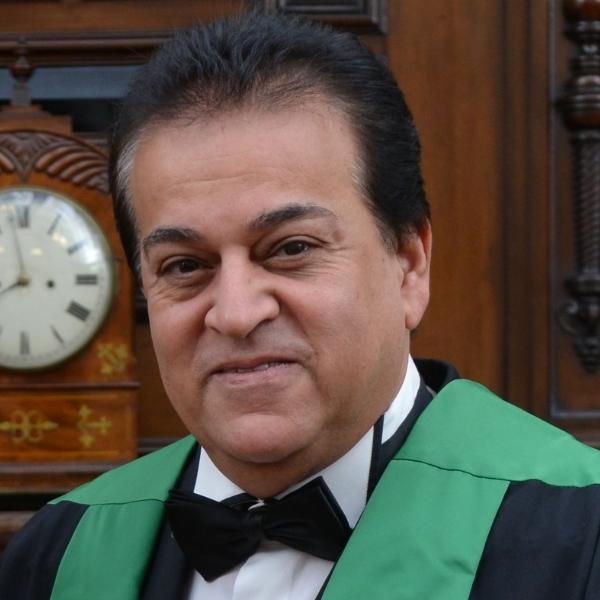
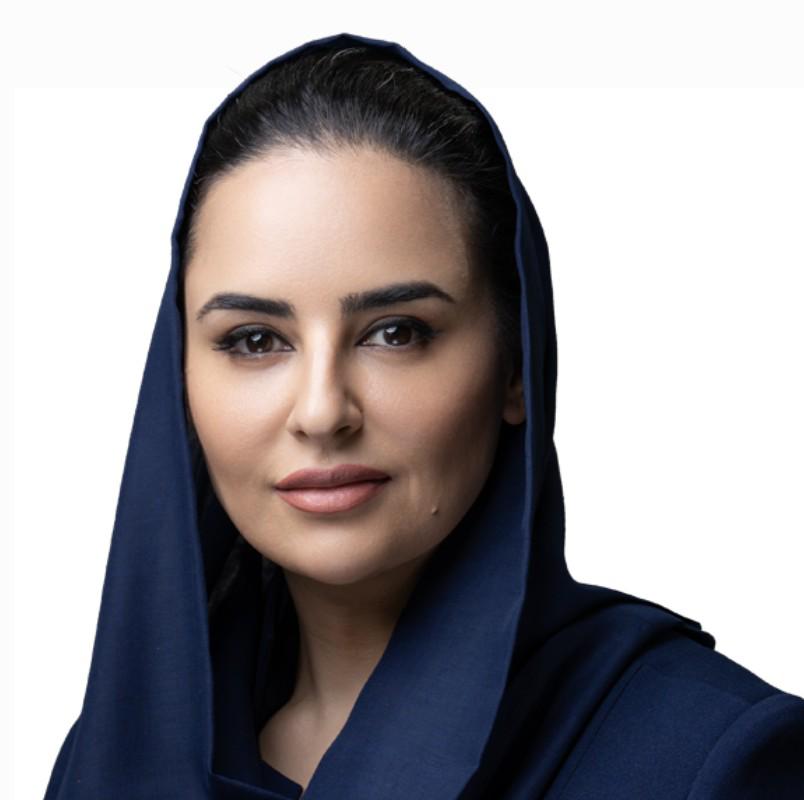
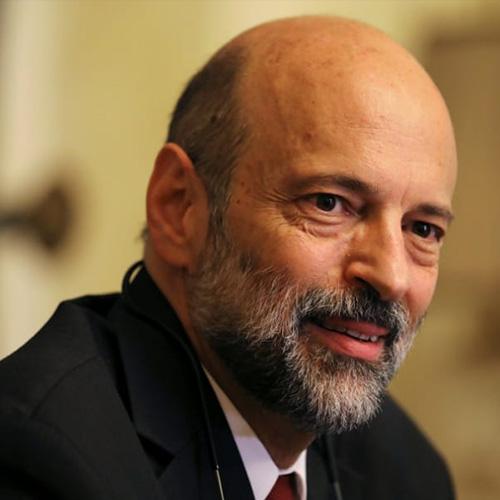
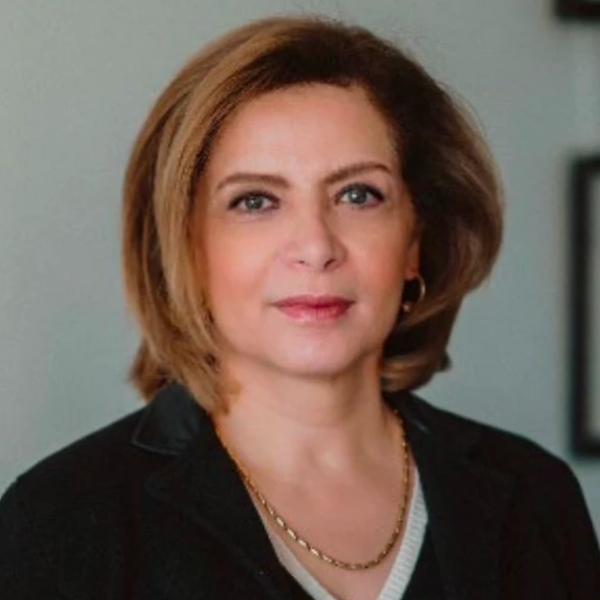
Thank you very much, Matteo. Amazing findings. Clearly, the megatrends are global forces that will shape lives and livelihoods in the region. I suggest we now jump to our panel discussion, and this will be an opportunity for us to dive deeper into the different dimensions presented by Matteo. We hope you will engage in the conversation in the live chat, and I encourage you to join and keep it going on social media using the hashtag #InvestInPeople. Please, leave messages in the chat and we will try our best to address them. Let me first introduce our distinguished panel. We’re very happy to have with us today His Excellency Dr. Khaled Abdelghaffar. He is Egypt’s Deputy Prime Minister and Minister of Health and Population. This is a role that he has held since June 2024. Previously, he served as Egypt’s Minister of Higher Education and Scientific Research. We’re also very pleased to have with us today, His Excellency, Dr. Omar Razzaz. He’s a Senior Fellow at the Middle East Initiative, and he comes with a formidable career that spans the public and private sector and non-governmental organization, think tanks, and academia. Most notably, served as the 42nd Prime Minister of the Hashemite Kingdom of Jordan between 2018 and 2020. We’re very delighted to have with us today, Her Excellency, Ms. Deemah AlYahya, who is a digital innovation and transformation leader and a long-standing champion of digital inclusion, particularly for women, for young people and entrepreneurs. She is the first Secretary General of the Digital Cooperation Organization. Pleasure to have you with us. And we have in our panel Dr. Fadia Saadah. She is currently the Regional Practice Director for Human Development in the Middle East, North Africa, Afghanistan, and Pakistan region, with many years of experience in these important topics we’re talking about today, health, nutrition, population. I’m very, very pleased to have you with us today in the panel. I’m going to start with the fiscal dimension, and I’m going to go to you first, Your Excellency Dr. Abdelghaffar. My question is around the fiscal dimension. We know that the demand for better health, education, and social protection continues to grow, but we also know that the fiscal space is tight. How is Egypt dealing with the issue of mobilizing revenues to sustain investment in human development?
[Khaled Abdelghaffar]
Thank you so much, Boutheina. I really enjoyed Matteo and Ousmane’s presentation. It was spectacular and very informative. Thank you for raising this important and crucial question at the same time, which we all have to respect the fiscal space because ministers of health and whoever is looking after health should be careful about the financial issues and about the fiscal space that he has to move within. And indeed, this fiscal space is tight, but this is not just only in Egypt, but as you all know, this is a situation that happens across the region and even globally. At the same time, the demand for better health and education and social protection as a main core pillar of human development is rising. And this is the real challenge, the difference between the available fiscal space, which is tight, and the demand, which is rising in different parts of the world, as I said. So, the challenge before us is how to reconceal the limited fiscal space with the imperative of investing and to invest in human development. Because this is exactly the core, which is not an expenditure. Investing in human development is not an expenditure, but it’s the most productive investment any nation can make. Egypt has chosen to meet these challenges through a pragmatic and sequencing strategy built on five important pillars: relocation, mobilization, front loaded investment, efficiency, and guided vision rooted in inclusive growth, but let me start by reallocating the subsidies to reach those who need it most, which is the first pillar of my discussion today. We have taken bold steps to rebalance public spending. Untargeted subsidies, particularly in energy, which are being gradually reformed while targeted programs are expanding. The Takaful and Karama program, which produces cash transfer schemes, now reaches millions of households, ensuring that resources are directed to the most vulnerable population. Bread and essential food subsidies remain protected, as do targeted electricity and gas support. Meanwhile, inefficient universal subsidies are being phased out, freeing fiscal space that is increasingly challenged, and channeled towards health, education, and resilience building programs. Second, mobilizing the revenues and strengthening the fiscal policy. I also believe that Egypt is strengthening the domestic resources’ mobilization by modernizing tax administration, expanding the tax base and improving compliance, which is very important. All of these measures will ensure fairness. According to recent legal and administrative reforms that we followed, that includes VAT updates and settlement pathways, these are complemented by strategic divestments and public spending efficiencies. We’re also diversifying the financial and the financing sources by leveraging public-private partnership, mobilizing concessional finance, and deepening engagement with international development partners. These measures allow us to sustain investment in human development without jeopardizing the fiscal stability. Third, the front-loading investment in human capital, because we firmly believe that investment in people yields the highest return ever. That’s why we are accelerating the rollout of universal health insurance systems, expanding primary care and disease control centers, and investing in early detection and prevention, and recently in prediction also. So, illness does not erode the future, earning and learning. And we can give examples about this, which is the presidential public health initiatives, and I can name 100 million healthy lives and early screening programs that are already improving outcomes and reducing the long-term costs and in different health care sectors. On the other hand, in education, we are implementing education, what we call strategy reform curricula, by investing in technical and higher education, with a special focus on technological and vocational skills. And certainly, digital skill is an important pillar in that. Social protection programs are being also complemented, and employment and empowerment measures to break the cycle of poverty and promote self-reliance. In parallel, a megaproject, which is, as we call it, the Decent Life Initiative, Hayah Kareema. This has been transforming rural communities through integrated investment in health care, facilities, schools, sanitation, road development and infrastructure, and economic opportunities, benefiting more than half of the Egyptian population in phase one of this initiative. Fourth, ensuring efficiency and measurable impact. We are committed to ensure that every proud spent delivers measurable impact, and monitoring and evaluating systems, better data and digital transformation are also helping us to track outcomes and improve service delivery. A clear example of this is the e-invoicing system, which has already brought thousands of businesses into the formal economy, strengthening revenues while reducing leakage. This is not only about spending, it’s about smarter spending, public-private partnership, and the strategic use of divestment proceeds which are helping us to crowd in private finance and extend the reach of public investments. Fifth, our guided vision with human development as a national development. And in this case, Egypt sees human development as a central pillar for national development. Our policies are rooted in the understanding that fiscal discipline and human investment are not contradictory. They are mutually reinforcing. The Bedaya Initiative which we launched last year as one of the initiatives of the human development sector, this is a new start for building the Egyptian citizens. And this initiative is a comprehensive national program designed specifically as a human development initiative, which, with a primary goal of investing in human capital and consolidating Egyptian identity, it operates through an integrated action plan that enhances coordination and synergy among all relevant stakeholders across the country, particularly the ministries of Education, Health, Endowment, Culture, Local Development, Social Solidarity, Youth and Sport. And these, all ministerial-committee, work together to ensure tangible and positive outcomes. Alongside this, the initiative prioritizes awareness, building and the preparation of new generations guided by the values of belonging, loyalty, and responsibility for safeguarding national contributing and national resources. To conclude, Egypt’s approach is about balancing fiscal substantivity and sustainability with a firm commitment to social investment. Through reallocation, mobilization, and efficiency, we are creating the room to invest upfront in our people who remain our greatest assets and the true wealth of our nation. And finally, let me close by reaffirming Egypt’s commitment to work hand in hand with our international partners, including the World Bank, to ensure that human development remains at the heart of our region’s growth agenda. And I thank you so much.
[Boutheina Guermazi]
Thank you so much, Your Excellency, for sharing the experience from Egypt, and as you nicely said, it’s human development, the national development. Thank you for sharing the five pillars of the vision and many examples. I want to move now to His Excellency, Dr. Omar Razzaz. We’re going to talk more about policy issues beyond the fiscal aspects. So, Your Excellency, the report highlights the important reforms needed in the region to respond to human capital accumulation. You had experience in implementing hard reforms and facing challenges. So, what would be your key takeaways to share with governments as they try to implement these recommendations?
[Omar Razzaz]
Thank you. Thank you, Boutheina. I don’t know if I’m getting across in terms of voice and image.
[Boutheina Guermazi]
Yes, perfectly.
[Omar Razzaz]
Perfect. Thank you. Thank you to you. I really enjoyed Matteo’s presentation and Ousmane’s introduction. I think everybody agrees that human development is the key, and investing in people is the key. The challenge and the question become, so if this is obvious to everybody around the world, how come it’s not happening enough? How come we are not investing enough? And how come we face challenges continuously in this area? And this is not just Jordan or MENAAP or the Global South. This is a problem that we see a lot of countries really struggling with. And let me just put from my experience three key points that lead us into this gap between what we want to happen and what actually happens. Perhaps the first one, and the most obvious, is a phenomenon that we refer to as “short-termism.” Politicians, whether they’re from democracies, autocracies, etcetera, tend to want quick results, quick wins, and things that they can show immediately. As we know, human development, usually, policy doesn’t work like that. You don’t have a magic wand that changes the world and changes the situation in a few months or even a few years. You need a strategic long-term approach along all of these lines. The second, so the first issue is short-termism, which complicates the decision-making and the commitment level. The second one is silos. We all know how very often governments work in silos, so the Ministry of Health, Ministry of Education, Ministry of Social Development. The interaction between them is very often limited; and therefore, human development suffers as a result. Because as we know, human development is ultimately a comprehensive issue that entails jobs and education and health and social protection. These need to complement each other. The third one, and I think really the crucial, perhaps the most important, is the weak’s voice, and accountability, institutions, and mechanisms. Voice is, essentially, where your citizens, the elderly, the mothers, the young population, can make their experience heard at the policy level, and then action is taken to correct things, and then holding officials accountable. This voice and accountability, I think in our region, the MENAAP region, is probably among the lowest in the world, and this is something we really all need to work hard on. Now, there are success stories. There are success stories from Jordan, and I’ve read the report. There are success stories from different countries in the region and really fantastic stories from the rest of the world about how we overcome these barriers. And here, I want to say this report, really, we should thank you all, and the report writers for emphasizing in chapter four, I think, the institutional aspect. How do you build institutions that disclose information, that engage the population, that put together a policy and start implementing and hold bureaucrats accountable? And then, learning from that. And then, adjusting where we make mistakes. That iterative cycle where you can improve results, and instead of a vicious cycle where things just never change to a virtuous cycle where we learn from our mistakes and try to do it better and adjust accordingly, and we keep the final beneficiaries, the population, aware of what we are doing, why we are doing it, why did something fail, why we want to do something that we haven’t done before to try it because here’s the problem or the gap that we’re trying to address. The report gives a whole chapter to the issue of institutions. I really think from my experience and looking at other countries’ attempts in this area, really, we need to have these mechanisms, especially voice and accountability. Without that, there’s very little that can be done other than short-termism, and cutting ribbons, and taking a picture, and building a new clinic or a new school. That is not what is mostly needed. What’s needed is a structural reformation of the whole system. Thanks again for allowing me to share my comments on this great initiative. Thank you.
[Boutheina Guermazi]
Thank you. Thank you so much. Thank you. Short-termism, silo-approach, the importance of voice and accountability, the importance to learn from lessons and amplify success. Thank you so much. We are now going to talk about digitization. My question to you, Your Excellency, Ms. Deemah AlYahya, the report identifies digitization as one of the three megatrends impacting human development. Based on the report recommendation, can you zero in specifically on digital skills, and how countries in the region can effectively harness digitization to prepare a future-fit workforce?
[Deemah AlYahya]
Definitely. Thank you, Boutheina, and it’s a great pleasure being with you today. Congratulations to the team for a timely and important report. Let me start with a destination. A future-fit MENAAP workforce is one where digital skills are as fundamental as literacy. The bridge between people and opportunity, firms and competitiveness, governments and trust, but that bridge is incomplete. In 2024, seven in 10 people in the Arab States were online, yet three in 10 remain excluded from the digital economy. The paradox is clear. Coverage is no longer the main barrier. Mobile broadband reaches 95% of the population, but 47% lives under coverage without using it, held back by affordability, skills, resilience, and safety. There is human capital left behind. A second factor in line is women’s participation. Only one in five women in our region are in the labor force, the lowest globally. Unless digitization becomes a pathway for women through remote work platforms and flexible modules, the skills agenda will under deliver on jobs and resilience. The third factor I wanted to focus on, which is AI transition, moving from digital into AI transition. Many MENAAP labor markets now may be less automated than advanced economies, but the real risk is missing the productivity gains. Globally, 40% of the workers are in high exposure occupations. Without targeted upskilling, AI divides are increasing and multiplying, but innovation also carries a responsibility. Digital solutions must be designed to meet people’s essential needs, safe access to education, health care, and livelihoods. When innovators anchor their creativity and human priorities, technology becomes not just faster, but also fairer and more meaningful. So, how do we convert these gaps into momentum? We do see in through the report that first, digital skills must be treated as a system, fundamental capabilities for all. Basic ICT online safety and data literacy delivered early on and reinforced through adult learning. If 95% are covered by broadband, but 41% don’t use the Internet, the margins of the dollar should go to affordability, devices, and confidence. So, connectivity turns into productivity. So, we have now more meaningful connectivity. Second, we need job-linked mid-level skills like e-invoicing, e-commerce, digital marketing, ERP basics, and low code automation. These could be co-designed with the private sector, delivered as micro-credentials and connected directly to jobs and opportunities. And governments can turn procurement into a skilled engine by preferring firms that hire and certified more digital-skilled talents than others. Third, advanced capabilities, which is cloud, cyber security, data engineering, applied AI, with unique mobile subscription, projected to rise up to 64% in 2025, and expected 71% by 2030. Devices will carry nano-credentials and regional recognition. So, a certificate in Amman is trusted in Riyadh. And therefore, a talent can work wherever in the world because of that shared market. So, resilience must be built in. And the average data breach in the Middle East caused $8.75 million in 2024 only. That’s only the data breach. So, among the world’s highest. And therefore, 77% of organizations are raising their cyber budgets, but budgets don’t equal capabilities. And without training and upskilling, every skills program should embed secure by design practice and incident responses as well, especially in the era of AI. And let me be bold about inclusion. Imagine a MENAAP where women are not at the margins of the digital economy, but at its center, designing AI systems, leading startups, shaping e-commerce. That vision is possible if we weave women’s digital skills into our growth stories and we make it a fundamental value and a KPI for us. We must also finance smartly. The ITU estimated universal meaningful connectivity by 2030 will cost $2.6 trillion globally. Locally, this means shifting funds from insufficient or efficient subsidiaries into people, device financing and skills vouchers and outcome-based training or peer-to-peer training as well. So, let me close here by emphasizing on the importance of digitization and upskilling in the digital world. If we look at our foresight into the future, we turn these obstacles into opportunities. Yet no single country or organization can answer this call alone. Without multi-stakeholder and cross-border cooperation through agile and nimble multilateralism, we risk fragmentation and failure. The call is not to chase technology for its own sake, but to invest in people, their learning, their adoptability, and their resilience. So, our region is not just prepared for the future, but leading and shaping it. Digital skills can be a catalyst that transforms where we are right now into pathways of inclusive growth and also renewed trust. Thank you very much.
[Boutheina Guermazi]
Thank you very much. Crystal clear message on the importance of digital and the importance to think about it in an ecosystem manner. Think inclusion, think devices, really using the opportunities that technology offers and having the right skills that can take the digital revolution to the next level in the service of the people of the region. Thank you very much. I’m going to now go to Fadia, and to ask you to bring the regional perspective. Where do you see the biggest risks if countries do not act now? Where do you see the greatest opportunities for human development in this beautiful region?
[Fadia Saadah]
Thank you. I think our previous panelists have really made my job easier because they have highlighted a number of key aspects. But allow me to start with the issue of demographics because that we did not speak enough about. There is a vision about the MENAAP region is that it is the region where we have a big youth bulge, which is probably true, but what we do not reflect on is how fast the region is aging and how to handle this demographic transition between population movement, youth bulge, and aging, and the implications for human capital. Just to illustrate, in the report, you will find a lot of data, but one of them is about the dependency ratio, where we look at the people 65 plus and the ratio to those who are in the working age group. This ratio is going to increase by 2.5 times in three decades. We’re almost increasing one time each decade. This has a huge implication, not only for human development, but also for the economy. This is about how much there’s savings; how much are people going to work. But a lot of the actions are within the area of human development, at least initially. I see that this has a lot of potential if we harness it well and if we prepare. But if we don’t, we actually will miss the opportunity to benefit from our youth bulge and we will not be ready for what we hope will be healthy and productive longevity. What does that mean? That means the region already, Matteo mentioned that we start with NCD burden much earlier than even other regions because of lifestyle factors and risk factors that affect us. If you add multiple years to that, we could have a healthcare system that will be sinking under that and we’ll have a lot of loss in productivity. People will also leave the workforce earlier due to some of the NCD disabilities in some cases. And yet this could be a huge opportunity to expand our productivity, to embrace it, to prepare the future through bringing all of these tools for a better service, multiple forms of service delivery, bringing the public-private partnership, bringing the family and the community into this, and preparing for this future. And this is going to be critical because it’s moving much faster than we are prepared. I already see a couple of countries trying to think about that, but we are really behind, in general, about being prepared with what I think Dr. Razzaz mentioned, the short-termism, because there’s a lot of crises as well. You have to deal with them. We leave the other issues on the side. But also, this is a huge opportunity. It’s a lot of opportunity for one, jobs. The whole care economy is huge. This is how we care not only for the elderly out as we age and the type of care, but also, even for early child development for childcare, which will open the market for many more jobs, especially for women and youth. If you think about that as a subset, then we really think that this is a huge opportunity not only to be better prepared, to maintain and use our human capital, to make sure people are learning on the job and building human capital and use it for a longer period, but also to generate jobs and train people and be prepared for them. That’s one. If you think about it also in terms of the population mobility, it’s also happening, but why don’t we make it happen better for people? Why don’t we try to optimize that for people so that they get the right jobs for their skills instead of just chasing whatever they can get so that they can be able to move from one to the next? This one area, I think, is waiting for us to all act on. I hope that this call for action will happen. We see some potentially good examples. ECD is more than the long-term care. We see Morocco, for instance, made huge strides in that very quickly and using a public-private partnership. Many other countries are looking at it, but let’s open that door. Let’s get these jobs created. Let’s get the human capital built. On green and digital, I think Dr. Deemah had just mentioned a lot on digital. And on green, I just want to mention that actually we also will see a lot of rising temperatures in the region, and we already have a lot of things that we suffer from. While the actions are not all within the human capital, we need to collaborate and work across to address that and to also prepare those skills, the skills for the future. We use a lot in the report, the future-fit skills. How can we prepare ourselves and our youth? This is not just learning in the school, this is lifelong learning as well. But I want to just weave in the whole issue of also financing because it is really bringing all of them together to see where we are in the region. We tried something that has not been done for a while to pull all the human development-specific spending in the region. It was really sad to see that actually in real terms, we find that over 30 years, the majority of the countries, human capital spending has been, per capita, stagnant. We have a few exceptions, I acknowledge, and we’re pleased to see those, but the majority were not. You saw that actually education takes quite a big hit in some countries as well. That doesn’t mean it’s all to come. Countries like Syria, Yemen, and Lebanon, we see that actually the amount of money going is less than a quarter what it was before 2010 due to the specific situation of the countries. It doesn’t all have to be that we need to add more money. Dr. Abdelghaffar has brought about the fiscal issue, but we have to spend wiser. We have to also look at revenues. That’s why we look at it, not only at the financing, we look at the fiscal issue. It’s a combination, working with our macro colleagues and our fiscal colleagues to try and see where we create the space, and where we can make these investments that are a bit longer term, but that have a huge implication for the future. I do not want to repeat what very eloquently actually Dr. Omar Razzaz mentioned about institutions that do cover it. But I want to just end by saying, look, it’s not just on revenue and efficiency. Efficiency is also the reforms. We need a call for leaders to really do the reforms and to encourage that. When there are moments in time, I asked some colleagues who work on education reform in the region and some of them were like there was a moment and we grabbed it. We had to act when we saw the enabling environment. How we encourage that enabling environment to be more available for us to work on that, and to look at the outcomes of it. Finally, not to forget equity. We are seeing increasing equity in many places and the erosion of sometimes the middle class that comes with that. This is really important not only to build institutions, but to build society for the future. With that, thank you for the space and the time, and we hope that this report will be very useful for engagement.
[Boutheina Guermazi]
Thank you so much, Fadia, to you and your year team for this great report and the importance to understand the challenges and the risks, but also to look at, flip the coin and look at the opportunities that come with these different megatrends. With that, I’m going to now ask our vice President for People, Ms. Mamta Murthi, who oversees the global practices for education, health, nutrition, population, gender, social protection, and jobs, as well as the Human Capital Project. So, all these themes that are very important to the discussion today. Mamta, the floor is yours to close us off.
[Mamta Murthi]
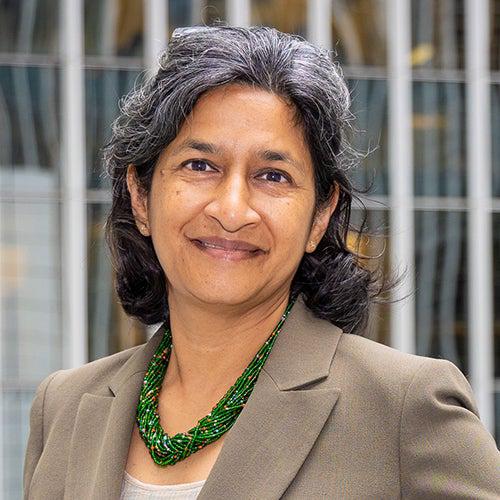
Thank you so much, Boutheina. Let me begin by just saying that our panelists really made excellent interventions. I cannot thank them enough from Dr. Khaled, who reminded us that human development policy is national development policy, to Dr. Razzaz, who reminded us that really to make progress over the long term, we need to think about building systems and institutions that are accountable to the population, to Dr. AlYahya, who said, “There are many things we can do to convert connectivity into productivity, whether that’s about making devices and data packages more affordable, whether it’s about upskilling people, whether it’s about including people in the digital economy.” We were reminded by Dr. Razzaz and by Fadia that there are many good examples of taking these ideas forward in the region, and what we need is to replicate them and also learn the lessons from outside the region. So, I leave feeling very encouraged by this conversation, and I asked myself, what do I want to say to this audience? I guess the question you would have for us is, what is the World Bank doing and how can we help? I’d like to say there’s four things that we do. First of all, we play a role in convening dialogs such as this one based on sound analysis and drawing on experiences from both inside the region and from outside. I hope this is a session that you have all enjoyed, and this contributes to the ongoing dialog and reform momentum within countries. The second thing we can do is become easier to work with. We’re a large institution. We are not always easy to work with. We’re trying very hard through our operational efficiency measures to become more responsive, to become faster, to be easier to access. And we’re also trying to work more closely with partners. And we would like our partners, whether it’s government or philanthropies or other multilateral organizations, to find us easier to work with. The third thing we do is we develop tools. I would like everybody to be aware that we have a new Human Capital Index, the Lifetime Human Capital Index, which we will launch early in the next calendar year. To take a page from Dr. AlYahya’s book on digitalization, it’s actually going to be launched with an app. It will allow everybody to zoom in and see how their country compares to other countries on different dimensions of human capital and where the most progress needs to be made. We hope that you will find this new index and the app extremely useful. The fourth thing that we do is engage in capacity development. I hope many of you are aware of the new World Bank Economic Development Institute. It’s already reached 15,000 practitioners and government officials, and we hope that many more of you will both participate and provide your expertise, as well as benefit from the offerings of the Economic Development Institute. We also have launched a new Knowledge Academy, and this is meant for both leaders and practitioners to engage in peer-to-peer exchange. One of the panelists mentioned this, peer-to-peer exchange on what works, whether it’s in health insurance reform, whether it’s in cross-cutting issues like digitalization, whether it’s on issues related to fiscal issues and debt distress. So, please participate in our Economic Development Institute and our Knowledge Academy programs. With that, let me conclude. I want to extend my deepest gratitude to the team that made this report possible. It’s really a very good report, and I think it puts a lot of valuable ideas on the table. I also want to thank Ousmane Dione, my brother, my friend, for his leadership of the new and expanded MENAAP region. You have a big job on your shoulders, and I welcome partnering with you on this. Thank you, and back to you, Boutheina.
[Ousmane Dione]
Boutheina, you’re on mute. Boutheina.
[Technical officer]
Could you unmute, please?
[Ousmane Dione]
Boutheina, you’re on mute. You are muted, Boutheina. We can’t hear you.
[Technical officer]
She’s unmuted. Unfortunately, I think there is just no audio.
[Boutheina Guermazi]
Yeah, I have something happening.
[Technical officer]
We can hear you.
[Boutheina Guermazi]
Thank you very much, everyone.
[Ousmane Dione]
That was good, Boutheina. Thank you.