
Forests for the Future

- ABOUT THE EVENT
- Transcript
- FAQ
GO TO SPEAKERS
Investing in nature is smart development, laying a foundation for healthier communities and stronger economies. Forests and landscapes are an engine of economic growth, environmental renewal, and community empowerment - for every 100 jobs in the forest sector, 73 additional jobs are created in the broader economy.
Join experts from around the world, including representatives from local communities, for a discussion on how healthy forests and the sustainable management of natural resources can reduce poverty, boost employment, and provide a better quality of life for all.
[PAUL BLAKE]
Welcome to Forests for the Future. I'm Paul Blake. And over the next 40 minutes, we'll be discussing how healthy forests and the sustainable management of natural resources can reduce poverty, create jobs, and improve lives. We'll be joined by a panel of global experts and indigenous leaders sharing their insights into how forests and nature lay the foundation for healthier communities and stronger economies. We're live from Washington with guests in Kenya, Colombia, and more. But no matter where you are, you can share your thoughts on this topic anytime using the hashtag #liveableplanet. And on our live blog at live.worldbank.org, we have experts in English and Spanish standing by to answer your questions. But first, as global development experts, government officials, and international partners from across the world have gathered in Brazil for the 30th annual UN Climate Change Conference, or COP 30, we start with World Bank's senior managing director Axel van Trotsenburg with this message from the heart of the Amazon rainforest.
[AXEL VAN TROTSENBURG]
Pleasure to welcome all of you to special Forests for the Future event. I'm here in Manaus, Brazil, visiting government and communities and learning more about how forests such as the Amazon can generate jobs and livelihoods and what important lessons there are for other countries around the world. Here in the middle of the Amazon, I can see how nature-based solutions are equipping people with the tools they need to transform their economies and communities. At the World Bank Group, we believe that healthy ecosystems are fundamental to poverty reduction, job creation, and resilience. Forests clean the air, enrich the soil, stabilize local rainfall patterns, and strengthen food and water security. Through the protection, restoration, and sustainable management of forests, countries can accelerate economic growth and safeguard vital biodiversity. The formal forest sector is a major employer, supporting 33 million jobs globally. This is about 1% of total employment across all sectors. And for every 100 jobs in the forest sector, 73 additional jobs are supported on average in the broader economy, helping to close the global jobs gap. We must take the size of action to protect and restore nature so that current and future generations can fully benefit from these opportunities. Investments in better governance, better management, and better business are key to building sustainable forest economies that work for both people and planet. We are working with governments to connect the dots between forest and prosperity, and we are scaling up investments in forests and landscapes and mobilizing private sector resources by collaborating with a range of stakeholders, such as local communities, smallholders, producer organizations, businesses, and researchers. We are supporting forest conservation and resilient development. Today, you will hear from a range of partners and experiences across the world who share our vision and commitment to nature as a foundation for healthier communities and stronger economies. I hope you will enjoy the discussion to follow and that you join us in advocating for the transformative power of sustainable forest economies to help end poverty and build a livable planet for all. Enjoy the discussion.
[PAUL BLAKE]
Thank you, Axel, for that message from the Amazon rainforest and for your thoughts on forests for the future. Now back live here in Washington,
[POST YOUR QUESTIONS AT LIVE.WORLDBANK.ORG FORESTS OF THE FUTURE, NOVEMBER 17, 2025 #LIVABLEPLANET]
and we want to know what do forests for the future mean to you? Please do post your questions online at live.worldbank.org or on social media using the hashtag #liveableplanet. Now, let's dive deeper into this topic with our global panel. From the United States, Mark Wishnie is Chief Sustainability Officer at BTG Pactual Timberland Investment Group. And in Kenya, Éliane Ubalijoro is the Chief Executive Officer of the Center for International Forestry Research and World Agroforestry. Éliane, let's start with you. You lead a global forestry research institute with a focus on bringing knowledge to global practitioners. In your opinion, what are the top three areas where more research is needed to ensure that forests can contribute to both economic and social development and to job creation?
[ÉLIANE UBALIJORO]
So, first, I would say we need deeper research on sustainable forest-based value chains from ecotourism to non-timber forest products and diversified wildlife economies. Our sustainable wildlife management work in Madagascar, DR Congo, Papua New Guinea, Gabon, Zambia, Zimbabwe, and Guyana showed that practically restoring wildlife populations, supporting alternative livelihoods during recovery, and strengthening landscape connectivity so communities can benefit from tourism and sustainable use in the long term are really key areas of research. We also realize that stronger science on tree crop systems and species stability to scale agroforestry and put less pressure on forests is really key. And so, we do work where we say that the right tree for the right place and the right purpose is really key to ensuring that we create corridors for nature so we really ensure that encroachment on forest are minimized and we create sustainable livelihoods while actually encouraging the growth of indigenous trees outside of forests so we create nature corridors and actually encourage the preservation of forests. So, those are really the key areas that we see. We also see that we need a lot more investment in monitoring systems that guide adaptive management. And so, tools like our Land Degradation Surveillance Framework that are powered by AI and geospatial data really allow countries and communities to assess land condition, target restoration investments, and also track impact over time. And we know when these are done well, we can have good valuation in terms of these projects. And so, when we link restoration success to job creation and broader socioeconomic benefits, we really have this possibility of strengthening not only what's investments, invested right now, but also ensuring we're unlocking the additional needed investments we need in forest restoration preservation.
[PAUL BLAKE]
Right tree for the right place for the right purpose. I quite like that. Now, Mark, you were just in Brazil for COP 30. Since it's taking place in the Brazilian Amazon, no doubt forests and nature were at the top of everyone's minds. Can you tell us a little bit about what you heard there in the ground about the role of forests in driving growth and creating jobs, especially from your perspective in the private sector?
[MARK WISHNIE]
Yeah, thank you very much. And you're right. I think that what's notable about this COP being in the Amazon, in the forest, nature and forest are really at the front of the conversation. And importantly, the conversation was not just about forest conservation, but was really about forests as an engine for economic development for equitable rural development, for livelihoods, and for the development of the bio-economy. I think that the opportunity is really-- as we're thinking about global transition to renewable energy but also to renewable materials to see forest and natural systems as providers of biodiversity of climate benefit, of cultural values, but also a source of biomaterials of all kinds that can help us to both decarbonize hard to abate sectors and to add value to standing forests so that forest economic activity, forest conservation, and forest restoration can really be mutually reinforcing and supporting. And I would just note that just today at a high-level event at COP, my colleague, Caitlin Clark, was able to announce that the Brazil Restoration and Bioeconomy Finance Coalition, which was launched on the sidelines of the G20 last year in Brazil with a goal of mobilizing $10 billion for investment into restoration of bioeconomy activity by 2020, was able to announce today that so far, over half that amount, $5.7 billion dollars, has been mobilized by the thirty members, which include members from civil society, from the private sector, and development institutions like the World Bank Group. So, I think that we see a real momentum and a real recognition that when we talk about forests and all the values that forests provide, we are not talking about just exploitation, we are not talking about just conservation, but we're talking about some new models where these are really self-reinforcing ideas that can ultimately benefit climate, nature, and people in really material ways.
[PAUL BLAKE]
Mark, Éliane, stay with me for just a moment because I want to bring in another perspective. We'll come back to you in a moment. But we're going to bring in another perspective, that of indigenous peoples and local communities. Now, we know that they, around the world, depend on forests for their livelihoods and well-beings. And Ginny Alba is an indigenous woman from the Piratapuyo people, originally from Guainía province in the Colombian Amazon. Ginny's dedicated her work to defending the collective and territorial rights of indigenous peoples. And these communities play a key role in the sustainable management of forests and biodiversity. And that's a reminder to all of us that conservation and culture go hand in hand.
[GINNY ALBA]
Good morning. My name is Ginny Alba. I'm an indigenous woman from Piratapuyo. I'm part of the organization of the Peoples of Colombia, OPIAC. And I want to talk about the importance the forest has as part of a connection to the rainforest, the importance of something that cannot be quantified or imagined. It is important as a community to be part of us, and we have to take care of it. Therefore, we have to protect it and preserve it. It is important that the international community continue to make these different efforts to strengthen, to preserve the traditional medicine, customs, and languages. It is important that the international community continues to strengthen not only the economic aspects, but also the technical assistance that is sometimes required for the implementation of certain projects on our territories. The work that has been carried out by the international community should be highlighted in all the efforts that have been carried out. But unfortunately, in many of our territories and entities, value is not given to this kind of work carried out by our indigenous peoples, and often the international community steps in to support the work being done by our peoples. It is important that you as an international community continue to strengthen Indigenous peoples because this contributes to our physical and cultural survival.
[PAUL BLAKE]
--the international community. Now, let's bring back in Éliane and Mark. Mark, coming to you first, across global development discussions, one thing keeps coming up, the role of the private sector in unlocking the scale of investment needed in forests and the communities that depend on them. The private sector is the main engine of job growth. Tell us, what are some of the things governments can do, or perhaps not do, to help attract forest investors and to develop forest enterprises and the related value chains?
[MARK WISHNIE]
Yes, thank you very much. Great question. I think there's an awful lot for governments to do to help facilitate more private sector investment and activity in the forest sector. And there's an awful lot for civil society to do as well, I would say. It's very important for governments to begin by setting the objectives. And I congratulate the Forest Climate Leaders Partnership on the release of the Forest Finance Roadmap in September in New York at New York Climate Week, which really articulated, I think, very nicely the role that different segments of society need to play in delivering on the full climate and biodiversity potential of forests. That's for the public sector, for the private sector, for indigenous peoples and local communities. By setting these objectives, articulating national priorities around restoration, conservation, tenure rights, governments can send very strong signals to the private sector about where political support and attention lies. And then, I think that there are a number of very important additional actions. A number of countries are now beginning to develop bioeconomy strategies and plans. This is very, very important for articulating what are national priorities for articulating how the bioeconomy fits within national economies and for beginning to build policies that really can help facilitate the development of bioeconomy enterprises, which often are small-scale and rural, or which really require, in some cases, private sector engagement to build value chains to connect forests to markets in sustainable, equitable ways. And so, I think there's an awful lot of policy activity that governments can pursue. They can really help to unlock this private sector action. And then, finally, climate finance, climate policy also plays a very important role, defining how forests and forest products will show up in national accounting systems, in carbon crediting systems where they exist. That can also help to not just unlock finance, but provide clear guidance to the private sector as to how investments will be treated in national accounting systems, how corporations and others that are seeking to manage their climate footprint can account for forests within their portfolios, within their holdings. All of this, I think, will serve to unlock significant additional private capital.
[PAUL BLAKE]
And Éliane, research is important in its own right, but the value is really unlocked when its findings are put into use. Replicating solutions at scale is at the core of the World Bank Group's own knowledge agenda. And from your perspective, how can governments, and development partners, and the private sector better utilize research so it has a meaningful impact on the ground for people in communities? And where have you seen this done well?
[ÉLIANE UBALIJORO]
So, to build on what Mark was talking about, the critical importance of how we're looking at bio economies worldwide is really key. So, for example, in our work in Brazil and research, we look at co-creation with local communities and really look at true co-design, strong delivery systems, and real time learning rooms. And we really work within the model of the social culture biodiversity framework that Brazil uses. So, how we look at context-dependent use of research is really critical because at the end of the day, how does our research enable the right policies to unlock the right financing? So, we really know that the process really has to be co-created with communities and directly embedded into policy and operational systems. And we know that strong partnerships between governments, private sector, conservationists, and local communities to turn evidence into livelihoods, resilience, and shared prosperity is key. How we're working with Indigenous populations is key, and I think it was critical that we had that previous intervention. And so, we really see that co-design as a really critical space. For example, in our Africa Grow initiative, we've implemented with 25 partners across 15 countries, where we have looked at creating real-world innovation ecosystems where farmers, scientists, and policymakers jointly test and refine agroforestry practices that are suited to each landscape. In terms of delivery, we know that scaling really requires strong extension services, and accessible digital tools, and value chain partnerships. With our Regreening Africa program, our app has already been used in over 20 countries and translated research into practical guidance for farmers on tree planting, farm level restoration, monitoring, and turns complex science into simple actions that can be taken at scale. And thirdly, we know that continuous learning and adaptation is important. So, Living Labs in our Africa Grow Initiative provides that feedback loop, and this helps us work what needs to be changed, how innovations can be replicated, how to adapt to local conditions, and whether through better species selection and stronger market linkages or more inclusive landscape governance. So, what we see is that research can directly shape policy improving land management and creating new economic opportunities. And Africa Grow is already strengthening climate adaptation, boosting food security, and advancing gender inclusive restoration across Africa. And so, we know that it's possible when evidence, policy, and community partnerships work together that we are stronger and that transformation can happen. And so, it's not just about publications, but how research really influences practice and shared, adapted, and owned by the people that it's meant to serve.
[PAUL BLAKE]
And, Mark, let me come back to you. I've got two more questions for you. I'll ask one and I'll ask a follow-up, and then we'll go back to Éliane. 2026 is right around the corner. If one breakthrough had to happen in the forest sector next year, what would you like it to be? And put another way, what are the sort of key policies and actions that you hope to see progress on next year, Mark?
[MARK WISHNIE]
Well, I think there's still more work to do on climate accounting, and financing, and carbon market rules, particularly as related to forests. We're seeing progress on Article 6.4 now. We need to see where that language lands, but I think that we can have policies which really facilitate greater investment in the forests or policies which divert investment away from forests in part as a result of some of the decisions that will be made over the coming week. So, we're, of course, watching that very carefully. I think, though, that the other breakthrough, and I think we're seeing some sign of it already, we are increasingly seeing, I would say, that peers in the private forest sector finding new ways to integrate forest restoration and conservation into landscape scale commercial forest management. Our friends at re.green won the Earthshot Prize 10 days ago for their work on commercial restoration in Brazil. We see companies like Suzano, also in Brazil, committing to very large scale, truly landscape scale biodiversity corridor construction across both their own land and neighbors' land around them. We are increasingly seeing restoration become integrated into commercial models. And I think that if we're going to find a way to activate the potential of the forest sector, the commercial forest sector, to contribute to climate mitigation, to contribute to biodiversity, reversing biodiversity loss, I think restoration needs to become a much more widely deployed tool in our toolbox. We're seeing some signs of that to see that really take off in 2026.
[PAUL BLAKE]
And just briefly and sort of broadly, what are some of the obstacles to making restoration more in the center stage here? Put another way, what can accelerate getting restoration into the center of the conversation?
[MARK WISHNIE]
Yeah, great question. I think that first, we need to have much more pre-competitive collaboration within the sector. Restoration at scale is unfortunately a relatively new task or idea, and everyone engaged in that activity is really sort of learning as we go. So, I think there's a lot of scope for collaboration within the sector, sharing learnings. I think there's a huge role for research, as Éliane has been touching on, research on what are the most efficient and effective restoration techniques in a given place, research on what are the most efficient and effective monitoring techniques. How do we detect where we're being successful and unsuccessful so that we can adapt and respond in real time and get the best result possible? And then, finally, further national policy development around restoration. A number of countries have restoration targets in their NDCs. That's very helpful. Further building out the policy framework around restoration so that it fits within rural land tenure frameworks, so that it fits within rural tax regimes will, I think, be critical. Some of these sort of really prosaic or fundamental building blocks are really necessary if we're going to drive this to scale. So, I think continued prioritization from national government and development of associated regulation will only be helpful.
[PAUL BLAKE]
And, Éliane, same set of questions to you. 2026 is just around the corner. What is the breakthrough you're hoping for? What are you looking forward to? What are the policies, the actions that you want to see next year?
[ÉLIANE UBALIJORO]
So, I'd love to see more transformative, coordinated action at scale, where we're turning policy alignment into major catalyst for change. I'd like to see scaling of financing that reaches communities, as well as deepening the partnerships that make long-term impact possible. We have a collective decision to elevate forests from important to indispensable by acting together, aligning our strengths, and filling what we already know works while ensuring needed funding reaches Indigenous peoples and local communities. We can get there. And I love what Mark said around making sure that we know the research on what works, what doesn't work, so we scale the right things. And the biggest challenge really is to achieve this breakthrough is not the lack of solution, it's alignment. We often have these fragmented policies, short-term funding cycles, and parallel initiatives that each move-- they're moving in the right direction, but not necessarily in the same direction. And so, we need our efforts to stop being dispersed, really be better coordinated, and we need to ensure that resources and decision-making authority reach the community who steward forests every day. According to UNEP's State of Finance of Forest, forest global finance currently stands at $84 billion a year, but the amount needed needs to triple to $300 billion by 2030. So, really, that gap of $216 billion, we need to figure out how to fill that gap. So, that sense of urgency, how we do that in a more coordinated, more multi-year partnership where patient capital allows us to make the needed investments now so the returns in the future for local communities, indigenous people, smallholder farmers, countries can happen in the future is really key. And again, we need shared data systems, transparent monitoring, and collective accountability so that progress is visible and success can be replicated. So, the challenge is real, but it's solvable. And if we choose alignment over fragmentation, co-creation over siloed efforts, and long-term commitment over short-term projects, we can turn this breakthrough into reality and deliver meaningful benefits for people, forests, and economies across the world.
[PAUL BLAKE]
Just a little bit of time for one last question. How can we accelerate that alignment and not have these sort of fragmented conversations, fragmented agendas, fragmented sort of priorities? What would your advice be?
[ÉLIANE UBALIJORO]
So, I have a whole team in Belém right now that are interacting with countries, that are interacting with private sector, that are engaging and working with local and indigenous communities. So, we need a lot more of this action happening, and we need to be accountable to local people. And so, how we work and how transparent we are in our engagement is key. And we need to have the humility to realize that local people, indigenous people, they have a lot of knowledge. And the more we can accelerate getting funding to them and having them as partners for research, have them as partners for policy making, and also have dedicated investment funds that they can steward is really key to how we accelerate this work.
[PAUL BLAKE]
All right, well, Éliane, Mark, thank you so much for taking the time to join us today. Conversation makes clear that forests are a key driver of economic growth and environmental renewal. Investments in nature can both boost employment, stimulate private sector development, build resilience, and empower local communities. We heard earlier from Ginny Alba in the Colombian Amazon. Now, before we go, I'd like to bring in the perspective of Ramiro Batzín. He's a longstanding indigenous leader from Guatemala who's been a driving force in ensuring that Indigenous peoples and local communities have a strong voice in global biodiversity conservation. Let's hear now from Ramiro.
[RAMIRO BATZÍN]
Co-president of the biodiversity. For us, the forest is our big house, our great house, the one that gives us water, air, food, and medicine, and where we find our sacred places, where we live together with plants and animals. The forest is seen as our territory, a communal space where we nurture our culture, identity, worldview, our traditional knowledge, our practices. When indigenous people speak about the forest, we're speaking about environmental, social, cultural, political, and economic systems. Therefore, we call on states and international organizations to respect, recognize, and promote indigenous systems of use, management, and conservation to promote living well, to promote a sustainable development model with identity based on natural and cultural resources. To speak of the forest is to speak of life.
[PAUL BLAKE]
To speak of the forest is to speak of life. Now, that brings us to the end of our program. We hope it's been informative and engaging for you. You can re-watch a replay of this session and our other events at live.worldbank.org. And as we come to a close, please continue sharing your comments online using the hashtag #liveableplanet. We'd love to hear from you. And as we go, we'll leave you with one last video that sums up all the different themes you've heard today about the role of forests in building a livable planet.
[Music]
[Healthy forests are essential for people]
[They enrich soil for farmers, store carbon, and clean the air we breathe]
[They create jobs locally and drive industries globally]
[1% of the world is employed by the private sector]
[Forests are an engine of economic growth, job creation, and community empowerment]
[Yet, forests remain under threat]
[Since 2000, forest area the size of Ethiopia has been lost]
[That is why investments in forests are crucial to ending poverty on a livable planet]
[The World Bank Group is helping countries turn over a new leaf]
[Working with countries to build sustainable forest economies that deliver jobs and build resilience]
[Working in ecosystems around the world, from tropical forests to boreal forests, from savannas to mangroves, forests hold the keys to a resilient future for people]
FREQUENTLY ASKED QUESTIONS
- Where can I find the event program?
The program for the sessions will be posted on this page closer to the event date.
- Do I need to register?
The sessions hosted on this page are public — you do not need to register to watch them.
- What happens if I miss a session?
The recording will be available on this page after each session ends. If you sign up for email reminders, you will receive a notification a few days after the event concludes, inviting you to watch the replay and check out newly added resources.
- Will a transcript be available?
A complete transcript of each session will be posted on this page within 48 hours after the session ends.
Speakers
-
-
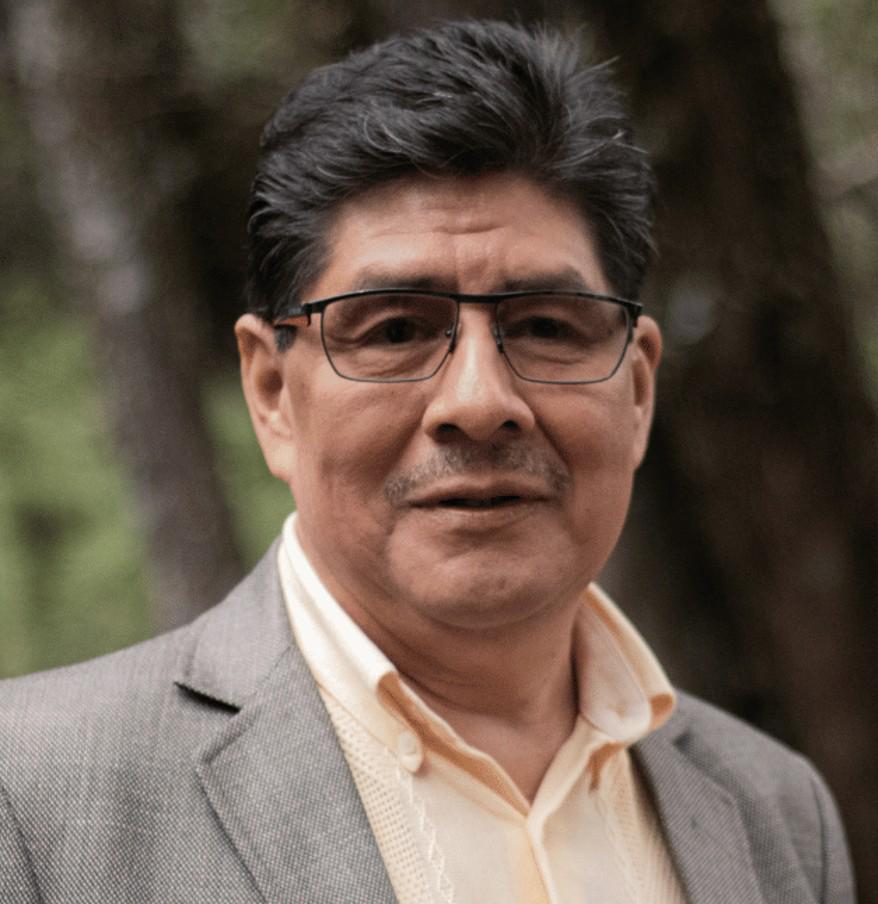
Ramiro Batzin
Co-President, International Indigenous Forum on Biodiversity (IIFB)
-
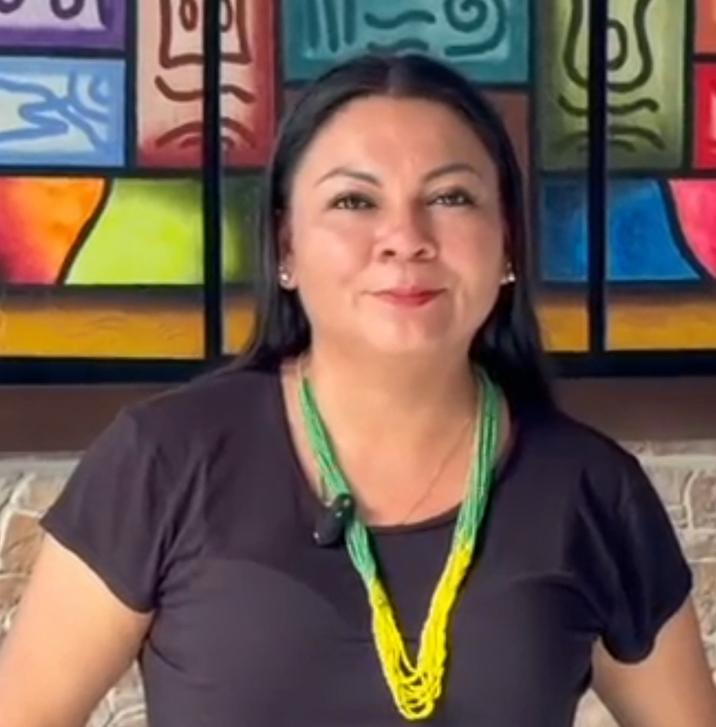
Ginny Alba
Technical Secretary of the Human Rights Commission of Indigenous Peoples, OPIAC
-
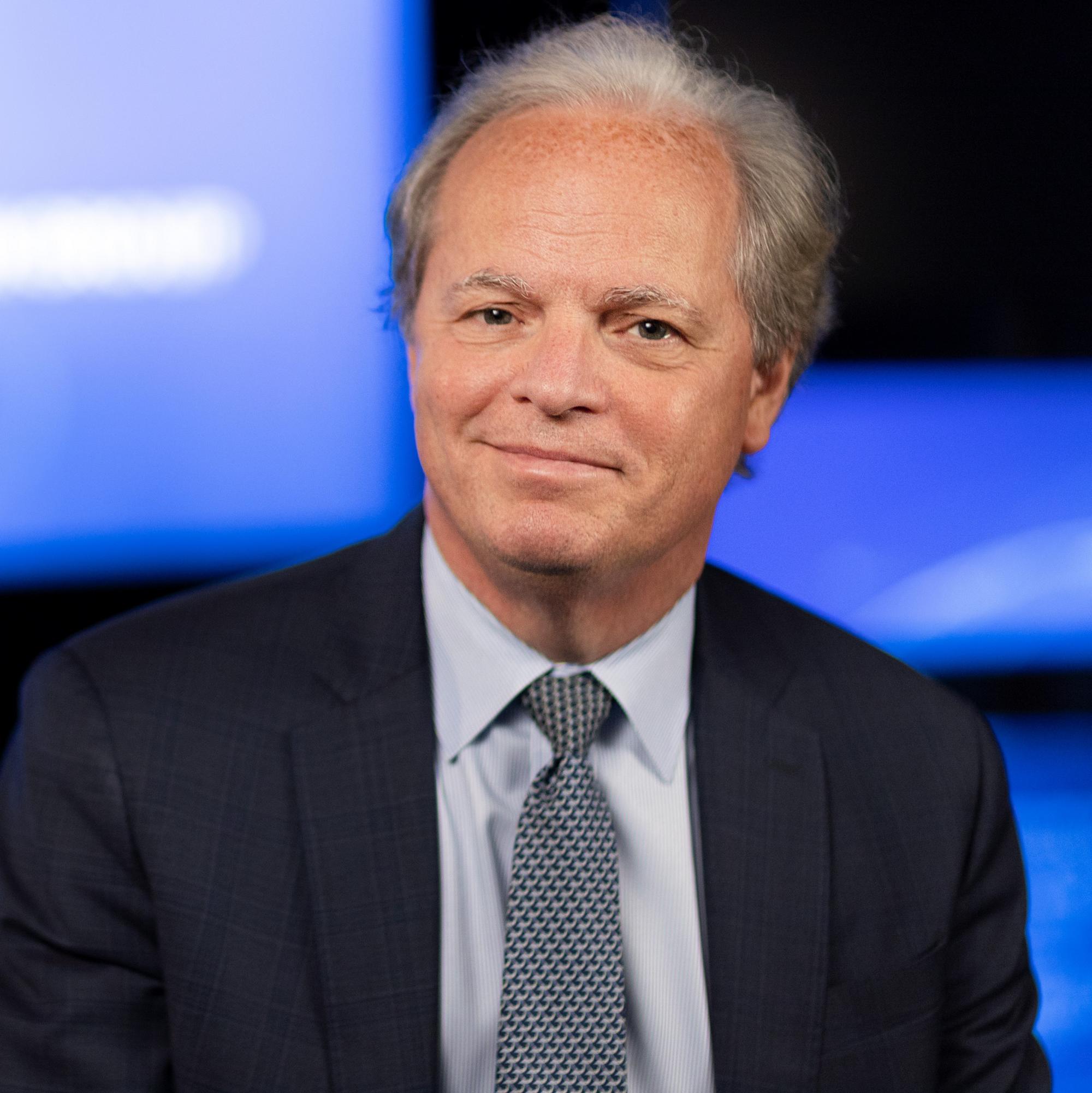
Mark Wishnie
Chief Sustainability Officer, BTG Pactual Timberland Investment Group
-
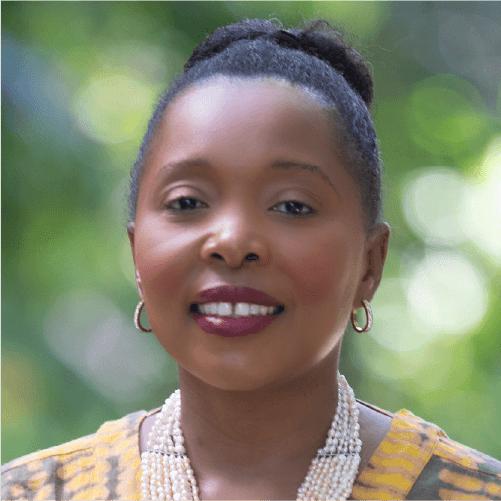
Éliane Ubalijoro
CIFOR-ICRAF Chief Executive Officer and ICRAF Director General (DG)

Host

-
Tuukka Castren
Senior Forestry Specialist
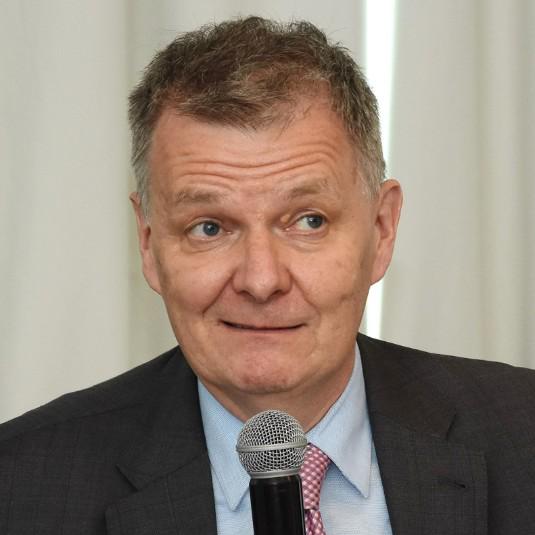
Liam Mullins – Moderator
Hello everyone, and welcome to today’s event: Forests for the Future. I’m Liam Mullins from the World Bank, and I'll be guiding our online discussion today. Throughout the event, I'll be sharing insights, updates, and valuable resources related to our discussion.
We're joined by our esteemed expert, Tuukka Castren, Senior Forestry Specialist here at the World Bank, who will be addressing your questions live. Check out the lineup of speakers participating in today’s discussion listed on this page.
Today’s event is supported by PROGREEN — a Multi-Donor Partnership for Sustainable and Resilient Landscapes led by the World Bank and supported by the governments of Germany, Sweden, and the United Kingdom: progreen.info
Liam Mullins – Moderator
Welcome, everyone, to today’s event: “Forests for the Future.”
Our event moderator, Paul Blake, External Affairs Officer with the World Bank Group, will kick things off momentarily.
Be sure to write in your comments and questions in the live chat for our forestry expert, Tuukka Castren.
Liam Mullins – Moderator
📌 “Here in the middle of the Amazon, I can see how nature-based solutions are equipping people with the tools they need to transform their economies and communities.”
Liam Mullins – Moderator
Now over to our panel discussion. Paul, our event moderator, is joined by:
Mark Wishnie: Chief Sustainability Officer at BTG Pactual Timberland Investment Group
Eliane Ubalijoro: Chief Executive Officer at the Center for International Forestry Research and World Agroforestry (CIFOR-ICRAF)
Remember, your questions drive the conversation. Drop your thoughts in the live chat here or join the discussion on social media using #LivablePlanet. Our forestry expert is standing by to provide real-time responses.
Liam Mullins – Moderator
📌 “We need deeper research on sustainable forests-based value chains – from ecotourism to non-timber forest products,” says Eliane Ubalijoro.
Emmanuel Msoffe – Participant
Thanks very much for organizing this webinar.Keeping Forest Land has been facing challenges considering that there are many profitable land uses comparing with forest .Imagine you have a fertile forest land.which provide ecosystem services and people in most cases dont consider these services in monentary values. At the same time other land users like agriculture wish to convert the same to agric.land and cultivate for instance beans which mature 3 months .Even the production forests which in Africa can take 15 to 20 years and in Europe Finland 60 yrs or more to mature which is very long time comparing with agric crops which mature 3 months or more which is short period .comparing.with forests? Big question what.are.incentives to encourage people keep their forested land?
Tuukka Castrén – Expert
It is true that generating revenue from establishing production forests takes time—much more than in agriculture. To overcome this challenge and reduce risks in forest investments, it is essential that land rights are respected and that overall forest governance is improved. We also have to recognize the multifunctionality of forests: forests should not be seen only as single-species production systems; they can also provide non-timber forest products and various services. In many cases, agroforestry systems allow for more even revenue flows.
Liam Mullins – Moderator
📌 Insightful perspective from Mark Wishnie — “Forest-based economic activities, conservation activities, and restoration activities can be mutually reinforcing.”
We want to hear from you! What role does the forest play in your community? 🤔
We will now hear from Ginny Alba. She is the Technical Secretary of the Human Rights Commission for Indigenous Peoples of the Organization of Indigenous Peoples of the Colombian Amazon.
Ginny has been an advocate for indigenous women's leadership and a voice for collective and territorial rights for Indigenous Peoples in the Amazon.
Enock Chikhosi Malawi – Participant
How can governments and development partners ensure that economic benefits from forest restoration and sustainable natural-resource management are directly captured by local and Indigenous communities—rather than external actors—so that conservation truly drives poverty reduction and long-term livelihood security?
Tuukka Castrén – Expert
Forest investments require contributions from all relevant stakeholders: local communities and their organizations, farmers, civil society, the private sector, and the government. The private sector ranges from local smallholders to international commercial investors. For example, a recent study estimates that by 2050, low-cost restoration is feasible within 280 million hectares of tropical croplands, 200 million hectares of pasturelands, and 60 million hectares of degraded forestlands, respectively. Such restoration could affect 210 million people in croplands, 59 million people in pasturelands, and 22 million people in degraded forestlands. Therefore, it is important that forest management and restoration are not seen as a zero-sum game, but rather as an opportunity for all to benefit—local and external actors alike.
Liam Mullins – Moderator
📌 A sobering reminder from Ginny — “It is important that… the international community continue to strengthen Indigenous Peoples because this contributes to our physical and cultural survival.”
Kasonde Chalabesa – Participant
Are Earth's forests growing or depleting? For a number of years, there has been discussions on sustainable exploitation of forests.
Tuukka Castrén – Expert
Our colleagues at FAO have recently published the latest datasets on forest change their Forest Resource Assessment 2025. Worth looking at www.fao.org/forest-resources-assessment/en
Liam Mullins – Moderator
📌 Poignant statement from Mark Wishnie – “By setting objectives, articulating national priorities... governments can send very strong signals to the private sector about where political support and intention lies.”
Samuel Ondeng – Participant
Forests management should be integral part of food security solutions. What are the best approaches of enhancing Participatory forest management to address declining forest cover and livelihood around the world?
Tuukka Castrén – Expert
I would encourage you to check out AgriConnect, a World Bank Group initiative to transform smallholder farming, create jobs, and strengthen global food security: worldbank.org/agriconnect
AgriConnect is a World Bank Group initiative to transform smallholder farming, create jobs, and strengthen global food security.
Elvis Nonde from Zambia – Participant
By what percentage have forest healthy and prudent management of natural resources helped improve livelihoods of Local communities, particularly people from rural regions like Northern province of Zambia?
Tuukka Castrén – Expert
The Transforming Landscapes for Resilience and Development or TRALARD project has been supporting farmers, forest communities and other rural population to develop their livelihoods in 16 districts in three Provinces in Zambia: Luapula Province; Muchinga Province; and Chilubi, Mbala, Mungwi, Mpulungu, and Nsama districts in Northern Province. The project has been active since 2019, and a second phase was approved this year. More information can be found at:
- projects.worldbank.org/...
- www.nor.gov.zm/...
- www.worldbank.org/...
Liam Mullins – Moderator
📌 Insightful perspective from Eliane Ubalijoro – “In terms of delivery, scaling requires strong extension services, accessible digital tools and value chain partnerships.”
Sekerani Nkhata, Malalwi – Participant
What is the World Bank doing to help African Countries to manage forests because deforestation is mainly in Africa due to poverty?
Tuukka Castrén – Expert
The World Bank has been actively involved in supporting forestry initiatives across Africa, recognizing the critical role forests play in environmental sustainability, economic development, and the well-being of local communities. Africa’s forests are essential for biodiversity, climate regulation, and providing livelihoods for millions of people. In response to increasing deforestation and forest degradation, the World Bank has implemented a range of programs and partnerships to help conserve and sustainably manage these vital resources.
Here are the examples of World Bank–supported forest-related projects in Africa, without footnotes:
Uganda — Uganda Investing in Forests and Protected Areas for Climate-Smart Development (IFPA-CD), P170466: Improves sustainable management of forests and protected areas and increases benefits to communities in target landscapes, including refugee-hosting areas and production forestry scale-up.
Democratic Republic of Congo — Forest and Savanna Restoration Investment Program, P178642: Supports agroforestry, re/afforestation, efficient cooking energy value chains, and MRV systems to enhance forested landscape management and livelihoods.
Côte d’Ivoire — Forest Investment Project, Phase 2 (FIP-2), P175982: Develops management plans for gazetted forests, establishes timber and agroforestry plantations, and supports livelihoods around Tai National Park and adjacent reserves.
Mozambique — Conservation Areas for Biodiversity and Development – Phase 2, P166802: Strengthens conservation area management and integrated landscape approaches (including links to Sustenta) to protect biodiversity and support community benefits.
Benin — Gazetted Forests Management Project 2, P508182: Improves integrated management of gazetted forests, scales sustainable fuelwood production, and develops non-timber forest product value chains and jobs.
Liberia — Sustainable Forest Economy Project (concept), P508345: Aims to improve forest management, traceability and certification, restore forests, and strengthen community-based natural resource management and forest-based jobs.
Democratic Republic of Congo — Improved Forested Landscape Management Project (and GEF AF), P128887: Long-running program on forest governance, REDD+ readiness and performance payments, and community-based forestry in high-deforestation areas.
Zambia — Transforming Landscapes for Resilience and Development II (TRALARD II), P507971: Enhances management of approximately 685,000 hectares of miombo woodlands, supports community forest management, and develops a jurisdictional emissions-reduction program to access carbon markets.
Ethiopia (Oromia) — Oromia Forested Landscape Program – Emission Reduction Project, P151294: A jurisdictional REDD+ program coordinating multi-sector interventions to reduce deforestation and generate verified emission reductions with strong safeguards.
Manirakora Jean Damascene from Rwanda – Participant
“What concrete strategies are being implemented globally to protect forests as a natural climate solution, and how can small communities in developing countries benefit directly from these forest-based climate resilience programs?”
Tuukka Castrén – Expert
For example, the World Bank manages several programs that support countries in protecting their forests and generating carbon credits. Revenues from the sale of these credits are, in turn, shared with relevant stakeholders—including local communities—based on agreed benefit-sharing plans. More information on these programs can be found on their websites biocarbonfund-issl.org/ and forestcarbonpartnership.org/
Joseph Scott-Manga – Participant
How can we mainstream smallholder farmers in third world countries in agroecosystem and promote biodiversity conservation?
Tuukka Castrén – Expert
I would encourage you to check out AgriConnect, a World Bank Group initiative to transform smallholder farming, create jobs, and strengthen global food security: worldbank.org/agriconnect
AgriConnect is a World Bank Group initiative to transform smallholder farming, create jobs, and strengthen global food security.
Liam Mullins – Moderator
📊Did you know that green jobs create ripple effects? For every 100 jobs in the forest sector, 73 additional jobs are supported on average in the broader economy.
Victorine DJOMAKO TCHAMEBE from Cameroon – Participant
What concrete strategies is the World Bank proposing to balance reforestation, food security, and rapid population growth, while ensuring that smallholder farmers effectively and sustainably adopt these practices?
Tuukka Castrén – Expert
A key aspect of the World Bank’s approach to rural development—including forest and agricultural development—is recognizing that no single solution will solve all development challenges in rural landscapes. Therefore, we have established Global Challenge Programs to provide a comprehensive framework that helps us deliver development solutions. The Global Challenge Program: Forests for Development, Climate, and Biodiversity (GCP-F) aims to catalyze a paradigm shift in financing global forest-related investments by mobilizing financing at scale to meet future investment needs. Central to this paradigm shift are three key strategic elements: (i) improving governance, including strengthening state command-and-control regulations and institutions; improving inclusion by, among other things, promoting transparent land markets and land regularization, as well as co-management, and improving access for forest communities to government services and financial inclusion; (ii) establishing private sector-driven forest-based economies, where economic opportunities and job creation serve as catalysts for forest conservation and restoration; and (iii) leveraging additional financing to respond to clients’ investment needs. More information can be found at documents.worldbank.org/...
ChilesheFrancis, Zambia – Participant
How best can we prevent forest fires as they have devastating effects on the environment and economy.
Tuukka Castrén – Expert
Global forest fires now burn more than twice as much tree cover each year as they did two decades ago. In 2024, at least 13.5 million hectares of forest burned worldwide—an area roughly the size of Greece. This was the most extreme year on record, surpassing the previous record of 11.9 million hectares in 2023.
The annual average for the past decade has ranged from 6 to 13 million hectares burned per year, with a clear upward trend since 2001. Fires now account for over 40% of global forest disturbance, up sharply from past decades.
More examples on what the World Bank Group has been doing can be found here
worldbank.org/...
Liam Mullins – Moderator
Economic growth, productivity, and jobs rely on the wealth of nature—including healthy forests.
🕮 You can read more in our recent report “Reboot Development: The Economics of a Livable Planet”.
HEZRON NGESA – Participant
Educating on Deforestation
Key Points to Emphasize
Causes of deforestation: Understanding the drivers, such as agriculture, urbanization, and logging.
Consequences: Highlighting the impacts on biodiversity, climate change, and local communities.
Solutions: Exploring sustainable practices, reforestation, and conservation efforts.
Effective Education Strategies
Storytelling: Sharing personal stories or case studies to illustrate the human impact.
Visual aids: Using images, videos, or infographics to visualize the issue.
Interactive activities: Organizing workshops, games, or discussions to engage learners.
Real-world examples: Providing local or global examples of deforestation and conservation efforts.
Targeted Messaging
Age-specific content: Tailoring the message for different age groups, such as children or policymakers.
Cultural relevance: Considering the cultural context and values of the audience.
Call to action: Encouraging learners to take action, such as reducing paper usage or supporting sustainable products.
Educational Resources
Documentaries: Screening documentaries like "The Biggest Little Farm" or "Before the Flood".
Online platforms: Utilizing websites like NASA's Earth Observatory or the World Wildlife Fund.
Educational games: Playing games like "Eco" or "Planet Coaster" to raise awareness.
Community Engagement
Local initiatives: Participating in local tree-planting events or conservation projects.
Collaborations: Partnering with schools, organizations, or businesses to amplify the message.
Social media: Sharing informative content and personal stories on social media platforms.
Key Takeaways
Empowerment: Educating individuals to make informed choices.
Collective action: Encouraging community involvement and collective action.
Sustainable practices: Promoting sustainable practices and conservation efforts.
By using a combination of these strategies, educators can effectively raise awareness about deforestation and inspire action to protect the world's forests.
Tuukka Castrén – Expert
Thank you for a good checklist for all forest communicators.
Liam Mullins – Moderator
We will now hear from Ramiro Batzin. He is Maya Kaqchikel, and Co-President of the International Indigenous Forum on Biodiversity
Ramiro is a champion of Indigenous Peoples’ cultural forest management practices, their land rights, and their traditional governance systems.
john victor – Participant
What is being done to assist small developing states to cope with the challenges of climate change?
Tuukka Castrén – Expert
For example, the World Bank manages several programs that support countries in protecting their forests and generating carbon credits. Revenues from the sale of these credits are, in turn, shared with relevant stakeholders—including local communities—based on agreed benefit-sharing plans. More information on these programs can be found on their websites biocarbonfund-isfl.org/ and forestcarbonpartnership.org/
Eric F. Salamanca/Turks and Caicos Islands – Participant
Please comment on the use of drone technology to conduct reforestation/afforestation, including monitoring and maintenance work. Do you think there is an appetite for funding institutions to support this approach?
Tuukka Castrén – Expert
Emerging technologies are transforming the forest sector, offering unprecedented opportunities for innovation and efficiency. Tools such as drones, advanced satellite imagery, and user-friendly data processing platforms are revolutionizing how we monitor and manage forests. Artificial intelligence further amplifies these capabilities, enabling smarter analysis and decision-making. While many of these solutions remain in the pilot phase, the primary challenge lies in scaling them for widespread adoption. Ensuring that all stakeholders have equitable access to these technologies is crucial. Fortunately, the increasing efficiency and accessibility of these tools are helping to overcome barriers posed by limited infrastructure, making it easier for organizations and communities to participate in sustainable forest management.
Liam Mullins – Moderator
🌳 A powerful message from Ramiro — “To speak of the forest is to speak of life.”
Liam Mullins – Moderator
And that wraps up our discussion. A big thank you to everyone for tuning in! If you missed any part of it, don't worry—the event recording is now available on this page. Feel free to bookmark it for later viewing and share it with anyone who might find it insightful.
To learn more:
- About World Bank’s investments in forests, visit: worldbank.org/forests
- About the World Bank’s investments in nature, visit: worldbank.org/environment
- Immerse yourself in the role forests play in driving job creation and growth for countries by reading our latest story: Forests at Work: Jobs Grounded in the Natural Wealth of Countries
COP30, the UN Climate Change Conference, takes place November 10–21, 2025, in Belém, Brazil. The World Bank Group focuses on smart development solutions that meet countries where they are—helping them reach their goals while building resilience to climate change. Learn more about our work at COP30.