separator
Ajay Banga on the World Bank Group’s Jobs Agenda — at the Atlantic Council

- About the event
- Transcript
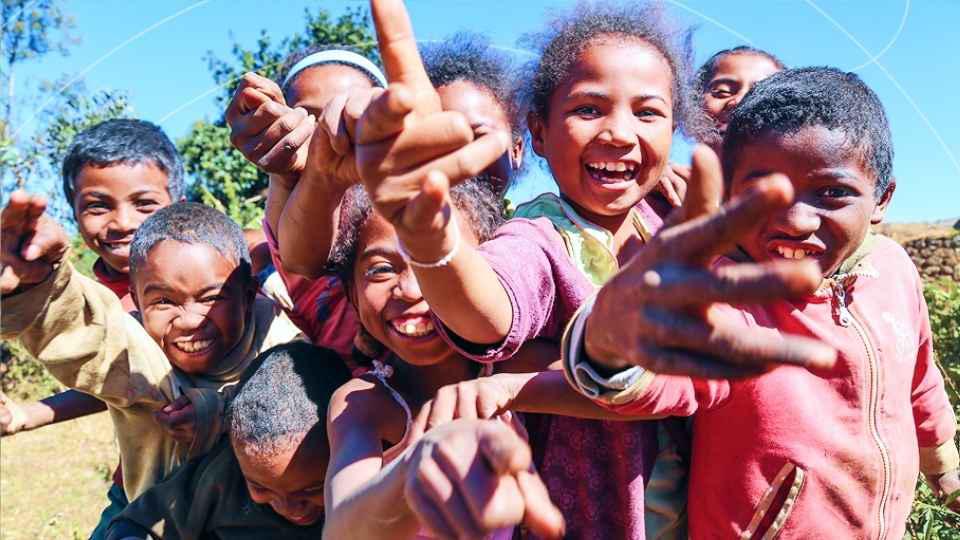
Over the next decade, 1.2 billion young people are expected to enter the workforce in developing economies—while only 420 million jobs are projected to be created.
World Bank Group President Ajay Banga joins Frederick Kempe, President and CEO of the Atlantic Council, to discuss the World Bank Group’s role in supporting job creation and economic development in a fast‑changing global economy. The conversation focuses on jobs, resilience, and the evolving development agenda.
This event will launch the Atlantic Council’s IMF-World Bank Spring Meeting’s programming. View the full agenda here.
Follow the event on X with the hashtag #ACFrontPage
[Frederick Kempe]
So you've described the World Bank as operating on two wavelengths, and I think this is just a crucial moment to think about both of those—the urgent crises that dominate headlines, and then what you've called the slow-moving forces that actually reshape the world. So we’re in the midst of a pretty urgent crisis—one that was not entirely anticipated at all by the countries it’s hitting. How do you look at balancing the slow-moving crisis with the urgent crisis at a time like this?
[Ajay Banga]
First of all, thank you for having me, and I think that that’s absolutely the right place to start. The current immediate crisis we’re discussing is the crisis in the Middle East, right? It has an impact on the people that live there, it has an impact on people in Asia, people in Africa, people who rely on essentially imported oil, energy, fertilizer, sulfur, helium, things of that nature, all of which impact us in different ways in these different countries.
The emerging markets are more stressed in some ways because they already start from a more complicated fiscal and debt situation than some of the more developed world. But please don't think that the developed world won't get impacted. Whichever way you think about this conflict—and everyone's trying to figure out the length of it and the scale of impact and damage on energy facilities—it depends where that goes. But whatever you do, you're going to get some degree of high inflation and some degree of lower growth. That's going to happen across the system. And that's really what is the challenge you're describing today, in addition to the humanitarian crisis of people in countries who are impacted directly by the conflict.
But don't forget we've been in a conflict in Ukraine for a while.
[Interruption by woman arguing that Board of Peace is a sham.]
[Ajay Banga]
We should discuss that, too, by the way.
[Frederick Kempe]
I'm happy to do that, President Banga. I want to tell you that the Atlantic Council is a place where we provide light and heat. We welcome open debate and respectful debate.
[Ajay Banga]
I'm not worried about it. She has a point of view. That's fine. I just want at some point that we should discuss that so you can understand what we're trying to do with the Board of Peace as compared to having a mistaken impression out there. But the reason I was talking about the other wars that are going on is that I think the crisis isn't only what's going on today in Iran. There is more in the world. There is Ukraine, there's the issue in Gaza. I think we just need to realize that all this put together are the, what I was talking about, the more immediate higher-velocity issues.
What I'm trying to explain to people is that while we as an institution and others have to do the right thing at this time for those who are impacted by this, and we as an institution can help because we've got certain kinds of response windows that we call crisis response windows, which are exactly meant to help countries as you navigate through these. The things that we launched after I joined—it allows you to get access to 10 percent of the undisbursed value of projects to approve with you.
So let's say you as a country have $5 billion of projects to draw down on. You could take $500 million out now, tomorrow morning, instantly, to help you through a temporary liquidity or fiscal circumstance. There are new projects we’re approving in that space. You add all this up together, in the first two to three months, I believe that these countries could get between $20 and $25 billion of liquidity from us. If we add more instruments we're thinking of, over the course of six months, you could get to $60 to $70 billion. These are learnings we drew during COVID as well. So liquidity and the capability to help you tide over—we can be helpful with.
You’ve got to be careful at the same time that you don't end up using that moment to increase your fiscal challenges with subsidies you could not afford or challenges you undertake at the fiscal level which put your country into an even bigger problem downstream. So you're going to do this in a transparent way, in a temporary way, and in a targeted way, aimed at people who are impacted the worst by these price changes that’ll come through. That's the kind of work we want to bring across.
[Frederick Kempe]
So, I don't want to dwell too long on this crisis, but you look at a specific element of this, which is the developing world and emerging markets. How do you see the impact, you know, short term, longer term? You know, what is the price of this conflict, or conflict in general, as you look at this?
[Ajay Banga]
Yeah, well, you know, it depends what you call short term and long term. But if you assume short term also includes a certain amount of damage to energy infrastructure in terms of rebuilding—as you know, there already has been some in that space—then you're probably looking at something over the next couple of months getting to a place where the beginnings of normalization begin.
If you don't, then you're looking at six to eight months of disruption, which will then last longer in the economic sense.
Either way, if you looked at the world having a probable GDP growth of 2.8 to 3 percent before this recent conflict, you're probably impacting that between 0.35 to 0.4 percent in the baseline scenario, all the way to 1-plus percent in the more challenging longer-term scenario. Inflation—the opposite direction. If you're looking at 2.5 to 3 percent of inflation globally before this, you're probably looking at another 0.7, 0.8, 0.9 percent in the baseline, and about 1 to 2 percent in the more challenged scenario. Both of these in a more exacerbated way for the developing world than for the developed world.
[Frederick Kempe]
Thank you for that. Thank you also for addressing the interruption in such a gracious way. You mentioned that you'd like to say something about the Board of Peace.
[Ajay Banga]
Look, I believe that at the end of the day, the UN Council resolution was very clear, and it mandated, specifically, institutions like the World Bank to work with the Board of Peace. If you read that Council resolution, it said we want people like the World Bank—and it mentioned us—to work with the Board of Peace to help rebuild Gaza when the opportunity comes up. All we are trying to do, in addition to our engagement with the Palestinian Authority in Palestine, is to also therefore engage, in line with that Council resolution, with the Board of Peace. Our role with the Board of Peace is very clear. We're a limited trustee of a trust fund that has been created into which these governments want to put in money to help in reconstruction. That money would come into our trust fund. We would be the fiduciary that holds it. The Board of Peace will decide who to get the money from. The Board of Peace will decide how that money is used on projects on the ground. [UNCLEAR / POSSIBLE HALLUCINATION]
We did create a Palestinian expert group two years ago, hoping that one day when the conflict reduces, we can have a role to play. That group consisted of people from Jordan, Egypt, Palestine, Israel, America, and Europe. And that group has proposed four actions that could be taken. We're working on all four.
And the first one is exactly what the lady was referring to, which is the clearing of the land. There is unexploded ordnance above ground. We don't even know what's in the tunnels. There's rubble. There's all that circumstance that needs to be managed.
The second part is human capital. These are people who've been through trauma.
[Interruption from woman.]
So, as I said, I'm actually not funding anything. The funding comes into this trust fund from these other countries. What we are trying to fund, however, is human capital—exactly this. We're trying to fund reconnecting Palestine and Gaza to its neighbors, both physically and digitally, to enable trade. And in the middle of this entire conflict, we were the institution that put money into equity at the Bank of Palestine, so it would be available as a financial institution when the crisis was over and reconstruction had to commence.
So what we are trying to do, actually, is to be a constructive part in that role—trying to follow that resolution, the UN Council resolution—put in place what we are trying to do with the Palestinian expert group, and that's what we're working on. [UNCLEAR / POSSIBLE HALLUCINATION]
[Frederick Kempe]
Thank you for your respectful answer to a not entirely respectful question.
[Ajay Banga]
It’s okay. It’s all right. They're hassled. They're worried. It's okay. My job is to respond to what I think I can do best.
[Frederick Kempe]
Thank you so much for that answer. You've argued that development isn't a charity, it's a strategy.
[Ajay Banga]
Yes.
[Frederick Kempe]
That investing in job creation in the developing world is ultimately how the West competes, grows, and stays secure, including the United States. Make that case not only to skeptical Americans, but skeptical Europeans, skeptical people around the world focused on jobs in their own countries.
[Ajay Banga]
Yeah, well, you know, the whole issue of 1.2 billion people coming through to the age of 18 in the coming 15 years is that you presented it as a challenge. There's also the opportunity side of this. This could be a very productive opportunity for the next 30 or 40 years. I would argue what Asia did for the world’s economy in the last 30 years could be what Africa does for the world’s economy in the coming 30 and 40 years.
The question is, will we seize this opportunity of the demographic dividend—which, by the way, a large part of it is in Africa; it's also in parts of Asia. But as you know, parts of Asia are now cresting that dividend, and parts of Latin America have crested it as well. So Africa is the real huge opportunity here. Parts of the Middle East, as well, are part of that.
You could get a big driver of growth in energy for everyone, for companies that are across the world—for our products, our technology, our intellectual property, our services. All that benefits from this.
So I see it as a mutually beneficial system. The challenge is, if you don't get these young people to have the opportunity of a job—by a job, I don't mean working only for a big company. I mean being an entrepreneur, working for small and medium enterprises, which by the way create most jobs—those kinds of opportunities.
Why is this important? Not just because you earn money that you can spend, but it's because dignity and hope come from the chance to have a job.
And I think if you can guide young people into that dignity and hope, then you build a mutually beneficial system for all of society. That's the argument I make time and time again.
And it's kind of where we're trying to head the Bank towards—get away from a task of building a bridge here, a road there, looking at this issue with energy here, that issue with building a flood-resistant school here. Do all those things. But why do those? Because they have to add up in some way to the creation of opportunities for young people.
[Frederick Kempe]
Thank you so much for that. So, we do have World Bank–IMF Spring Meetings next week, then Bangkok later in the year. What are your goals for the week, and then how do you look at the entire year leading up to Bangkok as well?
[Ajay Banga]
I think the week is certainly going to have some conversation on what the Bank and the IMF can do to help countries mitigate the impact of what we just discussed earlier, which is the conflict and pricing and inflation. And, you know, it's not just, as I said, oil and gas; it's also fertilizer, it's sulfur, it's helium, it's the downstream impact on chemicals that you use and the like. So there's that work to be talked through, and we're gearing up for that conversation.
But I'd say an equally important part of this is to think about this a little differently. A lot of the countries who are impacted by this don't control the conflict, but they can control other things they can do to retain the opportunity for their countries to be offering the right kind of productive opportunity for their people. And that requires a focus on policies and reform that they can undertake.
Our whole jobs agenda is built on three pillars. The first pillar is the creation of infrastructure, both physical and human capital in a country. The physical is the roads, bridges, homes, airports, digitization, power—that kind of thing—water.
The second, on the human side, is human capital in terms of skilling, education, healthcare. So you start with that fundamental first pillar. The second pillar is the idea of the right business-enabling reforms. By enabling, I mean governments manage the guardrails around these reforms, but they do enable business to work.
Small enterprises are looking for certain kinds of reforms. They're looking for easy ways of starting a business, permitting, access to basic financial education and inclusion. If you're a medium-sized enterprise, you're looking for the ability to get access to capital to grow and break through the medium-sized trap. If you're a larger enterprise, you're looking for predictability in trade flows. You're looking for competitive market environments where you could be working.
So in my old company, Mastercard, which was in the larger firm size, I would be looking for countries to give me the opportunity for a level playing field if I was competing there—things of that nature. So companies and firms of different sizes have different needs, and the idea is to see if governments can help create that enabling environment while providing the right guardrails for their citizens.
And then the third pillar is the availability of catalytic capital—both junior equity, early sort of loss capital, or discounted blended finance, and of course insurance, both domestically and political risk insurance cross-border.
Those three pillars—of infrastructure, the right kind of governance with transparency, and then the availability of catalytic finance—are our three pillars. This Spring Meeting is dedicated to the middle one on governance and the like.
So yes, you cannot control the impact of the conflict, but you can still do things the right way in your country to ensure that businesses can survive, create jobs, and thrive in your own economy.
[Frederick Kempe]
So, in that spirit, address the value of multilateralism, the challenge to multilateralism in this globally fragmented world. We're looking at war in Ukraine, the conflict in the Middle East, trade tensions, U.S.–China tensions. Multilateralism is under new challenges all the time, but how do you view the current time and how the role changes and how your institution needs to adjust?
[Ajay Banga]
I mean, look, in the middle of all this, we raised a record amount for IDA21 and in fact raised $24 billion, which through our AAA rating allows us to leverage four times that for the poorest countries. We can only leverage four times because we give away one-third of that money without any interest or capital repayment as a grant essentially every year, which means you've got a melting ice cream cone on what you can raise on the balance capital. So we end up every three to four years going back to raise more.
But we raised $24 billion in the middle of this geopolitical and fragmented world. If you put it in context—new governments in Japan; the French government changed twice, thrice actually; the British government changed; the Dutch government changed; the German government changed; the Canadian government changed; the Mexican government changed; and the American government changed. And what people discuss only is the last one.
I would tell you I navigated through that change in the middle of an IDA21 campaign. From my richest shareholders, and the ones who actually contribute the most to us—and to their credit—they came through.
So multilateralism is not about beating your chest about the importance of multilateralism. It's demonstrating the value that they would get by putting their taxpayers’ money to work with you so you can deliver outcomes that are useful not just for other countries, but also for their own national interest.
This is how you have to be able to argue that case with these countries. And I would tell you that with that $24 billion, we showed it is feasible. It's not easy. It's way more challenging than it may have been 20 years ago. But that doesn't mean it cannot be done and it should not be focused on.
I have a very clear way of thinking about this. Public financial systems are squeezed everywhere—in the developed world and the developing world. Yet the challenge of 1.2 billion people versus the 400 million jobs—and yes, that's pre-AI, but we can talk about AI in the developing world; I think it's different from AI in the developed world.
The reality is you're going to need money to make that happen. The old model of relying on public finances to do all this is broken. It cannot work in this situation. Therefore, you have to bring the private sector. You have to bring their capital, their ingenuity, their technology, and their people into the core, into the system, into the equation.
And that's what I'm trying to do across the system. And if you argue that case well, with the ability to deliver outcomes, I think our World Bank Group is moving from a focus of inputs—how many projects, how many dollars—to outcomes, which is jobs and growth.
[Frederick Kempe]
Results-oriented.
[Ajay Banga]
…and development-oriented results, which I care about. I've taken our scorecard from 155 items to 22, and they're output-oriented. You can go on the website, go on to one of our 22 items, and you can drill down to every project that is financed.
My view is that sunlight is the best transparency. You can see my response to the two ladies. It’s a discussion worthy of having. They can have a different view. I can have a different view. We can still be respectful to each other, because these are real people we're discussing and real problems we're discussing.
That’s my attitude to this. If you take that attitude, you're going to focus on outputs, you're going to focus on transparency, you're going to focus on realizing you cannot do all this with public finances, and then you focus on fewer, smarter ways of getting this done. Then I think you can do it.
The other thing I've come to realize is that the model of economic growth over the last 30 years has been one of essentially outsourcing manufacturing to places where labor cost was arbitraged in your favor. Over time, those countries developed well enough to not only have some residual labor-cost arbitrage, but also improved logistics and improved quality of delivery, so they earned the right to continue to be places where things are made.
The problem is, you lost jobs in the developed world, you created jobs in the developing world, and if you didn't do enough for the people whose jobs are lost here, you didn't create a stable economic system in the future. You ended up with instability here and job growth there. That's not a smart move either.
What I'm trying to choose as job-creation sectors going forward are five sectors that do not rely only on that movement of jobs into the emerging markets.
The first is infrastructure. It's construction, but what it enables. And that's why you found us saying we will reach 300 million people in Africa with electricity by 2030. Electricity—not one light and one fan. That's not productive use of electricity. That's humanitarian use of electricity. It is important, but it won't change the job or economic potential of those people. You’re going to give them enough electricity to open a business—a hair salon, a computer shop—or use it to open a chemist location or a chicken hatchery. You've got to do something that enables productive use.
The second is agriculture for small farmers. I grew up in India. One of the crises is that small farmers are getting marginalized. When their children grow up, they sell the land. For a little while they're very rich, and then they're not. And they're living in urban shantytowns looking for gig work. I have no problem with gig work. I'm just saying—is that the best use of someone who had land?
Instead, if you work with these people—help them get access through cooperatives to better pricing, better fertilizer, better water, better inputs, better markets for their produce, like Amul did in the country I grew up in—you can make agriculture a business. It'll create jobs both in agriculture and up and downstream.
On agriculture, we said we will reach funding of $9 billion a year by 2030 into this sector, plus mobilize private capital. We lend $120 billion a year. If I can put nine into agribusiness, that's a fair chunk of money.
The third is healthcare. I've committed to reach 1.5 billion people with access to better primary healthcare by 2030. And just to be clear, by June this year we will be at 400-plus million. So we'll get there by 2030.
On Mission 300 for Africa, we will be at 50 million by June. And we're doing this in partnership with the African Development Bank. I'm not even counting their numbers. They're meant to deliver 50 out of the 300 million. [UNCLEAR / POSSIBLE HALLUCINATION]
The fourth item is value-added manufacturing. Everybody's talking about minerals and metals that the emerging markets are blessed with. Yes, provided you don't just extract them, but you do some degree of value-added manufacturing locally so you create quality jobs, not just extraction jobs.
The second part is the creative industries in the emerging markets—from fashion to art to history to sculpture. You can see enormous value in creative industries. There’s a lot we're doing in both these spaces.
And then the last one is tourism. Tourism gets a bad rap from a lot of people, but tourism actually generates the most jobs per dollar invested of any sector in the economy.
They're not all jobs to general managers. It'll be from waitresses to general managers. But you do create a ladder of jobs across the spectrum.
Those five sectors are not reliant on outsourcing jobs from the developed world into the developing world. This is a different way of building jobs in these countries. You talk to any leader in the developing world—they get elected for two things: quality of life and jobs.
[Frederick Kempe]
And so if you look at this— infrastructure, agribusiness, healthcare, value-added manufacturing—I'm so glad you talked about creative industries. Our Africa Center, led by Ambassador Rama Yade, focuses heavily on creative industries.
[Ajay Banga]
Good. We should do something together.
[Frederick Kempe]
Yeah, absolutely. And tourism. Those are a lot of priorities. Where are you best positioned to move the needle?
[Ajay Banga]
They're not actually a lot of priorities. They're different priorities that will suit different countries. Don't think every country will do all five. Most should do infrastructure, because without infrastructure you're not going to get somewhere. The other ones depend on the circumstances of that country and the stage of development they're in.
Think of this as not one-size-fits-all. Think of this as those three pillars being really important. Everybody's at different stages. A country affected by fragility, conflict, and violence coming out of it—say Ethiopia—is different from Sudan, which is still struggling. You cannot say one-size-fits-all.
I'm just telling you the toolkit is those three pillars and these five sectors. Then you apply them country by country.
[Frederick Kempe]
Thank you. We're running out of time, and I want to take a question or two from the audience. To kick us off, we have a question from one of our Bretton Woods 2.0 fellows. We're going to turn to the screen to watch Sienna Nordquist.
[Sienna Nordquist]
I’m Sienna Nordquist, a former Bretton Woods 2.0 fellow, a PhD candidate at Università Bocconi, and a visiting researcher at Sciences Po Paris. This year, small- and medium-sized countries have taken center stage, from Prime Minister Carney's speech at Davos to Pope Leo's recent trip to Monaco. What are the priorities and objectives of small- and medium-sized countries within the World Bank, and how is your pivot to jobs and growth going to impact them? [UNCLEAR / POSSIBLE HALLUCINATION]
[Ajay Banga]
Thank you, Sienna. A lot of my clients are actually small- and medium-sized countries. When countries get large enough, they migrate out of needing our financial support, but they still work with us on knowledge. Saudi Arabia and South Korea, for example, work strongly with us on knowledge.
Small- and medium-sized countries are the bread and butter of what we do. The job strategy applies across them, but you have to nuance it—countries affected by fragility and conflict versus those that are stable.
There is another stratification you didn’t mention: small island states. A Barbados—no matter how strong its leadership—one hurricane could wipe out double-digit percentages of GDP. They need a different kind of help.
I went to Tuvalu and Fiji last year to understand their challenges. One thing that came out is the need for regional procurement to get scale and discounts. That’s the kind of adaptation we’re trying to do.
The pillars and sectors don’t change that much, but the application does.
[Frederick Kempe]
Thank you. A question from the audience. Scott?
[Scott Nathan]
Scott Nathan, board member of the Atlantic Council. One priority that seems to have dropped is the climate crisis. How do you integrate that into the priorities you discussed?
[Ajay Banga]
I think the way to think about this is adaptation versus mitigation. On adaptation, embed resilience into everything you do. Build schools to be hurricane-resistant. Roads to be monsoon-resistant. Use heat-resistant seeds. That’s smart development, not a divisive agenda.
On mitigation, I don’t need to fund exploration for oil and gas. But once discovered, I can help countries use all energy sources—gas, nuclear, solar, wind, geothermal—within their nationally determined contributions to create baseload energy.
Electricity is a human right. You cannot deliver healthcare, education, or hope without electricity. Six hundred million people in Africa are without electricity in 2026. That has to stop.
[Frederick Kempe]
Final question. You've said that ignoring the slow burn long enough turns into an inferno. Five years from now, what will tell you we got this right?
[Ajay Banga]
That’s the hardest question. I know how the Bank will feel. We have a scorecard. With the ILO and other multilateral development banks, we've aligned on how to measure job creation and job quality. We’ll announce that at the Spring Meetings.
I think we’ll see whether jobs are embedded in strategies, whether the G20 embeds private-sector growth at the core. But I don’t yet know the single metric that will tell me we’ve moved the needle enough.
[Frederick Kempe]
Let’s work together on that. This has been an incredibly important conversation. Please join us next week at the World Bank and IMF Spring Meetings. Download our new app. And with that, I thank Ajay Banga, President of the World Bank Group.
[Applause]
Speakers
-
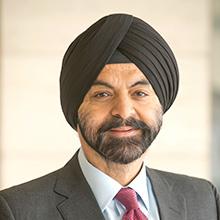
Ajay Banga
President, World Bank Group
-
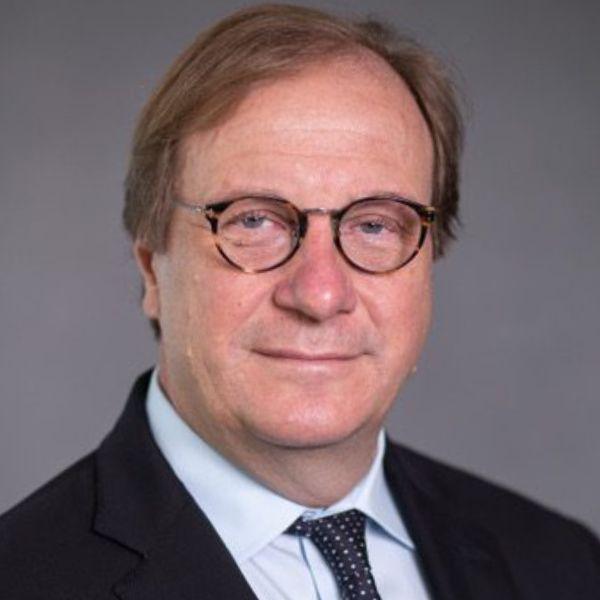
Frederick Kempe
President and CEO, Atlantic Council
More to Explore
separator