[Video begin playing]
[Narrator]
Every economy begins with people going to work. Ideas, effort, opportunity. And yet, one of the most powerful drivers of jobs, one that has always been within reach, remains the most untapped. Women. Despite advances in skills and education, these gains have not translated into more growth. Here’s why. When half the population is held back, the entire economy pays the price. But when barriers fall, possibilities rise. Skills create work. Access creates businesses. Opportunity creates jobs. When women work, economies grow. Unlocking women’s potential unlocks jobs.
[Video ends]
[Emcee]
Good morning, everyone. Good morning. Thank you so much for joining us here today, both online and in person. I’m really pleased to kick off the last day of the World Bank Group Priorities Series. We’ll be talking about gender today and how the World Bank Group is committed to advancing women’s economic participation. Let’s jump right into it. Let me get on stage our first speaker, the World Bank Group Director for Gender, Robin Mearns. Please join me in welcoming him.
[Applause]
[Robin Mearns]
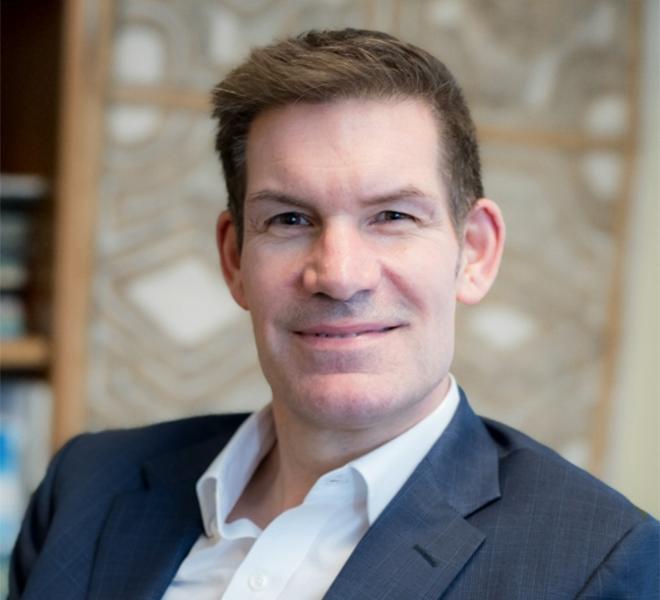
Hello, I’m Robin Mearns, as it says, Director for Gender here at the World Bank Group. I want to start by saying something from the heart. I’m not here to speak for women. They don’t need me to tell them about the barriers that they face. I’m here as an ally and an advocate for something that I believe deeply, and that is when unlocking women’s economic participation is something that benefits everyone. When we do this, communities get stronger, businesses grow, and jobs are created. And the world needs jobs. That’s what we’ve been talking about here all week. Okay, you know that over the next 10 years or so, over a billion young people will come of working age in developing countries. And yet only about 400,000 jobs are expected to be created. Closing this jobs gap for everybody is one of the most pressing development challenges of our time. So, what if I told you that one of the most powerful and yet underutilized ways of creating jobs is unlocking women’s economic potential? So, what are we doing about it? The idea is simple: to find jobs, to create businesses, to create employment, women need access to opportunities. To make this a reality, we have set three very interlinked targets. Think of it as a ladder of opportunity. The first of these is social protection. Think income support, skills and training programs, job matching, childcare, the kinds of support that women need in order to enter the labor market or start a new business. Our target is to reach 500 million people with social protection by 2030. That might sound straightforward, but it’s not. The challenge is exclusion by design. Women lose access to cash assistance not because they’re ineligible, but because the systems weren’t designed with them in mind. For example, think of a cash transfer program that recognizes only the head of household is eligible. Or a labor support program that provides job opportunities but no childcare support. Or programs that ignore women’s safety concerns or consider women only as mothers and caregivers. With this target, we’re actually more or less on track. To date, we’ve reached 110 million women with social protection. In Bangladesh, for example, we’re working with the government to improve the way that programs identify and target women so that they’re not screened out of cash assistance. Similarly, in Eastern Southern Africa, through the IGA program, we’re financing training that provides technical and vocational pathways for young women. And the reason that we’re on track with this particular target is no accident. The World Bank Group has decades of experience in social protection and genuine expertise. But that is precisely why we can’t afford to get complacent. We have major operations in the pipeline in Morocco, Pakistan, India, Brazil. And our task now is to make sure that as these programs scale, we stay just as focused on how they’re designed, how they’re actually being implemented, and who they are reaching. The second target is digital use. It’s not just having a connection, it’s actually using it. Because when women get online, they get access to information, to financial services, to markets that genuinely can change their lives. Now, the barriers here, so far, I should say, we have reached our goal is to reach 300 million more women by 2030 with broadband access and use. So far, we’ve reached 46 million women. So, there’s still quite a way to go to close this gap. This one is going to be hard. The barriers aren’t new. They’re persistent, they’re deeply rooted, and they’re stubbornly difficult to shift. Yes, you know, in many places, the infrastructure simply doesn’t exist yet, and building it takes time. But even where it does exist, getting online is about more than just having the connection. It’s about having a device that you can afford, having data that you can afford, the digital literacy to use them. And it’s also having a safe and accessible place to actually get online, whether that’s a community center or a health facility or some other shared public space. It’s also about having access to services that are relevant to your life: government services, financial services, job opportunities. And it’s about living in an environment where your use of technology is accepted rather than questioned or discouraged. We’re not discovering any of this for the first time. The challenge has never been one of diagnosis. But really of delivery and scale and staying committed to tackling all of these things together rather than one at a time. And that is precisely why our target matters. It keeps us honest. It forces us to keep pressing ahead, pressing forwards, even when the progress feels slow. Now, the good news is that we have several programs in the works to spur inclusive digitalization, including in Eastern and Southern Africa. And I think these programs are positioning us well to see progress over the next few years. I hope you can begin to see now that these targets are deeply interconnected. They reinforce one another. For women, cash transfers, training give them skills, give them confidence and agency. Digital connectivity expands access to jobs, to services, financial services, to learning, to markets. Together, these things create a foundation that enable women to move into leadership positions, into higher-quality jobs, and into entrepreneurship. And here’s where we want to go deeper in today’s session. Our goal, I should say, actually, it’s not just a financial inclusion issue, because when women-led businesses can’t get access to capital, can’t get capital, then the consequences ripple out from there. Businesses don’t grow, fewer jobs are created, and there are fewer economic opportunities for the communities around them. Our goal here is to reach 80 million more women-led businesses by 2030. Now, as of today, we’ve reached 5 million women-led businesses, so we’ve got a long way to go to close this gap. And getting to this goal is complicated because the barriers look different depending where you are. Is the woman even in the financial system at all? Are there laws that allow her to access credit in her own name? Are there credit information systems that work for her? And is the financial sector making any real effort to reach her in the first place? There are no simple answers to these questions, and it’s why our response has to operate on several different levels at the same time. We need to change the rules and the norms, and that’s why our dialog with governments matters. We’re seeing really good progress in some places, such as Indonesia and Mexico, but it takes time, and we need financial institutions to build products that women actually want to use. We’re actually seeing this approach pay off in Brazil, in India, for example, and we need to scale that up. And in order to do that, we need to bring in more private capital through gender bonds, through guarantees and partnerships, because we’ve shown that when you reduce the risk and you prove the model, then investors will follow. Now, to go deeper on exactly this challenge, I’m delighted to welcome Dr. Anino Emuwa, founder of Avandis Consulting and creator of 100 Women @ Davos.
[Applause]
[Robin Mearns]
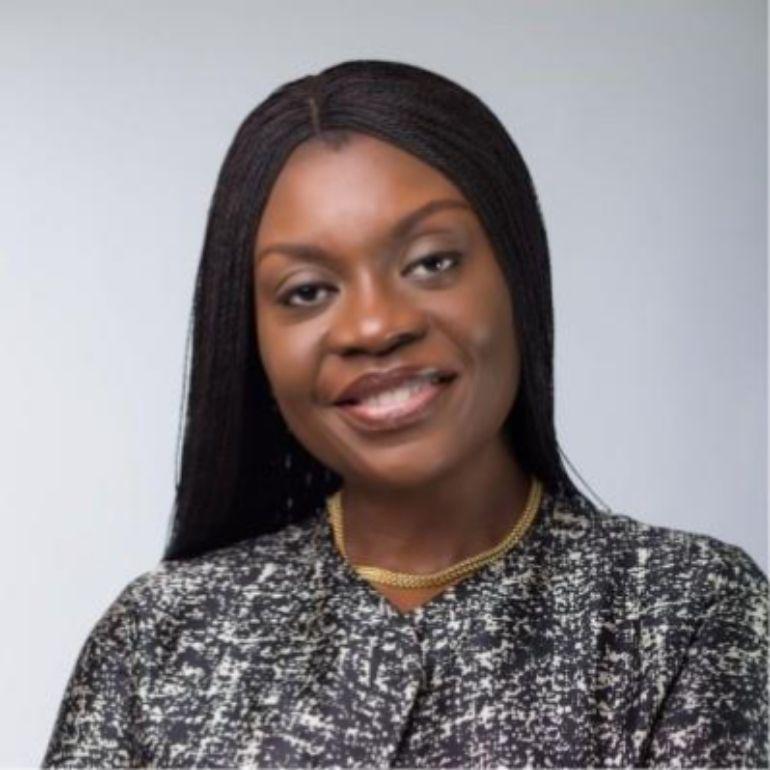
Anino, you would have heard her perhaps the other day. She’s one of the sharpest voices around on issues of African entrepreneurship, gender and finance, and I think exactly the right person to have this conversation. Anino, a very warm welcome.
[Anino Emuwa]
Hi, Robin. Nice to see you again. Hi.
[Robin Mearns]
So nice to see you again.
[Anino Emuwa]
Thank you.
[Robin Mearns]
Let me kick off, Anino, if I may. When you were starting out, when you needed capital to grow, what did that experience actually look like and what did it tell you about the system and how it’s built?
[Anino Emuwa]
First of all, I’d like to start by saying hello everybody and welcome and wonderful to see such a busy room. Robin, thank you and thank you to the World Bank for having me here. Just a little bit about my background for those who don’t know me. I started my life, my career in corporate banking after studying monetary economics, so this is very much familiar territory for me. Fast-track many years later, I was interested not just in lending to big companies, but actually lending to SMEs, simply because we’d lived in several countries in Africa and seen the same thing over and over again. The question is this: if smaller businesses and entrepreneurs don’t have capital to grow, how on earth was Africa going to grow? That’s what drove me to study this academically. And I remember when I was applying for my doctoral studies, I literally said, if any… If I didn’t get a place, I would do this all on my own. I felt really passionate that we needed to get finance to smaller businesses. And in fact, most people, many, many researchers here, you actually look at research as what are the facts, but mine was also focused on what are the solutions. And I think the three areas that were absolutely clear, and alongside this, I was working with women-owned businesses, helping them to access capital, but my research study showed three things in a conceptual framework. The first one was we have to look at what’s happening with entrepreneurs themselves. The second one is what’s happening in the financial markets, the organizations, the banks, and the institutions. And the third was the policy and the business environment, really. So, this was a study that took very many years because it was really quite qualitative, vast. So, there are so many issues, really, when it comes to that. But one thing that I’m focusing on now, many of you know here, is on women’s leadership and decision-making because that is one place where we can actually make change. On the basis of that, I’m the founder of 100 Women @ Davos, which is a global network of women business owners and leaders involved in impact, that is, alongside actually making change happen, and the Africa Women CEOs Network. There are three sets of issues that I think we need to examine, and here at the World Bank, we’re certainly looking at that in terms of the financial institutions, in terms of the central bankers and the ministers of finance and economy and how they’re actually making change. I hope that answers the question for now because I know we’re going to go deeper a little bit later.
[Robin Mearns]
Thanks so much, Anino. Yeah, absolutely, let’s dive in a little deeper. Risk is often cited as a reason why women are denied financing or that they’re offered financing but on worse terms. But on the flip side of that, venture capital can often perceive women as risk-averse. They can’t win. There’s no winning for women in this space, it seems. I was in Egypt and Morocco last week with colleagues, and we had some private sector roundtable discussions with VC, fintechs, capital, financial institutions, and exactly these issues came up. That was the sort of coalface of the challenge for them. Anino, how do you think about these issues of risk? Is it a data problem? Is it a problem of bias, or is it something else?
[Anino Emuwa]
When we’re looking at the size of the problem, you can be sure, Robin, that it isn’t just one thing. To look specifically at those issues you’ve talked about, when we look at the fact that… And most of us here know that less than 2% of total venture capital goes to women-owned businesses. We have a big problem on our hands. It’s certainly not just one thing. We do have data. The data is probably not… Let’s say, it’s not extensive enough, but we do have data in terms of female-led businesses that are, or organizations that are funded by VC, and what that tells us is that those businesses exit faster at higher valuations. So, if we look at just the facts that we have, it actually shows that it makes good sense, business sense and investment sense, lending to female-owned businesses. However, what is happening in the markets is totally different because if that was the case, we wouldn’t see it at 2%. There’s certainly a lot of other things that are involved in this, but I wouldn’t just say that yes, there is bias, but I think we have some structural and institutional and systemic issues that absolutely need to be addressed.
[Robin Mearns]
Absolutely. I think that really lies at the core of this challenge. I think there’s data to show that women-led businesses often create more jobs for women. It’s really at the heart of this agenda. We’re working to try to get capital to 80 million women-led businesses by 2030. You’ve very eloquently laid out what some of the challenges are there. There’s a number of others that I spoke about earlier in social norms and so forth. But Anino, from where you sit, you’re someone who’s seen this up close from a whole bunch of angles as an advisor, as an entrepreneur yourself, as a thinker, a thought leader. What do you think we’re getting right in this space and where are we falling short?
[Anino Emuwa]
Well, the first thing you’re getting right is to actually make it a target, and make it a goal. And secondly, to have big numbers. That’s the first thing. One thing that is actually missing, and I’ve spoken quite a bit about that this week one-on-one, is the quality of data that we have. Because we have central bankers here, we have ministers of finance here, one thing that is not systematically tracked in countries is how much lending actually goes to female-owned businesses. That is to say, we do not necessarily have gender-disaggregated data. If you can’t measure it, how can you fix it? So, that’s the first thing, is to actually have that data, because then we know and we can see what is happening. The other thing is, in terms of policy, and which is really the part that I think really interests me, because policy has the ability to create large-scale impact, but we also know that it’s not just policy on paper. We also need to have the implementation and to make sure that it happens. So, I’d say first is to have the data, second is to have the policies within the countries, and third, sometimes the structural issues. One of the things that I think I mentioned to you, Robin, in in the past was when I was doing my research, we looked at Nigeria, and one of the issues at the time was talked about by one of the institutions was to have data on the credit reliability of businesses, and that of course meant credit bureau. But then we’re battling with things like unique ID, etc. So, you need to have some of these institutional things which are in place, upon which you can definitely build information. One, for those of you who are in the field, one thing that is also important is the alternatives to requirements like collateral. And let’s not forget that in many advanced countries, women have only been able to open their accounts by themselves since 1965, in some European countries, and 1975. Women have only had that kind of independence in many countries only in the recent 50, 60 years. We still have a lot of cultural barriers and biases against women’s access to financial services and financial inclusion.
[Robin Mearns]
Very powerful point, Anino, and it reminds us, in fact, our Women, Business and the Law report provides the data on this. There is no country in the world that has actually achieved legal parity between men and women. Women enjoy only two-thirds the legal rights of men, and even less in practice when you look at the implementation. I think that’s an extremely powerful reminder. Anino, I want to ask you, I’m going to turn the tables on you a little bit because when you were moderating the amazing event the other day, the conversation between Anna Bjerde and Christine Lagarde, the panel that followed, you asked each of the panelists if they could change just one thing, whether it’s a policy, a practice, or whatever it may be, in order to achieve getting capital to women entrepreneurs at scale, what would it be? I’m going to ask you the same thing.
[Anino Emuwa]
A great question, and I shall preface it so that people understand, you understand the reason why. Sometimes, I believe it was in the early part of this 21st century when the Bank of England in the UK decided that it was critically important for entrepreneurs to access capital, and the private markets weren’t actually doing that, it didn’t wait for the private markets to get it right. What it did was convene banks, and there’s a report every single year for 11 years after the meetings convening banks for them to report on how much they were lending to smaller businesses. By the way, of course, a lot of work was done behind the scenes to overcome these barriers, and the last report said this, it said: “We no longer need to have this convening and these meetings because there are no more systemic barriers to lending to entrepreneurs, that there are some certain issues obviously.” And I think that is the one thing that I would change, which is, basically, policymakers, first of all, to require institutions to report on their gender data, to convene them as a policy imperative and work together collectively to actually overcome this bias to finance. I would include not just banks, I would include discussions with other providers of capital, alternative capital, including, of course, venture capital. Please, let’s remember that we talk a lot about venture capital, but it’s actually a small amount of capital that is available to entrepreneurs.
[Robin Mearns]
Thanks, Anino. I’m so glad you mentioned that. That’s where I wanted to go next, is to ask you about these alternative financing channels, fintechs, blended finance, diaspora investment, and you’ve mentioned venture capital. These are often held up as the answer to reaching women who are often locked out of traditional forms of financing. Can you say a bit more about that? What’s your take on that?
[Anino Emuwa]
Absolutely. In fact, just to tell you how long ago that was, at the time I was writing my dissertation, there wasn’t really any fintech, and after that I thought, why didn’t I start earlier? It would have made my life easier because many of the issues we found with traditional banking, collecting information, could be solved by fintech in terms of data collection, etcetera. And also, how do you… I’m using digital means in order to score borrowers. Fintech is actually great, and there are so many examples of greater fintech organizations around the world that are lending to startups. But two things… Well, one thing is that it is very contextual. So, the fintechs do have to link with the standard banking infrastructure, and from everything from APIs that link into data banks, etcetera, building a platform on top of the banking and financial system. In my country of origin, Nigeria, we’ve seen very often fintechs actually start acquiring microfinance banks because of laws and regulations. In fact, we did run a sandbox, which was basically a regulatory sandbox to actually see and overcome some of these issues, because what you find is that the regulatory environment was… Fintechs were far ahead of regulatory environment, and so they didn’t even have the regulatory, or the policy background, in order to build their fintechs. Then, of course, I think COVID did affect that incredibly. But all of these and all that innovation, I think, is truly important in terms of getting money and funding out to entrepreneurs and certainly to women. We’ve seen some fintechs that are focusing on women, and for me, I don’t necessarily feel that you must be a fintech only to women, but you must have data that is reporting what is happening in terms of borrowing to women. Alternative forms of finance are critically important, and I think that the central banks and the regulators, yes, regulation is what they do, but also look at it in terms of opportunity. What are they doing that banks can’t do? We’ve seen some of them try to merge with banks, banks acquire, but it’s still early days, and I think the opportunities really are there, but alternative forms of finance are critically important.
[Robin Mearns]
Thanks so much. That’s absolutely fascinating, and there’s lots of valuable advice and lessons for us there as we continue to refine the target implementation plan for our access to capital target. We have time, Anino, just for one last question. What would you say to a young female entrepreneur who’s sitting exactly where you were when you started out? What would you say to her today?
[Anino Emuwa]
I’d say it’s hard. But that’s… Saying it’s hard is just really setting the expectations, right? So, it’s not going to come easy, but the opportunities are so much more expansive in today’s world. There’s a focus with institutions like the World Bank in the WE-Fi code that are looking at this. So, one, there are quite a lot of grants out there, for female-led businesses. So, do look out and see what is happening there, but importantly, I think community is critically important. As a founder, even if you have a co-founder, maybe the two of you, at most three of you, you’re doing it alone. It’s lonely, and you need to have a supportive community around you. Yes, you would have, of course, people who care about you personally, but get your mentors, get your coach, get other women who have done it, join communities, join African Women’s CEOs Network, join 100 Women @ Davos. No, really, there are many, many out there. You need to have a supportive community of women who have been there, who have done it, because it’s not easy. Do not do it alone. And really, there is so much happening. And one last thing I’d say to you is that with the way technology is changing and driving the workplace, it’s bringing efficiencies. It’s also bringing opportunities in whatever form or fashion you’re using technology. We wouldn’t even talk about digital, that is given, but you need to be focused on AI, and how AI is going to improve efficiencies in what it is that you’re doing. So, opportunities are there, they are vast, get support around you and go for it.
[Applause]
[Robin Mearns]
Dr. Anino Emuwa, thank you so much for your wisdom, for your guidance, those pearls of wisdom, and for your leadership in this space. This has been such a pleasure. Thank you so much.
[Anino Emuwa]
Robin, thank you for having me. Thank you.
[Applause]
[Lively music]