Transforming Water in Agriculture for Food and Jobs
- About the event
- Agenda
- Transcript
GO TO: SPEAKERS
The way the world balances water and food production will be critical to feeding a global population expected to reach 10 billion by 2050. Current agricultural water use is unevenly distributed, limiting its full potential to support food production and economic opportunity. In water‑stressed regions, irrigation can at least double crop yields—unlocking major gains in productivity while creating up to 245 million jobs globally, most of them in Sub‑Saharan Africa.
Unlocking this potential will require stronger private sector participation, increased investment, and solutions that can scale—from digital tools and data‑driven farming to blended finance and renewable energy–powered irrigation.
Join us March 19 for the launch of Nourish and Flourish: Water Solutions to Feed 10 Billion People on a Livable Planet, as public and private sector leaders discuss how targeted investments, innovative financing, and proven approaches can improve water efficiency, boost agricultural productivity, create jobs, and support sustainable growth—while protecting the planet’s most critical resource.
5 MIN | Fireside Chat
- Paschal Donohoe, Managing Director and Chief Knowledge Officer, World Bank Group
- Tanvir Gill, Senior External Affairs Officer, World Bank Group (Event Moderator)
5 MIN | Keynote Address: Powering the Future of Water, Food, and Jobs
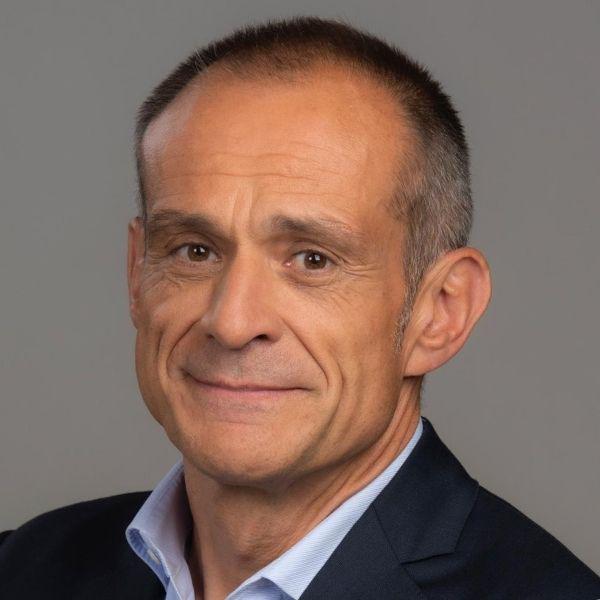
- Jean-Pascal Tricoire, Chairman, Schneider Electric
10 MIN | Presentation of the Flagship Report "Nourish and Flourish: Water Solutions to Feed 10 Billion People on a Livable Planet”
- Amal Talbi, Global Lead for Water for Food, World Bank Group
- Pieter Waalewijn, Lead Water Resources Management Specialist, World Bank Group
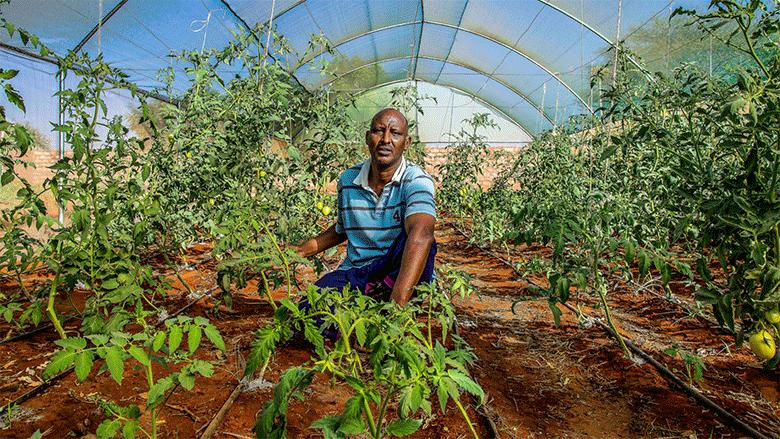
6 MIN | Farmers Voices (Video montage)
25 MIN | Panel Discussion: Scaling Solutions Through Policy, Finance, and Partnerships
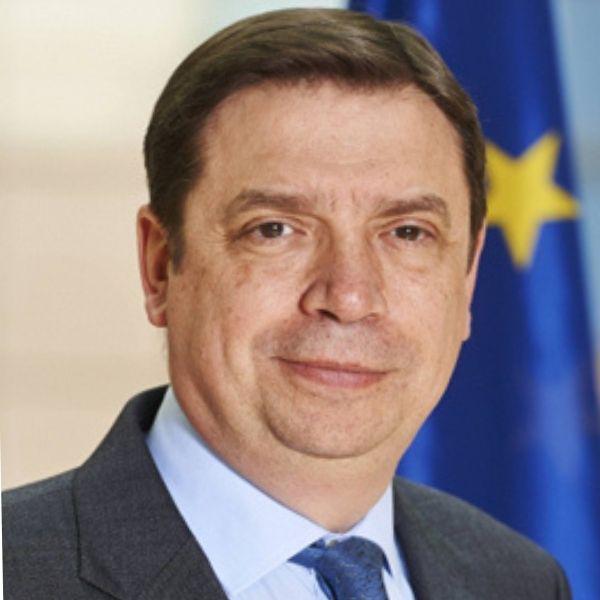
- Luis Planas Puchades, Minister of Agriculture, Fisheries, and Food, Spain
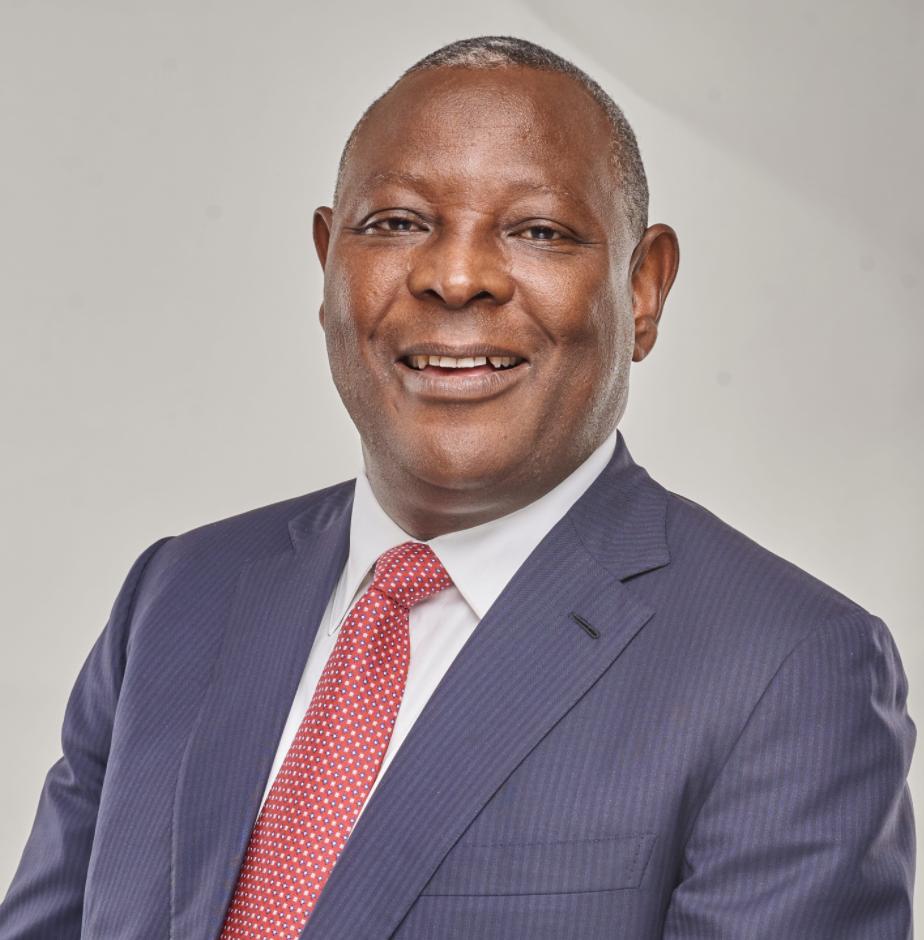
- James Mwangi, Group CEO and Managing Director, Equity Group, Kenya
- Moderated by: Tanvir Gill
3 MIN | Closing and Call to Action
[TANVIR GILL]
Hello and welcome to the launch of the World Bank Group's new flagship report, Nourish and Flourish. Water solutions to feed 10 billion people on a livable planet. Now you may wonder why we are talking about the subject of water use in agriculture at a time when it may seem from the outside that there are other hot button issues dominating headlines concerning geopolitics and disruption in global supply chains. Well, that's exactly the reason why this issue is so important. Right now there is much cause for concern over food output, equitable food distribution and food prices. For countries heavily dependent on food imports, the glaring problem of food insecurity demands urgent attention. Water is at the heart of food security and that is why this report is so important and food security remember is at the heart of jobs, stability and growth. Today, agriculture accounts for 70% That's right, 70% of global freshwater withdrawals. Yet, millions of farmers still struggle with unreliable water access, rising climate shocks, and low productivity. Countries need to balance water and water use in food production because in doing so they will be able to one boost crop yields, two attract more private capital to build scale and three generate major employment opportunities and that's a big one. In fact, on that third point, expanding sustainable irrigation could potentially create at least at the very least 245 million jobs globally. That's quarter of a billion jobs, most of them in subsaharan Africa. So, what's new in this report you may ask? Take a look at the slide that'll just come up for you. Global water use in agriculture is deeply imbalanced today. This map, the world map reflects that imbalance quite perfectly. The regions in pink are overusing water for agriculture. While the regions in green, some parts of subsahara and Africa, some parts of Latam are underutilizing their water resources, which is a big opportunity by the way because at the World Bank Group here, we looking at challenges that can turn into big opportunities and that can lead to huge untapped potential in terms of upping agri output, improving jobs, boosting economic growth and helping human capital, especially providing better nutrition for children. The bottom line being that globally there is an acute problem of water imbalance, not water scarcity. Let me repeat that for you. The bottom line here is that globally there is an acute problem of water imbalance, not water scarcity. And that's an opportunity to expand agriculture in countries where water is available to be able to boost food production so that 10 billion people can be fed by 2050. Bearing that issue in mind, let's kick off the show with more perspective on this topic both in-house and from the outside. I would like to take a moment to extend a very very very warm welcome and thank participants and speakers who are joining us joining this event online today from all around the world. This event is going live and is being streamed online in three languages English, French and Spanish. And may I also remind you that as we speak we have a live chat going on parallelly. So our experts are literally standing by waiting by. We'll be more than happy to address your questions. So keep keep those questions coming in. Keep them coming in because your questions matter and we're really looking forward to more engagement with our viewers through this session. Straight ahead on the show then we have a candid chat coming up with our managing director and chief knowledge officer Pascal Donahghue who in a pre-recorded conversation shared his perspective on the need for more efficiency in water management practices globally that would help generate new and better jobs for the youth today and tomorrow. Here's a slice of that conversation.
[TANVIR GILL]
a time when the world is obsessed about geopolitics and AI. How do you communicate the relevance of this report? Uh how does now become a critical time and an urgent time to address this issue?
[PASCHAL DONOHOE]
Because our world is going to have to feed more people and we cannot feed more people unless we make better use of the water we have. And what this report lays out are the changes that can be made to the water that is available to our planet to meet the food needs of today and the food needs of tomorrow. And we know that being able to provide food uh to people is one of the foundational needs that societies have. So it really is that simple. Without making better use of water, we cannot make the food that we will need in the future. In the absence of that food, we will have higher levels of hunger, higher levels of insecurity, and fewer jobs, right?
[TANVIR GILL]
Can the government do it alone? And how does the government incentivize because you've been a policy maker in the past, how does the government incentivize the private sector to come in with more investments?
[PASCHAL DONOHOE]
So, the government cannot do it on its own. Can't do it on its own because the uh funding needs for water are very large. But the second reason it can't do it on its own, it's because every government has many other needs that it's trying to meet both now and tomorrow. And that's why the private sector has to play a role in relation to it in relation to the investment that the private sector can make and the need for government to be able to direct that private sector investment in the right way. And within the World Bank Group, we think about that happening in three different ways. Um firstly we look at what are the kind of regulatory changes that have to be put in place to allow the private sector to invest. Second then we look at the role in which government can play in mobilizing the private sector. And then in thirdly we look at the role in private capital and of course public capital delivering the infrastructure that is needed in order to tackle great issues and that's very clearly the case with regard to water. What's the human infrastructure we need to supply in terms of education, in terms of training? What's the physical infrastructure we need to provide to deal with in particular the challenge of irrigation?
[TANVIR GILL]
Pascal, so you raise a very important point which is getting the private sector on the same page as policy makers and government bodies, right? Uh but you're talking about the right policies to be put in place, the right legislation to be put in place as also the right financing channels.
[PASCHAL DONOHOE]
on that can be a fairly tricky mix and this is where the World Bank Group can come in uh because the World Bank can come in in a number of different levels in order to be of help. Firstly, a role with regard to policy and that's what this report is all about. What are the trade-offs that need to be recognized? The policies that can be improved, the hard recognition that needs to be made of how choices in relation to the availability of use of water can impact on agriculture and food. That is the role of this report and it's a great example of the role the World Bank group can play. So that's our role with knowledge. Our role then with regard to infrastructure is also very clear because we are also of course a bank. Uh we can play a role in working with governments, working with the private sector in order to co-und the infrastructure that is needed to meet the warfare needs that this report describes. So yes, it is really really challenging. But our organization both as a bank, literally a bank and as a knowledge bank can play a key role in dealing with this really important dilemma.
[TANVIR GILL]
Just wearing your hat as a policy maker, former policy maker, what do you think is the biggest impediment for the private sector to come on board with full gusto? what what has been the challenge in PPP not taking off?
[PASCHAL DONOHOE]
I would highlight two matters uh that I think have influenced it. Firstly, the fact uh that the difficulty in creating a stable and predictable policy environment that matters to private capital in making very big long-term capital decisions. And the second one I would highlight is maybe a sense and this goes back to your first question. The the private sector I think may judge that the issue of water hasn't always received the focus and recognition that it needs from governments. Yeah. And that in turn has influenced their willingness to commit capital to commit the resources of their of their shareholders to tackling this. And what our report aims to do is firstly highlight the profound importance of the availability and use of water. Yeah. Uh to a great uh need with regard to the supply of more food. And then secondly to highlight the policy choices that are necessary to creating an environment which private capital wants to come in and we really do need that uh because the needs are so great. No government uh no matter how committed they are can deal with this on their own.
[TANVIR GILL]
A central theme for us, Pascal, here at the World Bank Group is jobs. And so I wonder how transforming agricultural water management uh is very closely linked to creating job opportunities especially for young people.
[PASCHAL DONOHOE]
uh in in in so many of our countries and economies uh that uh in which we play a role in their economic development, the availability of water is essential to how we deliver our jobs agenda. And that exists on the most basic and the most fundamental of levels. If you can't meet the human needs of uh people within our society, within our workers, of course, they're not going to be in a position uh to play the productive role that they want to and we need them to play within the economic development of their country. And then, as we've just discussed in our interview, if the water isn't available in the first place, yeah, you then can't make the shift from subsistence farming to surplus farming. You can't make the shift from up the value chain when it comes to manufacturing if you don't have the availability of water. You can't make the progress you need in our five areas of job creation in relation to tourism, in relation to manufacturing, in relation to agriculture that we've just touched on. So the water and the availability of it is fundamental to all of that.
[TANVIR GILL]
Thank you very much Pascal for your and this lovely conversation. Many thanks. Thank you. Insightful. So there you have it. You heard it from an ex-p policy maker who previously served as the Minister of Finance for Ireland, Pascal Donahghue, explaining the role of the private sector in building better water infrastructure to help boost food output. Now let's go across to the other side and understand what the private sector players are doing in this regard. Let's bring on board Jean Pascal Tror who's the chairman of Schneider Electric who has very kindly taken the time out to share his insights on how private entities through innovation can galonize more interest in this sector thereby achieving success at scale. John Pascal.
[JEAN-PASCAL TRICOIRE]
Ladies and gentlemen, excellencies, distinguished public and private sector leaders and colleagues joining us from all around the world. Many thanks to the World Bank Group for bringing us together around one of the defining challenges on a big opportunity of our time. By 2050, the world will need to feed nearly 10 billion people on a planet where water is already under severe stress. Today, three billion people on almost half of the global food production are located in water stress regions. Groundwater depletion, inefficient irrigation, climate volatility are already putting food systems under pressure. In low and middle inome countries, agriculture is also a major source of employment. When water becomes scarce or unreliable, food security, livelihoods, and social stability are directly at risk. But there is one encouraging news in all this. Solutions already exist and they can be scaled. At its core, water is a question of efficiency on energy. Using water better, producing more water where it's possible, and moving water more efficiently where water is needed. At Schneider Electric, we believe the transformation of agricultural water management sits at the intersection of electrification and digitization. When you use technology right, it can close the water gap while strengthening food on energy resilience at the same time across the old water cycle from abstraction on treatment to pumping, dissalination, distribution, reuse. We work with public and private partners to design, operate, optimize more efficient digitized on resilient water systems. This includes advanced water recycling, smart irrigation, precision farming, the tracking and elimination of water losses, dalination at scale, datadriven water saving practices on use of AI at every level. By combining automation and digital control with energy efficient electrification, we today can save up 15% of water and improve operational efficiency by up to 25% even in challenging condition. Well, once we've said that, what does this look like in practice? In Egypt, water reuse is a national priority. At the Al-Masama Agricultural Drainage Treatment Project, which is one of the largest water reuse facilities, we treat and reuse around 1 million cubic meters of water every day. This has enabled the expansion of more than 70,000 acres of farmland, turning previously unproductive land into productive agriculture, supporting jobs, food production on people relocation. These principles are not limited to large infrastructure projects. Actually, most of the projects we see today in the field of water are small projects. In India for instance, Schneider Electric supports solar powered digitally monitored irrigation system which empower farmers to operate pumps remotely using mobile phones. This improves safety dramatically by eliminating the need to go on site while reducing energy costs on waterways. Thousands of solar irrigation pumps are already in operation empowering those farmers in improving their crops and the life of their community. Same approach applies directly at the farm level with much larger systems. Through Schneider Aiva smart farming solutions, farmers gain realtime visibility into water flow, so conditions, weather data on system performance. Instead of irrigating on fixed schedules, water is applied based on actual crop needs, saving water while maintaining or increasing yields. Optimization technologies reduce the energy required to more water delivering energy savings of 10 to 20%. Digital tools simplify operations, enable early fall detection, reduce downtime and support new skills. They strengthen rule employment on long-term system reliability. Crucially, these solutions are modular, replicable, and investable. They can be scaled through partnerships with governments, development banks on the private sector, delivering clear economic, social, and environmental returns. We do not need to wait for the next innovation to address the water issue. We can do a lot by deploying at scale what we already have. At Schneider Electric, we stand ready to work with all of you, governments, financial institutions, farmers, and partners across the value chain to turn agricultural water management into a powerful engine for shared prosperity, progress, and sustainability for all. Thank you.
[TANVIR GILL]
Thank you very much uh Jean Pascal for your keynote address and for your commitment to agricultural water management. May I next invite on this show with the drum rolls going the authors of this flagship report Amal Talby who's lead water specialist World Bank Group and Peter Walan who's lead water resources management specialist World Bank Group. They will be joining us and giving us a crisp presentation that highlights the solutions the group is offering to make life healthier for a growing population. Amal and Peter over to you. Great to see you.
[AMAL TALBI]
Thank you Tanvir. Good morning, good afternoon, and good evening. Thank you for joining us to discuss a question that is at the heart of development. Can we feed nearly 10 billion people by 2050 while keeping the planet livable and supporting livelihoods, growth, and jobs? Our new reports, Nourish and Flourish, argues that we can, and it shows how. But first, the broader context. Every day, global agriculture feeds billions of people. It is one of humanity's greatest achievements. But as global population grows by about 200,000 per day on the way to nearly 10 billion by 2050, the question is no longer whether we can produce enough food. It's whether we can do it sustainably. Agricultural water use is out of balance. Food systems and water system are tightly linked and today there are misaligned. As you see on this slide, in some parts of the world, there is water that could support more productive agriculture and more jobs, but it's not being fully leveraged. In other regions, food is produced in ways that deplete water resources, pushing rivers, aquifers, and ecosystems beyond safe limits. So, we have a global food water imbalance. This imbalance will show up in higher food prices, more volatility and greater vulnerability, especially for the poorest household. In a world population growth and changing climate, business as usual will not feed 10 billion people sustainably, nor will we provide decent jobs and livelihood at scale. Before we explore the solution offered by Nourish Flourish, I'd like to hand things over to Peter.
[PIETER WAALEWIJN]
Thank you Amal. Yeah, so the starting point of the report is that context matters. Countries face very different water realities and play different roles in the global food trade. We capture this with two very simple questions on water and food. One, what is the level of water stress? Is a country relatively water secure or water stressed? And two, is it a net importer or an exporter of food? That gives us four types of context. Water secure importers, water secure exporters, water stressed exporters and water stressed importers. Each of them faces different choices. The key point is that the same policy will not work everywhere. Countries need tailored combinations of actions. Context one, water secure food importer. You have water capacity, but you import much of your food. If water can be used sustainably for agriculture, that's an opportunity and in some countries an imperative to overcome lack of access, expand agriculture production and strengthen resilience while building the systems that can actually scale. Context two, water secure food exporter. You're starting from a position of strength. You already produce food successfully. Water stress is relatively low. The priority here is to protect that advantage. Keep improving productivity while strengthening institutions and accountability and make sure growth stays within environmental limits. Contextf free water stressed food exporter. This is a high-risisk position. You're producing export crops underwater stress. The path forward is not simply more water. It is smarter water, higher productivity per drop, better governance and allocation and where appropriate non-conventional sources. And it requires making some hard choices. What to grow, where to grow it, how to bring production back within environmental limits. Context four, water stressed food importer. This is probably the most complex situation. You are dependent on global markets for calories, and you're under serious water stress at home. Here, incremental fixes aren't enough. The work is broader transformation. That can mean shifting crops and production systems, improving water productivity and allocation, supporting economies and livelihoods that are less exposed to water risk. It also means coordination. And it goes beyond irrigated agriculture. An integrated response across water, agriculture, environment, and social policy. This framework with its four context does not give you the answer. It gives you the starting point helping policy makers and societies at large evaluate, make tradeoffs that reflect local realities. Over to you, Amal for more on that.
[AMAL TALBI]
Yes. Let us now examine how we make this transformation a reality. The report offers eight policy recommendations covering the main levers of agriculture water management. The process is sted forward even if work is not. Start with an accurate baseline. Where are you really on water, agriculture, jobs and livelihood? Build coordination across sectors because water doesn't follow administrative boundaries. Use data that set direction. Debate water and agriculture futures and create feedback loops. Set clear goals. Then build service delivery that is performancedriven not just infrastructured driven. And diversify financing bringing private sector investment because no government can do this alone. None of this happens without three foundational enablers which Peter will share now.
[PIETER WAALEWIJN]
The first foundational enabler is vision and coordination. Amal already alluded to this. Countries that successfully transformed agriculture water management had one thing in common. Leadership. Someone decided it mattered, embraced the trade-offs, built the institutions to make it work. Water, agriculture, environment and finance working together without shared vision and coordination. Investments fragment and reforms stall. That brings us to the second enabler, incentives, services. Right now, many subsidies work against sustainability. Engineering alone will not fix that. Too often, agricultural support rewards overuse, pays for infrastructure rather than performance. Shifting incentives changes the rules, which then changes the game. We must move from hardware to services, from distorted subsidies to performance-based delivery, from short-term spending to resource-based financing and risk sharing that attracts private investment. And it's not just about money. Farmers need reliable services, water when they need it, technical support, access to markets, information. When services are reliable, farmers do actually invest. And finally, change is enabled by data and technology. We cannot manage what we do not measure. Too many billion dollar decisions are made with incomplete information. The answer is to institutionalize this water data. Satellite imagery, sensors, digital tools make that information open, usable, and ready for debate, not locked in a ministry, shared, transparent, actionable. When farmers, operators, policy makers, and the general public see the same picture, accountability follows. Without these enablers, even the best investments can fall short. But get them right and agricultural water management becomes what it truly is, a foundation for climate resilience, inclusive growth, and jobs. Thank you. Back to Amal for some key takeaways.
[AMAL TALBI]
Let me close with three things, not conclusions, but invitations to nourish and flourish. The first is an invitation to think differently about context and the definition of success. Feeding nearly 10 billion people sustainably is possible, but it depends on how each country balances food production with water resources. There is no onesizefits all pathway. When we accept that and stop searching for that universal solution, we open a far richer conversation on goals and tradeoffs, one that moves beyond more irrigation, less water, more self-sufficiency to something more resilient and more durable. The second is an invitation to see what's actually at stake. This is not a story about crops and canal. It's a story about people. If we get water and food policy right, one action alone, expanding sustainable irrigation could create at least 245 million jobs. That's generation of livelihood and firmer future. And that number is just sustainable irrigation. before we even count the jobs created through investment on storage, processing, transport, and markets across the value chain. The third is an invitation to be bold because getting there will require more than incremental improvement. It will require U-turns, a fundamental rethinking on how we invest, how we deliver, and how we measure success. We have never had better tools to do it. The innovations are here. The financing models are emerging. The private sector is ready to engage if we create the conditions. So yes, the challenge is immense, but so is the opportunity. So the question is not whether we can transform agricultural water management, it's whether we will act fast enough. Thank you. Over to you Tanvir.
[TANVIR GILL]
Thank you very much Amal and Peter for your insights and key takeaways from this report and as Amal you said this is really uh the story about the people this is really the story about our farmers you know viewers I always feel as an exjournalist that you can have a real sense of any problem only and only by talking to people affected by it people at the center of it uh it's when you hear their pain, their suffering, their struggles that you truly come up with solutions that can potentially transform their lives. In this case, it is the farmers in the fields working round the clock to feed us all to feed you, feed me, feed themselves, trying to yield a better crop so that we can consume better food. It's important to understand their plight because at the end of the day, every farmer matters. Water in farming matters and increasing food output through better use of water is the way forward. So let's take a listen to voices from the field next.
[VIDEO MONTAGE]
Foreign
speech. Foreign speech. Foreign speech.
Foreign
speech. Foreign speech.
[TANVIR GILL]
After watching that video, many of your viewers out there would understand why water forward and agri connect are such core strategic initiatives at the World Bank Group. The next leg of this show will bring together a panel of experts who can talk more about the solutions at hand and the practicality behind executing them as also what can be done to overcome real life challenges. We have a panel discussion coming up on scaling solutions through policy, finance and partnerships. And may I introduce our esteemed panelists for this panel discussion. We are joined by his excellency uh minister Luis Planas Buchadas who's a minister of agriculture, fisheries and food from Spain. Spain as you all know is known for having successfully modernized its irrigation facility uh its irrigation infrastructure. And our second panelist on this panel discussion is Dr. James Muangi who's group CEO and managing director equity group Kenya uh which has expanded access to finance across six African countries including small holder farmers. Welcome welcome gentlemen and thank you so very much for sparing the time to be with us uh on this show. Let me start off with you your excellency Minister uh Planas on the situation in Spain. Now Spain has achieved a remarkable modernization plan of a large share uh for its irrigated land over the past two decades. What were the critical conditions minister that made this transformation possible politically, institutionally and financially you think? And what are two three lessons you would most want other countries to take away from Spain's experience?
[LUIS PLANAS PUCHADES]
Good morning uh from Madrid and thanks uh thank you to the World Bank for this kind invitation and also congratulations for the report nourish and flourish that I think is a an excellent instrument to see the future of the primary sector and challenges that we have to to to face concerning irrigation. Uh I have to say that the Spanish uh haze is a success one. Uh we have uh accomplished in the last 30 years uh transformation of our primary sector about the better use of water. In this sense we have 3.8 8 million hectares that is more or less 22% or our arable land that produces 71% or our output or our primary sector in the in concerning the the the agriculture production. So I I have to say that uh uh this success has been the investment from uh successive administrations concerning irrigation and concerning also participation of farmers in this process. But uh I have to say that the key of all is the good use of water. We are in a zone of the world uh Spain no in the south of European Union very close to the north of Africa where drought high temperatures uh provoke that we have less rain that we had in the past. So we have to make to be as we are uh a country with an so uh strong agri food sector. We are the fourth exporter of the union and European Union the seven of the world. Uh we have a very competitive sector in the use of of water. I I will talk particularly about the modernization of the irrigation. Uh it's uh very important that the new techniques about using less water, less fertilizers, less fto sananitary products are used with digitalization of all the process also because of the cost the use of renewable energies and all that makes I think very clearly a case a study case for for for others. I I am eager always to to cooperate with other countries with farmers from uh from other countries of the world to to show and to share what we are doing in this area. Not only about the use of water but also the use of nonconventional waters and even the use in some specific areas. Something that is more expensive but also needed like this analization. uh for example in the Canary Islands. All that shows that we have a a system that is performing uh that is a great help for the future of our farmers. I didn't want to to not to mention two extra facts and two extra measures that are very very important to that we are confronting climate change. So we need the new genomic techniques uh with seeds and plants that have more resistance to the to have less water and higher temperatures and also we have the risk management uh closely linked with our national system of uh farming insurance. uh all that provides I think a set of instruments not only irrigation but the one on NGTs and the one on farming insurance that provides farmer can we say a protection about the situation of this roller coaster that sometimes is our climate change in this area of the of the world is that I want to to share with others but I know that each country situation is different but I think that our can we say experience is valuable to others.
[TANVIR GILL]
Indeed, Minister and I'm very glad that you highlighted what worked for you uh to boost your agricultural sector uh at a time when many areas are grappling with underutilization of water uh for the use in the agricultural space. And it's also heartening to hear that you're willing to exchange knowledge and technical knowhow when it comes to modernizing agriculture in other areas that can benefit from your experience. I want to go across to Dr. Moangi and ask him about how Equity Group having a strong track record in reaching out to small holder farmers in Kenya has been able to successfully galvanize uh financial support for smallh holder farmers. what financial instruments have proven most effective Dr. Mongi at making irrigation equipment affordable because the price point matters uh and also what conditions need to be put in place for commercial banks to step in and step up access to finance.
[JAMES MWANGI]
Uh thank you very much uh deeply appreciate the opportunity to be part of this conversation. Let me start from the onset uh by saying I'll be sharing lessons from 24 irrigation schemes we have been able to build in Lula Kenya and uh the first lesson is that uh we only succeeded because uh we brought in a partnership between the government ourselves and KFW of Germany the development agency of Germany. uh so a partnership model a private public partnership is what we saw worked with us very well the second aspect of it is that that partnership was able to help us achieve breaded finance breaded finance in the sense that um the government was able to borrow from KFW uh the amount of money 50% of the cost of the project and that was given to the farmers as a grant and the government took the responsibility. Equity bank gave the balance 50% as a commercial loan spread over 8 years so that the tenure allows the farmers to be able to pay the loan comfortably and affordably. uh so that concept of breaded finance uh reduced the cost to the farmer and made uh the whole project affordable and spread uh particularly the cost of infrastructure
[TANVIR GILL]
right it's again very insightful that you touched upon that and we'll come back to that point in a bit once again to you Dr. Mongi but I want to bring in another angle uh into this discussion and your excellency I do want to get your thoughts and minister from Spain on the public private partnership model through the state society for agricultural infrastructure Dr. Mongi I'll just come back to you in a bit. You know that model blends public financing with irrigator contributor contributions to modernize irrigation. Mr. Which elements of this PPP approach particularly those that mobilize and sustain private sector investment are most transferable you think to other countries because you were talking about that exchange with other countries and what lessons would you emphasize for governments aiming to strengthen private partnership to take away from your example.
[JAMES MWANGI]
Yes I think I that oh sorry Dr. Mongi this question is for the minister from Spain. We'll just come back to you Dr. Mongi. Oh, sorry. Thank you. Okay.
[LUIS PLANAS PUCHADES]
No, just just to say that uh that I think that the system works. Uh uh we need public investment. For example, in the last 7 years, we have uh provided 2.5 billion euros to the modernization of our irrigation system. But it's true that the key part is the involvement of the farmers. So through farmers organizations what we call communantes we achieve the fact that some of the financial burden of the of the work is is shared by the by the farmers itself and I think that makes a degree of personal engagement and professional and business engagement that makes I think more sense to the public investment. I I I I I think that this is a an excellent example of uh of what we can achieve because the pro the question is not the only the instrument and the governments the the the result is uh what we are providing in terms of food security that is the real issue right when we when we talk about food security we need to have a stable production of food and I think that is as you said in your question and and that's the elements of what um we I am trying to show. Uh I think the a very good example that can be extended to other countries of the world.
[TANVIR GILL]
Thank you very much minister for that. Dr. Mangi you making the point about financing instruments that can help smallh holder farmers. I just want to add uh another element to uh that thought and to that uh uh train of thought that you have because we're running short on time. So would want to wrap in another question to that point. Kenya's irrigation sector investment plan is recognized as a model for combining infrastructure with financial services and market access both of which are very important for small holder farmers. In your view, what is the role of the private sector in ensuring that irrigation investments actually translate into jobs and economic transformation on the ground from your experience?
[JAMES MWANGI]
I think the first one is organizing the farmers so that our farmers are in organized form and are able to be at the center of the conversation. The second one is capacitating and building um their capability while at the same time delisking them. so that commercial money can um follow through. Then the the third one is building an ecosystem. If you are building irrigations, you require pers, you require electricians in the rural areas so that the project is done affordably with the right capabilities. And the last one is linkages to the markets. We need to ensure that the head produce access the market so that the farmers are encouraged by uh the cash they received.
[TANVIR GILL]
Wonderful. Thank you so very much uh Minister Planos as well as Dr. Mangi for joining us on this panel discussion and giving us your thoughts on agricultural water management. I'm sorry I wish we could carry on with this discussion but we have just 15 minutes left on the show. We really really appreciate your time and your insights and your thoughts uh and also the case study that you presented with the success that we've seen with agriculture water management in Spain. Thank you very much once again uh and of course the support that equity group has extended out to small hold of farmers. Thank you once again for your time. I would like to bring back on the show Amal Talby who's our lead water specialist here at the World Bank Group to field some viewer questions. Remember at the start of the show I told you that we would love to have questions from all of you tuning in. Well, some of you have sent us uh questions. We can't take all of them because we have just about 15 minutes left but we'll try and uh field as many questions as possible through the course of the next few minutes. Amal, lovely to have you back. Uh we have the first question coming in from Spain Amal which you want to take up. Um what technological innovations could transform uh transform rather uh water management and agriculture you think?
[AMAL TALBI]
So agriculture water management the good news is that it's undergoing a profound digital transformation and innovation and really we see innovation at the center of it. So we look at remote sensing we can see actual monitor uh crop health evapo transpiration and water productivity in near real time and actually in a way that is much cheaper. So we have really those benefits and we have artificial intelligence and machine learning that go even further where we can have also predictive models. So on the ground, for example, soil moisture sensors, laser land leveling, irrigation pressurized systems, smartphone apps such as ER track in Uganda are changing how farmers make daily decision. Solar pumps still a bit expensive but at uh capital investment but operating is very low and it's mitigating. So in a nutshell agricultural water management indeed is not just an infrastructure question it's data information shifting to more accountable and performance service using emerging financial model for farmers to access to financing exactly what Dr. Mangi has mentioned and attract private sector investment. Thank you.
[TANVIR GILL]
Right Amal the second question is from Kenya and this is a very interesting one. I do want to get your thoughts in on this one. I want to listen to your views on this one. What role can women and the youth play in sustainable water management and food production? Because agriculture is typically seen as an old man's profession so to speak, right? Or an elderly man's profession so to speak. You know, there's some sort of tag associated with that. And so how can agriculture become a lucrative career opportunity for the youth?
[AMAL TALBI]
Let me start by saying actually the reality is in the world we already have manys and you would already uh grow the food that feed the world. So they are already present. What we need is an agricultural water management that is a powerful tool to improve their access to finance credit market. We we've seen just sustainably expanding irrigation, we could generate more than 245 million jobs globally. And I want to say this are not abstract numbers. We're talking about livelihoods, economic independence and dignity for women and youth. Helping small holder farmers, helping farmers, we've heard it from Minister Planless and from Dr. Mangi is it means that we can have women and youth contributing to actually boosting the productivity and what we see the data shows us more and better food adopting innovation they are really high adopter of innovation and building the climate resilient food system thank you
[TANVIR GILL]
all right uh I also want to take one more question from our viewers Amal before we move on and bring in the poll results. Uh again, we conducted a viewer poll that I'll talk to you about in just a minute. We'll get you the results in just a moment. Yes. Okay. Those results are on your screen. Uh but just one more question on governance frameworks because we spoke a lot about that as well, Amal and institutional models uh that can effectively align sustainable water management, food security and private sector participation. Where do you think uh the secret source lies in success here?
[AMAL TALBI]
I'll I'll tell you what is really what we see as the secret source is turning water infrastructure into lasting food security is not just one reform here one technology or one investment it's a whole system change and if we want just an an example to capture this let's take Spain we we've heard from minister plan Spain combined physical modernization of irrigation with digital innovation, institutional reforms, a new financing framework. And what we see the result was a U-turn, measurable gains in agriculture, water, productivity. So when you get the full package right, exactly what Peter was mentioning, the the three levers, when you get that full package right, the impact is profound. and every region of the world we've looked at Americas, Africa, Europe and Asia. There are examples of innovation and practices that have delivered real result with solution that are working. We couldn't capture of course all of the example of innovation and solution in a global report that is less than 50 pages on such a vital and vast topic. But we tried to reflect many and let me tell you why. Because contrary to what some may perceive as a backwards sector, agriculture, water management is very much alive and buzzing with innovation. So we all collectively need to show what works, what we've have have learned and help scaling up. And to illustrate quickly this point, if you look at the World Bank Group water strategy implementation plan, we have what we call scalable solution. There are seven scalable solution to address water security and accelerate results and benefits on the ground for people.
[TANVIR GILL]
Wonderful. Uh Amar, stay right there because we conducted a poll that you're aware of as well uh to get in viewers to participate and share with us their thoughts on what priority solutions can be put forward uh to solve the problem of agricultural water management because it's about everybody all the big brains coming together and figuring out solutions that are sustainable for the long haul. uh we got participation from over 700 people and these are the findings of the poll. These are the poll results on your screen. The overarching message coming straight out from this poll is that small is big and that you cannot underestimate the strength the power of the smallh holder farmers especially when they come together and form agricultural cooperatives. So smallcale private investment is a major driver of irrigation growth is what is coming out from the poll results. There's not been a majority view but 37% of the respondents did think that that was important. When conditions are right, farmers can co-invest alongside public support. So they're talking about empowering small holder farmers through financing tools, digital tools, and access to markets. 33% believe investing in Brazilian agricultural water infrastructure which is what Amal alluded to is very very relevant for the sector and the future of the space. 1313% believe reforming policies having a supporting policy framework incentives and financing frameworks will help take this sector forward. 12% believe using data and digital tools to improve water and land use will also be important. While 6% uh a minority say scaling public private partnerships across value chains can help can contribute. Amal Talby reporter of Nourish and Flourish one of the authors of Nourish and Flourish water solutions to feed 10 billion people by 2050. How do you react to the poll results and its findings?
[AMAL TALBI]
So listen, these results are telling us important something really important and I want to start with that. Let us look at who is at the center of this conversation. Small holder farmers. 84% of the world farmers are small holders. They work on less than two hectare of land. We're talking about 500 million farmers. 500 million entrepreneur because every farmer is an entrepreneur. They adapt to climate shocks, navigate markets, innovate with whatever resource they have. So at and this is precisely why we see the potential of artificial intelligent digital tool financial and institutional innovation that is really profound in agriculture water management because when you derisk investment for 500 million entrepreneur the aggregate impact is staggering that makes a real change and we heard uh Pascal then we No single actor can transform agriculture water management alone. No single government can transform alone. So this challenge is at its very core a partnership challenge. one that extend beyond public sector, beyond government and farmers to private sector, civil society, partners, philanthropies and yes each of us as consumers we make choices and these choices send signal. So we all have a role to play and this poll is reflecting exactly that the system change we need to feed 10 billion people on a livable planet.
[TANVIR GILL]
Indeed Amal Talby thank you very much for this report. Thank you very much for your effort the effort that you put in your team put into bringing us this report and helping understand water solutions on a sustainable basis that can help feed 10 billion people by 2050. Thank you very much for reacting to the polls and taking our viewer questions. Before we go, if we have made you curious enough, here is the detailed report. Nourish and flourish to feed 10 billion people by 2050 on a livable planet. Please scan the QR code on the screen and get your copy today. If you want to understand more about food production, agricultural production, water use and agriculture, this is a report that you need to read from the house of the World Bank Group.
And in my concluding remarks, the urgency of this issue is clear. Water dependent sectors such as agriculture, energy, and industry support around 1.7 billion jobs worldwide. This means water security underpins our jobs, incomes, productivity and the growth of our economies. That is also why water is one of the strategic priorities for the World Bank Group. Through the new water forward initiative, which you will hear more about at the upcoming spring meetings, and the ongoing agricon initiative, the World Bank Group brings together its expertise in financing and partnerships to help countries address their most urgent challenges in access to water and food production so that we can have better lives, healthier lives in the future. Stay tuned for more on Water Forward at the upcoming World Bank Group spring meetings that are lined up from April 13th to April 18th. Mark those dates on your calendar because those are important dates. We will get some big headlines there where when it comes to our water forward initiatives. So stay tuned for more. We will see you there. For now, take care. Thank you very much for watching and good luck. Have a great day.