[ANITA ERSKINE]
Ladies and gentlemen, good morning, good afternoon, good evening, good night. Depending on where you are connected with us from, but those of you who are here with us in Tokyo, good morning to you and you can say good morning back to me. Well, fantastic. So we are ready. My name is Anita Erskine and it is an honour to be here at the Universal Health Coverage. Of course, this is the inaugural forum right here live in Tokyo, Japan. We are bringing this wonderful opening ceremony to you live on our World Bank Live YouTube channel. But also you'll be watching the entire day's proceedings on the official Ministry of Health, Labour and Welfare YouTube channel. So if you're joining us from around the world, you are also welcome. Welcome, ladies and gentlemen, we are gathered here in our numbers for a very pivotal moment. Undoubtedly, countries are doing everything possible to provide access to health services. Even though we know that health financing is shifting now, ultimately the reports we're seeing, the evidence we're seeing goes to show that we're perhaps not making enough progress towards universal health coverage. And this is particularly seen in government where of course, we've got low and lower middle income countries and where their health spending is below the minimum benchmark for UHC. Naturally, we also know that partners, contributions, collaborations is contracting. Now, despite healthy populations underpinning economies and boosting social progress, a lot of people, countless people are unable to access healthcare. And this automatically has an impact on our economic growth, our economic prosperity. But there is light right in the middle of the tunnel, ladies and gentlemen, because primary Healthcare is the fastest and most effective way to expand this access. It allows us to avoid illness.
[ANITA ERSKINE]
And ultimately, it takes pressure off hospitals. Investments in health also fuel job creation. Children are happier when they go to school. Adults are stronger when they go to work. We will see that our economies will be productive, will be resilient. So today, right now, right here in Tokyo, Japan, today is a day for opportunity and leadership. We've seen all you countries, we've seen all you nations and governments stepping forward. We humbly embrace your partnership. The partners that are here, here to unite for renewed determination is what we like to call it. Here in Tokyo today, we are making history to ensure that indeed, no individual is left behind due to lack of access to healthcare facilities. So, ladies and gentlemen, you look at this not just as another conference, it's not another talk shop. It is a pivotal moment. It is a turning point from country to community to organization to institution. We are here to align together to ensure that health for all truly means health for all. And it's something that we can see and enjoy in our era. My name is Anita Erskine. It's an honor to be your host throughout the day today. But ladies and gentlemen, let's start off this. I would like to call it this gathering, this celebration, this pivotal moment by taking you on a journey, what it looks like to have people, partnerships and progress that define us, that defines health for all. Take a look at the video.
[VIDEO]
Good health is a human right and the foundation of development and prosperity. It empowers people, creates jobs and drives economic growth. Equity is essential, making sure everyone gets the care they need. But healthcare is out of reach for billions of people. A visit to the health clinic can be a gamble. The lights may be out, the medicine may be gone, there may be no doctor. For millions of people, the cost of care can mean skipping meals, education or work. What's the answer? Investing in health means that all diseases and conditions will be detected early, making sure that we have a healthy population networks to prevent this community from any disease and easy also help the communities also to reduce maternal mortality. Together, we can do more. Let's unlock the reforms and investments needed to strengthen affordable primary care. Expand coverage, train health workers, and make essential medicine affordable for all, creating healthier lives, economic opportunities, and jobs for millions of people. Universal health coverage means leaving no one behind. Join us to advance healthcare for all.
[ANITA ERSKINE]
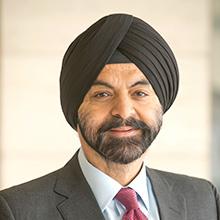
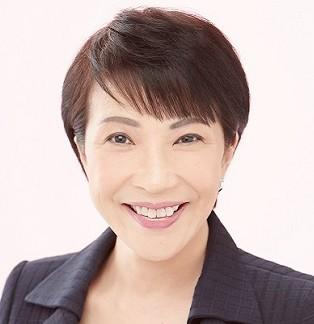
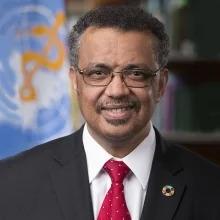
Ladies and gentlemen, join us to advance healthcare for all. It is now my singular honor to bring to you a special message from the Prime Minister of Japan. Ladies and gentlemen, please warmly welcome joining us by video, Her Excellency Prime Minister Takaichi, President Ajay Banga of the World Bank, Group Director General Tedros Adhanom Ghebreyesus of the World Health Organization, Honorable Ministers of Finance and Ministers of Health, all esteemed guests.
[SANAE TAKAICHI]
It is truly an honor to welcome you all here in Tokyo. I would also like to express my deepest appreciation to Professor Takemi Keizo and everyone involved whose dedicated efforts have made this forum possible. The Government of Japan has long been committed to advancing universal health coverage UHC to protect the lives, livelihoods, and dignity of every individual, and to achieve quality employment and sustainable economic growth supported by a healthy workforce. It is essential to achieve UHC and ensure that all people have access to quality health services at an affordable cost. Since achieving universal health insurance coverage in 1961, Japan has ranked among the world's highest in health standards, thanks to improved access to healthcare. This achievement contributed to a rapid economic growth and social stability in Japan. Japan has also actively shared its experience and expertise in health and medical care with the international community and supported the establishment of health systems in developing countries. In 2017, Japan hosted an international conference on USC here in Tokyo, where the then Prime Minister Abe Shinzo called for strengthening the momentum towards promoting USC. In 2019, Japan convened the first ever joint session of G20 Finance and Health Ministers in Osaka, creating a new global trend of collaboration between finance and health authorities. Top of Form Together with the UN High Level Meeting on USC held in the same year, this marked an important step toward charting a path for achieving sustainable UHC. Against this backdrop, it is highly significant that the USC Knowledge Hub is being officially launched here in Tokyo today in collaboration with the World Bank and WHO. I am confident that this hub will serve as an international platform for supporting the development of sustainable health financing by enhancing the capacity of finance and health officials in developing countries. I warmly welcome the eight countries from Asia and Africa joining the training in its inaugural year and look forward to seeing many more countries engage in this initiative in the future. As the host country, Japan will work closely with the World Bank, WHO and other like minded partners to strongly support the activities of this hub. I hope this forum will mark an important milestone in demonstrating our strong commitment to achieving UHC and in jointly shaping the future direction of global health beyond 2030. Japan is determined to work hand in hand with all of you to build a future where everyone enjoys good health. I offer my best wishes for the great success of this forum, and I extend my sincere wishes for good health to all of you. Thank you.
[ANITA ERSKINE]
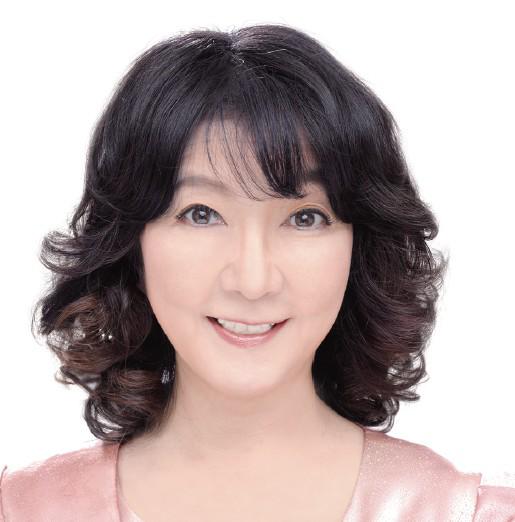
Thank you, your Excellency. And now ladies and gentlemen, it gives me great pleasure to bring you to this moment where we will witness the signing of the UHC Knowledge Hub here at the Universal Health Coverage High Level Forum 2025. Please allow me to bring to the stage our Co host. Please warmly welcome Doctor Tedros Adhanom Ghebreyesus, Director General of the World Health Organization, with a round of applause. Joining Doctor Tedros is Mr. Kenichiro Ueno, Minister of Health, Labor and Welfare of Japan. Also joining them is Miss Satsuki Katayama, Minister of Finance of Japan, at our high table. Please warmly welcome the President of the World Bank Group, Mr. Ajay Banga. And now, ladies and gentlemen, this significant moment is not only for the books, but one also for inspiration. What is being signed is a joint collaborative project among the parties. The Hub aims to advance UHC by providing capacity building on health financing to senior officials of both finance and health authorities in developing countries. It also plays an important role in advocacy for strengthening political momentum for this agenda. Why is it unique? Health and financing ministries will come together. Scalable and replicable solutions will be seen. There will be a Co design of programs and reforms. So by signing this document, the Co hosts are committing to come together, bring others on board, contribute expertise and resources, push the knowledge frontier, of course, share solutions and coordinate efforts to strengthen capacity for health hand in hand with countries. And now ladies and gentlemen, the signing is taking place. And after it has taken place, a round of applause. I would now like to ask our Co host to take a photo with a signed document. Another round of applause. This is a great, great moment. And ladies and gentlemen, today after the signing ceremony, our Co host will be back for an important Co host discussion. But while they're taking their photos, a little bit of information. Today you will hear from the WHO, of course, from the World Bank Group, and this will be on the latest findings of the Global Monitoring Report 2025. In other words, the state of UHC. This will highlight, of course, where countries are advancing and where urgent action is required. We then move swiftly later on to session one, Partners Unite, where we'll hear from ministers and partners on collaborative efforts highlighting their contacts. Ladies and gentlemen, the photo has been taken. A round of applause for our Co host. I'm going to ask our Co host to kindly take their seats while we reset for our first discussion. Ladies and gentlemen, it's worthwhile knowing that this forum reflects a shared recognition, aligning global support behind country priorities, which is more important than ever. Through Health Works, through the Leaders Coalition, through the Compacts process and now through the UHC Knowledge Hub, as you have seen, we are building a platform for collective action grounded in evidence, driven by country leadership and focused on measurable impact across every session. Today you will see a clear through line country leadership, practical reforms, stronger collaboration between health and finance leaders. You will also see how to make bridges between public and private innovators and providers and aligned support from global partners, all working toward shared goal of delivering the quality affordable health services to more people in more places. Ladies and gentlemen, today we humbly ask you to be part of our deliberation as we look at all our compacts and our commitment circles, which are coming up pretty shortly. Where ministers will present their compacts, including key reforms, domestic financing commitments and areas where partner support is truly needed and where partners respond, sharing how they are aligning behind country practices. The session will close with remarks from the Government of Japan. And as I said earlier on, this session is live on World Bank Live and of course on the official YouTube channel of the Ministry of Health, Labour and Welfare. Later on, you will be able to see Session 3 which looks ahead to the road to 2030 and beyond. We will hear a keynote on today's rapidly changing global health landscape and then move into a high level panel discussion on the financing and policy shifts needed to achieve health for all. A spotlight conversation will examine how we shape the future of health, including in relation to key milestones such as UN meetings and of course the end of the global crisis. Ladies and gentlemen, as earlier on mentioned by my colleague, we do have live translations for your use. Channel 1 is English, Channel 2 is Japanese and Channel 3 is French. Later on as well, we would like you to take advantage of our Wi-Fi which is for all the participants. So do do well to be connected. Ladies and gentlemen, and now we move on to a very pivotal moment. It is time for us to hear from our Co host. I will have the pleasure of joining me or having this conversation with the Director General of the World Health Organization, Doctor Tedros Adhanom Ghebreyesus. If you may kindly join us up on stage, please welcome back to the Minister of Health, Labour and Welfare of Japan, Mr. Kenichiro Ueno. We are also joined for this conversation by the Minister of Finance of Japan, Miss Satsuki Katayama. And last, definitely not the least, please warmly welcome the President of the World Bank Group, Mr. Ajay Banga. Please, a round of applause. Thank you, Sir. Ladies and gentlemen, I think we need a louder and Wilder round of applause for our Co hosts, for doing this for the first time, for our countries, for our partners, this is indeed a pivotal moment. But we jump straight to this conversation. Minister Katayama, if I may start off with you, can you share the importance of strong collaboration between finance and health authorities?
[SATSUKI KATAYAMA]
Minister, thank you very much for chair. I'm delighted that we have now officially launched the UHC Knowledge Hub here in Tokyo and together with all of you who share a common aspiration to achieve UHC and the UHC Knowledge Hub is established to provide training on health financing for senior finance and health officials from developing countries. It is created through a strong partnership among the World Bank, WHO, and Japan's Ministry of Finance and Ministry of Health, Labour and Welfare. In this sense, this hub truly embodies the collaboration between finance and health authorities. And as you mentioned, Japan has consistently emphasized the importance of finance-health collaboration on the global stage. There are three main reasons. First, advancing UHC requires an economic policy perspective. Improving health is a worthy goal in itself, but at the same time, it also underpins sustained economic growth by fostering a healthy and productive workforce. Japan established a universal health insurance system in 1961, which contributed to social stability and rapid economic growth. This experience demonstrates the importance of promoting UHC at an early stage of economic development. Second, UHC needs strong financial backing. Domestic resources such as taxes, insurance premiums and co-payments should be the primary source of funding. External funding may also be necessary depending on the country's development stage. Combining these sources and keeping financing stable requires active involvement from finance authorities. Third, as healthcare spending is a major budget item, making it efficient and sustainable is an important fiscal issue. Many developing countries face competing needs for investment across different sectors to support long-term growth in allocating more resources to health. Under these conditions, health systems must be cost-effective and sustainable. To this end, it is vital to manage costs, including prices for medical services and medicines, and to respond proactively to demographic changes such as aging. And, as I have outlined, achieving UHC requires sustainable health financing made possible by close finance-health collaboration. We hope the UHC Knowledge Hub will deepen such cooperation and support country efforts to achieve UHC. And Japan itself faces the major challenges of maintaining a sustainable healthcare system amid rapid population aging. We look forward to learning together and moving forward with all of you. Thank you very much.
[ANITA ERSKINE]
Absolutely, we are moving forward together. And that brings me to you, Minister Ueno. What are your reflections on the progress of UHC in Japan and the expected roles of the UHC Knowledge Hub?
[KENICHIRO UENO]
Distinguished guests, welcome to Japan. I would like to express my heartfelt appreciation for your attendance at the UHC High Level Forum. Just now, together with President Banga of the World Bank Group, Dr. Tedros, Director-General of the WHO, Minister of Finance Katayama and myself as Minister of Health, Labour and Welfare, we have the honour of signing the agreement to establish the UHC Knowledge Hub and officially launching it before the distinguished health and finance ministers of various countries, government representatives, numerous international organisations, public-private partnerships, philanthropic foundations, private sector partners and eminent experts gathered here today. I am truly delighted that we were able to mark this important occasion together. Japan has long positioned global health as one of the key pillars of its diplomacy at the Ministry of Health, Labour and Welfare, whose mission is to safeguard the health of our people. We have also placed the promotion of UHC at the centre of our vision for global health. Furthermore, in order to advance UHC, the Government of Japan has worked as one to promote its adoption, beginning with our efforts leading up to the adoption of the SDGs at the UN Summit in September 2015. Since then, we have consistently highlighted the importance of UHC in international fora, such as the G7, G20 and the United Nations General Assembly. The UHC Knowledge Hub, established today, represents the culmination of nearly 20 years of our collective efforts. The hub will serve as a global centre for gathering and sharing knowledge essential to achieving UHC, while also providing capacity building support for health and finance officials in developing countries. Japan achieved universal health insurance coverage in 1961 following the introduction of our National Insurance system in 1925, and since then we have continued to develop the system with a strong emphasis on equitable access and financial protection. Japan's universal health insurance system has four principal characteristics. First, every person in the country is covered by public medical insurance. Second, individuals are free to choose their medical institutions. Third, medical services are provided at affordable costs. And fourth, the system is based on social insurance supported in part by public funds. However, in Japan, as in any country, the pursuit of UHC is never complete. It is essential to adapt our systems to demographic shifts, changes in disease structure and other evolving circumstances to ensure long-term sustainability. In Japan, as we face a super-aging society, we continue to implement a range of reforms in response to the medical needs of our people and the physical realities we confront. As a fundamental pillar of society's infrastructure and as a means to protect the survival, daily lives and dignity of every individual, we believe that achieving UHC is indispensable to realising human security. In Japan, it is evident that our health insurance system has served as a foundation not only for economic development but also for resilient responses to health crises such as natural disasters and pandemics. At the same time, fiscal and healthcare systems differ widely from country to country, and the pathways towards achieving UHC vary according to each nation's history, culture and circumstances. It is therefore essential to pursue approaches that are responsive to these diverse contexts. Today's high-level forum on UHC is an important opportunity for all stakeholders to share an understanding of the current status, challenges and future directions of efforts to achieve UHC in each country and across the international community. It also serves as a critical venue for discussing the way forward in global health beyond. This year marks the 100th anniversary of Japan's journey towards achieving UHC. In addition to sharing our own knowledge and experience, we will continue to gather and disseminate insights from countries around the world, contributing to their progress towards UHC. We look forward to your cooperation and support in ensuring that this new platform, the UHC Knowledge Hub, translates into concrete action that advances the achievement of UHC globally. Thank you very much for your attention, Minister Ueno.
[ANITA ERSKINE]
So that brings me to you, Dr. Tedros. I mean, we've heard about Japan's progress. We've also heard about the challenges. And I would like you to share with us the state of health for all, the urgency for action and perhaps the opportunity ahead.
[TEDROS ADHANOM GHEBREYESUS]
Thank you, Arigato Gozaimasu. First, I thank Prime Minister Takaichi and Japan for its continued leadership. And congratulations to Japan, first ever female Prime Minister. Not only is Japan one of the world's leading advocates for UHC, it's one of the leading examples of how to achieve it and one of the leading supporters of UHC globally. Also, I would like to pay tribute to the late Prime Minister Abe, and as you can see, the stability of the commitment to UHC. And of course, thank you to our friend Keizo for the matchmaking and for your, you know, commitment to UHC. Today, WHO and the World Bank are launching the latest edition of the UHC Global Monitoring Report, which provides a snapshot of progress towards UHC. There is good news and bad news. First, the good news. Since 2000, service coverage and financial protection have both improved by about one third globally. Now the bad news. In recent years, progress has stalled. The latest data show that 4.6 billion people still lack access to essential services and 2.1 billion people, more than one in four globally, face financial hardship because of health costs. Most of these people, 1.6 billion, are living in poverty. Reinvigorating progress on UHC requires three things. First, strong collaboration between ministries of health and finance and I'm very pleased to see so many ministers of finance here. Second, investments in primary healthcare and financial protection are essential. Primary healthcare can deliver 90% of the health services people need, but there is no point in providing health services if people are impoverished by having to pay for them. And third, we need the best evidence on which to base decisions about policies and investments. I'm therefore delighted that together with the Government of Japan and the World Bank, we're today launching the UHC Knowledge Hub here in Tokyo. And congratulations also to the first cohort of countries, excellencies, their colleagues and friends. The Constitution of the World Health Organization, which entered into force in 1948, was the first instrument of international law to affirm that health is a fundamental right for all people, an end in itself. But at the same time, by the way, it's a means to prosperity and development as well. Universal health coverage is the ultimate expression of the fundamental right of health to all people. My thanks once again to Japan, the World Bank and all of you for your commitment. We are realizing the right to health, not as a luxury for some or for most, but a right for all. Arigato Gozaimasu, back to you, moderator.
[ANITA ERSKINE]
Thank you very much, Dr. Tedros. So we, we, we've heard the good, the bad, but there is hope and there's opportunity. Exactly. That's—I bring it to you, Mr. Banga, at the end of the day, President of the World Bank Group, where health is absolutely central to the Bank. Can you share what the Bank has achieved since announcing its health goal 18 months ago?
[AJAY BANGA]
Thank you. And I just want to, before I get to that, I want to make sure that I add my voice of gratitude to the Japanese government and of course to my partner Tedros. And there's a number of other partners here, ministers from other countries, but also our partners from philanthropy and others like Peter Sands from the Global Fund and the Gavi Alliance. I think you have to realize that it's going to take all of us to make this mountain move. And so we need to be in it together. And the hub is just one part of it. And the hub is a way to ensure that knowledge gets exchanged and advocacy happens and best practices get exchanged and some financing gets created. But the real task is in the countries where the compacts are really interesting and very important. The compacts are how governments of finance and health, ministers of finance and health and leaders of the cabinet sign up to do the things that will be needed to ensure that this lofty goal of extending coverage to all actually comes true. So I think the idea of health for all is, as I said in an earlier session, an important issue for economic security, but also national security. I just think that you cannot get safe, secure, healthy, growing countries without health being a part of what everybody needs to have. So it's not just the fact that they should have it, it's the equity in which they get it, the fact that they can get access to diagnostics that they can trust. Those of them who need higher quality of healthcare can then get it, and they can get it at a price they can afford in a way that ensures that their access to insurance exists. These are all the models that Japan has built. Other countries are doing. So there are a number of them in the audience. There's Indonesia, Ethiopia, Turkey and India have done great examples of connecting primary health clinics through digital technology. Egypt and Morocco are doing really interesting things with insurance. So there's a lot of lessons here for us to work with. How did this transfer into us? And that's your main question. About a little while back, a year and a half ago, I met with this young gentleman in front, Takemi-san. He's a complicated guy because when he gets hold of you, you cannot let him go. You know, it's like he catches you and you have to agree with him. And one of the things he caught me on was he said you cannot get growth without health. I think what that means is not just that people need to get access to healthcare, but the aspect of job creation in the emerging markets is really important. They're going to have a demographic bulge coming through in the emerging markets. They need hope and aspiration. One of the best ways is for them to have the dignity of a job, of earning. Healthcare is an enormous job creator. Nurses, medical diagnostic technicians. You saw that in the video in the opening. You get things like midwives, you get PPE manufacturing, you get manufacturing of medical devices, you get people in digital services. All this is part of creating a healthy economy. We committed to reach 1.5 billion people with primary healthcare partly out of that discussion with him. And we don't know that we could actually have a plan to tell you that we knew how to get to 1.5 billion. But the idea was to create a lofty goal and then run after it. And in that, between then and now, we've reached about 375,000,000, largely, as I said, because the countries in this room. But there's a long way to go between here and 1.5 billion, and I think the country compacts are a critical part of it. I think avoiding fragmentation in a world of declining ODA is an even more important part of it. And then creating the right resources domestically is a third part of it. But then the fourth most critical part is how we entice the private sector to play the right role with the right guardrails in the delivery of this primary healthcare. And I think getting that right requires these country compacts to deliver policy and clarity on regulatory changes that countries need to make to ensure that a private sector player who knows that this is an investment that I can look forward to getting an adequate return on the right kind of risk-return tradeoff is what this is about. And I think the private sector's technology, innovation, ingenuity and capacity and people are what we need for this. And that's kind of putting it all together. The last thing—I said this in the prior session, which we had separately—that I don't want to lose sight of the opportunity of expanding manufacturing of vaccines, medicines and medical devices and PPE into other countries. We saw during COVID that we had two kinds of two-speed returns. We had countries that had access to vaccines and those that didn't. We cannot in the 21st century accept that. And so we have to find a way to get more equitable access to these devices and vaccines and medicines as well. And that's the key part, again, where the private sector will be required. And so that's where I am.
[ANITA ERSKINE]
Wonderful, Mr. Banga, while I have you here, we're out of time, but 30 seconds—if you have to say where we're going next, what we need to do next, what would that be?
[AJAY BANGA]
Get to work, get to work, Dr. Tedros, I think they're saying, yeah, I think get to work.
[TEDROS ADHANOM GHEBREYESUS]
The action is very important. And we have now the first eight countries—they will lead, but we should support them. And we have some models where, you know, country ownership actually works. And I would like to bring one example. Actually the Buffett Foundation, we're partnering with 17 countries and you can see in that partnership really clear ownership in its true sense, actually ownership by countries in its true sense. So let's use models that work and help countries to implement, starting from the eight. And then of course, we have UHC Partnership in 125 countries. So we're excited that eight countries are starting, but we have to expand it with the World Bank and other partners to all countries who can benefit from the UHC Hub. Thank you.
[ANITA ERSKINE]
Thank you very much. Ladies and gentlemen, the UHC High Level Forum has begun with this very pertinent co-host conversation. Please, a round of applause for my contributors, Dr. Tedros Adhanom Ghebreyesus, Director-General of the World Health Organization, Mr. Kenichiro Ueno, who is the Minister of Health, Labour and Welfare of Japan, Ms. Satsuki Katayama, the Minister of Finance of Japan and Mr. Ajay Banga, President of the World Bank Group who says get to work.
[Audio cues such as applause]
A round of applause for our panelists. And now, ladies and gentlemen, as our co-hosts and our panelists are grabbing their seats, it is now time and with honor and with pleasure for us to take you into the world of someone who is at the front lines. Excellencies, ladies and gentlemen, let's take a trip to Indonesia. Take a look.
[VIDEO]
I work at the healthcare facility that is very, very remote. We have to go there by watercraft. For five years I have been a doctor in this healthcare facility. I feel now that we have ultrasound equipment available people are more enthusiastic to come to the health facility. Because, now they don’t have to go to the city to get health care services I don’t want to see patients have to spend the 10 thousand, 20 thousand
[Indonesian Rupiah]
to travel to the city to buy medicine. I don’t want to see that especially for the people of Papua because I’m Papuan. I am proud. I want them to be served so that they can be the same as the children in the city. They are healthy. They are always healthy.
[ANITA ERSKINE]
Ladies and gentlemen, a round of applause for Dr. Martha Lisa Sylvana Sosor, a doctor from Indonesia. As we well said, a round of applause for all her efforts. We know that strong political leadership is essential, but progress also depends on evidence. With that in mind, we now turn to Dr. Ellen van de Poel, Senior Economist at the World Bank Group, and Dr. Kalipso Chalkidou, who is the Director, Department of Performance, Financing and Delivery at the WHO, to provide fresh insights on who is being left behind and what actions are most urgently needed to close those gaps. Ladies and gentlemen, a round of applause for Kalipso and Ellen.
[Audio cues such as applause]
[ELLEN VAN DE POEL]
Universal health coverage, it's not just about improving people's health, right? It's also a driver of economic prosperity. When countries invest in universal health coverage, they're investing in their people, in their workforce and in long term growth. But as Dr. Tedros was already pointing out, progress is slowing down, so we really need to take action. The numbers are pretty stark. 4.6 billion people lack access to essential services, 2.1 billion face financial strain from accessing healthcare costs. And 1.6 billion, and this is one out of five worldwide, right, have been pushed deeper into poverty because of health expenditures. So this means that for many people in this world, they have to make very tough choices. They have to decide between getting the medical care they need or between paying for essential services such as food and housing. So in this way, a health crisis very quickly becomes an economic crisis. We are making progress, though. Since 2000, service coverage has consistently gone up and the share of households suffering financial hardship has consistently gone down. Actually, in I think more than half of the 138 countries that were assessed, we've seen progress on both of these fronts at the same time. And this is really significant because this happened in a time where countries were dealing with a multitude of crises. COVID-19, rising debt, economic shocks, climate crisis, conflict, all of those put additional strain on both households and governments' budgeting capacity. But this progress masks serious gaps. The poorest countries remain the furthest behind. Despite fastest improvements, they still have the lowest coverage and the highest financial hardship. And that's in large part because half of all health spending in these countries comes out of household pockets. Within countries, inequalities are enormous. Rural women, people with less education and poorer households struggle far more. Amongst the poorest, three out of four face financial hardship when they're accessing health services. In the case of the wealthiest, the number is one out of 25. Here are two troubling facts. First of all, proportionately, overall financial hardship due to healthcare costs has dropped. At the same time, 16,000,000 more people experience financial hardship due to healthcare costs in 2022 compared to 2000. And why is that? Because population growth has outpaced progress. And the other troubling finding is that that declining share of people facing financial hardship is actually caused by the fact that we have fewer people living in poverty, not from the protective effect of health systems. And this is not a problem exclusive to low income countries. Also in middle income countries, access to services is increasing, but people still face large medical bills, especially in relation to drugs, because they account for around half of the out of pocket payments. So I think the message is quite clear: economic growth, even inclusive economic growth in itself, doesn't produce automatically universal health coverage. Health systems need to be very purposefully designed to protect people from large out of pocket payments. Since 2015, momentum has weakened, service coverage improvements have slowed by 67% and financial hardship reductions have slowed by 23%. Fewer than four in 10 countries currently are making progress on both those things. We have made gains controlling infectious diseases, but the biggest gaps are now in preventing and managing non communicable diseases like heart disease and diabetes. These are on the rise and now place a disproportionate burden on individuals, communities and economies. The deeper challenge is this: services have expanded faster than public financing and when expansion relies on user fees, people could gain access but then face higher costs. The path forward requires more public investment paired with smarter choices. We need cost effective services which are delivered through integrated healthcare, primary healthcare, high quality, which can access everybody equitably. The evidence shows us what works: supporting the most vulnerable, strengthening primary healthcare, expanding publicly funded coverage, reducing medicine costs, engaging the private sector with the right regulations, the right guardrails and shifting towards integrated care for non communicable diseases. And countries are actually showing exactly this, right. Sierra Leone, for example, has removed user fees for the most vulnerable population groups, protecting frontline services during times of fiscal constraint. Nigeria, another example, has increased federal health allocations by 25% to offset the impact of declining aid and again to protect services for the most vulnerable populations. Ethiopia is strengthening the delivery of both maternal child and chronic disease services by very strategically linking private sector resources with donor resources with domestic financing. So progress is possible and progress is happening. Progress is happening in those countries that expand public financing, prioritize primary care, protect the poor, and very strategically leverage private sector contributions. We can't continue business as usual at the current pace. By 2030, the service coverage will reach only 74 out of 101 in four. People will still face financial hardship when they're trying to access services due to healthcare spending. We must reduce reliance on out of pocket payments, eliminate point of service fees for poor people, and strengthen public financing. Progress requires action beyond the health system. It needs to address broader conditions that influence people's well-being, things such as sanitation, poverty, education, and economic opportunity. At the heart of UHC lies a commitment to equity and solidarity, and we can build on this foundation and take bold action. Universal health coverage is a journey. It's central to realizing the human right to health, and countries are showing us what is possible as they strengthen health systems. They're building the foundations for a healthier, more prosperous society where everybody can reach their full potential. Reports like this can help provide the evidence to inform this journey so that you can all accelerate progress working together. Thank you very much to our experts.
[ANITA ERSKINE]
A round of applause for those valuable insights from the Global Monitoring Report, Ellen and Kalipso. We are very, very grateful, ladies and gentlemen. Undoubtedly, the data does not lie. Progress on access to health must be driven by countries and that is why the conversation that is coming up is absolutely essential. We are now going to explore how this is happening in practice and we will know how these three ministers representing their countries are leading exemplary efforts, being the first cohort of UHC Knowledge Hub countries. Ladies and gentlemen, please warmly welcome from the Republic of Indonesia, the Minister of Health, Mr. Budi Gunadi Sadikin. Please, a round of applause for him, the Minister of Planning, Economic Development and International Cooperation from Egypt, Dr. Rania Al-Mashat. We also have last and definitely not the least, the Minister of Health from Ethiopia, Dr. Mekdes Daba. You're very welcome, Excellencies. It's wonderful, wonderful to read about your countries and the successes you're talking. We would like you to describe what you are doing a lot more in this conversation. And if I may start off with you, Minister Budi, Your Excellency, you know you have this very unique individual vantage point. A banker in health. The perfect combination honestly. What in your mind are important significant reforms and investments that your government is committing to achieve UHC?
[BUDI GUNADI SADIKIN]
So when when I being asked by the President to join these positions back in December 2020, he asked me to do 2 things. One is to recover from the pandemic, to do the biggest effort reform in healthcare sector. So we recover from pandemic until September 2020. And then we recruited McKinsey to chartered our plan and we realized that what we need to do first is to reform the law. So in August 2023, we reformed 11 healthcare related laws into a single modern law. And then after the law, we need money. So I came to my friends and he approved 4 billion U.S. dollar loan from World Bank, AIIB, ISDB, you know, so everybody can borrow from IFIs, you know, 4 billion approved December 2023. And then we start implementing the progress. We realized that we need people. So on May 2024 we start launching. This is with a lot of resistance from the doctors associations. We increase the numbers of specialist educations. We reform and follow the American and the British model. Indonesia only produce 2700 specialists every year. South Korea, 1/6 of our population produce 3000. UK 1/4 of our population produce 9000. We should produce 36,000 instead of 2700, but to push this reform in specialist education receive a lot of resistance from the doctors association and still until now. And then after that we start implementing and deploying what you have seen in 2030, four 10,000 ultrasound in 10,000 primary health care clinics in 7000 inhabited island, 10,000 ECGs from him. You know, we are implementing because stroke and cardiovascular disease is the number one that we're deploying 500 CT scan, you know, 500 cath labs, chemotherapy facilities, you know, hemodialysis in 500 hospitals. We also deploying 34 expensive radiotherapy, brachytherapy, you know a linac, a PET scan at 34 provinces. With the money that IFIs gave to me. Now in 2025 February, we launched our biggest ever initiative in UHC. We, it was the mandatory screening for 280 million Indonesian people. We launched in 10th of February, 15 to 20 screening every year, all digitalized and then until now yesterday as per last night, it reached 65,000,000 and every every year the numbers at daily run rate is 500,000. We can see the diabetes to my surprise 12%, you know hypertension 19%. So that is something that next year we will follow up to make sure they become controlled because I want to be like Japan. Japan has the largest centenarian above 100 years old, 0.77 for every 100,000. The average world is 0.1, so Japan is 7 times higher. So if you want to live long and live healthy, you move to Japan. Yeah, no, but, but, but the last one that I would like, I would like to to share with you. This can only happen because there is a crisis and we seize the crisis and see it as the opportunity. So for you all, you are talking about the funding ODA crisis. Maybe they just open up the greatest opportunity for the global health to reform, as many people said, only through great earthquakes, lofty mountain rises. Thank you.
[ANITA ERSKINE]
Thank you very much, Minister Budi. Facing a lot of restrictions, facing a lot of hurdles and challenges, but you're still standing. So you're a wonderful example of what is possible. And I bring it to you, Dr. Rania, you also have a fantastic, a powerfully layered experience working at the IMF, at the Central Bank of Egypt and now Minister of Planning, Economic Development and International Cooperation. You've seen it all. From that vantage point, what would you say are the most significant reforms and investments that your government is committing to achieve UHC?
[RANIA AL-MASHAT]
Well, thank you very much. I mean, long term growth depends on investment in people, investment in people for productivity, investment for people in order to move forward and also to reduce cost when it comes to what you spend in order. So, you know, prevention is better than cure. As we discussed earlier, in the case of Egypt, health was seen as a key priority and it was linked to more than one initiative. So we have universal health insurance, which we started and we also started with the World Bank and other partners and I'll speak about that. But also we had presidential initiatives which were very key in terms of taking care of services to be provided to different citizens across the country. And then we had a very other important presidential initiative, which is the Decent Life Initiative, and that is to provide primary care clinics and services to people across different governorates. So if we take the universal health insurance by itself, we've reached 6 governorates already with a number of hospitals that are there as well as beneficiaries close to 6,000,000. If you take, if you add that to the presidential initiative on health, we've reached 90 million people through 250 million services, including non communicable diseases. If you take a look at the primary services clinics through Decent Life, we're talking about more than 2000 and also reaching to different people. So the scale is quite enormous. But also what's important is the complementarity between the initiatives. We're starting the second phase of universal health insurance, which is very important to us in six other governorates. And the idea of the private sector was very key. And there's a new law that was passed which is concession for health for the private sector. So it encourages private public partnerships, it encourages cost efficiency and innovation with the private sector. The other element which was, you know, key for the, you know, pushing all of these reforms was also the out of pocket spending. And as was mentioned from the previous presenters, that is a key constraint on citizens and also adds to poverty rates. So, you know, the whole spectrum of all these initiatives together is also to try and address that. And then finally, something that was mentioned in the Indonesian video, but also needs to be taken into account when we're looking at public finances, what we're spending on water, sanitation, what we're spending on other services also adds indirectly to the bigger health spending pictures. So we should not only take, you know, the universal health insurance spending by itself, but we should also integrate it with other types of spending. And this is also happening through different partnerships, be it with the World Bank, be it with other, you know, partners for the country. So you know, it's and I think through the hub, we will have a very good opportunity to discuss how we can look at all of these spendings, but try and see how they can be more efficient and put under one umbrella. So that really the amount that is being done from different countries is taken into account. Thank you.
[ANITA ERSKINE]
Thank you so much, Dr. Rania. And to you, Dr. Mekdes, this—I mean, when Mr. Banga was talking about the power behind economic growth really lying in the hands of healthy nations. For you as a doctor, I'm sure it, it, it makes sense. So for you, UHC is a no brainer. So let's bring it to what Ethiopia is doing in terms of reforms and investments. How you are seeing that and perhaps where we go from here?
[MEKDES DABA]
Thank you, thank you, thank you very much. Again, thank you for the government of Japan and all the co-hosts. Now, for Ethiopia. We came to this forum with a clear commitment, but also a combined commitment, a combination of both the health and the Minister of Finance and all sectors. It doesn't just take Ministry of Health as everyone has been speaking repeatedly when we talk about UHC, it has to bring everyone, every sector coming together. And for us, when we get to this, it is about strengthening what we have done over the years, Ethiopia and also many other countries in our continent. I have to be bold on this, not even in our continent. There are a lot of things that we have taken forward in a very challenging environment, but with greater commitment of our leaders over the years. If you look at what we are committed now, it is embedded in the previous commitments we say about primary healthcare. I see also you see also in this room former ministers, ministers who have invested within the continent, within the country. We have to take it from there and we have to make sure that we don't reinvent the wheel. We don't do everything from the scratch, but we invest but increase on where we're lagging behind. So we will be investing on primary healthcare. Primary healthcare is going to be the reinvestment, re-envisioning of what worked over the years and expand. Our aim is to increase to 48 million additional access to primary health care to the community. This is not going to be done only by the government's commitment but we will increase government commitment over the years. But this will take public sector, private sector, non governmental organization, CSOs to come together because community has to own. This time it is not just the facilities we talk about, but bringing access closer to the community with digitalization, with new innovative leapfrogging capacities that we can bring closer to the community. So our aim and our target through this investment is going to be increased to 18% of our primary healthcare to be more digitalized. If we don't have data on our hands, we cannot talk about what achievement of UHC have we had over the years. Of course we have data, but we are still using estimates and we should be away from estimates. So digitalization for us is both an enabler but also solution that we will use through government investment, government-led priorities and we will co-commit. It is not only about you know just asking for grants or additional commitments to come, but it's about co-investment. So our plan is to work on localization and local manufacturing through this new initiative. It's a bold, one of the strongest partnership we would want to see over the future is about co-investment. While the government commits and others co-invest with us. It's not just about grants or additional finance that is coming, but co-investment that we want to see. So expand domestic production, domestication and domestic local, local institutions and local manufacturing agendas to be more expanded in the year. So out of pocket expenditure have been one of the biggest challenge for us with 39%. But our aim in the next 30 years is also to complement to reduce it to less than 20%. And this can be achieved if we come together just like we sit in this room with governments, philanthropists and everyone who commits to UHC. And it can be done. Thank you.
[ANITA ERSKINE]
It can be done once we do it together. And there's a wonderful segue to my next round of questions, which focuses on partners. And I want each of you to answer the issue of knowing that you've got partners here in the room. You've been working with partners. Can you tell us how your partnership has changed, whether the partners are here in the room or around the world? Minister Budi, we start off with you.
[BUDI GUNADI SADIKIN]
So Indonesia can only move forward faster if we partner with somebody knows better than us. So I give you an example. If Japanese can live 100 years and more, the best way to learn how to live healthy is with the Japanese because they've proven they have the track record. And also the second partnership that we have to do is partnership with the private sector. Indonesian economy 80% is coming from private sector, so if we believe that government alone, you know, can provide all this healthcare facility by themselves, there is an illusion. So we need to write a regulation how the private sector can come in, use their balance sheet and equity to help us provide the services and we control not to give an abusive pricing to our people.
[RANIA AL-MASHAT]
Well, very similarly also I just want to recall that the first meeting we had on universal health insurance in Egypt was with the presence of JICA. So we wanted to, you know, start with the best. So that was one element. The other element is country ownership is very important, but you decide how to collate the different aspects of partners. What was very fundamental in our case was that the financing, technical assistance came hand in hand and also they were very much linked to policies, policies that would actually accelerate the journey towards what we wanted to achieve. Private sector moved from just 2% of contribution now 15 to 20 and we want to move that to 30, 40%. So that can also that's on the agenda. Hepatitis C, we were through the WHO declared free of hepatitis C and that happened to different vaccinations done through manufacturing that vaccine in Egypt by private sector companies. So it is a, you know, everybody has a role to play. It's important for the government to be a facilitator to try and see how best to leverage on everybody's comparative advantage, but also a platform for different partners to work together. So in the case of universal health insurance by itself, it's the World Bank, it's JICA, it's the French Agency for Development as well. And WHO as a supporting agency. So it's how you collate all of this, but transparency, everybody knows what they're doing and there's not redundancy, but actually complementarity in delivery.
[MEKDES DABA]
All the partners coming together in different forms over the years has worked. But I think this time we have to see it differently because previously it's more around program related to support that countries we are having and then there were more vertical approach. So now everyone has already challenged it and the vertical things are already now challenged that we're saying it has to be integrated and we need to reduce redundancy. This has been loudly said by every country. The more we work with government priorities and then we align our strategies and then we bring all stakeholders on the same table to have one strategy, one plan. Of course, the budget can be combined. A good example I can give you is our family planning compact when we had a gap and 8% just to fill a gap of 8% of commodities in family planning. The first thing we called was also philanthropist and good examples that I would say it was the first compact we had. We had the Buffett Foundation, the Bill and Melinda Gates Foundation back then and also other philanthropists. But more even UN organizations like UNFPA during that time came together just to combine some efforts and then to unlock an additional finance from the government side. So we were able to close a gap that we were initially aiming for, half a million, to increase to 9 million over the next three years. So that was a very good eye opener to look at how much you can really unlock from the fiscal space. And then immediately even this current transition in global landscape, we're now using different philanthropies, new philanthropers who are now coming to the landscape to look at our RMNCH and SAGE compact. But this RMNCH maternal compact is bringing philanthropists, government and other like minded people to come together to really and look additionally. So there are already working instruments. We have some solutions, but it's about can we come together and co-invest so that we can change the trajectory. It doesn't have to be about dependence. It has to be about sustainability. And we can do it and we can do it.
[ANITA ERSKINE]
I'm going to use the three of you as the billboard for UHC right here, right now. Ethiopia, Egypt and Indonesia. And in this question, I would like you to focus on why this relationship, this cooperation between the Ministry of Health and Finance is a game changer. Minister Budi, can you give us your call to action answering that question in one sentence?
[BUDI GUNADI SADIKIN]
Finance and health. It's good to live wealthy, but it's much better to live healthy because the best wealth is health.
[ANITA ERSKINE]
Thank you. That was three sentences in one, but I'll take it. And you, Dr. Rania, what would you say?
[RANIA AL-MASHAT]
I would say that every fiscal space that is allowed it's actually spent on health and education because these are human capital investments, which again are long term investments. The other element in the case of Egypt it's the envelope that goes to health versus education versus other comes from the discussion with through planning and what we have done over the past five years is goes to quadrupling what we're doing for health. So it's a very important way to streamline objectives. Our goal by 2030, everybody in Egypt has universal health insurance. So this is an ambitious goal. It requires technical skills, it requires also financing. Thank you.
[ANITA ERSKINE]
And Dr. Mekdes, I'll be brief.
[MEKDES DABA]
When health and finance come together, we can change ambition to implementation. When health and finance come together, we can change ambition to implementation.
[ANITA ERSKINE]
Ladies and gentlemen, round of applause for these honourable ministers. Egypt, Ethiopia and Indonesia, thank you so much.
[Audio cues such as applause]
And as our ministers take their seats, it's now time for us to go back to the front line, this time to the beautiful country of Kenya, where Beatrice Njerbi Njoroge is working in a newborn baby unit. Please take a look.
[VIDEO]
This hospital serves as one of the referral hospitals to almost 40 health facilities. So in a typical day we have more than 100 babies, so approximately 8 babies in the newborn intensive care unit. So it is a quite busy day. There is a big impact to my patients and even to the community because if you give a baby treatment support system to the mother and this baby goes home, a healthy baby will come out to be a healthy person who will build a healthy nation.
[ANITA ERSKINE]
A round of applause.
[Audio cues such as applause]
Healthy babies become healthy adults who build healthy nations. And now, ladies and gentlemen, to bring us a close just for the opening ceremony. It gives me great pleasure. And it's a wonderful honor for me to invite Keizo Takemi, a leading global voice on universal health coverage and Japan's long standing champion for health. And he will share his reflections on the opportunity before us. Dr. Takemi, the floor is all yours.
[KEIZO TAKEMI]
Thank you very much. Very kind introduction for myself and my I'm Keizo Takemi, the former Minister of Health in Japan. And firstly, I'd like to express my deep the congratulation to all of you here. Now we through the mark by the today's the signing ceremony. I extend my deepest appreciation to Ajay Banga and Tedros and Minister Katayama, Minister Ueno and for this wonderful their leadership and dedication in bringing this initiative to life. The global monitoring report reported by Ellen and also Kalipso and both side the finance and the health when we had the last the UHC forum, we did adopted to create the those the UHC monitoring system. And now it's became a really true the both the finance side and health side the jointly conduct those the new leadership for the UHC monitoring system itself. And now we know the way we are and we noticed that in the past 25 years, maybe it's the golden age for the global health. We could much more easier to raise the financial resources and deliver the services. But now unfortunately the very serious the geopolitical conflict is coming out and they're serious the constraints of the advanced economies. And now in the such circumstances, we have to once again shape up the global health governance architecture. And then this the UHC Hub and UHC forum have to take a very important role to talk about it. And we really think that that this is the decisively important to talk and consolidate those the basical strategic, the direction of the UHC Knowledge Hub and especially focusing on the health financing as we we have now the training programs for the high senior the government officials in the eight countries. And we encourage them to strengthen their own a good governance to allocate their resources for the people who really in need in their own country. But in the very tailor made and the basic philosophy of us is to respect the ownership of the recipient government. On the other hand, also the solidarities is required for the both side health and finance and beyond the national boundaries. This the challenge of us is a very, very decisively important under the very unfortunate negative tendencies of the international politics. And now I myself as a scientist and the policy makers, I have to say that the human security is a really the key the concept of us. The purpose of human security is to increase the alternatives for the meaningful life in individual people. But you can see that the several alternatives, education and also vocational training and business chances and business behaviors. But if somebody lost the healthy conditions, they lost the all those out other alternatives, the health itself cannot realize those the meaning of life. But if lost the health lost the other alternatives as well and the simultaneously. Therefore, we have to focus on our health as a core part of our human security and consistently, intently the Japanese government the support this the approach of the human security in health as a core part of our commitment. And finally, I'd like to say that the now close by once again, celebrating the successful launch of the UHC Knowledge Hub. And I'm confident that marks the beginning of renewed global momentum even under such international circumstances, one in which all of us unite our strengths, advance the universal health coverage for every person everywhere and beyond the national boundaries. Once again, I would like to express my deepest appreciation to all of you and also Ajay Banga, Tedros, Minister Katayama and Minister Ueno. Thank you very much.
[ANITA ERSKINE]
Thank you so much, Professor Takemi for those extraordinary reflections. Ladies and gentlemen, this morning program will continue, but for now, this part which is exceptionally the opening ceremony has come to an end. For those of you who are joining us live on World Bank Live, thank you so much for joining us.