[Sumi Somaskanda]
We are here to talk about a simple but really powerful truth. When women thrive, economies grow. Sounds simple, but it really is a powerful fact. Closing the gender gap is not just a nice to have, a social feel good; it is really an economic powerhouse. I can give you a data point on that. Estimates suggest that actually removing barriers to women’s economic participation could raise global output by 15% to 20%. That is quite significant. Yet, as we’ll see today, and as many of you in this room and probably on our stream know, progress towards that goal remains frustratingly uneven and slow. We’re going to talk about some of those barriers today. Now, before we get started, I want to get all of your input as well as you’re here. We have a question on the screen. If you’re in the room, I know you all have a phone. I will tell you to put it on silent, and then there is a QR code right here. I want you to scan this QR code because we have a question that we wanted to ask all of you to get your take. If I’m standing in the way of the QR code, I’m sorry. Now, hopefully, you can access it. But I’m going to read this question out to you because it’s an important way for us to get your sense of where you stand on some of these key issues. The question is, in your view, which area of legal reform would most expand women’s access to better jobs in your country or your region? We have four choices here. Labor protection, such as equal pay and parental leave; equality in family law, such as inheritance rights; safety from violence; and then access to affordable quality childcare. Do make your selection, and I’ll bring you the results a little bit later in the event. We do have a really packed program for you today. We’re going to start off with a fireside chat with the World Bank Group leadership who’s sitting here. Then a big reveal of the report’s findings, which we’ll have as well. We’re going to hear an inspiring story from an entrepreneur who’s based in Brazil, empowering other entrepreneurs. Then an in-depth panel discussion with policymakers and experts. Just a housekeeping note, if you’re here in the room, if you would like to follow this discussion in French, Spanish, or Arabic, there are translation devices in the back of the room, just to my left there in the corner. So, please do help yourself so you can follow along. And if you’re joining us online, there is audio interpretation at worldbank.org/live. So, with that out of the way, let’s jump right in. Let’s get started. It is my great honor to welcome our first two guests to get our morning started with this discussion. I’ll ask you to just hold your applause until I’ve introduced both of them. Indermit Gill, Chief Economist of the World Bank Group and Senior Vice President for Development Economics, and Paschal Donohoe, Managing Director and Chief Knowledge Officer of the World Bank Group. Please, welcome me on stage, gentlemen.
[Applause]
[Sumi Somaskanda]
Thank you, gentlemen. Good morning, and I’ll ask you just to take these two seats here.
[Indermit Gill]
I go there, no?
[Sumi Somaskanda]
Absolutely. It is wonderful to see you both.
[Paschal Donohoe]
And it’s wonderful to see you too.
[Indermit Gill]
What a nice crowd.
[Sumi Somaskanda]
It is a wonderful crowd. Thank you all for making it out this morning. I know the weather has not been easy, and the transportation neither. So, it’s great that so many people are here. Paschal and Indermit, let’s get started. And as you can see, Paschal has made notes on his report here. So, he is extremely well-prepared, as I know Indermit is as well. From both of your viewpoints, we’ve been talking, we’re going to talk quite a bit about the two sides of the coin. What do we know about the economic returns of enabling women’s participation in the economy and the costs of inaction when policy makers underestimate that. Indermit, I’ll start with you. If we could start with that question to really get us kicked off.
[Indermit Gill]
Got it. So, thank you, Sumi. And it’s great to have all of you here for the launch of this report, especially you, Paschal, and Chris Stevens, who is actually a partner in crime in this one. The other thing is that it’s truly wonderful to see all of you over here. It’s great to see a full room like this, especially because Women, Business and the Law is one of the most important reports that we publish. I also think that’s actually one of the most carefully researched and written reports in the World Bank. And I know that it’s the most beautifully designed and produced report in the World Bank Group, okay? And it is a work, the way I would put it is it is a work of science, and art, and love. That combination of science, art, and love is an unbeatable one. You see this report, and take a look at this report. I mean, read it, and I’m sure that you will agree. If you disagree, you must talk to me. Why do I think this report is so important? I’m going to answer that question by telling you about another thing that we do in DEC. We actually work with a team of researchers at Yale University, which is led by Penny (Pinelopi Koujianou) Goldberg, who was my predecessor. This report is something that puts out something called the Global Gender Distortions Index, okay? The GGDI, we call it, and it answers a very simple question, how much higher would economic activity be if women were to face the same playing field as men? It’s a very simple question, really hard to answer. A paper that the Yale-World Bank team produced last year actually summarizes the first results, and it finds that under reasonable assumptions, treating women worse than men, basically through lousy laws, through incompetent implementation, and poor support services, can cost a country between 15% and 20% of its economic output. So, there’s the answer to your question, okay? And this is not just because you keep women out of the labor force. Of course, that’s a big problem. It is also because you keep talented and skilled women out of demanding, and hence well-paid jobs. And these jobs require talent and skills, so you’re really leaving a lot of skills and talent on the sidelines all right? Now, because Paschal was a finance minister, before he joined us, I’ll put in terms that he’ll appreciate. The typical low-income and low-middle-income country, Paschal, raises between 15% and 20% of its GDP as tax revenues. Now, for example, India raises about 19% of its GDP in central and state taxes. Usually, it’s even less. Now, these taxes are used for education, for health, for roads and such. And we worry a lot that some of this money, like 1% of it and 2% of it, is wasted. We’ve got scores of projects and reports that try to reduce this waste by 1.2% or 1.5% and so on. Now, imagine if you take 15% to 20% of its GDP from a country and just dump the money in the ocean. That is pretty much what these countries are doing today. That, to answer your question, is the cost of inaction, that 15% to 20%. I’ll just finish very, very quickly. If you get rid of these distortions, a country that has a per capita income of about 4,000 would have a per capita income closer to 5,000. Now, if you remember that this GGDI, the way we compute it, we have to make some assumptions about it, and you can question these assumptions. But the Women, Business and the Law report does not make any assumptions. All it does is it collects much of the information that policymakers can use to bring these gender distortions down, collates it carefully, and presents it simply and beautifully. It’s not advocacy, it is intelligence.
[Sumi Somaskanda]
And we’re going to hear from the author of the report in a moment. But Paschal, do you agree with Indermit’s points there?
[Paschal Donohoe]
I do indeed. Could I just open up by thanking him and thanking all of his colleagues in DEC for the opportunity to be here, to be associated with this report and to play a small role in its launch and implementation in the time ahead? I wanted to be here for two reasons. Firstly, because of how important this is as a publication on behalf of the World Bank Group. As a colleague in the World Bank Group, I wanted to be here to support it and then endorse it. But I also wanted to be here as a man to make the case for the huge importance of this report. I spent time this morning reading through the report to better familiarize myself with it. There were two things about the report that were very different to what I expected, that really are a further reason for its importance. Firstly, when I had a look at the title of the report and in the introduction for the report, what I was expecting to see was something about the relationship between the status of women and law on the statute book. This may have been what this report was a number of years ago, but it’s certainly no longer what it is about now, because it goes beyond the legal framework in terms of law and the statute book, to look at what is the framework that needs to be in place to implement those laws, and what are the perception of women of the availability and status of those laws within their society. To see, for example, that the issue of mobility and the relationship between safety and mobility is called out as a key issue here in this report, reminded me of the importance of it. Optimistically to see, and I took note of this because it reminds me of the importance of this work to see that between October 2023 and October 2025, 68 of the economies that have been assessed in the report have enacted 113 legal reforms in relation to these areas is a reminder to all of us of why this work matters.
[Sumi Somaskanda]
Absolutely. It is much broader than this, as we’re going to hear, but gender equality laws do really set the ground for inclusive growth, don’t they? So, Indermit, this report was produced under your leadership. What do you think the critical points are that you simply cannot miss?
[Indermit Gill]
Got it. So, four things. The first is that the laws still need to be made less biased against women. By this, I mean the legal rights that affect credit, citizenship, and property, pay, parenthood, pensions, and workplace, domestic, and public safety. Now, the typical country has a score of around 67, when it should have a score of 100, which means that women enjoy only two-thirds of the legal economic rights that are accorded to men. That’s the first one. Okay? So, there’s still this gap in the actual laws. Then, when you look at the implementation of these laws, the gap is even bigger. When it comes to enforcing the laws and the systems that are needed to make sure that when the rights of women that help women actually access their rights, the score is just 50. Another way to think about this is the typical country has to double its efforts to actually get to the point where the implementation and the adequacy of these things is going to be close to 100. And then, the third point is that the gaps are the biggest in the parts of the world where the needs are the most urgent. So, if you look at the countries where we are expecting the biggest increase in job seekers and so on, these are the countries in North Africa, in the Middle East, in Sub-Saharan Africa, and in South Asia. And when you look at that, when you contrast that with the findings of this report, you actually find that the gaps are the biggest there. This is the thing. Now, the point that Paschal just made is that, look, there’s been progress. I mean, there have been these close to 70 countries. They’ve done more than 110 reforms and so on. And these are countries like Egypt and Jordan and Oman. This is very, very encouraging. But in general, the progress is actually very slow and very uneven.
[Sumi Somaskanda]
So, there’s definitely a gap there. Paschal, listening to what Indermit has said about this report’s findings, how do you transform the knowledge into more and better jobs?
[Paschal Donohoe]
Three things. Number one, the role that we as a World Bank Group can play then in the implementation of this report through our core missions. To bring that to life, we have targets with regard to the access of women to capital, targets with regard to the access of women to the availability of broadband. In our social protection plan, we have a target with regard to women. That’s what we own, that’s what we can do. Secondly, then using this report to make the economic case. I don’t believe that an economic case is... The economic case should never take the place of the argument with regard to equality and morality, but it can help make that argument. Indermit has already given a very vivid example of the economic argument and the economic gains that can be advanced by making the argument for equality. Secondly, then, I believe it’s always important then to put a very human face in relation to this. What is the advancement in social opportunity within an economy in a society that in turn will deliver an economic gain. When so many economies at the moment are focused on more jobs and more growth, and that’s what we are about, more jobs, better growth, this here is an argument about equality, first and foremost, but one that also delivers a very clear and very explicit economic benefit. That’s laid out in abundant detail within this very important report.
[Sumi Somaskanda]
That’s a really important point. Equality and morality are at the forefront, but it provides incredible economic benefit. I think that’s something to keep in mind.
[Paschal Donohoe]
Indeed. I’m very much aware as we use this report to advance the argument for equality of opportunity, and we’re sitting in front of administrations and governments. This is an argument that plays to the wider agenda here of the World Bank Group in terms of what we want to achieve with jobs. It’s an argument that is rooted and has its foundations in equality of opportunity, which is where this begins and ends. But by delivering against the recommendations here, it also delivers such an important, clear, evidence-based benefit in jobs and economic growth.
[Sumi Somaskanda]
As we’re sitting in front of governments’ policymakers, that takes me to my next question. Who in the government should be pushing for these reforms and ensuring that they are adequately financed in the budget line? So Indermit, what is your take on that?
[Indermit Gill]
I think everybody. I think if you look at these, if you see what the top priorities are essentially, Sumi, I would actually say that the biggest gaps are in childcare, entrepreneurship, and safety. Just look at those three subjects. I mean, childcare is usually the remit of a social ministry. If you look at entrepreneurship, it’s the remit of the economy ministry. If you look at safety, it is the home ministry. So, these should be priorities in pretty much every country. So, it’s everybody’s business.
[Sumi Somaskanda]
So, there needs to be more synergies, what you’re saying, across governments.
[Indermit Gill]
Yeah. There has to be a recognition of this from the top. I think I could imagine a coalition of a politically elected leader of a country and the finance minister. And the finance minister actually tells the leader that, look, this is tantamount to taking all of our tax revenues in the typical country where more than half of the people live in the world. It’s tantamount to just taking all of that money and just dumping it in the ocean.
[Sumi Somaskanda]
Paschal, we should say you’ve been in many leadership positions in the past, the Minister of Finance for Ireland, the President of the Eurogroup for Finance Ministers. So, from your perspective and having served in those roles, how can policymakers, some of whom are sitting in this room, who are responsible for finance and economic planning, as Indermit was just saying, how can they embed women’s economic participation in their agendas?
[Paschal Donohoe]
By never losing sight of the broader economic picture, always recognizing that this is an argument that has its roots in equality and equality of opportunity. But it is very important to repeat the economic benefits of this and what this means. I’m ever an optimist. I always believe we can make progress, and there’s much in this report that has pointed to progress that has been made. But as Indermit outlined very clearly, the report shows how much more still needs to be done. He’s pointed to safety, entrepreneurship, and childcare. It’s particularly sobering for me to read where we are from a safety perspective. I’m going to read it because this is the wonder, this is the importance of this report. It provides the detail, for example, indicating that 144 measured economies still lack adequate legislation in child marriage and exceptions allowing underage marriage with parental consent still participate in 83 of them. Evidence here regarding the fact that safety in the workplace, in many cases, is in advance. But when it comes to safety in schools, safety in public spaces, in many economies, it’s behind where it is in the workplace. This objective detail on matters that have many different reasons for us to care about them, again, is why this report matters so much. It’s the bigger picture, but the bigger picture, backed up with forensic detail on so many areas. The message I just like to briefly emphasize to the audience is that so much of this work feeds into the missions we have now on health, on social capital, on economic capital, on broadband. It really is influencing the work that we are doing, not just asking to influence the work that others are doing.
[Sumi Somaskanda]
It is truly intersectional. Unfortunately, that is all the time we have.
[Indermit Gill]
Can you give me one minute? One minute.
[Sumi Somaskanda]
Yes, we can give you. I’ve just been given the green light. Yes.
[Indermit Gill]
I’m just going to pick out one priority, one complaint, and one wish. If I had to pick one priority, for me, it would be safety. I mean, this is both at home, in the workplace, and in public spaces. So, I was born in Northern India, where about 10% of the population of the world lives. And for men, that place is as safe as an American suburb. For women, it’s as dangerous as an inner city. Big difference. If I had to pick one complaint, it would be that we pay too much attention to labor force participation rates. We should pay attention to them, but we don’t pay enough attention to occupational barriers and we don’t pay enough attention to entrepreneurial obstacles. So, for example, if you look at women’s labor force participation, on average, it is about two-thirds that of men. And that’s a problem. But women own just a third of all firms. That’s a bigger problem. And why do women hold fewer than one-fifth of upper management jobs? So that’s my complaint. If I had to pick one wish, it would be that the Women, Business and the Law report gets the same attention that Doing Business used to get, and then the Business-Ready report will get for sure. I think that this discussion is a great start to start to remedy.
[Sumi Somaskanda]
I couldn’t agree more. Thank you, Indermit and Paschal. Terrific conversation, gentlemen. Really appreciate it.
[Applause]
[Sumi Somaskanda]
I’ll just ask you to… Thank you. And gentlemen, you can just exit the stage this way. Thank you. That was a really illuminating discussion for getting us started this morning. Now, with no further ado, we’ve been teasing it all morning. It is time for our main presentation. I want to introduce Tea Trumbic, who’s the manager and lead author of the Women, Business and the Law 2026 report. She’s going to walk us through this brand-new report, its findings. This is the official launch. Tea, the stage is now yours.
[Applause]
[Tea Trumbic]
Hello, and thank you for joining us. I’m proud to manage the Women, Business and the Law team, and it’s a real honor to present the latest findings of the Women, Business and the Law 2026 report. Although there have been some previews, so some of what I’ll say will be a repeat. The picture that the 2026 report paints is one of progress, but also persistent inequalities. Around the world, women’s economic rights have expanded, yet they remain far from equal to those of men. Let me start by telling you a story. This is Claudine from Rwanda. She farms a small plot of land in Kigali. In 1999, Rwanda changed its laws to give women equal rights to inherit, own, and manage property. On paper, Claudine had those same rights, but in reality, only her husband’s name was on the land title. Most women in the country were in the same situation. A few years later, in 2007, Rwanda changed not just the law, but how it was implemented. Through a national land registration program, spouses were required to register land in both names. By 2014, nearly 10.7 million land titles had been registered, and in Kigali, women owned or co-owned most plots. In many rural areas, however, customary marriages still prevail, and women’s names often remain missing from land titles. When Claudine’s name was finally added to the land certificate, her legal right became a real one. She was able to apply for a loan, use the land as collateral, and invest in irrigation that improved her farm’s output. But why am I telling you about Claudine’s story? Because it captures a core message of Women, Business and the Law 2026. Legal equality on paper is not enough. Rights only change lives when systems and implementation make them real. Claudine did not need a new right. She needed her name on the title. And despite progress on legal equality, we still see fewer women working, owning businesses, and rising to positions of leadership in both the private and the public sector. The scale of this challenge is impossible to ignore. As our opening discussion made it very clear, the numbers speak for themselves. No economy can unlock its full potential while billions of women remain legally barred from equal economic opportunity. Over the next decade, 1.2 billion young people in developing countries will enter the workforce. This is one of the largest economic opportunities of our time. Ensuring that young women enter that workforce on equal footing is not just a fairness goal. It is a smart strategy for economic growth. In many countries, removing barriers to women’s economic participation could raise national GDP by 15% to 20%. The message is clear. Investing in women’s economic opportunity is one of the highest return economic strategies available to governments today. But realizing this potential requires more than good intentions. It requires understanding where the barriers are, how they are embedded in laws, institutions, and systems, and what it takes to remove them. Women, Business and the Law was designed to do exactly that, to measure those barriers systematically and globally. For the past 17 years, Women, Business and the Law has analyzed the laws that shape women’s economic lives around the world with one goal, to measure how laws or their absence affect women’s economic opportunities. But year after year, one lesson became clear. In too many places, laws on the books are not enough. Without effective enforcement, legal rights remain theoretical. The 2026 report marks an important evolution. For the first time, it examines not only the degree of equality in laws as written, but also whether those laws are effectively implemented and meaningfully enforced in practice. For women like Claudine and millions of others, we don’t want to see equal rights only on paper. We want women to have equal rights in practice. The report covers 10 topics structured around a woman’s working life cycle, providing a comprehensive assessment of the global state of her economic rights. These topics span the areas from safety and mobility to employment protections and pay, childcare, entrepreneurship, asset ownership, and retirement security. And this year, we introduced a series of methodological innovations designed to enhance precision, comparability, and policy relevance. This includes refinements of questions across pillars to better reflect current legal and economic realities, partial scoring to recognize incremental progress and gradual reforms, and the measurement of enforcement perceptions using anchoring vignettes to calibrate expert assessments and reduce subjectivity bias. The findings of our 2026 report are quite striking. Women’s rights to participate fully in the economy remain incomplete and uneven across economies, both in law and in practice. Even where equal rights exist in law, the mechanisms to make them effective lag behind. And in too many places, these laws are merely a suggestion if they’re not well enforced. Let’s take a closer look at these findings for each of these pillars. Women enjoy only two-thirds of the legal rights of men worldwide. And nowhere, not in a single one of the 190 economies assessed by this report, do women enjoy the complete set of rights measured by Women, Business and the Law. That means that legal equality remains out of reach for every woman in the world. In fact, only 4% of women live in countries close to legal equality. Only 14 economies score over 90 out of 100 in the Women, Business and the Law Legal Frameworks Index. We’ve heard this already, but the three topics where we saw the weakest performance were safety, entrepreneurship, and childcare. When women are not safe, they cannot participate in the economy at all, not just on equal terms. Yet around the world, women benefit from only one-third of the legal protections they need from domestic violence, sexual harassment, child marriage, and femicide. And women entrepreneurs could be a powerful engine of growth, driving businesses, creating jobs, and delivering innovative solutions to challenges. Yet, while women can start businesses in the same way as men in most countries, they face persistent barriers to finance, corporate leadership, and public procurement, which limits their ability to grow and scale. For example, in half of the countries examined, laws do not prohibit discrimination against women and access to credit, limiting their ability to open, grow, and scale firms. An access to affordable quality childcare is foundational for women’s economic participation, yet it remains the exception rather than the norm. Most countries lack financial support for families and do not extend support for childcare providers, constraining both demand and supply. Quality safeguards such as caregiver to child ratios, group size limits, training requirements, and regular inspection are also widely missing. But laws alone are not enough. They must be paired with policies that shape women’s daily realities. That means designing public transport systems that account for women’s mobility needs, as we see in Australia, Ecuador, and Malawi. It means adopting targeted plans and strategies to support women’s advancement in STEM fields, as we see in Azerbaijan, Cambodia, and Grenada. It means incentivizing fathers to take paternity leave and promoting a more equal sharing of care work, practices that are most advanced in high-income OECD economies. While these are encouraging examples across regions, the broader picture is less reassuring. Globally, only about half of these supportive frameworks needed to translate legal equality into real opportunity are in place. Without strong institutional support, legal reforms will fall short. And when it comes to enforcement, we see regional variation across most topics, with OECD high income economies and those in Europe and Central Asia generally performing better than those in other groups or regions. But the perception of enforcement of safety remains low everywhere. As I had mentioned earlier, the legal protections against violence are largely missing, but even when they exist, they are not enforced. Insufficient enforcement may mean that when a woman reports a domestic abuse to the police, the case is not formally recorded or does not lead to an investigation. Even the best laws cannot deliver results if enforcement is weak and social norms continue to shape women’s economic outcomes. Only by tackling both, legal barriers and social norms, can laws translate into real change. But the good news is that the world keeps moving forward. Over the past two years, 68 economies enacted 113 legal reforms, particularly in the areas of safety, entrepreneurship, and parenthood. These reforms occurred across all income levels and regions and focused on increasing protections against cyber harassment, introducing more inclusive corporate leadership requirements, and expanding parental leave for mothers and fathers. Across all 10 topics measured by the report, six economies reformed the most. The Arab Republic of Egypt, Madagascar, the Federal Republic of Somalia, Oman, Jordan, and the Kyrgyz Republic. These top reforming economies span different income levels and regions, showing that progress on gender equality is achievable across a diverse group of legal and institutional settings. So, let me close with a clear action agenda. At the foundation of women’s economic opportunity are equal legal rights. When women have the same rights as men to work, to earn, to start a business, to access credit, to balance work and family, economies grow. Jobs expand. Productivity rises. Shared prosperity becomes possible. But legal equality alone is not enough. First, we must ensure opportunities at every age and every stage of a woman’s life. Safety from violence, access to childcare, fair parental leave, equal pay, access to finance, and job creation policies are interconnected. And women’s economic participation does not exist in a vacuum. It is shaped by legal frameworks, but also by human capital investments, and by shifting the social norms that influence decisions at home and in the workplace. Coordinated action across sectors is essential. Second, we must turn legal rights into lived realities. Passing reforms is only the beginning. Enforcement mechanisms, functioning institutions, and services determine whether rights translate into real opportunity. Investing in implementation is what transforms legal equality into economic impact. And third, use the data. Women, Business and the Law is both a mirror and a map that guides countries towards reforms. And here’s how you can use this data to inform reforms that change women’s lives. If you’re a policymaker, use it to identify gaps in your legal framework and prioritize reforms that unlock jobs and entrepreneurship. If you’re in the private sector, use it to advocate for policy environments that allow women to thrive as workers, leaders, and entrepreneurs. If you’re in civil society or academia, use it to track progress, spotlight implementation gaps, and hold institutions accountable. If you’re part of the development community, use it to target investments where legal reforms and human capital investments can deliver the highest returns. Equality is not just about fairness. It is an economic strategy. I invite you to explore the data, our country insights, and full findings by visiting wbl.worldbank.org, and reach out to us to learn more and engage with the team. You won’t regret it. Thank you.
[Applause]
[Sumi Somaskanda]
Thank you. Thank you, Tea. That was really interesting. I think Indermit said it well when he said that it is a work of science, art, and love, indeed. Thank you for sharing Claudine’s story as well. I think in putting a personal face on this report, it really helps us understand the impact. We’re going to continue to do that now, putting a personal face on this report. Behind every statistic is a person, of course. To show us what that looks like on the ground, we’re joined by an incredible entrepreneur who is based in Brazil. She’s the Co-founder of Aliança Empreendedora, a pioneer in microfinance that launched Brazil’s first crowdfunding platform for low-income entrepreneurs. So, please join me in welcoming to the stage Lina Maria Useche Kempf.
[Applause]
[Lina Maria Useche Kempf]
Thank you, Sumi. Thank you, Sumi. Good morning, everyone. It’s a pleasure to be here. I’m so thankful. Thank you to the World Bank for this amazing invitation. It’s truly an honor to be here at the Women, Business and the Law 2026 report launch. I’m very, very excited. This report actually meticulously mapped the legal landscape for women entrepreneurs in 190 economies, and it’s giving us an amazing compass. But I would like to ask you to hold on to a fundamental question in our minds. What happens when the legal framework, the policies, however robust, meet the complex and messy reality on the ground? What happens when the law says “yes,” but life, systemic barriers, culture says “no, not yet.” My name is Lina. I’m Colombian, I’m a social entrepreneur, and Brazil has been my home for almost 30 years. And my journey into the world of entrepreneurship began actually in the classroom in a business school. I learned all about the theories. I learned all about the market share and the perfect business plan. But then in 2004, I had my first real encounter with the world of entrepreneurship. I was 19 years old, and I was trying to apply a textbook copy/paste solution to a group of very resilient and creative young microentrepreneurs in a low-income community. And then, I quickly learned that the things that look good on a spreadsheet and on the textbook, they crumble in the face of reality, of the daily struggles, the lack of formal education, the invisibility, the burden of care, lack of access to capital. So, a year later, with other six friends that are probably watching me right now, we co-founded Aliança Empreendedora. Born from the understanding that we needed a totally different approach. One, built on empathy, on adaptation, and a respect for the lived reality. Aliança Empreendedora is a nonprofit that supports low-income microentrepreneurs all over Brazil. We provide training, mentoring, and network building, and opportunities for them to connect. With almost 200 grassroots organizations. We create solutions for national and public policies that advocate for the most vulnerable entrepreneurs in the country. Our approach is structuring three pillars: empowerment, capacity building, and connection. Under the empowerment pillar, we developed a methodology, a training methodology that is based on the effectuation theory. You can Google that later. Believing that anyone can become an entrepreneur by leveraging their existing knowledge, talents, and networks, and by promoting peer-to-peer learning, peer peer-to-peer empowerment. We help individuals, especially women, to build the self-esteem and confidence they need to see themselves not just as survivors, but to see themselves as entrepreneurs, as leaders, as agents of change. And under the capacity building pillar, we deliver trainings and programs on financial literacy, on business management, financial management, and digital skills, for example, in multiple formats, both online and in-person. But our trainings are tailored to the entrepreneur’s unique context, availability, and existing knowledge. So, it’s not about imposing, it’s about co-creating the knowledge. And connection is the glue. It’s about building networks, fostering communities, and linking these entrepreneurs to mentors, to markets, and to capital. And of course, to each other because no one can thrive in isolation. And we have a network of 500 volunteer mentors that will dedicate their hours, their time, and their knowledge to support these microentrepreneurs in-depth on one-on-one mentoring. And this approach is working. For every dollar invested in our programs, the entrepreneurs generate two to three dollars in additional income for their businesses. And since 2005, the day we were born, we have influenced four national policies and supported more than 300,000 microentrepreneurs in these communities around the entire country. And 80% of them are women. And I want to share with you a story about one of these amazing women entrepreneurs. Her name is Francismeire. She’s from the northeast of Brazil. And Fran’s story, it’s a perfect illustration of the multiplier effect of supporting women entrepreneurs. A few years ago, Fran was facing homelessness due to domestic violence, and she was about to lose her three kids to the child protection service. And she was encouraged to look for help under the public social service, so she did that. And this public policy actually saved her life and saved her kids. Fran was brought into a support group of women that were recovering their identities after surviving violence. Once her self-esteem was recovered, restored, or at least recovering, she started to enroll in several courses to learn skills that could generate income for her. And that’s how we met. That’s how we met Fran. Through our programs, Fran found not only business skills, but a renewed sense of purpose and community. She started her small business selling soaps and perfumes that she produced by hand. And slowly and steadily, she built it up. But Fran didn’t stop there. She began to help others, helping other women set up their own ventures, connecting them to resources, and advocating for their needs. She actually co-founded the Local Artisan Association and became her president. And now, Fran not only changed her life, but she’s catalyzing change and transformation for hundreds of other women entrepreneurs in her community and her city. So, this is the power of a woman entrepreneur. It’s not just about individual success; it’s about lifting entire communities. And Fran’s story, like we have seen, the Women, Business and the Law report highlights the largest gaps are in safety and childcare. Exactly the foundations that Fran needed to rebuild her life and her business. Now, allow me to share some numbers with you. In Brazil, 99% of the businesses are micro and small. We have about 20 million informal microentrepreneurs in the country. This is massive. Our informal economy is still massive. But if we can unlock, if we can guide these entrepreneurs to formality, get them strength, get them strong, we can unlock and we can inject 100 billion dollars in the economy and lift 5 million people out of poverty in just four years in Brazil. This is the power of entrepreneurship. I’m going to repeat that because this is very important. So, if we can actually unlock the potential of these 20 million entrepreneurs, just a fraction of them, not all of them, we can inject 100 billion dollars in the economy and lift 5 million people out of poverty in just four years. And this is not just a dream; this is official data. It’s a real economic opportunity. Yet the challenge for women still remains. Culturally, we still deal with the care economy that places an unproportional burden on women, limiting their time, their mobility. Women often lack the family support they need to pursue their dreams. And this data that shows that women entrepreneurs, they dedicate 20% less time to their businesses than men. Beyond this challenge, women continue to face systemic barriers like access to formal capital, formal credit, gender, and racial bias, severe underrepresentation in decision-making spaces. This is still a reality. And these structural inequalities demand our collective attention. At Aliança Empreendedora, we start with the self-esteem and self-confidence. Before we even talk about balance sheets or cash flows. We talk about dreams, capabilities, and worth. And then, we tailor-made, then we tailor a support program that adapted their specific needs, to their specific context. It’s very important that we understand that women are not all the same. So, when we’re talking about supporting, let’s say, a black woman, a mother in a context of poverty, we need a completely different support, a completely different approach than supporting, let’s say, a white woman, well-educated, living in an urban area. It’s two different realities. So, these one-size-fits-all solutions often fail, and it’s very dangerous because they can perpetuate narratives like women give up, women lack commitment, maybe women have high dropout rates, and this is not true. Women don’t give up. We are the ones that are giving up on them. So, what to do then? To ensure women can become entrepreneurs in a sustainable and a dignified way, they need one fundamental thing. Do you know what it is? Capital. Money. Yes, you can say it out loud. It’s okay. They need funding. And this funding can translate or can take many forms like credit, seed capital, direct public investment, philanthropic, strategic philanthropy. It needs to translate into laws, including gender responsive procurement. And this was very clear in the WBL report. In short, we need companies and governments to purchase from women. This investment actually needs to translate into at least four of these pillars. First, training and mentoring. We need programs focused on comprehensive empowerment of women and development of technical skills they need to manage their business with excellence. Second, they need credit, they need seed money. Money in the hands of women multiply exponentially. We have seen that. Third, public support policies. All that we have been hearing about this morning, including access to quality childcare, elderly care, and protection policies. And last but not least, political representation and diversity in decision-making spaces. We must ensure that there are more women in the decision-making spaces, both private and public, because this makes a difference. Women will reflect other women’s needs, will reduce inequality, and will transform entire systems. And before I go, I would like you to remember this simple chain of events, okay? Self-esteem and self-confidence triggers action. Action brings customers, and sales, and income. Income improves the quality of life of these women, her family, and her community. This creates jobs. This supports formalization. This builds stability and security for this woman and her family. This is economic and social development. That is the power of a woman entrepreneur. And please, let us not only admire that, let’s support her. Let’s make it happen. The Women, Business and the Law report just gave us the map, but it’s up to us to build the bridges, to clear the path, and to ensure that every woman everywhere has the opportunity to lead and to transform the reality around her. Thank you very much.
[Applause]
[Lina Maria Useche Kempf]
Thank you. Thank you. Thank you very much.
[Sumi Somaskanda]
Fantastic job. Thank you. Okay, thank you so much to Lina. That was an incredibly inspiring talk, and congratulations to your organization for the work that you do. I want to take the opportunity now to take a quick look at that quiz that I hope you all took part in a little bit earlier today. Not really a quiz, a poll, of course. Nobody’s being tested early this morning. But I want to see what your answer was to the question, which area of legal reform would most expand women’s access to better jobs in your country or region? Here you can see the results. 45% said labor protections, 21% said access to affordable quality childcare, 18%, equality in family law, and 16% safety from violence. Of course, there is not one answer here that is right. It is the totality of these answers, but really interesting to get a sense of where you all see the priorities lying right now in taking the next steps, the actionable steps from this report. Now, I want to thank the online audience who’s watching on social media. You can continue watching on worldbank.org/live, and that stream is going to be switched at this moment. We’re going to continue the discussion about reforms and policy actions with our panelists today, who I’m very honored to welcome to the stage to join us for our conversation. The Honorable Nana Oye Bampoe Addo, Deputy Chief of Staff responsible for Finance and Administration in the Office of the President of the Republic of Ghana. Also, Gargee Ghosh is with us, President of Global Policy and Advocacy of the Gates Foundation, and Norman Loayza, Director of the Global Indicators Group at the World Bank Group. We will also hear a special video message from Her Excellency Wafa (Saed) Bani Mustafa, Minister of Social Development of Jordan and Chairperson of the Inter-Ministerial Committee for Women’s Empowerment. I’ll ask our panelists now to join me on stage.
[Applause]
[Sumi Somaskanda]
Please. I think that Honorable Bampoe Addo will be joining us in just a moment. We’ll start with the discussion with just the three of us as we wait for her to arrive. But wonderful to have you both in this discussion to share your expertise. Norman, I want to start with you. You have directed multiple reports in the Women, Business and the Law series over the years, so you have a wealth of experience on how this report is created, the data it provides. It is meant to generate reforms and expand women’s access to jobs. What ingredients do you see in this report that make it really valuable for policymakers who might be here in the crowd today who are looking to drive reforms?
[Norman V. Loayza]
Thank you. Thank you, Sumi. The most important innovation that the report has is this transition from laws on the books to laws in practice. Let me tell you a bit about the evolution, which actually Paschal, in his remarks, observed very well. When I became Director of this Group, I was actually in Malaysia. This was during the pandemic. So, I got the first draft of the report. We were going to go through a Bank-wide review, and I actually shared the report with two colleagues, two female colleagues in Malaysia, and I asked them for their comments. And they said, well, interesting report, but it doesn’t reflect the reality of women in our country. I conveyed that message to Tea and the team. We had a discussion, and Tea gave me a very good answer. She said, “Well, but actually, this is what is stated in the law.” Okay, of course, that’s a very strong answer. It couldn’t quite satisfy my colleagues in Malaysia. But when we went through a Bank-wide review that year and the following years, what we realized is that this comment kept popping up. That is, you need to actually measure also the impact of the laws in reality. And Tea and the team took this at heart. They decided to improve the project in a way that it will go not only as a reflection of what’s on the books, the law as written, but actually how it is implemented in practice. And they did it in a very structured way. And that’s what we have now. Of course, it reminds me of this proverb that the blueprint is not the house. Very clearly so. But of course, you need a blueprint to create a good house. But after you have this map, this blueprint, you need to implement it in practice. That’s what the team has done. That’s what makes this report so important. We see that we have these three pillars. We have the law, then we have the incentives in a sense, the supportive frameworks, and then we have the enforcement. If you will, the incentive, the second pillar is like the carrots, and the enforcement is the sticks. We have the law, the carrots, and the sticks. It’s all of that what makes the report rich. We are doing better in terms of the laws, two-thirds, but in terms of the enforcement, the carrots, and the sticks, we are only doing 50%. My guess is that we will be talking in the future still about this implementation gap, trying to close it, but we will still keep talking about it.
[Sumi Somaskanda]
Making important progress because of this work, though, which is important to say. Honorable Bampoe Addo, it’s wonderful to have you here on stage with us. We want to talk a bit about Ghana because Ghana has been taking action to enable economic opportunities for women in particular. The country recently enacted a gender equality law addressing gender responsive procurement, which aims to make sure that more government contracts go to companies that have gender equality compliance certificates. That’s part of that implementation that we’re talking about. Can you tell us a bit more about the type of institutional support that Ghana put in place to help implement equality laws aimed at supporting women entrepreneurs and employees?
[Nana Oye Bampoe Addo]
Thank you very much, and good morning to you all. It’s very important that we also talk about the Affirmative Action (Gender Equity) Act that Ghana passed in July 2024. So, this act is quite broad-based. It looks at addressing systematic, historic discrimination, especially against women, and also promoting gender equality. So yes, Section 17 speaks to the promotion of gender-sensitive budgets across all levels of governance in Ghana. In addition to this, we also have the carrot and stick approach. So, when you review the law, you realize that there are rewards, but at the same time, there are also penalties. In terms of institutional reports, it’s important to note that 90% of women are in the informal sector, and 44% are in the micro, medium, and small enterprises. So, it’s very important to focus on them. We have an apex development agency that is called the Ghana Enterprises Agency. That has actually partnered with the World Bank to implement programs that seek to support female entrepreneurs. And there’s one major program that the MasterCard Foundation also supports called the BizBox. And we have an amount of 55 million dollars invested listed in that, and it’s going to support 250,000 young people in Ghana right up to the year 2027. And over 70% of them will be women, in terms of institutional support. So, the focus focuses on women, and then also 10% people with disability. And also, it focuses on vulnerable women in agri-business. Another flagship project or program that is being implemented by the government of Ghana is the Women’s Development Bank. It was a campaign promise, and it’s being established, we’re looking at 91 million dollars. There has been some budget allocation for 2025 and 2026. So, that will focus on supporting women entrepreneurs across the length and breadth of Ghana. We also have the 24-Hour Economy Program. Just a fortnight ago, the Parliament of Ghana adopted the 24-hour authority, and when you look at the governance of that authority, we have a minimum number of two women being made board members, and then seven others, which could include women. But the uniqueness of the 24-Hour Economy Program is that it focuses on addressing the financial barriers that women face when they want to participate in business. We have these three key institutional supports. That is the Ghana Enterprises Agency. Then we also have the establishment of the Women’s Development Bank in Ghana. Then now the creation of the 24-Hour Economy Program. So, these, I believe, provide very strong institutional support. I’ll also mention the Ghana Economic Transformation Project that the government of Ghana and the World Bank are working together. And in 2025, 698 women were actually supported under this program. So, there’s quite a bit going on in terms of institutional support. We have the challenges, but I think your second question, we can discuss that in the second question. Thank you.
[Sumi Somaskanda]
More about the challenges, but that’s really important to hear some of the practices you’re putting in place. And Gargee, I want to come to you now because we have talked a bit about the legal barriers that women face in trying to become entrepreneurs, but only half of the countries that we have been looking at promote equal access to credit. We heard Lina talk about the importance of capital for women to become entrepreneurs. The limit to financing is really, really key here. What needs to be done from your experience to enable women entrepreneurs to grow and scale?
[Gargee Ghosh]
Thanks, Sumi, and thanks to the World Bank team for the invitation to add my voice to amplify the findings in the report. It’s really important. Maybe I’ll start a couple steps back from your question. The Gates Foundation is about 25 years old, and we have a very deep focus on areas where we think science and technology can advance progress in development. So, health is our largest area of focus. Agriculture is our second, financial inclusion. And for the first many years of our life in this work, we thought the areas that we worked in were almost gender-neutral, gender-blind. If you have malaria, we need to find a malaria vaccine that deals with the biology of the parasite. If you are a banana farmer and you’re dealing with banana blight, you need to solve that problem. And of course, as all of you know, and now we know deeply, the chance that you will get the information about banana blight in the first place is very different if you’re a woman farmer versus a male. Even the same malaria parasite affects you differently if you are undernourished, which is more often the case for women, especially pregnant women than men. And so, even in our areas of focus, it became clear to us and very deeply championed by Melinda Gates as a Co-Chair of the foundation at that time, that we would need to care deeply and get very smart about the causes of this differential access. And so, for us, I really appreciated Paschal’s point this morning that the moral and ethical case to focus on women’s economic empowerment stands on its own. And for us, we actually came to it through the lens of knowing that if you want to make progress on any aspect of development at all, you’re going to have to solve this challenge too. How did we get to credit? And what do we have to say about that now? Two reasons. One, credit matters. So many of the women we aim to serve through health or agricultural programs are actually entrepreneurs. But let me start with a different reason, which is that it makes action specific. I think when you work in the world of women’s economic empowerment, it’s too easy to make it a slogan, to have policymakers wear a button and do nothing. And so, it’s incumbent on all of us to do more than that, and to make specific actions. They may not solve everything. Credit does not equate with women’s economic (empowerment).
[Video cuts off]
. So, credit matters. As I said, so many women entrepreneurs, you’ve heard from some, both about the statistics and the individuals today. But it’s also solvable. We know that a combination of the regulatory framework that encourages banks or lending institutions to focus on women. We know that there’s bias in that lending framework everywhere. If I were to present a business plan to a venture capitalist here, I would be seen as riskier than my husband presenting the exact same business plan. And the same is true for small women entrepreneurs in rural parts of Africa or Asia as well. So, putting in the regulatory framework to overcome that bias is important. Second, using digital rails to deliver credit is very important. Technology actually can be a solution here to reach further and deeper than bricks and mortar lending could. So, that matters as well. And finally, we know that there may need to be supports in the financial system, whether that’s philanthropy, or guarantees, or other supporting structures that actually make it possible for women to grow their businesses. Those three, we know make a difference. Combined with a real push for political will.
[Sumi Somaskanda]
Yeah. Thank you. That’s a really holistic view, I think, of women and access to credit. Honorable Bampoe Addo, I want to come back to you. You are the Deputy Chief of Staff in the Office of the President, a member of the cabinet, so you do work with fiscal stability and sustainability, of course. Do you encounter budgetary constraints when you’re dealing with this in the government? And how do you overcome this?
[Nana Oye Bampoe Addo]
Yes, the constraints are there. And I can tell you loads of stories of when I was a Gender Minister and my engagements with the then Minister of Finance, for looking for resources for social protection and for gender-related work. And I remember one day after a cabinet meeting, I told him, “Honorable Minister, I’ll be coming to your office and I’m going to sit from morning till night.” “I have breakfast, I have lunch, I have supper in my basket, and I’m going to sit there, and until you get me some money for social protection, I’m not moving.”
[Sumi Somaskanda]
Well done.
[Nana Oye Bampoe Addo]
And even for the President of Ghana, there was one period I called him every morning. If he picked up, other mornings he didn’t pick, I’ll send him a message. So, the advocacy part is there. But in terms of… On a more serious note, the fiscal constraints are there, especially for us coming from middle income, lower-middle income and what have you. There’s a strain on the budget, there’s competing interest, infrastructure, and all others. So, you realize that we are the low bracket, maybe 2% or below. And so, we have to make a very conscious effort. And that’s where strategic partnerships come in. And that’s why we’re really very grateful for the strategic partnership with the World Bank and other like-minded development partners. So, we hone our resources together and then work together for a common purpose. But beyond that, the political will is also very important. For us in Ghana, we’re almost coming out of an IMF program. Hopefully by July, it will be off. And so, the resource mobilization and resources for implementing some of these programs are a top priority. But the uniqueness of it is that in coming up with a set of priorities for this government under President John Dramani Mahama, the Women’s Development Bank is a key priority, and that helps a lot in terms of economic empowerment. The 24-Hour Economy is also a key priority. But then I look at the map just behind you, and we still have issues of safety, work, marriage, parental, childcare, and what have you. So, even beyond the financial constraints, these are still problems and issues.
[Sumi Somaskanda]
Is there a change of mindset you see in the acceptance of these being issues that need to be addressed?
[Nana Oye Bampoe Addo]
It’s still work in progress because I’ll give an example of the Ghana Supreme Court judgments on the issue of property rights of spouses. That has a direct linkage with economic empowerment and the rights of women. So, we’re backtracking on that. And that has implications for all that we’re talking about today. So, I’m just saying that the road map that you have put out there is very relevant and is very real. If we don’t have safety, if we don’t have protection in marriage, if we don’t have the issue of assets, if we don’t have mobility, then it creates a layer of challenges for women who are seeking to be economically independent and who are seeking just to be able to get a job to put three meals at the table. And we also have the cultural and traditional challenges. But yes, financial constraints are there. But when you have the political will and you have a core of leaders who believe that when women are empowered and given the resources to work, that helps overall in human development, then that’s the way to go. So, we’re working consciously on that.
[Sumi Somaskanda]
The entire economy thrives, as we have been saying.
[Nana Oye Bampoe Addo]
Exactly.
[Sumi Somaskanda]
It benefits Ghana.
[Nana Oye Bampoe Addo]
Yes.
[Sumi Somaskanda]
Gargee, I want to come back to you because fiscal policy is really important. We’ve been hearing that, of course, from Honorable Bampoe Addo. That was highlighted in a recent Women, Business and the Law policy research paper that was supported by the Gates Foundation. And it presents new data demonstrating the importance of integrating gender into taxation and public spending to deliver results. In your view, from your experience as well, how can resource budgetary decisions expand women’s economic participation?
[Gargee Ghosh]
I think the budget is the practical manifestation of policy intent. And so, as we look at a situation as highlighted in the report this year, where there is a gap between laws on the books and how implementation looks in reality. For me, the process of budgeting and spending is one of the critical ways to bridge that gap. And we’ve seen that in action. We heard about the story in Rwanda with Claudine, India, Uganda, where you’re starting to see the progress of what used to be called gender budgeting, but is now really just budgeting against a series of policy intentions. It does make a difference to labor force participation, to the provision of women-only buses for safe transport in the evening. So, for reasons grand, and very specific, and practical, the link between intention, and access to childcare, to safe transport, to education, to women health care providers, that all happens through the budgeting process.
[Sumi Somaskanda]
And Norman, you’re an economist. So how can some of these budgetary constraints that we’ve just been hearing about be addressed to support policies and programs to encourage women’s participation in the economy?
[Norman V. Loayza]
Well, the first thing we need to realize is that gender equality is smart economics. We have heard this repeatedly today. We heard it from Indermit, we heard it from Paschal, we heard it from Lina. They have reminded us, and my fellow panelists here, too, that a critical feature of good investment is that you need to spend the money. That is, the old proverb that goes, you have to spend money to make money, that’s absolutely true. The question is how well you spend it. And on these gender programs that go from childcare to protections for women on safety grounds. All these programs take money but are very worthwhile investments. We face now in the world this sort of a dual problem. We have, for advanced economies, a shrinking workforce. For young economies, developing economies, we have an expanding labor force. We have heard this number of 1.2 billion people coming into the economy in the next two decades. Now, we say you need to allow for women to participate in the economy. So, it might sound a bit counterintuitive to focus on social inclusion when actually jobs are scarce. But the key principle is the following, that women don’t just fill roles. They actually create jobs. And the way that they create jobs is by leveraging not only this ability to work, but as Indermit pointed out, their entrepreneurial spirit, their leadership ability. So, we have this massive, massive pool of talent that we are not tapping sufficiently. These are 3.9 billion women whose power could be leveraged to increase the economy massively. We have seen this number of a 15% to 20% increase in GDP. And if we could create special submarines to rescue all the money that has been thrown into the seas, then actually we could provide for the funding of all these services. But the key point is that I believe actually that if we look at the issue dynamically, we won’t gain only 15% to 20%. We will gain a lot more if these women participate in the economy actively. So, from being a very worthy social benefit, having gender equality becomes an economic imperative.
[Sumi Somaskanda]
Absolutely. We are running out of time, so we’re going to do a really quick lightning round. 30 seconds, if you can. I know that’s asking quite a bit for a big question, but Honorable Bampoe Addo, I’ll start with you and ask the same question to each of you. Very briefly, what is one concrete action that you think governments, non-government actors, can take to improve economic opportunities for women?
[Nana Oye Bampoe Addo]
Being very deliberate and right from project design or program design, factoring in the needs of women, concerns of women, and looking at the whole journey that you have mapped out. I’ll give one classic example that is happening in Ghana with the 24-Hour Economy Program where they are deliberately factoring in, especially addressing women’s access to finance. And there are very great stories: 300,000 share butter pickers who are being supported, the poultry value chain, women are being supported, their garment packs being created by the 24-Hour Economy. So, it is possible. It has to be deliberate, it has to be sustained, and we have to have the political will to push it with the requisite financial resources.
[Sumi Somaskanda]
Gargee?
[Gargee Ghosh]
Let’s get practical. Let’s look at the data and what it tells us about the gap between intention and the reality of women’s lives, and let’s get really practical about how we unlock the resources, the enforcement, the regulation to bridge that gap.
[Sumi Somaskanda]
And Norman?
[Norman V. Loayza]
True equality begins with safety, whether at work, home, public spaces, women need to feel safe in order to thrive and to take advantage of the opportunities that they are given. Globally, we are failing. We only have one-third of the laws to protect women. And even so, 80% of those laws are not even enforced. So, this is a huge, massive gap that I want to underscore today, and that will be the basic message that safety is the foundation of gender equality.
[Sumi Somaskanda]
Wonderful. Norman, Gargee, Honorable Bampoe Addo, thank you so much for your thoughts or insights. Really, really interesting, I think, to guide this discussion. So, thank you so much. Let’s keep it going.
[Applause]
[Sumi Somaskanda]
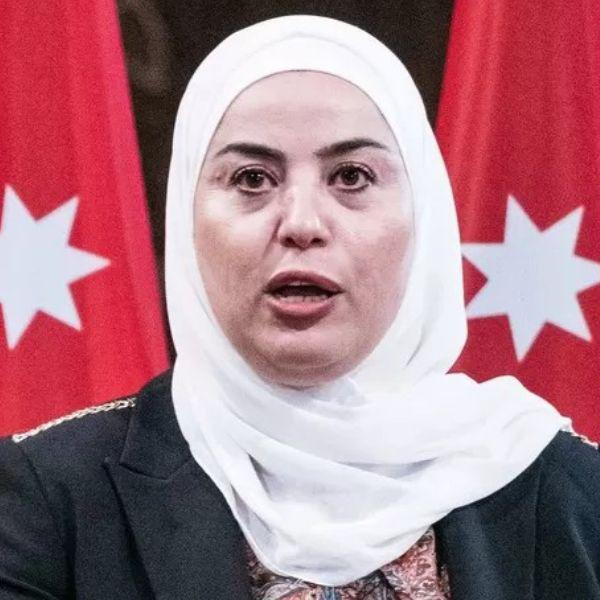
Thank you. We’ll exit that way. That way, yes, please. That was a fascinating discussion, I’m sure you’ll agree, and really helps bring around the entire talk around the report today. Speaking of taking action, one of the countries that has made meaningful progress is Jordan. In the past two years, it has actually lifted restrictions on women’s access to industrial jobs. It’s mandated equal pay, which we’ve heard is an important aspect, and expanded paid leave. We want to share with you a video message from Her Excellency Wafa Bani Mustafa, Minister of Social Development for Jordan.
[Wafa Saed Bani Mustafa]
Her Majesty Queen Rania (Al Abdullah) once said, “When you empower a woman, you empower a whole society.” In Jordan, we believe that advancing women’s economic rights is a direct driver for economic growth and job creation. The political will has enabled us to draw a clear reform plan to enhance women’s status in Jordan and facilitate their entry into the labor force. Our legislative framework confirms the principles of equality, since the Jordanian Constitution guarantees women empowerment and protection from discrimination and violence. A series of legislative reforms led to improvements in the areas of mobility, workplace, pay, and entrepreneurship in the Women, Business and the Law Index leading Jordan’s score to increase by 19 points in just five years, surpassing the regional average of the MENA region. Examples of our reforms include improving the workplace by prohibiting gender discrimination and unequal pay, criminalizing sexual harassment, and removing restrictions in certain professions and working hours, supporting childcare by introducing paternity leave and requiring eligible companies to provide childcare support for workers, recognizing flexible work, including remote work, to allow more women to balance their work and care responsibilities, promoting women’s leadership by introducing a 20% quota for women’s representation on companies’ boards. Going forward, we will continue our journey to address inequalities with support from the World Bank. This includes increased access to assets, expanding childcare and maternity mobility support, and safe mobility for women. In addition, we are committed to the implementation of reforms through all policies and government programs to ensure that women in Jordan are equally empowered to be drivers of economic growth.
[Applause]
[Sumi Somaskanda]
Thank you so much to Her Excellency for sharing that video. I want to thank all of you, our audience here, and of course, those who have joined us online as well, and our speakers who provided really interesting input today. If I may ask for a brief round of applause for the Women, Business and the Law group who’ve done a fantastic job preparing for today. They’ve been really fantastic. Well done.
[Applause]
[Sumi Somaskanda]
Of course, you can still see this QR code here. The full report is available to download right now. It’s wbl.worldbank.org. Please, download it, read it, share it with people you know who you think might be interested as well, and use it, of course, to drive change, as we’ve heard. I want to thank you all again so very much. I’m Sumi Somaskanda, and for everyone at the World Bank here today, thank you for being here, and hope to see you again the next time. Thank you.
[Applause]