[ Jimena Tolama]
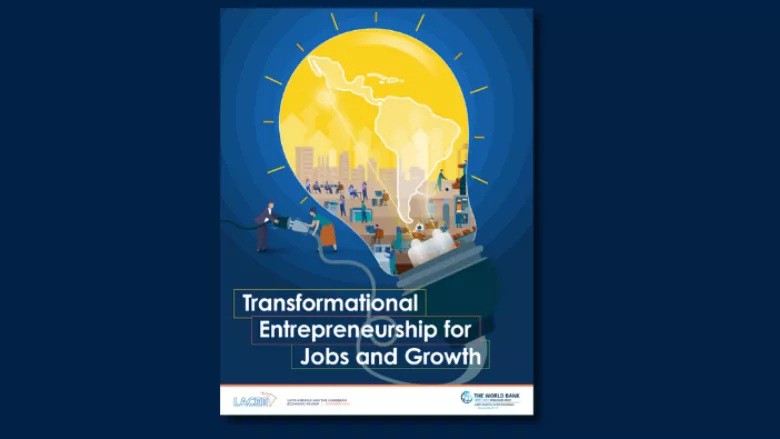
Good morning, everyone. My name is Jimena Tolama, Editor and Chief at Bloomberg Línea. I am delighted to welcome you this morning to this important event organized jointly by the World Bank and the Atlantic Council’s Adrienne Arsht Center for Latin America. Today, we’ll be discussing entrepreneurship. Latin America and the Caribbean are regions with very strong entrepreneurship. I think we all know this. They embody creativity, innovation, and resilience as well. However, we see that companies face many challenges when it comes to growing and creating quality jobs. This was made evident in the World Bank’s report, which was “Transformational Entrepreneurship for Jobs and Growth.” For the next hour, we will explore what it takes to unlock that potential of improving access to finance, strengthening skills and innovation, creating more supportive regulatory environments that allow entrepreneurs to thrive and fuel economic growth across Latin America and the Caribbean. Today, we’ll begin with a panel discussion on entrepreneurship and job creation in the region, featuring leading entrepreneurs and leaders. Thereafter, we will move on to a fireside live chat with William Maloney, Chief Economist for Latin America and the Caribbean at the World Bank, joined by Jason Marczak, from the Atlantic Council. There, we’ll delve deeper into the findings of the report and its implications for policy and investment. We will also leave time at the end to welcome audience questions. You can submit those through the Ask AC platform, provided on the event website. Now, I’m pleased to introduce our distinguished panelists, Erik Sibille, CEO and Co-founder of MUSA, a company that offers training programs via WhatsApp, María Julia Bearzi, Executive Director of Endeavor Argentina, an incubator and accelerator of enterprises, and Juan Ignacio Dorrego, President of the National Development Agency in Uruguay. We are thrilled to have you all here with us today to share your perspectives on how entrepreneurship can truly fuel jobs and growth across the region of Latin America and the Caribbean. María Julia, let me begin with you. I wanted to ask why so many entrepreneurs remain at the micro or small business scale, and what systemic challenges hold them back.
[ María Julia Bearzi]
First, thank you very much for this opportunity. Good afternoon to all of you. It’s afternoon here in Argentina. I’m very pleased to be able to share my knowledge, my expertise, and my experiences based on my experience in Argentina. In response to your question, I would say that the environment is not always favorable in Latin America. Entrepreneurship is a personal initiative, not one that comes from the authorities. So, this is the first thing we must grapple with. Then, there’s a lack of access to capital. There’s a lack of training in business and entrepreneurship, and there’s a lack of a network of mentors and professionals to help to professionalize the workforce. Latin America has the talent necessary, but the system has not managed to make a business as sustainable. It requires great individual initiative and a collective scale.
[ Jimena Tolama]
Well, if we go to this term as “sustainable companies,” if we’re talking about entrepreneurship at a small or large scale, what type of training, mentorship has proved to be the most effective in helping entrepreneurs professionalize and scale? How can these programs reach more entrepreneurs beyond big cities? María Julia, feel free to weigh in because we may be sensitive to the types of programs that would allow this type of scaling.
[ Juan Ignacio Dorrego]
Well, good morning, Jimena. Good morning to everyone who is joining us and following this event. First, the report underscores incubation programs with practical mentorships in universities. Clearly, that is a mission, and also specific training on different skills, digital skills. When it comes to credentials and incubators that are connected to real demand in our experience, those produce better results that aren’t so generic. We’ve seen macroeconomic development in countries like Uruguay in the region, but it’s difficult to escape the trap of low growth. For a decade, it’s hovered around 1%. Our capabilities need to be brought up to speed to make sure they’re consistent with current needs. You have to look at the cost for planning. What we’ve seen are good practical effects in micro enterprises. But also outside the big cities, it’s very important to have mixed hybrid programs that include policies, but that also make the most of the local presence. For example, some classroom work, mentorship, but also using technological tools that make it possible to reach remote areas. We have to encourage partnerships with higher education, tertiary education that are highly specialized. This needs to be [included] regionally and locally in each of our individual countries. We need to have some of the extension programs that will bring in incubators or local hubs that work with these types of institutions. We believe that growth in the region is curved by some regulatory restrictions and constraints that exist. It is very important to work on ecosystems that will lead to growth. These entrepreneurial pathways, those are very important in countries that are overly centralized, like you’re implying.
[ María Julia Bearzi]
Yes, it’s not just about training or to train, but also to provide ongoing support, strategic mentorship, its value, and the value of interactions with peers and networks of peers to learn for those who have already taken that path or scaled up. It’s very, very valuable. There should be a mix of more traditional training with this type of ongoing support and mentorship. This will provide the final push for scale up, which ultimately has greater impact.
[ Jimena Tolama]
Okay, let’s turn to you now, Erik. I’m really struck by what your company does, and that’s why this specific question is for you. How can entrepreneurs leverage technology and technological tools to reach new markets, to improve their operations? And what barriers, from your standpoint, continue to prevent widespread adoption? What is needed?
[ Erik Sibille]
Good morning, good afternoon, good afternoon to my fellow members of the panel. Thank you to the Atlantic Council and the World Bank for this opportunity. I’m very pleased to be on this virtual panel. I’m going to dovetail on some of what Juan and Julia mentioned in their comments. There are some structural matters that companies, companies like mine and others, have had to grapple with to pursue growth. A lack of access to programs, and the programs that do, in fact, exist in the region are not always enough for the type of growth that most companies like mine are seeking. For example, we’ve worked with Peru and Chile, and Tech from Monterrey, MIT, USC in the United States. Even so, we feel like it’s often not enough. If we want to pursue growth where we don’t need to invest more capital, it would be the kind of growth… I agree with what my colleagues said. While there are some programs out there that do provide support, an invaluable part of this is not just access to capital, which is extremely important, of course, but it’s the connections you make with your peers with mentors, but also with customers. It creates a more realistic scenario for companies and potential clients that will help to ensure that your solution is effective, is useful. It’s important to have ongoing feedback so that you can continue to grow in a real-life scenario. It’s connecting entrepreneurs to the market, whatever that market may be, but the programs to help introduce you to your first and initial clients, and help you to improve your solution, those will help you to ascertain whether or not your solution works, if it’s necessary, if there’s a market for it. So that’s my point. Then there are the structural matters that you mentioned. I like what Julia was saying that in many cases, entrepreneurship is born out of necessity rather than opportunity. Many of the big companies that are created, the idea at the beginning is not for them to expand and become too big. But in Lima, Peru, just like Uruguay, and most countries in the region, is highly centralized. If the market in the country is not big enough, you have to consider from the very outset how to expand to other countries in the region. That’s a great opportunity for those who are thinking so from the outset, but not all startups or companies are created with that in mind. You might think, “Okay, we can become more international and grow quickly,” but there are a series of structural challenges. What you’re going to have to grapple with in your country, you’re going to have to grapple with in other countries as well. I think there’s a huge opportunity there for creating a network that will help companies to take this step, to move from micro to small, to then medium, and then to large, and working with large companies.
[ María Julia Bearzi]
Jime, if I can just add something to your original question, which had to do with technology adoption for entrepreneurs. Adding to what Erik said, in countries like ours, in Latin America and the Caribbean, Brazil, Mexico, the US. Companies, countries, entrepreneurs need to adopt technology to be able to transcend borders, to be able to sell to other markets, access markets that provide larger opportunities. I don’t mean to be discouraging, but while technology can be an enabling[ force], there’s also a gap. Entrepreneurs that adopt technology and make it a core part of their business, it will make them more competitive, of course, and it will give them more opportunities. But for those who don’t, they’ll end up disappearing from the map. So, we have to really work on that because tools are there. They need to be adopted. They need to be used. We’re not even talking about digital transformation anymore. We’re at the next step. We’re talking about AI. So technology today is essential. No entrepreneur is going to be able to grow without it.
[ Jimena Tolama]
That is true, and I agree. We cannot waste time in that regard. Capital is not the only thing to focus on. Juan Ignacio, I wanted to return to you. I understand your focus is on Uruguay, but how can the public center, the government help? And as to what Erik said on what can be done, what would you say could be done policy-wise beyond what’s been discussed so far?
[ Juan Ignacio Dorrego]
Well, both Erik and Julia have already touched upon the heart of the challenges for the world of entrepreneurs. I think this World Bank review very accurately captures the situation in Latin America. ANDE, our National Development Agency is a government agency, but we are able to act dynamically because we’re organized under private law. We have initiatives and programs and tools that can be high-impact. The question is how to help businesses innovate. We really see four key aspects here. First of all, for innovation, there has to be capacity, learning. This means high-quality education and training, involving training, linked to development and adoption of science and technology for innovation, but those aren’t the only kinds of skills. Soft skills, managerial skills, also help ensure that tools are used appropriately. And we also need to facilitate experimentation. See this daily. You can either strengthen the business academia link, foster technology extension programs that can enable the adoption of technology. I think those who spoke before me already mentioned some of the challenges with regard to that. The third key aspect is to have a capital market that supports risk. In Uruguay, in our financial system, we have liquidity, but you have to work on two fronts. You have to overcome the issues of flow, of having better business programs, startup hubs, etcetera, but also develop the venture capital markets. That is vital. And so, we’re working on that as well. And then, the fourth key aspect has to do with regulatory frameworks. We have to revisit those to ensure that they facilitate entry and support competitiveness in the less dynamic traditional sectors, but also the much more quickly changing sectors, where given the size of the local market we have and how open the economy is we have to be thinking in terms of regional and global markets. The review underscores the need to make use of universities, to support this, and make sure we’re avoiding market distortions. We have some key challenges in that regard in Uruguay. But as a country, we should be investing 20% of our GDP for the next 20 years to be able to achieve the growth levels that we wanted. That effort cannot be made by the government alone. We need an active private sector willing to invest. In Uruguay, R&D is concentrated in just a handful of larger companies, so we need to really publicize the benefits of this at a broader scale. We need to build technology adoption programs, meaning matching grants linked to management capacity, sector skills, but also innovative public procurement programs that really favor these innovative ecosystems.
[ Jimena Tolama]
Thank you so much.
[ Erik Sibille Hablutzel]
If I could just add an idea because it’s often said that the public sector has to be the driver and to create the right ground rules to foster growth, it has to create these acceleration and startup programs. I agree with that, but we have to talk about the risk assumed by companies. And not just from the perspective of capital. Businesses have to be willing to invest at multiple levels. And as an entrepreneur, I see this at different levels in different countries. Chile is much more open to hiring startup companies than Peru, for instance. And we see this elsewhere as well, Mexico, Brazil, each country has its own idiosyncrasies. But the private sector has to think about what we’re doing to foster greater openness to new solutions, to embracing startups and different ways of doing things because it’s also really about the market.
[ María Julia Bearzi]
If I could piggyback on to what Erik is saying because we need a culture shift in the business world. As Erik said, companies need to be willing to work with startups and develop an internal ecosystem that doesn’t punish mistakes, that allows things to operate in beta mode, so that you’re really rewarding ongoing experimentation. I think that’s key. It’s essential to develop that mindset where it’s understood that every chain represents an opportunity, and you have to take risks. But large companies, too, have to be innovative in working with entrepreneurs.
[ Jimena Tolama]
Thank you, María Julia. Thinking about everything all three of you have said, I want to go back to the key topic of AI and AI adoption. There may be companies that may see it more as a need than an opportunity, but the use of AI is directly related to products, services, internal use. It’s an essential component. Now, María Julia, where is Latin America right now in that process? Particularly talking about adoption by startups and a connection with specialized talent because the large companies that are in this technology race are eagerly looking for that talent. So, what does the situation look like in Latin America?
[ María Julia Bearzi]
As I said before, tech adoption, AI adoption is an enabling factor. It accelerates business, but it’s also a divide. A business that does not embrace it to do business more efficiently and do better at providing goods and service to customers is going to end up off the map. Venture capital is prioritizing investment in businesses that understand that and are using AI. The talent that the companies are going to need to bring on board has to be good at using these tools.
[ Audio cuts off]
[ María Julia Bearzi]
That’s the ecosystem I know best. I’ve been traveling around for years looking at this, and Argentine entrepreneurs are very quick to adopt these technologies. They’re generally early adopters, and AI is an excellent enabler. Where I focus on, startups and scale-ups, there are a lot of tech companies there, and I’d say 90% are already working with AI, and they’re offering to the market products and services that incorporate AI. Latin American entrepreneurs, and I’ll... I feel like I can speak for the region as a whole. We understand this, they’re quick to read the trends. We’re there in Argentina, and I think we’re going to see a scale up across the region. It’s already happening.
[ Jimena Tolama]
Yes, there are already investment funds being created, focusing on that.
[ María Julia Bearzi]
Yes, the focus on AI companies. Totally.
[ Juan Ignacio Dorrego]
Jimena, if I can jump in with regard to what Julia just said. It really aligns with what we’re seeing in Uruguay as well and the rest of the region. AI, nowadays, is the new thing, even though it’s been looming for a decade, and it really pervades every aspect of production, and we tend to see it as a commodity. It won’t be long before it’s not a novel thing at all anymore and all entrepreneurs will use AI, whether it’s a production model or a business model. It will have to involve AI in some part of the equation. I’d say that in the higher growth, that’s not even something that needs to be said. Nobody in high productivity even mentions AI as a differentiator. It’s a given. Now, what I wanted to stress is that we have an issue with entrepreneurial quality in the region, and the review highlights that it’s a region with a lot of entrepreneurs, but most of that energy is focused on subsistence, microentrepreneurs, subsistence levels with little education, little desire to scale up, low productivity. And so, it’s an ecosystem where the entry of new companies doesn’t necessarily translate into higher productivity or quality. That’s where the technology access gap comes into play and becomes a problem. It has serious implications for development. The productive culture of the region is not one that is accumulating skills. And so, how can we have transformative entrepreneurship leading?
[ Speaking in Spanish]
. The makers get the pressure that we all need to work together to accelerate these processes, not just for technology development, but above all technology adoption. What the World Bank says in this review confirms something that we’ve seen that Erik and Julia have mentioned, and we’ve seen it from the public policy side. If we don’t invest in skills, technical skills, material skills, science skills, we’re going to end up having, yes, lots of entrepreneurs, but a limited ability to absorb technology and scale up.
[ Jimena Tolama]
I think that brings us back to the point that capital is not the only thing that we need to focus on. It has to be training and skills. I want to ask any of you, how has the shortage of capital affected entrepreneurs and what innovative financing models are emerging to help to address all of these issues that you raised?
[ Juan Ignacio Dorrego]
Yeah, go ahead, Julia.
[ María Julia Bearzi]
I’ll be very brief, Juani. It is true that the lack of financing is an issue. It also does drive creativity in Argentina. I would say over the past 20 years, we’ve had very complex economic conditions and environment. There are so many different entrepreneurs who have taken the step, and they are the ones forging the path for future entrepreneurs. There’s limited access to financing, but this creates a pool of entrepreneurs who are much more resilient, much more creative. They focus on solving problems and challenges in an environment that is always difficult and that is the case of Argentina. In Endeavor, we
[ push]
large corporations and large businesses to partner with entrepreneurs and startups, everyone wins. It is key that these large companies do that because the formula is going to be very favorable because these entrepreneurs, they contribute to the large companies through creativity. It’s a breath of fresh air. They bring innovation, and that is something that spreads, and that is good for them. And so, for startups and small enterprises, it’s what Erik was saying. They’re able to do proof of concept. They can sell to a real, tested client base. And for me, that is something that It’s very valuable. So, this bridge between corporations and entrepreneurs and startups, when they learn who they are, when they learn their “language” they might ultimately invest in them, and that’s a win-win for everyone. I think beyond venture capital, this is a valuable alternative and one that is feasible. It’s something that should be explored so that we can delve deeper into this.
[ Jimena Tolama]
I would love to be able to continue this conversation, but unfortunately, we have to turn to the next segment of our event. But I’ll give you all about 30 seconds max to share what lessons Latin American and Caribbean countries can draw from successful ecosystems, the ones that you believe are the most successful from other regions across the world.
[ Juan Ignacio Dorrego]
As a final conclusion, I would say there are no shortcuts. There are no shortcuts. Latin America and the Caribbean can obviously learn from other parts of the world Asia, the East, they can learn from some of their innovations. But the policies have to be consistent with the social and economic realities of the region. I think there are four lessons we can draw, four messages we can share. One is the need to invest in learning science, technology, and innovation. Economies that made the most of the technological revolution with education and research. Those are the ones that are strong. Then we have to try to improve business management. It’s not enough to just have government investment. We have to have a private sector that is willing and capable of doing this. Then there’s something that’s come up many times here,[ which] is financial markets that have clear goals, venture capital. There needs to be a legal framework, and people have to have financial skills. We have to have integrated ecosystems, universities, networks, consolidated businesses, and business communities. The partnership of startups with large corporations. Only with that will we be able to facilitate technology transfer and better and more resilient business models. This will help to fuel the creative potential of our communities.
[ María Julia Bearzi]
I totally agree. Jimena, just to wrap up, there are model ecosystems worldwide. In Latin America, if we have a very unique situation, the ability to adapt, creativity, if we’re able to tie that energy to long term stable policies as well as collaborative work between the public and private sector, I believe we will be able to create our own successful model in the region. That’s what I’m working toward every day. That’s why I push for the development of local ecosystems. I think my fellow panelists do this as well. I think there is a lot of hope that this can happen.
[ Erik Sibille Hablutzel]
I would like to echo what my fellow panelists have stated. I think we have... Maybe years ago, we talked about “We have to copy the Silicon Valley model,” but no. I think there are great examples that are organic to the region that have proven to be successful. We have to have ecosystems for innovation, for entrepreneurship, and build upon this idea that we should merge ecosystems. They don’t have to be separate. We should start to think as a region, as a single market, with cross-cutting rules that allow us to operate. Markets like the US, we’re talking about 300 million people, Europe, to compete against those markets with the market of Peru, which is 30 million or with others that are fewer, we come up short. We have to, therefore, consider regional integration. In doing so, we would really be able to push greater growth for everyone. I think there’s a historical opportunity before us, and Julia said this, too. As a region, we are accustomed to technology being developed in the Global North. I think the historic opportunity before us is to narrow that gap through training. That technology existed 10 years ago. It might have been a little more complicated to do that, but there’s a huge opportunity for us to narrow these gaps and to move forward.
[ Jimena Tolama]
Thank you so much, María Julia, Erik and Juan Ignacio, for this truly insightful conversation. Now, I’m pleased to have the opportunity to listen to William Maloney, Chief Economist for Latin America and the Caribbean at the World Bank, and Jason Marczak, Vice President and Senior Director of the Atlantic Council’s Adrienne Arsht Latin American Center.
[ Jason Marczak]
Thank you so much, Jimena, and thank you to María Julia, Juan Ignacio, Erik, for a very insightful conversation that also gives me great expectations of what may be possible. I want to thank Bill. Bill, it’s a pleasure to be able to chat with you today. Again, pleased for the Atlantic Council to be able to continue our incredible collaboration with you and with the World Bank. Across Latin America and the Caribbean, as we’re seeing here, entrepreneurship is everywhere. But as Bill, your excellent report highlights, the entrepreneurship that truly drives productivity, innovation, and good jobs, that’s actually far less common. Unlocking this next generation of high-impact firms that can scale, innovate, integrate into global markets and seize emerging opportunities is absolutely essential, as we’ve been talking about in this last panel, to boost the region’s output. That’s why the World Bank’s new LAC economic review is really timely. It lays out both the urgency and the opportunities that this issue presents. Given the importance of this work in our long-standing partnership, it’s a real pleasure to be able to dive into this impactful report with you, Bill. With that being said, let’s go ahead and get started. Let’s start off. I’d appreciate it if you could start by sharing with the audience some initial reflections about why the region should focus on what you call in the report “Transformational Entrepreneurship.”
[ William Maloney]
Thanks, Jason, and thanks again to the Atlantic Council for continuing this partnership with us and for hosting this event. I thought the last interventions were really enlightening as to what the issues are on the ground for entrepreneurship in the region. We’re gratified that we seem not to have been too far off with our report. To answer your question, the reason that this topic is so important is because everything we care about, growth, technology transfer, creation of jobs, all of that is not done in the abstract by some invisible hand. It’s done by individuals on the ground working in complex environments and taking risks, seeing opportunities and then implementing, taking advantage of them. What we see in Latin America is all the indicators are
[ that]
we’re an incredibly entrepreneurial region, as the report shows. We’re less risk averse, we’re more enthusiastic about entrepreneurship. And yet we have this paradox that despite the fact that we seem to be higher than average in terms of entrepreneurship, we don’t grow. As the first half of the report shows, Latin America is due to grow again about 2.5%. That’s just not enough to resolve the problems that we face. So, that moves this issue of exactly the entrepreneurs who were talking in the first segment here. That moves them to center stage. What makes them…? How do we get more transformational entrepreneurs, the ones who really do the heavy lifting of economic growth? Just to finish it, as we talked in the first half, we have a lot of entrepreneurship, but it’s in these microentrepreneurs. Who are not necessarily unhappy. They report that this is an opportunity, that for many of them it’s an opportunity. But they also say they’re not going to grow and they’re not going to adopt technologies. It really comes down to bigger firms with more educated entrepreneurs to do the heavy lifting. Then the question is, what is it about the systems that we’ve built in the region, the environment that they work in, and the qualifications of these entrepreneurs that’s not getting the most that we want out of it?
[ Jason Marczak]
Well, thanks, Bill. I wanted to dive into a couple of the points you just made. One is the Latin America’s productivity growth has lagged for decades, as you mentioned, despite actually higher than average entrepreneurial activity. As you alluded to as well, the previous panel spoke about some of that activity, that entrepreneur activity. From your perspective and the findings of the report, why hasn’t entrepreneurship translated into productivity gains and into better jobs?
[ William Maloney]
Look, we need the Nobel Prize winner, Philippe Aghion,
[ who]
has done a lot on creative destruction, on how we get new entrepreneurs coming in with new ideas, introducing new products, and that’s what propels us. What we’ve got in the microfinance section is just a lot of people coming in and exiting, but without introducing new technologies, without any structural transformation of the economy. The question is, therefore, why we don’t have more of the kinds of entrepreneurs who actually can take a new opportunity? For instance, we were talking about AI. Are we going to exploit those opportunities better than we’ve exploited technological change in the past? We’ve tended to adopt slowly in the past, and it’s been an imperfect adoption of technologies. As a result, we haven’t got the technology, the boost in productivity that we might have expected. A lot of that has to do with our systems. It’s hard to set up and exit from businesses. It’s hard to set up businesses and hard to exit if they’re not working out. It’s hard to get financing. It’s hard to resolve conflicts. It’s hard to get trained workers. 30% of our entrepreneurs and our agents say they can’t expand for a lack of trained workers. There’s just a whole bunch of barriers. Then you throw on the uncertainty that often characterizes our macroeconomic environments, new security issues. It’s often very difficult. The entrepreneurs are our heroes in that respect.
[ Jason Marczak]
Yeah, entrepreneurs are heroes. Let’s dive into two points you just made, Bill. One is the systems and also the financial markets. We’ll start with the edge of the system. The report highlights managerial and technical skills as absolutely crucial determinants of firm performance. What role should education systems and public policy play in cultivating these capabilities? What additional steps could be taken? We recognize the challenge. What additional steps could be taken to be able to cultivate these capabilities so that firms are better positioned for the jobs of today and the jobs of tomorrow?
[ William Maloney]
The first thing is it turns out that most of our transformational entrepreneurs are likely to have some college education. The first thing we want to do is have education systems that give the best education to the largest number of people. Our education systems still lag in the regions, and that cuts off, that reduces our pipeline of potential entrepreneurs. The second thing is, as someone mentioned previously, I think it was Julia, it’s not just a generic sort of education. There need to be particular skills to identify a technological opportunity or a new product opportunity and then implement it. It requires risk-taking skills, it requires administrative skills, it requires an eye for new opportunities in the first place. That’s not a general education. Having programs that are more oriented towards entrepreneurship helps. For established firms, the kinds of firm-upgrading programs or technological or managerial extension programs that exist around the world are very useful and have proven their economic profitability around the world. So, we have to work, and in general, we just need to raise the number of STEM graduates that we have. Many of the opportunities that are facing us in this new century are just in new technologies, and we need to have the people who can understand them.
[ Jason Marczak]
Also, as you mentioned, the report notes that venture and growth of capital, they’re concentrated in a handful of sectors, a handful of countries. As you were speaking about, as well as the panel earlier, the importance of extracting more early-stage investment. How can we deepen these, our financial markets, to attract that early-stage investment, particularly in some of the smaller economies of the region?
[ William Maloney]
For just basic finance, which remains elusive for a lot of firms, then there are things like systems to make collateral easier to register and more available to borrow against. But it’s also very difficult to resolve conflicts, contracts, for instance, in the region, or bankruptcy proceedings take two or three years, where in the United States, they take three to six months. This just inhibits people from trying to get credit or creditors from lending to risky operations. That’s just banks. When you talk about risk capital and venture capital, that’s a different animal because it requires not only funding, but it also requires the experience so that when a young firm approaches you with a project which is necessarily, if it’s going to be transformative, risky, that you have people on the other side in the venture capital firm that know how to help that kind of firm and mentor that kind of firm, as I think was mentioned several times, to grow and to organize itself in a way that it can survive. That kind of skill is hard to develop, particularly in the smaller economies. Brazil is doing a good job of it. As a result, a lot of countries around the world rely on bringing in the diaspora, people that have worked in Silicon Valley or other places and say, “Okay, come do your venture magic here, and the state will work with you on that.” That’s what China’s program was, for instance. Then the more entrepreneurs you have and the more who fail frequently and then learn how to manage a high-risk firm, then eventually you get that group of venture capitalists who can actually help you.
[ Jason Marczak]
As you’re talking about, Bill, is the importance as well of public sector, public policy, and the private sector working even more closely together, whether it’s from education systems to financial markets, early-stage investment, the whole spectrum that’s required for what you call in the report “Transformational Entrepreneurship” rather than subsistence entrepreneurship. How can public policy and the private sector work together more effectively to boost this type of entrepreneurship?
[ William Maloney]
I think first they have to acknowledge that this is an issue and that partnership needs to happen. Starting with basic education, we know we have major challenges there, but even when we get to higher education, it’s frequently the case in Latin America that our universities are very delinked from the productive sector. That means delinked not only in terms of the research that they do actually getting to the private sector, but also in the preparation of students who could be useful to particular high-tech entrepreneurs. You see that very clearly in Guadalajara, there’s a greater integration, a greater conversation, for instance, between public universities, the public sector, and the businesses of what is needed to generate new firms, Mexican firms that can grow. Financing things, that’s an issue. Getting the barriers to the growth, to a deepening of finance in the region is key. Those are public policy decisions. The venture capital thing, partnerships, for instance, with diaspora and the like, or with local people with some experience, that can help. There’s just a lot of areas that we have to think of it as building entrepreneurial ecosystems that support people who are taking those risks.
[ Jason Marczak]
Bill, as we’re talking about in the last question for you before I turn it back to Jimena. But as we’re talking about building these entrepreneurship ecosystems, given this excellent report, how can organizations like the World Bank, maybe other public policy organizations, like here at the Atlantic Council, how do you think the findings can be translated into concrete reforms, strategies across the region? What are you looking at so far as next steps and the possibilities that come from what was put forward in the report?
[ William Maloney]
I think the first thing that we can do, and that is a bit happening right now in Guadalajara a bit, is to help convene the different agents in, who form the entrepreneurial ecosystems, even though they may not realize it themselves, and get this discussion going. What is necessary to move this forward? The question I always ask to Guadalajara is, okay, you’ve Hewlett-Packard and IBM there for 50 years, where are your high-tech Mexican firms? And then, you start asking, is it a problem of finances? Is it a problem of our universities? Is it a problem of lack of linkages with these major companies? Is it a problem of managerial quality? What is it? Once you start asking those questions, then the path becomes a little clearer. I think having those dialogues, particularly at the subnational level, is frequently very productive.
[ Jason Marczak]
Wonderful. Thank you so much, Bill. I think this is, again, congratulations on an excellent report. I invite all those watching to read through it. I learned a lot, and I think there’s a lot of good fodder, especially of how do we move to this transformational entrepreneurship that is so critical. Once again, thanks to you, Bill, and to the World Bank for working with us.
[ William Maloney]
Thanks to the Atlanta Council.
[ Jason Marczak]
Thank you, Bill. Now, I’m going to turn it back over to you, Jimena, to get us started with some audience questions.
[ Jimena Tolama]
Yes, of course. Thank you very much, Bill and Jason. Thank you. We’re now going to turn to answering some of the questions we’ve been getting online. You can use the Ask AC platform using the link that is on the event website. The first audience question comes from Mario, and it has to do with what was discussed at the end of the panel, the fact that Latin America could find its own examples without having to seek lessons from elsewhere in the world. But Mario said, “What could we learn from Asia, Europe, the United States, as they seem to be more at the cutting edge of technology adoption?” “And what can Latin America and the Caribbean do to get up to date?” So, Bill could answer or any of our panelists could answer. Up to you.
[ María Julia Bearzi]
I can try to answer the question. We’ve learned from innovation ecosystems, remote ones.
[ They]
tell us that innovation is something that’s designed, invested in, and sustained. So, I think what we’re missing is that long term vision and synergistic efforts between the public and private sectors because we have everything else we need. So, I see a positive outlook and a good future for the region.
[ Jimena Tolama]
Thank you, María Julia. Our next question comes from Jorge. “What are the three primary steps that Latin America and the Caribbean should take to implement all the ideas that have been discussed this morning?”
[ William Maloney]
Would any of our experts like to chime in? If I can just quickly…
[ María Julia Bearzi]
Well, we certainly have to move toward action. Everything we’re discussing needs to be brought out to the field, brought closer to entrepreneurs. We need networking. We need to strengthen our acceleration and incubation programs. We need to work tirelessly to promote business development in each and every one of our countries, and to do it through linkages, create a regional support network for entrepreneurs.
[ Jimena Tolama]
Would anyone else like to add to that question, or should I go to our last question?
[ Juan Ignacio Dorrego]
Well, I would mention three key elements, and the question asked for three steps. I see three priorities for Latin America. In order to have truly transformative entrepreneurship, I’d start with capacity building, a regional hemispheres agenda. The second element in that regard. Second, to create a finance system that enhances growth with more, also, skills building for finance environmental decisions. The last step, and it’s inevitable, is to modernize the environment to allow for innovations, clearer rules and linkages in ecosystems.
[ Jimena Tolama]
Thank you so much. And I’ll finish with the last question, an excellent question that I think sheds a positive light on all of this. What is the region doing well? Where in Latin America and the Caribbean is the good example? And what are we doing specifically supporting entrepreneurs?
[ María Julia Bearzi]
Well, the positive things I’d say… First of all, I’m an optimist by nature. I was saying it already, there is a lot of resilience and solidarity and cooperation here in Argentina. All our programs bring together entrepreneurs that have already been through this that have been successful, the unicorns, so to speak, and they’ve been so willing to help the newcomers. That is something we’re seeing throughout the region in our work at Endeavor. That’s how we work. It’s really a common denominator throughout the region, innovation, resilience, and collaboration.
[ Erik Sibille Hablutzel]
I would add that most startups much more reflect the reality of the region, access to financing, their financial situation, access to technology and tech matters having to do with agriculture. These are very particular to the region and have an impact on the region. We also have opportunities. It falls to all of us to work in each of these areas. We have to create an ecosystem and context that allows for these solutions that are being created to be implemented. I think that that’s important. When we look at the type of the solutions, whether they’re fintech, edtech, etcetera, these are extremely important matters in the region, and we have to make sure that they are able to flourish.
[ Juan Ignacio Dorrego]
I wanted to add to what Erik and what Julia had just said. Latin America has created these lively, dynamic ecosystems, and we have this critical capacity, and that’s what makes us stand out. This is something that we do well in the region. Technology, technological advances are able to provide complex responses to thorny problems in the question of seconds, and that’s why the questions keep coming. I think it’s about continuously asking ourselves questions. This is a key asset to help us to keep asking the important questions.
[ Jimena Tolama]
Thank you to all of you. I’m left with one thought after this hour-long event. It’s important to look at the reality of the situation. Latin America can create its own success model. It has to have cross-cutting rules and an environment. And what Bill and Jason were saying during the fireside chat, that entrepreneurs are true heroes. With that conclusion, I would like to thank the World Bank and the Atlantic Council for having organized this event on a topic that is not surprising, but we know how challenging entrepreneurship is. I would like to once again invite the audience to read this report. You can find it on the World Bank’s website. It is the World Bank’s Latin America Economic Review. So, thank you once again. We’ll see you next time.
[ Lively music]