Middle East North Africa Afghanistan Pakistan
From Growth to Jobs: Making Industrial Policy Work for South Asia

- ABOUT THE EVENT
- AGENDA
- Transcript
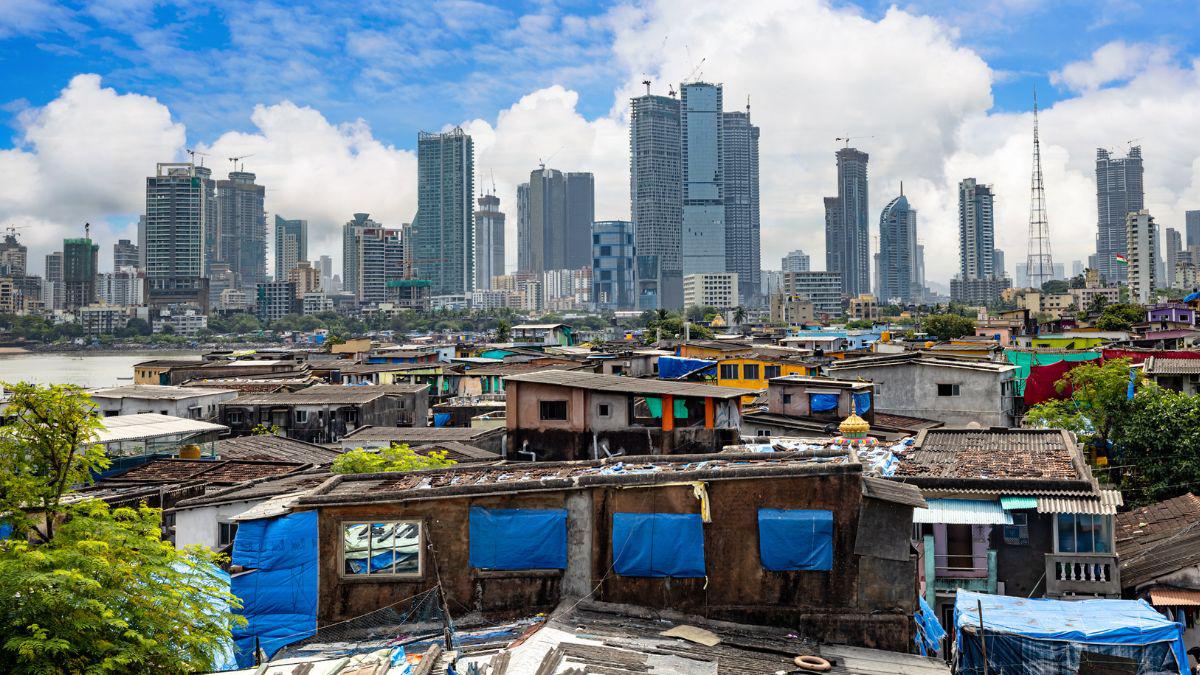
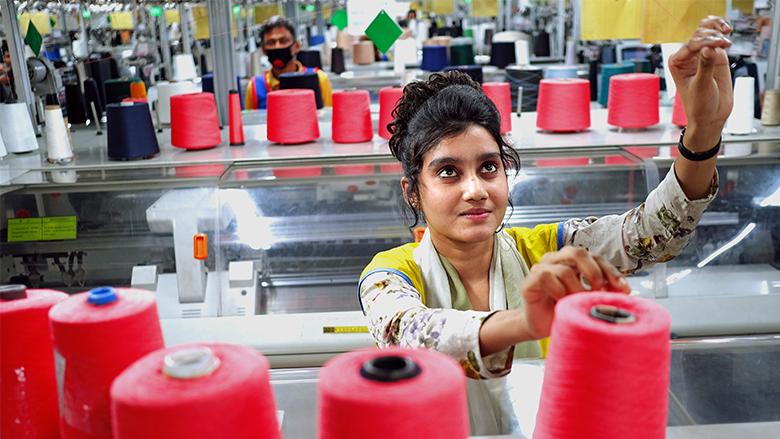
South Asia continues to be the world’s fastest-growing region. But amidst a challenging global environment, how can the region sustain growth and create jobs?
Governments are increasingly using industrial policy to shape their economies and achieve development results. The World Bank Group’s latest South Asia Economic Update explores the effects of these policies in the region and ways to use them most effectively.
Watch the replay to hear insights from leading experts, including Johannes Zutt, Vice President for the South Asia Region at the World Bank Group, and Franziska Ohnsorge, Chief Economist for South Asia. The program features a fireside chat with Shanta Devarajan, and a panel discussion with Nagesh Kumar and Dushni Weerakoon, moderated by Parikshit Luthra. Together, they examine how carefully designed policy measures can support sustainable growth and job creation across the region.
Interested in joining our online events? Sign up to receive alerts for future live sessions.
GO TO SPEAKERS
Welcome | 5 MIN
Opening remarks by Parikshit Luthra (event moderator)
One-on-One Conversation | 5 MIN
A conversation with Franziska Ohnsorge
Moderated by Parikshit Luthra
Fireside Chat | 20 MIN
A fireside discussion between Shanta Devarajan and Johannes Zutt
Panel Discussion | 30 MIN
A moderated panel discussion with:
- Nagesh Kumar
- Dushni Weerakoon
- Franziska Ohnsorge
Moderated by Parikshit Luthra
Closing Remarks | 2 MIN
[Lively music]
[Parikshit Luthra]
Hello, welcome to this very special event. We are going to be discussing World Bank’s latest updates on South Asia, and specifically, how do we speak about and discuss the topic of growth to jobs and making industrial policy work for South Asia? I’m Parikshit Luthra. I’m going to be your moderator for this event for the next one hour. Of course, as we discussed earlier, we are going to be talking about industrial policy, how different countries in South Asia are using industrial policy tools to really drive growth. And this is coming in the backdrop of the South Asia Update by the World Bank, which has drawn up a forecast that South Asia economic growth is expected to slow down to 6.3% in 2026 amid dislocations in global energy markets. So clearly, all these countries will have to do a lot in terms of innovative industrial policies to make sure that jobs are protected, the job market grows, and there is sustained economic growth there as well. We’ll also be discussing whether these industrial policy measures used by South Asian countries have actually worked and what can be done better in the years to come. We have a very exciting lineup of speakers. I’ll introduce all of them one by one. But before we go ahead, I’d like to also tell you that this is an event that is being watched live on social media. This is on World Bank Live on all social media handles. You can post about the event using the hashtag #SouthAsiaUpdate. Our live chat experts are also on standby and you can post any questions you have in the live chat box. Before I begin this event, I have a very special guest with me, the World Bank Group Chief Economist for South Asia, Franziska Ohnsorge, who spearheads the South Asia Economic Update report. She played a pivotal role in putting together this report on industrial policy in South Asia. Franziska, thank you very much for being with us today. If it hadn’t been for the Middle East crisis, we would have seen strong growth, perhaps at around 7%. And it’s really anyone’s guess on how things move forward from here on, considering that what’s happening in West Asia continues to remain uncertain. If I were to ask you to outline some of the challenges for the South Asia region right now, and what would be some of the major and critical areas where countries need to invest in and prioritize, what would those be?
[Franziska Ohnsorge]
Thank you, Parikshit. It’s a pleasure to be here. Thank you. You’re right, South Asia, or India in particular, but South Asia is the bright spot in the global economy. And it’s really important that it remains that bright spot, that it continues to grow at this pace, because 280 million people are going to come of working age over the next decade. And as you rightly say, there are a number of risks that could dampen growth in the short run especially. The most immediate risk is, of course, or the most immediate challenge is to navigate the energy market disruptions. So, that means currently managing fuel markets, managing adjustments to higher fuel prices and making sure the most vulnerable are protected. But this is just the front end of what may be the impact. There might be another shoe to drop, which might be fertilizer disruptions. And it might be higher interest rates, because this is a classic stagflationary supply shock. So, to come to fertilizers, for now, the region is okay. It is well positioned. It has buffers. It has stocks. It’s fine for this harvest season, and this harvest season is shaping up nicely. But there is a risk that if the gas that is needed to produce fertilizers doesn’t start flowing soon, then there might be disruptions for the next harvest season, and that may be at risk. And the even longer-term impact may be that global financial conditions may be tightening for more than just the next few months because already in the major economies, the expectation of policy rate cuts has switched to an expectation of monetary policy rate stabilization, if not hikes. And that would then trickle through to South Asia as well.
[Parikshit Luthra]
That’s a very important point. Now, when it comes to different countries using industrial policy to drive growth, what’s your experience been, and how has this use of policy interventions, targeted interventions by certain countries, actually contributed to growth or has not contributed to growth?
[Franziska Ohnsorge]
Yes, this is really important because there’s industrial policy, which is targeted at sectors or at firms, and then there’s broad-based policy, which is generic, not necessarily targeted. And South Asia is an enthusiastic user of industrial policies. Over the past decade, South Asian countries have used, on average, twice as many measures, introduced twice as many measures as other emerging markets and developing economies. Half of these measures were targeted at manufacturing in a push, in some cases, to stimulate exports. Within manufacturing, much more than in other emerging markets and developing economies, these measures have been trade-related. Import restrictions, export boosts. And that takes me to your question: how effective have these measures been? There, the track record, it has been very mixed, at least over a 5-to-10-year span. We estimate that import restrictions have effectively, statistically significantly, lowered imports of the types that were restricted. But export-promoting measures have not statistically significantly promoted exports of the types that were promoted. And that may be in part because it was a reliance on only industrial policy measures. When industrial policy measures are embedded in a broader improvement, broader policy measures, that’s when they have the biggest positive impacts.
[Parikshit Luthra]
Right. And going forward, do you believe that countries will have to take bets on specific sectors? We have seen enabling mechanisms being taken by certain countries, making sure that there is good infrastructure, ease of doing business, ease of opening and closing companies. But going forward, which are the countries do you think will succeed? Those with targeted interventions on certain sectors, on certain big bets, or a more broad-based approach?
[Franziska Ohnsorge]
Those that have both. Those that have both. And let me give you an example, two examples actually. For example, in southern India, there is an industrial policy park that has succeeded in attracting FDI, a lot of FDI, and especially in the electronics industry, something that hopefully integrates India into global supply chains. But there are also examples, for example, in Bangladesh of industrial policy parks that were put in place with the best intentions, but they had to be canceled because the surrounding infrastructure just could not be put in place quickly enough to really make this park work. So, the bottom line is that the combination of a conducive, good environment that just works for everyone, and then specific industries, industrial policy targeted at specific industries that are considered strategic, that’s the winning combination. And it’s very important that the considered strategy keeps being checked. So, the recent report actually of the World Bank specifies three conditions on how to make sure that these policies actually work. You have to monitor. You have to monitor all the time. Is it working? Is it delivering? Is the benefit greater than the cost? And there are many examples where it isn’t, including out of China, for example, some very nice papers written. So, monitoring and keep reassessing. Second, cut short. When it’s not working, cut it short. And third is to keep talking to the private sector, really making sure that that industrial park, or whatever the industrial policy is, keeps interacting with the private sector to make sure that that industrial policy actually targets the missing component, the missing input, or the externality, the bottleneck.
[Parikshit Luthra]
Very good points there, Franziska. Thank you very much for giving us those recommendations. I’m going to request you to hold on and be with us for a few more minutes. We have a special fireside right now, and this is a conversation between World Bank Vice President for South Asia, Johannes Zutt, and Shanta Devarajan, Professor of the Practice of International Development at Georgetown University. This is a prerecorded segment. They discussed the jobs’ challenge in the region and why getting the fundamental right should be the top priority. Here’s a slice of that conversation.
[Johannes Zutt]
Hello everyone. I’m here today with Shanta Devarajan, a professor at Georgetown University, to discuss the April 2026 edition of the South Asia Economic Update. Shanta comes with many years of experience as a colleague here at the World Bank and has some very, very interesting views about how South Asian economies should approach the challenges they’re facing today and what could be the role of industrial policy, and what should not be the role of industrial policy in this context. So hi, Shanta, thank you so much for being with us today. You’ve been a longstanding advocate for developing country governments to adopt broad-based policy reforms to enhance the business environment, to create more openness to trade, enable firms to become more competitive, to skill future employees so that they can contribute fully to the economy. The current South Asia Regional Update discusses industrial policy and, in many cases, those industrial policies are actually more targeted on specific market failures that countries are experiencing. What in your experience have South Asian countries done right in the area of industrial policy, and what have they done wrong?
[Shanta Devarajan]
Okay, it’s nice to be here with you, Johan, and thanks for that question. If I look back at the history of South Asia, say since the 1970s. I think South Asia is a textbook example of when countries stop doing industrial policies, the economy booms. Sri Lanka in the late 1970s liberalized trade. They had a huge protection before. They liberalized trade and the economy just took off, and Sri Lanka has remained the richest country in South Asia. India in the early 1990s, liberalized trade, and that was the doubling of the Indian growth rate. Bangladesh in late 1990s also liberalized trade, and we know that Bangladesh has done extraordinarily well. And Nepal in the 2000s again reduced the level of import protection, and the economy really took off. Now, these are not necessarily causal relations, but we have seen, we’ve observed the success of reducing industrial policy. So, I find it actually puzzling that given this track record that we are now considering reintroducing industrial policies in some of these South Asian countries, or not even reintroducing but validating what they’re already doing. So again, as the textbooks would predict, when they try to do these industrial policies, things go badly and when they remove them, things go well. Now, if there are market failures, there is an argument, and I want to be precise, it doesn’t mean you should do industrial policies, but there’s an argument for industrial policy. In fact, what the report doesn’t say is when there are no market failures, then there’s no excuse for doing industrial policies. And that, by the way, is the case in a lot of the interventions we observe in India, Bangladesh, Nepal, and Sri Lanka. But I think that even that statement is a dangerous statement, that when there are market failures you should consider industrial policies. Because what we have also observed in South Asia, not to mention in Africa, is that when governments intervene for perfectly good reasons of market failure, that also creates government failures. We think about the old days when they justified intervention in trade protection on the market failures associated with learning-by-doing externalities or infant industries. But when they introduced tariffs or quotas, you found that there was a huge rent-seeking business that went in where governments would dish out favors to their preferred producers, who were not necessarily the most efficient to get the cheap imports. And so, it backfired. So, we have to always be careful when we justify an intervention based on market failures, which is the correct economics, that we also are avoiding the government failures that too often seep in.
[Johannes Zutt]
Right. So, I think back to conversations I’ve had with government officials in numerous countries about openness to trade. I think that orthodox economic theory, which I subscribe to, says that if you open your economy to trade, your best industries, your best firms that are already near the frontier competitively, globally, will reach that frontier, and in some cases be right at the edge of it, will be able to sell products and services to customers outside at higher prices than they could if they had remained in a protected environment inside the country. Even so, many, many politicians, when they hear that story, will worry first and foremost about what will happen to existing firms as trade barriers are lowered. And they’re thinking about companies that are not yet at the frontier, who will not be able to compete effectively against external firms, and who will therefore shed jobs, which will be exactly the opposite of what they’re actually aiming to do. In a context like that, is there not a role for industrial policy with appropriate guardrails, subsidies, with sunset clauses, for instance, that are targeted on very specific measures that don’t substitute for broad-based reforms but are complementary to broad-based reforms. Could you see a possibility of using them in that context?
[Shanta Devarajan]
Certainly, there’s that possibility, but let me just say that sometimes this idea that just because a firm that was being protected will now lose its business, close down, does not necessarily mean that you lose employment because what the liberalization does is open up other firms to grow. And so, the question is whether these workers who are displaced by these firms that were protected can move to those other jobs. So, there may be a role, but that’s not necessarily subsidizing an industry, but maybe a role in helping workers transition to the other firms. Now when we look at that, what prevents workers from transitioning from previously protected industries to the growing industries? It’s usually existing government policies. I mean, there’s a famous paper by Besley and Burgess about India’s liberalization where they looked at states of India where trade liberalization led to increased employment and others where it didn’t. And they found the big difference between those two were the labor regulations at the state level. So, if you have restrictive labor regulations, which unfortunately South Asia does, and probably it’s the world record holder on that, that prevents firms from moving. So maybe what you might call industrial policy is relaxing those labor regulations. Which I would call the across-the-board reforms that we need anyway. And the report points that out as well.
[Johannes Zutt]
Right. Yes, I agree with you. I would also classify the labor regulations space as broader-based and clearly extremely important for South Asian countries. We’ve done some research actually inside the World Bank about how our own hiring internally is responding to artificial intelligence. And what we’re discovering is that some of the jobs that we would have considered entry-level jobs into the Bank are being substituted to some extent by the capacities of artificial intelligence, which are still very young, right? And then, there are other jobs which basically leverage artificial intelligence to make the job holder more productive, where AI is actually an enabler. So, we’re seeing some growth in that area. How do you see that playing out in South Asia? And I ask that question in part because, as you well know, a lot of the growth in India, for example, but also to lesser extents in Nepal, Bangladesh, Sri Lanka, has been driven by information technology, business process outsourcing, which would at least prima facie seem to make demands on skill sets that are more readily substitutable by AI. So, how do you see that?
[Shanta Devarajan]
Yeah, there’s no question that, what you just described, is going to happen in South Asia, but I think we have enough lead time and enough understanding that we can adapt to it. Part of that is pressure on people like me as professors at universities because we used to teach students these tools because we think that’s what makes them employable in the job market, including at the World Bank. But now those tools are the ones that AI is replacing. On the other hand, what we should be doing is teaching them how to think, creativity and knowledge that will enable them to ask questions of the AI bots when they enter the job market. So, we have to start at that end. And I think the higher education system in South Asia needs to change its ways because it probably does even more of the tools and the rote learning than even we do at Georgetown. And that’s clearly what’s going to be the weak spots. So, that has to change. But the second, and let me say that this has been a problem that we’ve dealt with for a long time, which is any technological advance will lead to a reduction in employment in the current structure of industry. But why are people adopting it? Because it leads to a huge increase in productivity. So, it’s rational for firms to absorb the new technology even if it means shedding some labor. And then, because the economy as a whole is better off with more productive technology. Now, then the question becomes, how do you share that huge increase in productivity between capitalists and workers? It goes back to traditional economics. And that’s where we may need to change. That is, maybe we should be taxing the firm more because of this huge windfall profits that they’re--
[Johannes Zutt]
So, you’ve given a few examples of things that you think we could do that could help create more jobs. And if we had to focus on one thing, one big thing, what should we give priority to?
[Shanta Devarajan]
Since you’ve already decided to focus on industrial policy, let me suggest a refinement within that. Because I think the other problem is that we’ve been thinking of industrial policy as a sector-wide policy. So, you want to subsidize electronics or garments or whatever. But the truth is, there are firms within that sector that have the potential to grow and be superstar firms. And there are other firms that should shut down. And by giving this blanket subsidy to that whole sector, we are giving extra boost to these firms that should shut down, and probably not rewarding the other firms. And the reason we did it, it’s actually very simple. It’s our fault that back in the days when they were developing all of these industrial policies, we didn’t have data on firms. We only had data on sectors. And that’s why we, Justin Lin and all of our friends, started thinking about industrial policy in terms of sectors. Today, we have the data, including in South Asia, about the different potential of firms within the same sector. And there’s now a lot of research on what makes firms grow. So, I think we should rethink the whole idea of industrial policy as one that actually identify characteristics of firms with the potential to grow, and then support those firms or enable them, assuming there’s some market failure that is standing in the way of them growing, to grow, but not make it a blanket sectoral policy.
[Johannes Zutt]
You didn’t say it exactly like this, but to some extent we’re going back to picking winners, but on the basis of evidence in light of the firm’s current capacities as demonstrated by their market position, the product mix they have, etcetera. I can see some benefit in doing that. But I think the other thing that remains very, very important is ensuring that we have the right guardrails in place, because even under those types of circumstances, it’s going to be very, very important that the subsidy or the tax holiday, whatever we provide, is measured and has an endpoint, a sunset clause of some point. Because the other thing I see very, very frequently in countries around the world is that they introduce these special measures to try to give some of their firms a boost, and then they never back away from that. It just continues to be a subvention on the budget into the future indefinitely. And those very firms that we’re trying to help actually become quite lazy and they depend on those subsidies in order to survive.
[Shanta Devarajan]
Oh yeah. And this potential of government failure is just as bad when you start supporting firms. So, you have to watch out for that. And we are already seeing it because we’re seeing these superstar firms become extremely connected to the political leadership. You allow these firms to grow because they have the potential to grow, they become so big that they have captured the government. And then, that’s the recipe for disaster. So, we really have to watch even those attempts.
[Johannes Zutt]
Okay, well, thank you so much for being with us today, Shanta. It’s been really interesting hearing your perspectives on the South Asia Economic Update for 2026. Obviously, you have tremendous experience from your various positions within the World Bank and now as a professor at Georgetown University, and we’re delighted to be able to benefit from your wisdom. Great to see you again.
[Shanta Devarajan]
Thanks very much. It’s been a very nice conversation.
[Johannes Zutt]
Excellent. Thanks.
[Parikshit Luthra]
All right. We heard that very interesting fireside chat, and if I may say, a contrarian view on industrial policy and the use of industrial policy tools by countries in South Asia. We saw that conversation between Johannes Zutt, Vice President of the South Asia Region for the World Bank, and Shanta Devarajan, Professor of the Practice of International Development, Georgetown University. And Shanta spoke about how we should not use industrial policy in a blanket manner across a particular sector, keep it very specific, keep a check on the companies that you are applying this to, and make sure that you don’t end up supporting certain corporates to such a big extent that they literally start running and calling the shots in a particular sector, and they start influencing government policy to their advantage as well. We are going to take this further. We’ve got a stellar panel of experts who are joining us. We’ve got Nagesh Kumar, Director, Institute for Studies in Industrial Development. He’s joining us from India. And Dushni Weerakoon, Executive Director, Institute of Policy Studies in Sri Lanka. And Franziska continues to be with us as well. Nagesh Kumar, if I can begin with you. As I hear all these examples and theories that have come up through the World Bank report by Franziska, and Professor Devarajan as well, somewhere everyone wants to solve the same problem. You want to remain competitive, you want to do well as an economy, you want your people to succeed. Everyone has the same goal. Perhaps the paths can be different, but at the same time there is a big worry. Even as we see these global disruptions right now. Look at the elephant in the room. If you look at China, they are spending close to 4% of their GDP by certain estimates on industrial policy per year. A lot of that is subsidies. We’ve seen firms shutting down, but China’s spending is not going down. They want to dominate global manufacturing. Now, having said that, in that context, what is going to work for economies in South Asia? What’s the real policy recommendation for the next 20 years for India, for that matter, from you?
[Nagesh Kumar]
Thank you, Parikshit. I think first of all, it’s a very interesting panel to be part of. And so, for that, I thank Franziska for inviting me. I think the question is really, very tricky and very important for South Asia at this moment to consider and worry about. As you rightly said, there is competition for investments and there are countries and governments spending billions of dollars on subsidies and investments. So, in India’s case, I think we began in 2014 with this “Make in India” program, which initially focused very much on the generic measures. For instance, knocking off thousands of outdated regulations that had outlived their relevance and they were blocking the way for investors. So, they were cleared out of the way. And then, the government brought some big picture reforms like Insolvency and Bankruptcy Code, the GST, which made India, for the first time, a single market, and then focused attention on building industrial and logistical infrastructure. However, we realized that that was not enough. Because of the regions that you mentioned, for instance, China giving huge subsidies and incentives. The United States, of all the countries, while being the biggest champion of free markets in 2022, Mr. Biden’s administration brought three laws, the CHIPS Act, the Inflation Reduction Act, and the Infrastructure Investment and Jobs Act, which together put on the table 1.2 trillion dollars of resources to be given to industry in the form of tax breaks and subsidies. So, in this context of the global competition for investment, some incentives are expected to be given to attract and pull the right kind of investments, the quality investment of the type we need. And so, India started this production-linked incentive scheme focusing on 14 sectors, very well defined. And as Shanta was saying, don’t subsidize everybody, don’t give incentives to everyone. So, it is very focused, it is based on performance. So, you have an incremental output, and on incremental output is the number on which the subsidy is given. So, 4% to 6% of the incremental output after you have delivered. So, it is post facto. It is for the short term, four to six years, and on case-to-case basis there may be some extensions, but not forever for sure. And so, it’s limited, focused, and targeted to specific players in the market who deliver. And that has helped India to attract Apple and Samsung to make India a base for their mobile phone assembling, for instance. And India is today the second largest base for assembling these mobile phones. Now, as the scales have built up, the backward integration and value addition is increasing as the component vendors and suppliers also come to India and set up their bases. So, this is something which is one experiment, and the success has not been limited to only mobile phones, but solar PV modules, for which we are going to be self-sufficient this year and it’s very important, clearly, for the clean energy transition of India. The electric vehicles and the electric vehicle batteries, for instance, they are all part of this PLI scheme, along with other sectors, which are 14 in number. So, what I think is clear, it’s that generic industrial policy, which is described in the World Bank report very well: infrastructure, skill development, all of that, is clearly important. But build on that for some specific targeted incentives if necessary, on a case-to-case basis for the short term, and that helps. At least India’s recent experience demonstrates that it works.
[Parikshit Luthra]
All right, that’s an important point. And of course, I have some specific questions about certain companies who have managed to invest in India. They have grown their ecosystem. How much of that has happened because of state-level policies, including industrial parks in Tamil Nadu, PLI schemes? How much is it because of a broader enabling environment? I’ll come to that in just a bit. But I’d like to introduce Ms. Dushni here at this point. Ms. Dushni, we’ve been seeing how Sri Lanka is trying to cut para-tariffs in 2026 to boost competitiveness in global value chains. Can this be seen as a broader pivot in Sri Lanka’s industrial policy towards less trade restrictive policies? How would you explain that?
[Dushni Weerakoon]
Thank you, and again, it’s a pleasure to join this panel discussion. I would look at the recent announcement of the para-tariff reduction that is going to be implemented over a phased period of, I think, 3 years or so. In the context of where Sri Lanka is today in this recovery from the 2022 economic crisis. We’ve done reasonably well on the macro-stabilization front, on fiscal policy, on monetary policy, to the extent that the evidence shows that the economy is bouncing back. We’ve had 5% GDP growth for two consecutive years now, and Sri Lanka has done much better than what was forecast in that recovery. So, somewhere by mid-2026 we should be back to where we were in terms of output levels pre-crisis. So, the story so far has been very positive, but you can also look at it as a cyclical recovery on the back of stronger macro fundamentals. And that growth momentum needs to be sustained on a different basis as we go forward. And that is where the kinds of reforms that we are seeing with the introduction of the para-tariffs, etcetera, have a very critical role because we have to transition to a growth that is going to be driven by structural forces within the economy that will raise productivity and competitiveness. Now, when I look at the para-tariff reforms and what it means, I’m not concerned so much about the pace and sequencing. I read the World Bank report. There is some very, I would say, rather optimistic view on what the para-tariffs can deliver. Sometimes I think if the current stress that we are seeing as a result of external shocks becomes more intense, that reform momentum may slow down if there are impacts on expected GDP output for the year or any impact on employment. But I see positives on two fronts. One is that, and I think Franziska mentioned this in her initial remarks, South Asia has always spoken of industrial policy in terms of tariff protection. And Sri Lanka has been doing that for the last, I think, two decades, if I’m not mistaken. We have incrementally offered more protection to domestic producers as a means of incentivizing them to up their production, but it has not worked. Now, I think for the first time, we are seeing industrial policy and tariff reductions being spoken up as the way forward now. And to me, that is the most positive message that I’m getting from the policymakers, that we are seeing industrial policy and positioning Sri Lanka’s reform in a different way now than what we have done in the past. The second positive message I see from that announcement really is that if you look at the institutional and consultative process that was behind that proposal, I think, again, it is after a couple of decades that we are seeing the Ministry of Industry, that has prepared that cabinet paper and got approval. Tariff reforms in Sri Lanka over the last two decades has been handled by the Ministry of Finance with the primary focus being on revenue implications of tariff adjustments, and that really has not helped us to think through about building external competitiveness, etcetera. So, these two changes, I think, are signals of a broader shift in thinking about where Sri Lanka goes from now, having recovered fairly reasonably well, better than what was expected, and to sustain that growth momentum. What needs to be done in terms of raising productivity and competitiveness? I think this is the reduction that is announced in para-tariffs and the rationalization of the tariff structure, whether it is implemented in the way that has been spelled out or not. Intention itself, I think, is very positive as far as I’m concerned.
[Parikshit Luthra]
It, of course, gives a very important signal to global investors as well. But, Franziska, if I can come to you, you heard that conversation between Johan and Shanta, and Shanta had a slightly contrary view to begin with about the use of industrial policy. He said that we should not be reverting to it in a blanket form. If you want to use it, make sure it’s a very targeted intervention focused on certain winning horses or winning champions in your industry. But then, there is another problem for economies in South Asia and governments in South Asia. How do you create millions of jobs on an annual basis, right? There is going to be a requirement. Governments are accountable to their people. AI is creating a huge disruption. Even in India, there is a worry that the Indian IT industry, which gives rise to about 6 million jobs per year, 2 million may be lost. But then, there is some sense of optimism that 4 million new jobs would also be created. Having said that, what role does an effective industrial policy have in sustained job creation, considering that the government itself can only create these many government jobs? Somewhere those new jobs have to come up, either through the private sector or through the gig economy. Where do you think we need to have the right industrial policy which encourages job creation on a sustained basis?
[Franziska Ohnsorge]
Yes, you’ve hit the nail on the head. Governments are not going to create millions of jobs that are needed. It has to be the private sector, and it has to be private firms. It has to be new firms, and it has to be rapidly growing firms, even if they’re not new. And there’s always a reason to think that industrial policy is the thing that is needed right now. So, I thank you for giving the example of AI. That might be yet another reason to look for externalities that prevent AI from triggering this growth boost and target industrial policy at AI. But I think actually we got some very nice guidelines already that are very much in line with the report. First, yes, targeting firms, but in a manner, like Nagesh said, that is temporary. In a manner that is temporary, that’s not permanent, that’s reassessed. So, Nagesh had this lovely example of the PLI, for example. It was part of a big success. I’m not sure it was the only reason for the success, but it was part of a big success in that electronics industry because many things were right at the time. But the PLI was a broader scheme, like Nagesh said, 14 sectors. And in March, I think only 12% of the funds had actually been used. So, the other parts, the other 13 sectors, did not go as well as, for example, that electronics example went, which was really the flagship success. And another thing to remember in the same vein, perhaps, is Dushni’s example of some of the best industrial policies being actually the removal of old policies. As Dushni said, that all these import restrictions and export promotions, etcetera, all of this was originally designed as industrial policies that she called it “to protect, to give incentives for producers to grow.” Didn’t turn out that way. So, the best industrial policy is actually not to cut these programs, to do this para-tariff reform, to shut them down. So, the secret source of getting industrial policy right really seems to be on a careful targeting initially, then an assessment of what works and what doesn’t, and then on shutting it again. Very much the emphasis, as Johan also put it, on not having it permanent and targeting firms, not jobs. There is a lot of evidence on policies that work for firms, making firms grow, there is much less evidence on policies that make jobs grow. Perhaps that is something that is best left to firms rather than the government.
[Parikshit Luthra]
Right. Of course, very important points there, Franziska. And Mr. Nagesh, if I can come back to you, when it comes to the PLI schemes like you were speaking about, the total outlay for those PLI schemes was about 26 billion dollars. Some of those schemes will end in a matter of one or two years. And what the feedback that we get from industry also, and I’m sure this would apply to all countries in South Asia, is that maybe some of the production-linked incentive schemes did not work because you were not looking at them from an end-to-end perspective. There were cost disadvantages in certain sectors, maybe import tariffs for that matter, or the value chain was not present, or there were quality control orders. So, now when we look at the next 10 to 20 years, what do you think should be the ambition, the financial outlay of India’s industrial policy, considering that certain sectors will continue needing financial support? So, if the first tranche of the PLI scheme, which is going to end in the next two years or so, was 26 billion dollars, what should the outlay be for perhaps the next 10 years?
[Nagesh Kumar]
Well, it’s very difficult to say what would be the outlay, but the good thing about PLI is that the funds are used only if they deliver. So, if the 26 billion were put aside for this scheme and only a part has been taken, so that the successful implementation of the intentions only takes or consumes the money. The rest stays with the government. And so, this can be mobilized for the future and the next scheme when it is designed. And you are right, I think it’s not that everything that the government wants will succeed. There are lessons to be learned from the success and failure of these schemes. So, in some sectors it has worked very well, electronics being the prime example. And as I said, the green industries, solar PV modules, etcetera, they have also succeeded. So have the electric vehicles, the batteries, and so on. Semiconductors is another area where we have made a lot of difference in terms of attracting investments. Of course, there were more policies. There was the Semiconductor Mission for that. And as you said earlier, the state governments played a role. They provided facilities. I referred to the industrial and logistics infrastructure. So, that is clearly where state governments come in. So going forward, one has to take a look at what worked and what didn’t work, or where it worked and where it did not work. And then, improvise, refine the policies, and go to the market, again, correcting the issues which were faced by the people who wanted to invest in other sectors. And as you said rightly, there may be issues concerning the supply chain or the ecosystem not existing. There were also some mistakes made about the QCOs which have been withdrawn. And so, things are changing, and I think the government is constantly learning from the experiences. So, going forward, we need to really move forward with a much clearer and sharper vision.
[Parikshit Luthra]
Right. One brief question, a follow-up before I go back to Ms Dushni, and this would be some of the successful interventions that India has had. Look at industrial parks in Tamil Nadu attracting over 4 billion dollars in FDI, including Apple suppliers. What do you think has made that work? How much of this was because of targeted interventions and how much was this also because of a broader enabling environment on the part of the center and states?
[Nagesh Kumar]
Yeah, I think it is coordinated implementation of industrial policy. The central government putting on the table the PLI, and a facilitating environment, and state governments providing the ready plug-and-play infrastructure. That certainly helps to get off the ground quickly. Otherwise, land acquisition in India has been a major concern of new investors. So, the facilitation by the state government definitely helped. And Tamil Nadu has had this reputation of being a very investor-friendly regime across the party lines, across the governments. So, there is a reputation, there is an experience and expertise in the bureaucracy to handle the investment. And on top of that, the central government’s facilitating role, as you know, with this PLI type of incentives and overall infrastructure, the highways, industrial parks, and the industrial corridors, all together made this happen.
[Parikshit Luthra]
Right. Ms. Dushni, coming back to you, when it comes to South Asia, Sri Lanka has very clear strengths in tourism, apparel, and the IT services industry as well. But at the same time, there is limited fiscal space and state capacity. So, keeping these circumstances in mind, what kind of industrial policy is the most feasible for Sri Lanka? Should you double down on existing comparative advantages, or should you try and move up the value chain in other sectors, in other core manufacturing sectors?
[Dushni Weerakoon]
I think it brings us back to when you look at South Asia as a region, I mean, there are obviously country differences, and Sri Lanka is an outlier here. The focus of the report also, I think, is to create jobs. But for Sri Lanka, we are an outlier in terms of our demographics. We’ve just had the population census completed two months ago, and it clearly shows; I mean, we already knew that it’s a rapidly aging demographic. We have 18% of our population that is already over 60. Children make up only about 20% of the Sri Lankan population. For every 100 children, that means we have 87 elderly people. Our mean average age is 35, and I think our demographics are very different to what you will find in India, in Bangladesh, and in Pakistan. I mean, there is a youth population that is crying out for jobs. For Sri Lanka, when we look at the demographics, and we look at whether we can continue to focus on the comparative advantage that we’ve been focusing on, labor is no longer a luxury for us. And I think there really is no choice but for us to start going up the value chain. A lot of studies that have already been done suggest that for Sri Lanka, the comparative advantage is actually no longer in industry, but that it’s in services. But even in the industry sector, it is about finding niche, high-end value segments that will allow us to join global supply networks because labor costs are high. But again, I think what was very interesting in the report was that this industrial policy is only one component of a broader reform effort. We have to look at skills competencies, particularly with the new technologies, with AI. We have to look at whether we have an enabling business environment that will attract efficiency-seeking FDI investors that will help us get into those high-value chain segments. So, we need to move on to a high value chain. I don’t think that it is a choice given the demographic transition that we are going through. Industrial policy alone is not going to get us there. We have to look at reforms to labor markets, reforms to our education sector, reforms to ease doing business so that we attract foreign investors into the country. And I think most importantly also, we have to look at policy consistency. That has been a big failing on the part of Sri Lanka because we’ve been going back and forth on policy changes every five years or so. So, some consistency in policy. And if all of these things come together, if we have the kind of industrial policy nudges that we are getting with the reforms in the tariff rationalization that we’ve just introduced, then we can be hopeful that we are going in the right direction.
[Parikshit Luthra]
Very important points there. But let me go back to Franziska. Franziska, when we look at industrial policy in the region or use of industrial policy, many a time we are competing for the same aspects of the global supply chain. India wants to be a leader in automobile manufacturing. So does Vietnam, so does China in the region. China, of course, is now the dominant player in terms of automobile manufacturing components. But the likes of Indonesia, Vietnam, and India have strong ambitions there. Similarly for textiles, Bangladesh has very strong ambition, Sri Lanka has an ambition, India has an ambition there. India wants to be a maker of semiconductors, rare earth magnets because we have vulnerabilities as well. So, how do you think this is going to pan out, competition within different South Asian economies for the same aspect and same pieces of the pie? Or do you feel there possibly needs to be more regional coordination, which sounds very difficult?
[Franziska Ohnsorge]
Yeah, good question. I mean, it would be great if these regional supply chains could emerge, if there could be within-industry trade to really increase the competitiveness towards the rest of the world. But even if this doesn’t emerge, as you said, it can be difficult. In the end, the region is less than 10% of global GDP. So, there is a large world outside that can be entered, where South Asian firms might be very competitive once they get the chance, once they get these trade agreements, once they get unshackled from tariffs on imported inputs. So, there is a lot of potential, even if within the region there isn’t much. There are frictions. So, that is actually one of the mega trends that I think the region is beginning to embrace now, this opening to the global economy, because there’s a big world out there where this region can be super competitive if it really starts, if it really opens itself. That’s one mega trend. Dushni mentioned another mega trend. Actually, demographics are changing comparative advantage. And in that sense, there are differences between the various countries in the region. And some may want to become more capital intensive, but still compete on textiles and others may want to do the more labor-intensive textiles, the bespoke things. Like for example, Bangladesh does a lot of bespoke. And then, the third megatrend, which I think you mentioned already before, is AI. That is something that’s going to disrupt or is disrupting already services production the same way robots disrupted manufacturing. That is just something that’s a global technology shock that’s sweeping across the world, including South Asia, and countries will have to reshape the way they do business around it. And there we find lots of evidence that even before any government has had time to act in any way, because this is such a quick shock, markets are already shifting, firms are already demanding more AI complementary skills, and they’re shedding; they’re not demanding so many substitutable skills. So, if the private sector is actually very good at shifting, responding to these signals, if there isn’t too much of a policy intervention, and if what Nagesh is saying is present, which is this enabling environment. Nagesh had these wonderful examples of logistics, for example. That’s why these electronic parks worked. Because the state government has provided all the other stuff that is needed for these firms to thrive. So, it takes much more than a single industrial policy to really allow firms to thrive and create the jobs they need to create.
[Parikshit Luthra]
Right. Nagesh Kumar, what role does the private sector need to play? Very often we keep calling on the government to make those enabling policies, roll out targeted fiscal incentives. But what is the role of the private sector?
[Nagesh Kumar]
Well, actually, the private sector has to be in the driver’s seat. The government can only do as much to provide a facilitating and supporting environment, some incentives here and there, and facilities, logistics, infrastructure, skills, and all that. But the private sector has to take it forward, and to some extent, they have been doing that. And in India, what one thing which worries me or concerns a lot of people is the fact that private sector has been slow in responding to the need for doing innovation, R&D, because the competitiveness and productivity in manufacturing is very much dependent on what they are doing in terms of continuous improvement, continuous innovation, and that is done through R&D. So, in India, I think we have been relatively poor in terms of paying attention to R&D. So, the country as a whole, the official numbers suggest, only spends 0.7% of its GDP on R&D, which is very low compared to the global standards. We feel that this measurement is not correct. There’s some more R&D done which is not measured officially, but taking everything into account, it would still be 1.25%, which is much lower than the 1.9% global average. And other countries like China spend way above 2%. Korea, over 4%. So, we need to get our act together in getting the private sector to be spending more and paying more attention to innovation, in-house R&D activity, and of course drawing upon the public-funded R&D activity which is done in scientific institutions of the higher educational institutions of the country. There are quite a few, and India is actually attracting attention of global majors. Global multinational companies are coming to India to do R&D, and there are 1,800 global capability centers hosted by India for that region. So, there is a resource waiting to be tapped by India’s own private sector.
[Parikshit Luthra]
Very important. And of course, we have to look at R&D from an entire value chain perspective. How many PhD scholars are coming out, how many research scholars are coming out of your universities on an annual basis, and how much of your diaspora, people who are going abroad to work in some of the top AI firms, how much talent is actually returning? We see China managing to get their diaspora back to a great extent. Having said that, I’ll take some very quick thoughts from all our panelists here. Ms. Dushni, if I can begin with you. If you had to change one thing about how South Asian economies approach industrial policies, what would that be?
[Dushni Weerakoon]
I think I would still go back to the obsession that we’ve had in this part of the world to look at industrial policy from the perspective of providing protection, not time-bound. Once protection is given, it has become very difficult to withdraw that. Whatever we consider, in India’s case it has worked, but in some countries it just doesn’t work. And in that context, I think the global efforts to provide subsidies has muddied the waters a little bit. Because we can also hear industrialists now saying, well, the US is doing this, Europe is doing this, how can we compete in an environment where governments are actively supporting industries now via subsidies, etcetera. So, there is that… It does still become somewhat of a debatable issue; but for me, I think, if policymakers recognize that blanket protection is not going to be the way forward for any kind of industrial process and look for other measures, then I think we are making a start.
[Parikshit Luthra]
Right. Franziska, your thoughts?
[Franziska Ohnsorge]
Thank you. So, what I would hope is that whatever industrial policy is done, is done in combination with a massive effort on the broad-based policies: infrastructure, skills, the right regulatory environment, and of course, anything that can get private investment, that gets the conditions right for private investment to thrive.
[Parikshit Luthra]
Right. And Mr. Nagesh?
[Nagesh Kumar]
Yes, well, I think I would very much continue with what Franziska said, because industrial policy is not a single policy as you can imagine. So, it has elements of investment promotion, investment facilitation, the trade policy issues come in, the exchange rate and financing capital, etcetera, come in, the land acquisition, infrastructure, science and technology, intellectual property rights. So, there are various departments of any government which deal with industrial policy. So, we need to pursue it in a very coordinated and strategic manner to make it effective. And also, in India and many other countries, there is an issue of coordination between state and the central governments. So, we need to have a much more effective mechanism, much more coordinated and strategic mechanism for pursuing industrial policy for it to be effective.
[Parikshit Luthra]
So, it was great talking to all our panelists. This is, of course, going to be a very important topic for discussion in each of our economies. Over the next 3 to 5 years, how to have an effective industrial policy. There cannot be a one-size-fits-all approach, but one thing is clear: you cannot have a blanket policy. There needs to be very targeted interventions. You need to have an enabling environment, and as Franziska said, you need to monitor, reassess, and immediately remove what’s not doing well also. So, you need to keep your eyes and ears on the ground as well. So, it was fantastic talking to everyone. The last set of recommendations were very, very important for all South Asian economies. Thank you very much for joining us on this live discussion. We will, of course, monitor your views coming in on the chat page very, very closely. But thank you very much for being with us on this discussion.
[Nagesh Kumar]
Thank you.
[Franziska Ohnsorge]
Thank you.
[Dushni Weerakoon]
Thank you.
[Lively music]
The South Asia Economic Update, released twice a year in April and October by the Office of the South Asia Region (SAR) Chief Economist, assesses growth prospects and provides in-depth analysis on topical economic policy issues for the region. This update provides timely insights on the region's economic trends, challenges, and opportunities, helping to shape strategic economic priorities.
Join the conversation on social media #SouthAsiaUpdate
Speakers
-
-
-
Shanta Devarajan
Professor of the Practice of International Development, Georgetown University
@Shanta_WB -
Nagesh Kumar
Director, Institute for Studies in Industrial Development
-
Dushni Weerakoon
Executive Director, Institute for Policy Studies of Sri Lanka





Moderator
-
Parikshit Luthra
Director of Policy and Government Partnerships, Convergence Foundation

Middle East North Africa Afghanistan Pakistan