[Noreyana Fernando]
Hello, everyone. Welcome to Making AI Work for All. You ask, we answer here on World Bank Live, coming to you from Washington, DC. I’m Noreyana Fernando, and I’ll be your host today. Love it or hate it, AI is all around us, and it’s here to stay. It assists scientific discovery and deepfakes too. We all know that, but what is small AI? And how can it help developing countries tackle real-world challenges today? Well, across sectors, practical AI tools are improving health, agriculture, and education, even in low-resource settings. Affordable, adaptable AI is helping governments deliver services faster and more fairly. Still, questions remain. What foundations need to be in place? And as demand grows, how do partnerships with the private sector help scale these solutions? Well, we’ll hear today from two experts answering your questions and sharing real-world examples of how the World Bank is supporting countries to make a big impact when it comes to AI without necessarily relying on massive or expensive infrastructure. And we want you in the conversation, take the quick poll now on worldbank.org/live. Now, to help us unpack all these issues, two World Bank Group experts have joined us. Lana, Johan, welcome.
[Johan Bjurman Bergman]
Thanks very much.
[Lana Graf]
Thank you for having us.
[Noreyana Fernando]
Thank you for being here. Well, you work every day at the intersection of AI, investment, innovation, and impact. Lana Graf is a Principal Industry Specialist for AI at the IFC, and Johan Bjurman Bergman is a Digital Specialist at the World Bank’s Digital and AI Vice Presidency. Welcome to you both. Let’s get started. Lots of questions here today. And first up is a video question from Luis in Angola.
[Luis Lopes]
How can you ensure that Artificial Intelligence works for everyone?
[Noreyana Fernando]
Thank you, Luis. Lana, let’s have you take this one.
[Lana Graf]
Absolutely. Well, when we try to answer this question, we have to acknowledge constraints. We do have this perception that AI requires quite a heavy infrastructure. But in our realities, we need to make sure that small AI will work. So, it’s low connectivity and relatively limited computing. It’s also devices that are not always at the end of the line. We have to make sure that this AI would work, and [that it] would work for the end user. It would require a particular data set that is relevant to the context, relevant to the country or the region, and it’s also absolutely available and affordable. So, this is how it looks when AI would work for everyone.
[Noreyana Fernando]
Interesting, this concept of small AI with the potential to make a big impact. Our next question is from Dr. E.T. Perry in Nigeria, who has a follow-up question asking, “How will AI shape public services?” Johan, let’s have you take this one.
[Johan Bjurman Bergman]
So, we think it can have two main effects. The first one is to go from reactive to proactive. Let’s imagine you need to renew your driver’s license. For me, that normally looks like forgetting about it expiring, then having to scramble to find the right website, book a time, and stand in line. It’s a terrible experience. But with AI, governments can make a proactive reach out to you and book a time for you automatically that works for you. The second part is really about personalization at scale. Here, we have a project in Ghana that the World Bank is supporting. Learning with an AI-powered math tutor that delivers personalized support over WhatsApp. Students who use this tutor for an hour a day for eight months gain an extra year of learning. And that just costs five dollars per student, and they could just use their basic devices to access that. But obviously, this doesn’t happen overnight or without investment. Governments need to really look into how they can invest in shared scalable infrastructure, in the data, as Lana was saying, and in the skills that they need to build and maintain these types of solutions. Countries that are doing this well are taking a gradual approach. They’re looking at a few different services. They’re trying to figure out the data for that, and then building shared infrastructure to deliver that in a scalable way. And as the World Bank, we’re helping that because we think that AI, if delivered safely, can really help support service delivery that reaches the last mile in people who live in really challenging contexts.
[Noreyana Fernando]
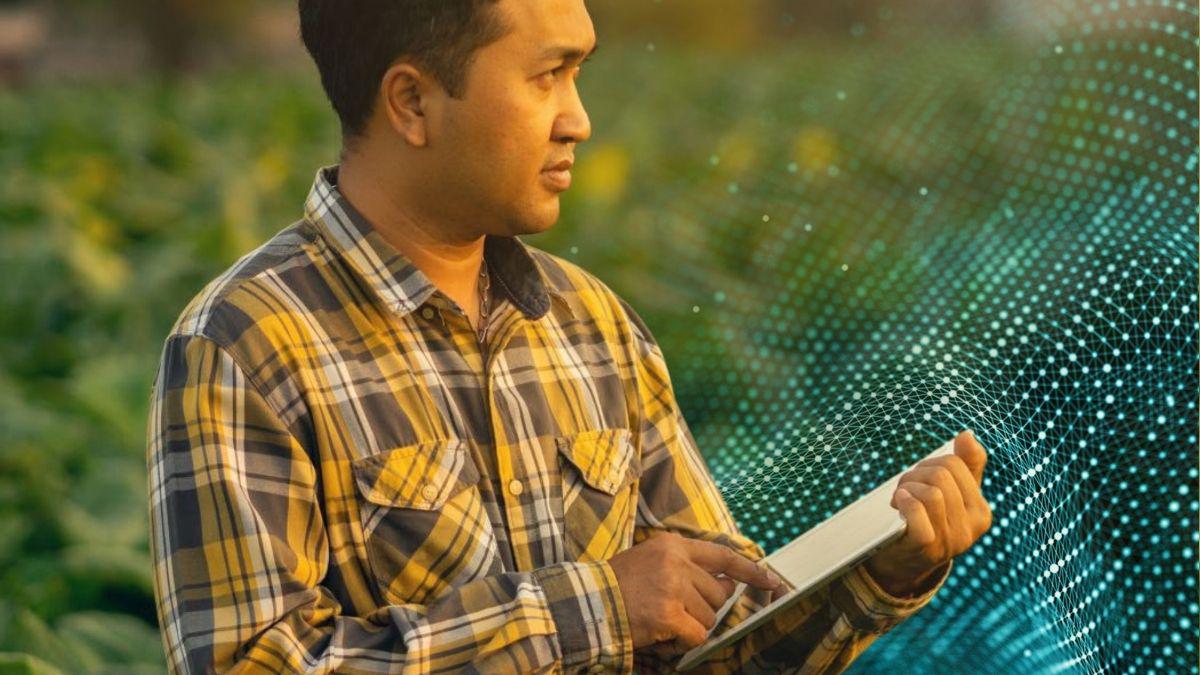
Personalization at scale, that’s a great phrase. And it’s also striking how it’s spreading across sectors. We have education, we have social services and identification. So, it really does cross the spectrum. We now move on to our next question coming from Loundou [Mathieu Cleveron] in the Republic of Congo. And the question is, “How are frugal, smartphone-based AI applications transforming the daily lives of smallholder farmers?” Okay, so this would be agriculture. Lana, it would be great to know what you think and if you can share any examples.
[Lana Graf]
Well, absolutely. There are multiple ways that I can think of. Of course, first of all, this is the application. It could be just image-based input. If you take a picture of a crop or a soil, that would get an answer. Very fairly quickly, I would say, “What is that?” “Is it a problem with the crop, or like a problem with the soil?” Or, if we would develop that data a bit further and the data set would be curated properly, we might have quite interesting suggestions, what can be done going forward. I also want to think a bit more like if we can overlay different sets of data [that are] quite relevant for the region. It might be satellite imagery taken from also a drone or an aircraft. Also here, we can get weather data. And altogether, that would have a fantastic prediction on the potential, on the volumes of a crop, or what might go right or wrong, who would be using or digesting that data? Insurers or banking institutions. Immediately, that data that is basically surrounding a farmer become a very powerful tool. If you put it on a very contextual scale, a small scale, that would unlock a lot of opportunities and possibilities for the farmer.
[Noreyana Fernando]
Interesting how this concept of customization, but also larger data sets keep coming up over and over again. We have our next question coming from the Gambia. Isatou [Sarr] is asking, AI systems often encode the biases of their creators, “How can low- and middle-income countries safeguard against the subtle ways AI could entrench discrimination in finance, healthcare, or public services?” Very important question. Johan, let’s hear from you on that one.
[Johan Bjurman Bergman]
So, I think the core issue is really about the data in a lot of AI systems, the data it’s trained on, that is, being taken from contexts that are very different to the ones where the system is deployed. Imagine a credit scoring algorithm that is trained on data from traders here in the US that will most likely have not very good predictive power for a trader in the Gambia or in Guinea, in West Africa. So, what we can do here is really to look at three different areas. First, it’s around the data itself. What does the data represent? Does it have local language research capabilities? And does it represent the behaviors of the people we’re trying to serve? And getting to that place means governments need to invest in that data foundation. The second is around the governance. Who can actually use these types of AI applications? How do we ensure accountability? And how do we step in to challenge the AI when decisions or recommendations aren’t correct? And then, the third one is really about the capability to manage that data and to enforce those regulations. So, governments need to be able to understand how they evaluate and audit these AI systems and how they spot when biases start to creep in.
[Noreyana Fernando]
Thank you. And it does sound like a lot of thoughtful, proactive thinking needs to go into this. So, point well taken. Our next question is a video question coming from Rwanda. We have Nsabimana Fulgence asking the following question.
[Nsabimana Fulgence]
How can the World Bank encourage private sector investment in AI?
[Noreyana Fernando]
Lana, we’re going to have you come in on the private sector element and Johan on the policies.
[Lana Graf]
Well, absolutely. So, when we look at the investments that are sustainable, that hopefully will scale and deliver a lot of value, we need to just make sure that the foundations are there. And the foundations are all about who will be using that, who can improve the system, update the skills, like the soft infrastructure. There is also a question, what would be [the] setup for the infrastructure where you would run those models, keep them updated? What technology stack is there available? And then, there are lots on regulation, really, what policies, what incentives. It’s there, basically, on the grounds to make sure that this venture will be successful, whether it’s like some matching capital or some type of grants, like towards a particular vertical or sector of application. And in this case the minute we see that there is an ecosystem or a systematic approach taken in the country or in certain innovation hubs, this is where it looks quite promising for us. This is what we are trying to see if entrepreneurs can build upon. This is where startups can hopefully be able to scale. So, it’s all about really building blocks and layering foundations.
[Noreyana Fernando]
Johan, any thoughts on that ecosystem, startup policy angle of this whole idea?
[Johan Bjurman Bergman]
Yeah, I think we all know that there aren’t one-size-fits-all approaches to regulatory frameworks. As the World Bank, I think what we bring is really the ability to understand the specific country’s context and then bring lessons and insights from other countries, and help tailor them and adapt them so they work there. But obviously, regulation isn’t enough for investments to start flowing. We also need customers. That’s where it’s so important that governments step in and start using AI in a safe way to improve the efficiency of administration, to help deliver services in a better way, because that sends a signal to the private sector that, in fact, here is a market that’s being built and there is demand. So, as the World Bank, we’re trying to help and support both those areas. On the one hand, really supporting the rules that are clear that give investors the confidence to invest, and then supporting public sector entities in creating the use cases that build the demand and the market that then entrepreneurs can serve.
[Noreyana Fernando]
Interesting, very interesting to see the end of play of private sector and the government coming in here. Great answers, and we’ve already covered a lot. And thank you to everybody who has been joining the conversation online. Our experts are actually online with you right now answering as many questions as they can in the chat. Now, let’s see what you told us in the live poll. We asked you, which do you think is most critical for AI to address real-world challenges? We heard from more than 500 people on the poll, and let’s see what they have to say. Here you can see on screen that affordability and ease of use coming in at 24%, working in low resource context at 10%, solving local problems at a whopping 40%, and trust and safety at 25%. Okay, Johan, Lana, reactions. Did this surprise you?
[Lana Graf]
Well, I’m glad to see that 40% of the local serving models or local serving AI, this is hopefully a proof of that small AI, big impact. Our idea that we’re trying to push is something there to lift and scale. We do believe, of course, in localization in the local context, in a particular data set, and in always the feedback loop that probably only the local user would give us. So, it’s absolutely encouraging to see that.
[Johan Bjurman Bergman]
Yeah, and I’d also honestly point out the 10% on low-resource context. I think it’s a little biased. We’re asking people on the internet if low-resource AI is important. So, we’re probably not asking the people who actually live in low resource context. But from our work, we know that a lot of these contexts are low-resource in the sense that they have limited internet connectivity. They have quite basic devices. I don’t know if you’ve used one of the popular chat bots in, let’s say, beyond major cities in Central Africa or in South Asia, but it’s not a great experience because they really can’t deliver the answers you need. And that’s where I think small AI has a huge role to play. These are AI solutions that are tailored to a specific development issue. They’re trained or finetuned on locally curated data. They work within these constraints in terms of low connectivity, and they can deliver support via WhatsApp or SMS or other applications that people already use. And so, this is really where we see the fastest path to impact for AI in this lower resource context.
[Noreyana Fernando]
Of course, and we saw this idea of trust and safety also coming in at 25%. And you said earlier, Johan, that we need these proactive solutions to that element. Let’s move into a few more questions. This time we have Tindyebwa Manson coming in from Uganda asking, small AI relies on smaller data sets: “How do we prevent these models from inheriting local biases or making hallucinations that could lead to dangerous medical or agricultural advice?” Johan, let’s go back to you for that one.
[Johan Bjurman Bergman]
So, this is a really important point, but I think actually small AI systems can have an advantage here because they’re tailored to do one or two things well. So, if you have a system that you know is supposed to do one or two things, it’s much easier to validate that it does that than if you have a system that’s trying to do everything under the sun. But that doesn’t mean that you don’t need to have some safeguards in place. First of all, the models and solutions need to know what they don’t know. They need to be able to tell you things only if they’re confident in the answer. If they aren’t, they need to tell you, go and consult some other source and not just come up with some answer. The second one is really ensuring that humans are the ones making the decisions at the end of the day. World Bank Group is supporting, for example, a pilot of an AI-based tuberculosis screening tool in India, and while that tool is helping to set the diagnosis, a clinician always makes a decision of what’s the next step in that treatment chain. And then third, it’s really about ensuring that the end user is the last line of defense so that they can flag. If there is something that doesn’t make sense to them, they can flag the issue, and that flag goes back to the model and helps train and improve that model continuously.
[Noreyana Fernando]
Point well taken, this idea of humans as the last line of defense, and the final reviewer. When the rubber hits the road, jobs are a big part of the equation. And we actually have a practical question coming in from Ashfaque [Ali Khan] in Pakistan who’s asking, “What skills should Gen Z and millennials learn to adapt as AI changes the nature of work?” Lana, what do you think about that one?
[Lana Graf]
Probably, I maybe have a “not expected” answer. Instead of talking too much about what type of technical skills, I would just point out that soft skills are the ones that matter the most these days because we are in front of our screens all the time. We are on our phones. So, interactions with colleagues, making sure you’re present, persistent, consistent in your communication, this is quite important. So, it’s still quite usual. Through all these years, soft skills are important. Another idea that I think is worth sharing is that, yes, technical skills are important, for sure. We have to learn those tools, like all new generative AI tools, absolutely, but it’s in a unique time we are living in. It’s
[a time]
when non-technical, like non-coder people can actually create technology products. So, it’s those like no code, low code, or like vibe coding, how we have it. It’s a fantastic opportunity for those who want to try themselves in this new environment of AI. It’s absolutely possible these days, which is fascinating.
[Noreyana Fernando]
And interesting how the soft skills advice has transcended decades in technology. So, soft skills for you, Ashfaque in Pakistan. Our final audience question, we have Yatina [Katunga] coming in on video.
[Yatina Katunga]
How can small AI be scaled in a way that aligns with national policy, private investment, and existing systems, rather than remaining siloed?
[Noreyana Fernando]
Okay, Johan, Lana, would you like to take this one?
[Johan Bjurman Bergman]
I’m happy to jump in. I think it’s two main things that will make it more likely for small AI solutions to scale. First, that they solve a real problem. So, that means addressing a challenge that the government or people are already grappling with. Going back to the example earlier of this AI tool that helps with tuberculosis screening, if you’re doing that better and quicker than the existing methods, and the government already has budgets and programs that are trying to do that, then it’s more likely that that could get uptake and scale. The second piece is really connecting to broader systems. So, for example, if a farmer is using the app that Lana was talking about earlier to figure out when to best plant his crop, that app should then be connected to the input providers. And when he makes a transaction, that payment history needs to be stored so that we can then use that history to create a credit score for him so that he then, or she, can actually get access to credit in a faster way. So, it’s really about connecting to those systems, but it doesn’t happen just overnight. As the World Bank Group, we’re helping countries invest in what we call “a digital public infrastructure approach,” which is essentially just a fancy way of saying we need to invest in shared ID, payment, and data sharing systems. And then, once you have that, or at least this beginning of that infrastructure, you can plug those small AI systems into that infrastructure, and that will help them then also scale up nationally instead of just staying in small pilot silos.
[Noreyana Fernando]
Interesting. A lot of data and cross-fertilization unlocking lots of possibilities. Lana, anything to add on that?
[Lana Graf]
I would say that, first of all, foundations absolutely matter. This is what we would build the investment cases [on], but also where to invest. Starting very early, like with seed investments, with the very early companies, we just need to make sure we are touching upon accelerators or the Funds or Fund Managers that are tackling the nascent innovation within a country. So, at the same time, Fund Managers who are going out there and looking for investments across the globe, it’s sometimes not that easy. The major technology providers, obviously, they are in the developed world, but then they continue to be devoted to that mission, going to the emerging market and seeing what actually will be applicable out there. It’s very inspiring to see. So, our colleagues at the Bank within many departments, they are doing a fantastic job, looking for those investments and [they] continue pushing the envelope towards the most innovative solutions to invest [in].
[Noreyana Fernando]
Thank you. Thanks for that answer. And thank you to everybody who’s been submitting their questions. As we wrap up, there’s one final question that we would like to bring to the table. We’ve covered a lot of topics today, Lana and Johan. What’s one thing that you would like folks to take away from this conversation? Lana, let’s start with you.
[Lana Graf]
Well, absolutely. I would probably say something about jobs. We’re constantly being asked if AI is taking away jobs. So, we see in the emerging markets a bit of a reverse dynamic. AI is creating a market, making more jobs available across finance, healthcare, logistics, e-commerce. It’s inspiring to see, obviously, with the development of systems, some jobs will be augmented, but there will be new jobs available in those localities. So instead of quite a wide, appropriate opinion that AI is only here to eliminate all possible jobs, we gladly see a bit of reverse dynamic.
[Noreyana Fernando]
That’s some encouraging news from your perspective. Thank you, Lana. And, Johan, what would you say? What do you want us to take away today?
[Johan Bjurman Bergman]
I think we’ve talked a lot about small AI, and I think it’s important for us to remember that it doesn’t mean frontier AI that’s adapted for developing economies in low- and middle-income countries. It means innovation that happens in those countries for their own needs. We’re seeing it work in India, in Kenya, in Ghana, and many, many other places. And together with a number of other multilateral development banks, we’re making a concerted effort to bring together more of those learnings, more of those proven use cases in what we call the AI Atlas, a platform that we’ll be launching soon. So, inviting everyone to come and visit that platform once it’s out.
[Noreyana Fernando]
The AI Atlas, looking forward to that. And this idea of innovation happening in these countries and personalization at scale seems to be a main theme here. Thank you again, and thank you to everybody who joined us online. In fact, the chat was full of questions and comments more than we could ever answer live. We love that level of engagement, and the chat will stay open for another day, so please keep sharing your ideas. And if you’d like updates on upcoming live events, subscribe to receive updates at worldbank.org/live. Thank you once again, and we look forward to seeing you next time on World Bank Live.