World Bank and ADB Announce Pacific Projects Under New Full Mutual Reliance Framework

- ABOUT THE EVENT
- Transcript
The Full Mutual Reliance Framework (FMRF) is a landmark collaboration between the World Bank and the Asian Development Bank, designed to deepen the two institutions’ collaboration on cofinanced public sector projects and deliver greater development impact, faster, for clients.
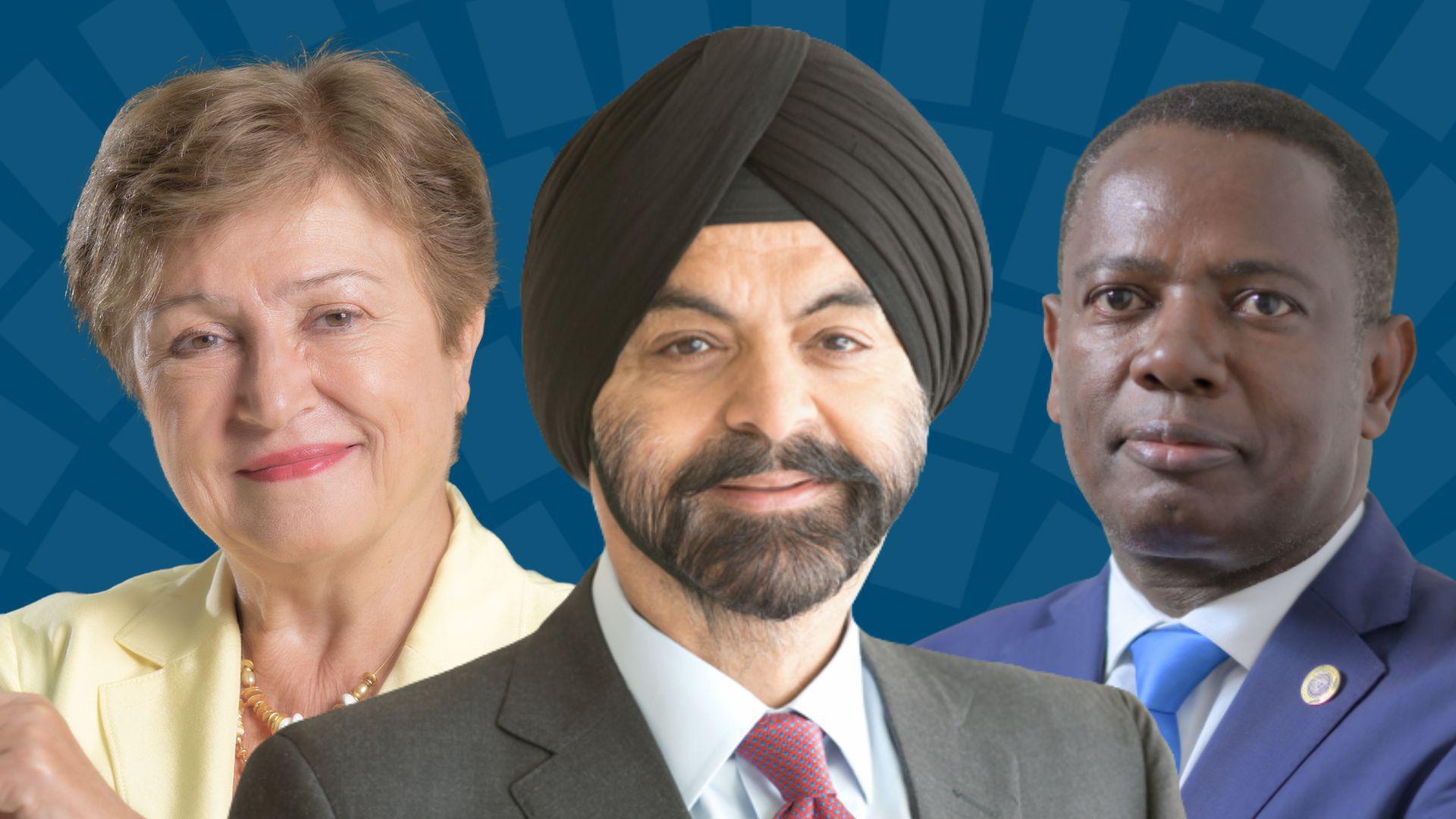
Watch Ajay Banga, President of the World Bank Group, Masato Kanda, President of the Asian Development Bank, ʻAisake Valu Eke, Prime Minister of Tonga, and Esrom Immanuel, Finance Minister of Fiji, announce the first two projects to be delivered under the Full Mutual Reliance Framework, in the Pacific.
Speakers
-
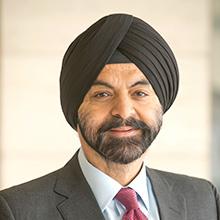
Ajay Banga
President, World Bank Group
-
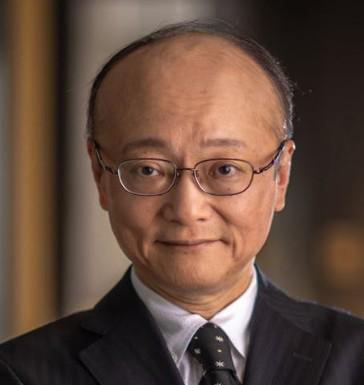
Masato Kanda
President, Asian Development Bank
[EMCEE]
May I now invite ADB President Masato Kanda to deliver his statement.
[MASATO KANDA]
Thank you. Thank you very much. Good morning and thank you all for joining us today for this historic announcement. I’d like to warmly welcome my respected friend Ajay Banga, World Bank Group President, for whom I’m very much grateful for coming to Manila for this joint announcement. I also welcome... greatly appreciate the virtual participation of the Prime Minister of Tonga, His Excellency 'Aisake Valu Eke, and the Minister of Finance for Fiji, the Honorable Esrom Immanuel.
Friends and colleagues, this is the first time ever in our time that two organizations have collaborated this way to make development finance simpler, faster, and more effective. We are truly making history. I can’t stress enough how groundbreaking this is. Earlier this year, the World Bank and ADB signed a full Mutual Reliance Framework Agreement, which is an innovative financing model that will enable both organizations to deliver results efficiently and partner more effectively. Under the framework, countries work with only one single lender—either World Bank or ADB. That single institution will manage all aspects of project preparation and supervision, from design to evaluation. This approach streamlines processes and eliminates duplication, allowing us all to concentrate on what matters most: impact.
At the heart of this agreement is the benefit for our client countries. Our clients, like Fiji and Tonga here, will benefit from faster project implementation, lower transaction costs, and continued adherence to high policy standards. I’m really delighted to tell you that this commitment has now turned to action as we announce the first two projects proposed under the framework.
I also want to take the opportunity to appreciate the partners and the work that was done to achieve this extraordinary cooperation between the World Bank Group and ADB, and I want to recognize Ajay’s personal commitment to making this historic agreement happen. So thank you very much, Ajay.
The Pacific is where this innovation begins. Small island developing states face unique vulnerabilities—climate risk, geographic isolation, and capacity constraints. By streamlining processes and aligning policies, we can better help countries in the Pacific.
For the project in Tonga, ADB will be the lead lender for the Sustainable Economic Corridor and Urban Resilience projects, approved by the ADB Board two weeks ago. It will be the biggest development partner finance project in the country’s history and will provide upgrades to the Greater Nuku‘alofa transport network, including the 720-meter-long Fanga'uta lagoon bridge and urban drainage systems. Both projects will deliver immense benefits for the people of the Pacific.
The unprecedented cooperation between our two institutions presents a new model for how multilateral development banks can work together as a system. The experience and learning we gain from applying the framework for these two projects will inform how we broaden the adoption of this model across Asia and the Pacific. We look forward to announcing many more such projects and expanding the framework in the coming years.
In closing, before we hear from Ajay, let me say that our goal with this framework is clear: to deliver development solutions that are timely, efficient, and impactful. Through our collaboration, we can help our region solve complex challenges—from disaster resilience to better connectivity—while supporting our countries’ efforts to achieve greater prosperity.
Thank you very much indeed.
[EMCEE]
Thank you very much, President Kanda. May I now invite World Bank Group President Ajay Banga to deliver his remarks. Thank you very much. And Kanda-san, thank you.
[AJAY BANGA]
It’s a pleasure to be with you here again. You know from the day I met him, which is when I was, two and a half years ago, I was a nominee for this job, and Kanda-san was in his prior job in the Ministry of Finance in Japan. We have talked about doing things like this together.
And so, it’s a real pleasure that we’re sitting here together, getting a chance to actually convert that conversation to a real agreement.
It’s not just thanks to him, it’s also thanks to the teams of both our institutions who’ve kind of worked with real determination to bring us to this point today.
So, this announcement we’re making about the Full Mutual Reliance Framework between the two of us, between the Asian Development Bank and the World Bank, it’s the first agreement of its kind among the multilateral banking system, and it’s kind of befitting that it’s happening today.
I was asking Kanda-san and his colleagues, when was the last time a World Bank President was in his office, and he said, Jim Wolfensohn. That’s 25 years ago, and I’m telling you, it will not take 25 years for this to happen again, because we’ve got many ideas of how to partner together.
One plus one must be equal to three. That’s what we’re trying to do. The reason we went to this is our clients. They asked us: Can you make our lives easier? Can you work faster? Can you be better partners together, because we don’t have the capacity to deal with both of you and multiple sets of rules, multiple documentation, multiple missions, multiple procurement steps, and all this strains their capacity.
And by that you delay impact. And in development, you know delay is equal to denial. And so, I think we’re trying to find a way to get past that and spend time on delivering results.
I was in Tuvalu and Fiji last year, and I saw the impact of both of us cooperating on projects, but with different procurement, different documentation, those countries with their limited capacity for spending their time sorting and meeting with us, as compared to implementing those projects on the ground with what they should be doing. So, this is really about that.
The idea is to tackle that problem directly, reduce duplication, streamline how we work together, free up time, money and talent to focus on execution of development.
So, the two projects we’re announcing today, and Kanda-san mentioned both of them, but there’s the first one is an urban development and connectivity project in Tonga, which ADB is leading on, is the largest partner-financed investment in the history of Tonga.
And so together, we’re making that numbers come true, but they lead on this, they’ll deliver transformative upgrades to roads, to drainage, to water supply in that country.
The second one is also kind of a regional project, so it’s a little different. It expands access to quality health services across the Pacific. It’s the largest operation that the World Bank has ever supported in that region.
We think we reach 2 million people. We think we’ll generate 11,000 jobs across Fiji, and Tonga, and Kiribati, and Tuvalu, and Nauru, and Samoa, and Solomon Islands, and Vanuatu, and I think that is the kind of thing that makes a difference in both these cases.
Streamlining with the ADB allows us to focus on the real work, from strengthening care for non-communicable diseases to building urban infrastructure that is essential for jobs and growth.
You know, he understands healthcare better than most people. The Japanese government is a model on delivering universal healthcare to the citizenry. In fact, I’m going from here today to Tokyo, and tomorrow we have a very big event on healthcare, primary healthcare and universal healthcare, the conversation for which started during his time in the Ministry of Finance in Japan.
And so, you can see that there is a commonality of thinking that we both want to bring to the table together. But the point is that this is only the beginning. I think there are these two projects now, but we’ve got 20 more in the pipeline across infrastructure, energy, agribusiness, healthcare and social protection, and most of our clients are very interested in this, which means it tells you why it’s worth doing.
I also believe this is bigger than the World Bank and the ADB. This framework is a proof of concept for how MDBs can operate as a more coherent system. We’re discussing similar approaches with the European Bank for Reconstruction and Development, with the Inter-American Development Bank and have initiated conversations with the African Development Bank.
And our hope is that, over time, any willing partner who is willing to follow this common approach that we are pioneering will reduce duplication and raise efficiency, can help clients manage complex challenges with limited resources.
So, President Kanda-san, thank you for your leadership. Thank you for your partnership. Thank you for your guidance from the day I became a candidate to come to this job. I think this is a very important step forward for our institutions.
But frankly, far more importantly, it’s a very important step for the countries and communities that we are supposed to serve and help. So, thank you for being who you are. I appreciate it. Thanks very much for listening.
About the FMRF
- PRESS RELEASE | ADB and WBG Announce Pacific Projects as First Proposed Under Groundbreaking Partnership Initiative, 12/4/2025
- PRESS RELEASE | ADB and World Bank Group Partner on Full Mutual Reliance Framework to Increase Development Impact, 2/20/2025
- BRIEF | Proposed ADB-World Bank Full Mutual Reliance Framework
Asian Development Bank (ADB)
World Bank Group
Social Media
X.com
@ADB_HQ | @worldbank
LinkedIn
/asian-development-bank
/the-world-bank
Facebook
@AsianDevBank | @worldbank
Instagram
@adb_hq | @worldbank