The Evolution of Development Finance—Reflections on a Career at the World Bank

- ABOUT THE EVENT
- Transcript
GO TO SPEAKERS
Development finance has evolved over the past decades, and is poised to undergo significant changes in the years ahead. What lessons from the past can help shape a stronger, more resilient global financial architecture that responds to the needs of the future?
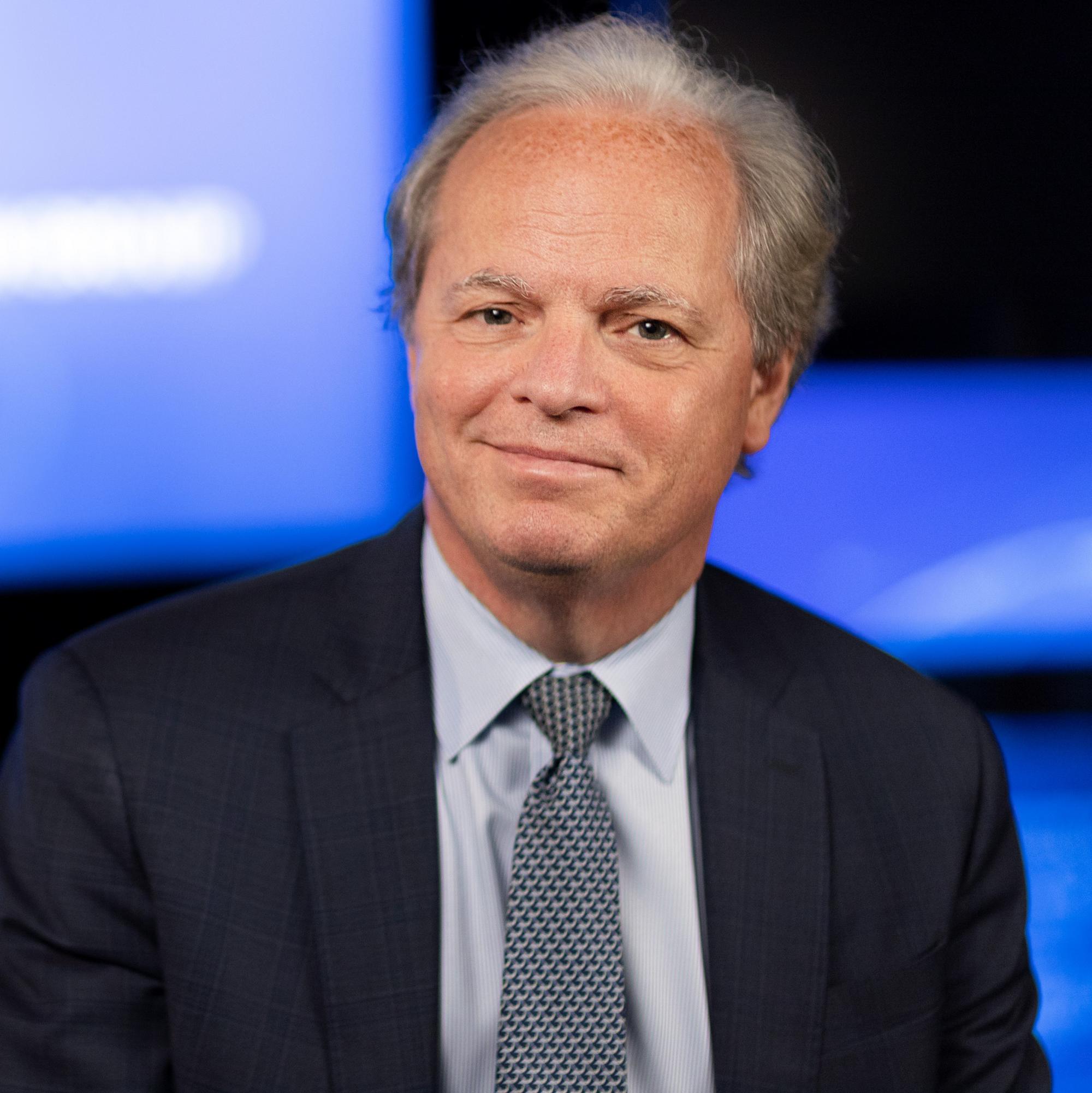
Axel van Trotsenburg is the World Bank’s Senior Managing Director for Development Policy and Partnerships. On November 19, 2025, reflecting on his 37 years of experience at the World Bank, spanning regions, crises, and major development milestones, Axel joined CGD President Emeritus Masood Ahmed for a conversation on the evolution of multilateralism, the changing landscape of development finance, and the future of international cooperation.
[Lively music]
[Masood Ahmed]
Welcome! Welcome to the Center for Global Development. Welcome to this conversation that we’re going to have now with Axel van Trotsenburg. I also want to welcome all the people that are joining this session online. I know there’s a lot of people who are not in Washington who have expressed an interest in joining. Thank you all for making the time. We have 45 minutes. I want to reserve 15 of those minutes for questions or comments that you might have that you want to raise with Axel. We’ll have 30 to start with. I want to go straight into that conversation without having a long preamble about all the great things that Axel has done in the World Bank and the CV and resume that is so impressive that you will all have seen. I suspect most people in this room and who are watching online know Axel and what he has done. I’m going to spare you all of that.
[Axel van Trotsenburg]
Thank you.
[Masood Ahmed]
I want to... We’ll get into substance in a minute, but in 1988, to arrive at the World Bank, as a young economist part of the YP program. I wanted to think back a little bit to that time. The first thing you go off to the Latin America region, you start working there. If you compare your first exposure to the World Bank then, and think about the World Bank today, what is it that strikes you looking back in terms of what’s different? How is the Bank different? But perhaps even more importantly, how do you feel the relationship between the Bank and the countries that it is serving has changed in that period?
[Axel van Trotsenburg]
Well, there are a couple of things which come to mind. I would say the World Bank in 1988 was a very closed organization. We would argue that it was very secretive. The best indication was, for example, when country strategies were written, they were written for the Senior Vice President, the Vice President, the Director. They were not written for the team members. So, it was a secret. So, you ask, why do you have that paper? This was closed. The second thing was that as a YP, in my second mission, I went to Venezuela in February ‘89, and that was just before the blow up of the Paris administration. And there was this massive effort from the Fund and the Bank to provide a support program. Two things came to mind. How the program was designed, this was very fast and it was clearly not, in my mind, country-owned, and also considered all the possible effects it could have on the social sector. Unfortunately, it proved that the whole thing exploded. I think we have learned a lot from this. That was also different. I would also say that at that time, we were still, if you wish, a Cold War organization. We still didn’t have the full membership of 189 countries. So, that was also a difference that you felt. Actually, I had the luck to have my second assignment of my YP assignment in Eastern Europe.
[Masood Ahmed]
So, these were six-month assignments of the YP programs--
[Axel van Trotsenburg]
Six, at that time. I worked on Yugoslavia and Poland that in September ‘89 made this big demographic exchange. Then, people still smoked in the offices, so.
[Masood Ahmed]
There is that. When did you first then start working on Africa? Because a big part of your whole career has been around low-income countries and around concessional finance.
[Axel van Trotsenburg]
Correct. So, I moved in March ‘93 to Côte d'Ivoire on the Côte d'Ivoire desk. At that time, that was quite difficult because what happened was that the Bank, and there you have to give the Bank some credit, since the mid-1980s, it pointed out that the CFA franc, it was the currency for 14 African countries that was linked to the French franc, was severely overvalued. There was not much tolerance to talk outside about this because it could cost VPs and Directors their jobs, which it did. We could only talk about “d-day.” We prepared that for these countries, particularly in ‘93. What was also clear was the problem, in hindsight, we have to say, of defensive lending. There was an enormous amount of IBRD lending given to these countries, and so they had a problem to repay. In the end, the French Treasury paid most of the debts in the final days. But it became also clear that that kind of terms for African countries were too harsh. I still remember in my first month, I wrote something that there was a multilateral debt problem. Well, that didn’t go well because the paradigm was there was no problem. There was a problem with bilateral debt and commercial debt. There was no problem. Incidentally, while I’m actually cleaning up, I found some emails by pretty senior people in the Bank that pointed out there was never defensive lending, and there was not a problem. Indeed, it still took two years until Wolfensohn came to actually start addressing this. I think on the concessionality, it was also a sea change that with this very unfortunate experience with IBRD in the CFA countries, these countries were put on IDA. It was a realization that we needed to look at that sustainability and the terms should be more compatible with their debt servicing capacity. So, that was a big thing that started to pop up.
[Masood Ahmed]
Let’s talk a little bit about debt, because you remember you started talking about the mid ‘90s when we started focusing on the unsustainability of debt in a whole number of low-income countries, and that ultimately led to HIPC, and it was a way of dealing with debt overhang and debt sustainability issues in these countries, and led, in the end, to 100 billion dollars of debt relief for 36 countries. But the run-up to it was a difficult period, partly because it’s a bit of denial, as you said, initially to the concept. Then, people started worrying about what this would mean for the whole financial model for the multilateral. Now, today, here we are, 2025. I would say for the last five years, we’ve been living in a period when everyone is saying debtors. A lot of people in the political-economic arena are raising questions about unsustainable debt, very heavy debt service payments by low-income countries. At the moment, there’s one group of people who would then say, “You need another HIPC,” some kind of grand initiative to deal with the debt problem. There are others who say, “Well, no, there’s a debt problem, but they’re not quite the same, and you need to find country-by-country solutions.” And the Bank says both, depending on who you talk to in the World Bank. Well, that’s alright. How do you see a way? Where do you see a way forward now on debt? Because I hear the same conversation repeated now in different meetings, year after year, but how do you think we should go forward?
[Axel van Trotsenburg]
First of all, I think with HIPC, what was actually an important paradigm change, we put a clear framework forward. That actually helped countries in a sense that before that, if you look at Paris Club arrangements, particularly middle-income countries, it was really the country negotiating a debt workout. With HIPC, we established indicators. Now, you could question whether that debt to export ratio was low enough or so, but it was a very clear framework that actually provided also for countries with no voice a fair treatment. Because if it showed that there was this unsustainability, that particular country would qualify for the relief and would not need to negotiate for that. I think that was massive, very important. Second, of course, that the multilaterals provided for the very first time that relief, which was a paradigm change. What the problem today is, compared to HIPC, was that in HIPC, we devised a framework that was largely focused on external debt. And it was very powerful. Today, the issue is that there is public domestic debt and public external debt. In many countries, for example, in Africa, today, the domestic debt is larger than the external debt. That is one big difference. Second difference is clearly that the creditor landscape has changed. After the MDRI and all the write-offs, as well as the write-off from the Bank and the Fund, a different set of creditors moved in. There were non-Paris Club bilateral creditors, and secondly, also commercial creditors. They filled up. This is a huge problem. We will need to look at the external debt sustainability and then the domestic. So, what you actually need is actually a renewed framework for the whole public debt. Why is this difficult? First of all, you will need among the external debtors to get an agreement. This was in the past done in HIPC with the bilaterals through the Paris Club. And the Paris Club is not a treaty organization. It’s basically a gentleman’s agreement. It’s unbelievably powerful that a gentleman’s agreement leads to massive debt relief because the framework agreement that is agreed among those creditors is then translated in national legislation and it is delivered. The problem today is with this new set of creditors that we are trying to deal with that through the common framework that was created during the presidency of Saudi Arabia, during the G20 presidency a couple of years ago. But what is missing is one word. In my mind, when you want to restructure, you need one word and one word only. It’s trust. Because you deal with money. I need to trust you that you keep your word and that there is equitable treatment. If that is not there, it becomes very difficult. That trust level is still not there. This is the reason why we also have this Global Sovereign Debt Roundtable, not because we want to have another club to talk about it, but you want to bring people together and ultimately create confidence-building measures that ultimately lead to a much better understanding from each other’s concerns and how you can to actually get that framework going. That is on the external debt. Now, on the public debt, it’s even more sensitive because in many low-income countries, the financial systems are incipient. They haven’t really developed very well. And then you have pension or insurance companies. But they often have been forced to buy treasury bills from their countries. So, if you then all of a sudden say, well, you just write this off, you need to start thinking what that means for that financial system. So, it is not that there should be no participation, but you also need to say that that part is much more difficult. Then there is the communications because we talk, well, today in IDA countries, that service is in the order of 7% higher than education and health expenditures combined. But what people then think it’s all external. And that is a problem because we need actually to have that differentiation. So, I think we need to have that action. I think for the World Bank, the consequences were that you need to put countries providing IDA flows and you need to ensure positive net flows, which right now is not assured by many creditor groups. And so, I think that while we haven’t resolved the thing, we need actually creditor groups being willing to ease a rollover or at least see how we can ensure some positive flows because the negative flows, they are really hurting the poorest countries. And that we need to look at. The other part is what has hurt us in the end, I regret that we should have been louder. After the MDRI initiative in 2006, we started discussing how actually you should deal with new debt situations and could you already adjust to it? That was on the basis of debt sustainability analysis, and what I said, we created an ex-ante preventive debt relief. And that was basically when a country would get credits from us and then they become, “red light,” namely that they are not sustainable. We would make them grant eligible. The problem, what I have found, particularly after Covid, was that there was by some creditors, a group, precious little appreciation that actually there actually had been quite a bit of relief provided by the Bank. And so, at the bottom, it is more complicated. We need to push for a much quicker treatment. The Fund and the Bank have made quite a few proposals, what you could do, meaning maybe also have a moratorium once the countries are requesting such things, putting deadlines on this so that they can count on this, but that can only be done if the creditor groups agree.
[Masood Ahmed]
Which so far, so far, hasn’t been the case.
[Axel van Trotsenburg]
It’s difficult, very difficult.
[Masood Ahmed]
All right. Final question before I ask others. Different topic. So, one of the things that you’re just talking about, HIPC, part of the reason, my take on that period, part of the reason why we were able to get that kind of framework is because there was a degree of trust or cohesion amongst the principal creditor community. The people who were the primary active shareholders of the MDBs, of the IMF were also the people who had lent the money through their own bilateral agencies. They were the ones who were contributing a lot to IDA at the time and to the institutions. So, it was all a bit of a closed system. And once they could agree, they could make different bits of it work together. Now, multilateralism is very different. You have very different players, and they don’t have the same homogeneity of views and values necessarily. And that affects not just how you resolve issues like that, but really, you step back and look at the whole, at the World Bank today, the challenges that it faces are partly the challenges of what is a multilateral institution’s role in a world that is increasingly going bilateral or national-focused, the country first. So, say a little bit about how you see an institution like the World Bank coping in that world, and what changes would it need to make to still be able to play that role that borrowers want.
[Axel van Trotsenburg]
I think there is a sharper distinction between the low-income countries and the middle-income countries. In the low-income countries, I would actually argue that certainly through IDA, we are more relevant than ever. Also, within the total envelope of commitments, keep that in mind, in Africa, we would allocate maybe 5% of our lending program in 2000, it is now 40%. It’s 70%, or over 70%, of the IDA resources that are going to Africa. There I see changes. Compared to also the bilaterals that have been withdrawing, we have become very, very large on this. I think there I would say that the multilaterals are very, very strong. I also say in the middle-income countries, it’s a differentiated picture. I think that clearly, quite a few countries have good access to capital markets; and therefore, the borrowing from the World Bank or other organizations is no longer so important. So that you see in Latin America, you see it in Asia, and that will continue. It is also a part of the normal story of the World Bank. I also think you need to think not only about the World Bank, but all the MDBs, because clearly, if you are looking in East Asia, you look only at the IBRD, that’s not enough. You need to look at the Asian Development Bank, then the
[AIIB], and the New Development Bank. You see actually quite substantial flows going where actually bilateral flows are going down because in traditional donor countries, they don’t want to continue with large aid programs in middle-income countries. There you see then the Bank becoming actually relatively more important. I think where we need to look at is that the zeitgeist in OECD countries is shifting, namely because there have been other priorities, and these priorities range from climate, humanitarian, Ukraine, Gaza, other parts, Afghanistan was previously. There are different priorities. And so, there’s still a large amount of money
[that]
is going there, but it is not going to all the traditional sources. You also think what is changing is that maybe compared to 25 years ago, yes, there was emphasis on the private sector, but right now it is far more seen as vital because governments are no longer able to generate these resources that would be necessary. And so, therefore, there is more emphasis in the private sector. I would say actually the domestic resource mobilization in other countries. Because a country and donors have a hard time to accept that they come with their taxpayers’ money while a recipient country is having a tax effort in the 10% or 12% of GDP range, that is no longer acceptable. Therefore, there is this pushback. There is also a maturing of relationships. I think you can still find money, but it is no longer given unconditionally. I also think people would like to see results much faster. There is impatience because they see that the political supports are difficult to get.
[Masood Ahmed]
Low-income countries, you said, a big part of where the Bank through IDA will continue to be relevant. IDA’s financing model has traditionally depended on donors contributing roughly eight billion a year or so over every three years. Now, a lot of donors
[are]
cutting back on their development budgets and the contributions they make to multilateral institutions come from those budgets. If you were to look out for the next 10 years, do you think that we should be relatively comfortable, confident that contributions to IDA and multilateral windows like that will continue? Or should the IDA’s of the world, and IDA in particular, start thinking of a different financing model going forward?
[Axel van Trotsenburg]
Well, I think there may be a concentration phenomenon coming that monies are going to be relocated dedicated to those who are performing. On IDA, I think, having done a lot on the IDA, I think you need to fight. You are not a wimp. You basically have to stay for a vision and a mission, and that you need to do. And then you can get the money. Because basically, donors would like to know, are we serious as good custodians of taxpayers’ money? Are we chasing results? And are we actually accountable to this? I think if you do that, you can still get support. It is in the nature of, if you have 60 donors, that there are good times by some donors and bad times by other donors. But what you see is, therefore, it’s often a wash. Over the last five replenishments, you see actually donor contributions swinging in the 23, 24, 24.5 billion range. Sometimes somebody goes down, the other goes up. Would I like to get more? That has always been my ambition, but people know me, but I think what we did is we linked it with markets. Now you will say, “How do you do that?” “Is that some sort of gimmick of the World Bank?” “How is it possible that you go in IDA into marketing, you have a AAA?” What you need to understand is that in IBRD, the paid-in is 22.5 billion dollars, but the paid-in into IDA through the replenishment was 340 billion dollars. So, a huge amount. And this was actually capital. And yes, there are grants that are gone. Yes, there was debt relief, that is gone. But the equity is still, in nominal terms, bigger than all development banks together. So, it’s very large, and that is the basis on which you can issue bonds. Now, those bonds are not an eternal game because it’s a concessional window. And in a concessional window, there is a grant element. If you use it, it’s gone. So, that financial model of going to markets, you need to be very careful that you cannot do everything forever. You need to look at your capital base on this. How will that go in the future? I do think actually there will be continued future support out of enlightened self-interest. Because it will be important that our engagement with low-income countries, there are still enormous risks of a growing divide. Thinking also of, for example, digital and AI divide, you will need to engage. My expectation is that also OECD countries will stay engaged. The big question is, can you get that type of self-solidarity also with emerging markets? And that is an absolute challenge.
[Masood Ahmed]
Great. All right, let’s open it up and let’s take some comments or questions. Who would like to come in first? We got one hand at the front there. Let’s start there.
[Randall Hennnig]
Thank you so much for this. I’m Randy Henning at American University, and I really appreciate the discussion. I wanted to ask you to elaborate a little bit on the joys and sorrows of collaborating with the International Monetary Fund. I’m thinking, I think that’s a general question, but I’m also thinking specifically about the LIC-DSF review and collaborating on the LIC debt sustainability framework, since this is a joint project of the two institutions.
[Masood Ahmed]
Thank you very much, Randy. Let’s take three, and then we’ll come back to you. I think it was right behind you.
[Stephanie Segal]
Hi, I’m Stephanie Segal. I’m a resident here. Actually, Randy took my first question. I wanted to actually acknowledge first your long and very impactful career at the Bank, and congratulate you on that. And then, that gives rise to a few of my questions because you have this long-term perspective. One question I had was precisely on the evolution of Bank-Fund cooperation, if you care to comment on where that stands. A second question is related to the debate about embedding sustainability in development. So, the Bank not too long ago embedded “Livable Planet” in its mandate. That seemed to be a resolved issue. And then, with the Gates memo, it’s come back up to the four again. I’d love to hear your thoughts on the relationship between sustainability and development. I’ll stop there. Thanks.
[Masood Ahmed]
Thank you. One more, maybe right in the back there. Yep. Is there a microphone?
[Elizabeth MacBride]
Yeah, I have one. Thank you.
[Masood Ahmed]
Okay.
[Elizabeth MacBride]
I was hoping that my--
[Masood Ahmed]
Could you introduce yourself as well, please?
[Elizabeth MacBride]
My name is Elizabeth MacBride, and I was hoping… I’m a writer and an author and a consultant at the World Bank right now. I was hoping you could speak a little bit more about the most promising areas for collaboration between the multilateral development institutions and the private sector, and what changes need to happen so that that actually can work.
[Masood Ahmed]
Okay, so let’s take those three. Bank-Fund collaboration. Go ahead.
[Axel van Trotsenburg]
Bank-Fund cooperation. Look, I think HIPC also created a new ground on collaboration because we never really worked before so closely on that. There were the policy framework papers, they were done jointly, but the IMF had a clear lead role in this. In HIPC, it changed because this was a genuine joint document. There were robust debates as I think Masood can testify, and entertaining. The issue was that we had to learn to work together. I would say at the end of the day, it was usually successful because we produced these documents. And not only what was interesting, the HIPC documents, but after the Enhanced HIPC Initiative, the PRSP, the Poverty Reduction Strategy Papers. I still would say if you ever want to have a very clearly written document with a good analysis, read them. They are on the website. They actually provide a very good thing, they went to the reviews from both organizations, but also benefited from it. I think if you actually ask me about value added, there was huge value added on this. I think the natures of the organizations are different. The IMF is even more hierarchical. It’s a bit of a military. We are a bit more friendly anarchy. So then how do you bring that together? At the end of the day, it is also the willingness that we work together for common interest. We have, of course, a lot of things where we do the things together, that can be in the G20, in the G7 context, in many of those international initiatives. Is it always working out well or not? No, we have, I think, a sturdy arrangement of how you work together that started in the 1940s, and it is a dynamic process. But I think that we also need to see that where there are sometimes issues is, if the mandate starts overlapping or that is probably the area where the greatest amount of tensions you could expect. The working together, I think in operations, I would actually say that it has been actually quite good, that there are always individuals or so where it may be less or more. But I would actually argue over time, we have gotten to know each other quite well on this. The question about the sustainability, I have been caring a lot about ending poverty on a livable planet, as I’ve been drafting that. The issue is about long-term sustainability. I personally am talking here; my mantra is the poverty agenda will remain critical. But we have to recognize that there are global public goods that are today of absolute essence, including climate. And those need to be captured because in a way, the extreme poverty agenda is no longer the world agenda. When IDA started in 1960, we had about 60% of extreme poverty in the world. We’re now in the 9% area. So, there’s a completely different thing. But therefore, there are other agendas, particularly on climate or other global public goods that remain important, and that was captured on a livable planet. I think we need to continue working on that and stay focused on it. Now, you will say, well, there is a Gates memo and other things. Look, there are many opinions. I’m of the view, look, we are an international public institution. We will be criticized. There will be different opinions, there are eight and a half billion people, so it’s likely to expect that there are some people liking us or not. What I think is we need to stand for values and we need to stand for a robust debate and not shy
[away from]
it. You should basically think you need to act with conviction. If you are acting scared, then nobody will trust you or also think that you cannot do it. The organization is capable of lifting mountains, and they should do that. The last question was...
[Masood Ahmed]
On the private sector, areas of collaboration.
[Axel van Trotsenburg]
Oh, the private sector. I think there are enormous amounts of areas of cooperation. I think that the fact that we have two viable and large public organizations and two viable, large private organizations puts us in a very unique position compared to other development banks because they may have outfits, but not the size as the World Bank Group has. We need to be self-critical that basically we have not exploited that to the fullest extent. I have to say there, Ajay has been relentlessly putting the finger on it, how you put a One World Bank Group together that is not living on paper, but in action. And you see that with, for example, the consolidation of all the guarantees in MIGA. And it’s showing its effect because that portfolio is growing fast. So, there are things where there were blind spots. There are enormous amounts of possibilities. I think those can be exploited. What is going to be important is, and that particularly one of the previous of Makhtar
[Diop], there was Philippe Le Houérou, he was always talking about trading markets. I think that is something very important for IFC and particularly in the low-income countries. So, you would like to see, particularly the challenges in low-income countries, how we can exploit much more the potential of the private sector. That will require, of course, the private sector window of IDA to help de-risk. My view has been, and I’m always saying that as a multilateral development bank, we should create more private sector windows because you need to de-risk and we need to get much more to critical mass. I think that is still a work in progress. The second other big challenge is, and I see that in Africa, is how you deal with long term investments of the private sector. Take, for example, mining and all the development, how can actually multilateral organizations in the private sector be engaged on a much longer term as opposed to short term financing? But then you have to look far, far more on the equity, but also in IDA, how one can actually provide that de-risking device. I think there is more potential, and we should try to exploit that for the very simple reason that not enough public money will come into our direction. So, we will need to have new collaborative arrangements with the private sector.
[Masood Ahmed]
Axel, we’re running out of time, but I have one question online, which I want you to end with. The question is, what advice do you have for young professionals who are thinking of a career in development today at a time when they see a lot of headwinds in the development area?
[Axel van Trotsenburg]
Well, the headwinds are a good starting point. In no states, if you are joining a multilateral institution, should you expect an easy ride. Where in development, it’s not easy, it’s controversial, and it’s hard at times. So, if you want to have an easy ride, then go and sell cars. But if you think that you are...
[Masood Ahmed]
EVs.
[Axel van Trotsenburg]
Oh, sorry. EVs. They are all still cars. But if you feel you have the stamina, the enthusiasm, the passion, and the determination, you can make a career. If you think that you want to administer your job in a World Bank or in a multilateral development, don’t do it. You should go there to shape that. You need to be bold, you need to be determined, and you need to be willing to not only live in Washington, but you should be living in the countries where it matters most.
[Masood Ahmed]
All right. Look, I want to bring this to an end and thank Axel. Let me just say one thing, which is that I’ve known Axel pretty much since 1988 when he joined the World Bank, and I was there already, and we’ve worked together quite closely at times and been in contact. There are many people who go through long careers in institutions, and some of them actually rise in a bureaucratic sense to senior positions. Then when they leave, you remember them as people, but you look and see what was their impact. It’s uneven. I think the difference with Axel’s work in the World Bank has been that he’s been in different places in finance, concessional and regular finance, the World Bank, in operations, in policy work, in debt relief, now in knowledge. And everywhere where he has been, if you go now, you will see things that are different when the changes were made during the time that he was there. So, he’s always been a force for trying to change and improve the institution. And that’s why Axel will be moving on at the end of the month. But the impact of what he has done on the institution and on the work of the institution in supporting the member countries is one that’s going to be there for a long time. There are not many people you can say that about. I want to say to you, Axel, really for me personally, big thank you for everything that you’ve done.
[Applause]
[Lively music]