Global AI & Digital Summit – Small AI. Big Impact

World Bank Group Launches First Digital Strategy to Expand Access and Create Jobs
👉 Read the announcement- ABOUT THE EVENT
- Transcript
GO TO: SPEAKERS
What if AI's biggest impact comes not from the largest models, but from practical tools designed to solve everyday challenges? From supporting farmers and teachers to helping small businesses grow, "small AI" is making technology more accessible and useful. Join leaders, innovators, and practitioners as they explore how locally adapted AI solutions can create jobs, expand opportunity, and help shape a more inclusive digital future.
[Mark Tetto]
Please join me in welcoming the President of the World Bank Group, Ajay Banga, to the stage.
[Audience applause]
[Mark Tetto]
President Banga, welcome, and thank you for bringing us all together here in Seoul. I think this is in large part from you that we have this pleasure to gather like this. As you can see, it's a packed room of people anxious to hear from you. With that, let's get right into it. I know many of us have also had the chance to hear you, whether in Bangkok or at Annual Meetings, and in your remarks mentioning where you laid out a vision for a new era of development. What is changing about the way the Bank approaches development?
[Ajay Banga]
First of all, Mark, thank you for doing this. All of you, thank you for being a part of what we're doing here. I appreciate the fact that there are people from so many countries and it shows the interest on this topic. To me, actually, there are two reasons for it. I'm going to come back to your question, but the main reason is that digitization is such an enabler of jumping over the standard ways of development. I think that shows in the kind of audience interest here. Your point about development, what's changing? I think Sangbu mentioned a little bit, but in my view, there are two issues. The first one, Mark, is that public resources are constrained in every country in the world, whether you're a developed country or a developing country. I would argue, with the exception of a couple of countries, almost everyone is facing some sort of a fiscal challenge or the other. When you put that together, with the fact that the cost of development, the drive of development, estimates range in the trillions for everything you want to do. When you add constrained resources both in developed and the developing world, and I'm not even beginning to talk about today's crisis of a war in the Middle East with challenges on gas and fertilizer prices or interest rates and what that could do. Let's not even get involved with today's crisis. Just look at the pattern. You've got constrained public resources, you've got a second issue, which is the 1.2 billion people that he referred to in the developing world who will become 18 years of age. I've been saying for a while that at the end of the day, poverty is both a state of being and a state of mind. The state of being in theory, you could solve by handing out money, but the state of mind requires you to feel like a productive citizen every day, to feel like a contributor to your family, to your friends, to your society. That's what we refer to as the dignity that the ability to be that person brings. To me, the combination of resources with the coming 1.2 billion is both a challenge and an opportunity. That's the big change in development. The second piece then is, if public finances are constrained, what other legs of the stool can we build? If you think of a stool having 4 legs to be stable, then the first leg is public finance. You need it for countries, concessional financing, grants. They're very important and they play a role in every country. In the early stages of development, most of the public good in a country— roads, bridges, airports, electrification, water, schools and education and healthcare— come from government coffers. You cannot replace that in the early days of development. Over time, public-private partnerships can come in, but it takes time, so it plays a critical role. The second leg of the stool is philanthropic capital, which can very often do things that neither public nor private capital can do. We're working with the Rockefeller Foundation on Mission 300 in Africa. The Gates Foundation is helping us to adapt simple AI tools to local languages, mission-critical if you want it to be used. The Children's Fund is helping us do things with healthcare and with water. You have people funding the things that neither private nor public capital can do. The third leg of the stool is private capital being mobilized at scale, and the fourth leg of the stool is the turbocharge that technology gives you. When you think about the future of development and you realize the constraints and the opportunity of 1.2 billion people and you understand the stool with its 4 legs, then you can see why the Bank is pivoting towards the creation of jobs using our balance sheet. Last year, we put $120 billion from our balance sheet to work using philanthropic capital. Last year, we mobilized the most money from philanthropies that we've had in a while, and we've now launched a philanthropy hub at the World Bank to help create matchmaking between those who want to give money and those who could use it. Then the third, on private capital, last year we mobilized $112 billion. Three years ago, that was $32 billion. Those 3, and then the fourth leg of the stool is why we're here and why we're launching a digital strategy. You can see where we are trying to take this— go after jobs, do the right things. You can't build jobs without, as Anna was saying, building the foundation, infrastructure and good governance. Then you can mobilize private capital and do the right things in sectors where locally relevant jobs can be created, from infrastructure to small farmers to primary healthcare to tourism and, of course, to value-added manufacturing and entrepreneurship. It's a long way of saying this is the future of development. It cannot remain fractured and fragmented into 100 different causes. We should unite around the future of young people and their dignity and their opportunity and what it could do to drive all of our futures for the next 30 or 40 years and do it the right way by giving them the chance to be productive in society.
[Mark Tetto]
President Banga, thank you for sharing how there's a pivot going on in development and the 4 legs you mentioned are part of that pivot. Since you mentioned on the last leg digital, and since, as you mentioned, we are here in Seoul, how does digital fit into this picture in particular?
[Ajay Banga]
Well, as I said at the beginning, I think digital allows you to leapfrog. I was in the private sector a long time and I used to say that when I first started— I'm an old guy, so when I started my career a long time ago, 40 years ago, if you were an incumbent and you'd already built product quality, distribution, and scale, that was a barrier to entry for somebody else. You had a moat around your business, and the moat was your size, scale, and the timing of your entry. What digitization did is that it eliminated that moat. As if you go back in time, the invention of the printing press took away the right of people who interpreted religion to allow you to understand what the world was. You could get the Encyclopedia Britannica. I bet half of you don't know what that is, but the Encyclopedia Britannica is how young people like me got access to the world around you. It was very expensive, I couldn't afford it. We used to buy secondhand and thirdhand and fourthhand Encyclopedia Britannicas. Then came Google, and guess what? The Encyclopedia Britannica became available to everyone free of cost. It democratized knowledge. To me, digitization democratizes market opportunity, and that to me is the role of digitization. It is to take away the barriers to entry, to remove the moats that incumbents and rent-seekers build around their business and enable people with an idea, a good idea, with lots of opportunities to break through. You're going to hear from panels in a little while, young people doing that. I was just meeting a couple of them, I met them yesterday, I met one today. You will see what I mean about digitization being the ultimate democratizer of market opportunity, and that to me is critical.
[Mark Tetto]
Thank you. And as you mentioned, I also grew up and remember Encyclopedia Britannica. If we think—
[Ajay Banga]
How old are you, man? You look very young.
[Mark Tetto]
I'm 46, but I still remember.
[Ajay Banga]
I've got 20 years on you.
[Laughter]
[Mark Tetto]
As you mentioned, I passed on my version to someone else as a secondhand version.
[Ajay Banga]
There you go, there you go.
[Mark Tetto]
If we think of this as a transformation of that scale, that we went from Encyclopedia Britannica to where we are today through digital transformation, I think that hits home for us. What we have to look forward to at the rapid change in this sector as well. President Banga, you've argued that creating jobs requires getting the fundamentals right before the private sector can invest and grow. Does the same logic apply to digital development? What are the essential building blocks, the fundamentals to get right for digital, and how is the World Bank approaching them?
[Ajay Banga]
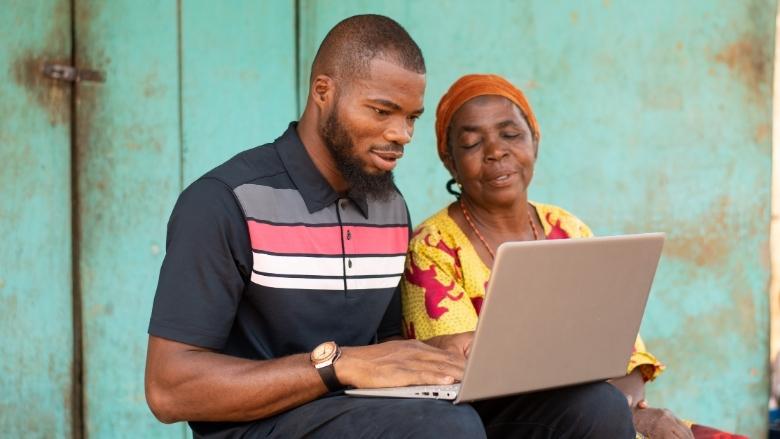
I spent a few years in a company that was deeply embedded in technology and data for its future. What I learned there was that you're only as good as the ability for your services and capabilities to reach people. If, at the other end, there are only a limited number of people who can get what you're offering, no matter how good it is, that's the limit of your ambition. I think what digital development requires is very basic things to be sorted out. Anna was giving some numbers. Let me give you a different angle, and Sangbu, I think, gave some numbers when he was speaking. Let me give you a slightly different angle. The access point, here's how critical it is. If 2.2 billion people lack or are not using the internet, let's just start from there, 2.2 billion. 95% of those are in lower- and middle-income countries. It basically means that most people in the developed and the upper income countries use the internet. They may not use it at the same level of consumption. They may not have as a sophisticated device, but they use the internet at different stages of development and use. But 2.2 billion basically in the lower- and middle-income countries don't use it at all. A number of them don't use it because there is either no internet that has reached their location, or even worse, there is no electrification. When I used to sit in rooms some years ago and hear people talk about how we're going to digitize Africa, I finally lost my patience in one room and said, “What do you mean by digitizing Africa when 600 million people in a continent do not have electricity? How do you plan to charge the wireless phone? By connecting your hand to the sun?” That does not exist. And so, the fundamentals are really important, otherwise the gobbledygook of development takes over the fundamentals. And the fundamentals are give people access to baseload affordable energy which allows them to be productive, not one fan and one light attached to their house. That's nice. That's humanitarian. I'm talking about making them a productive part of society, enough electrification to enable them to open a business, to be able to use a computer, to be able to do things to remove that issue of the arbitration of getting past market opportunity. That's the first thing, the fundamentals, electricity, the chance to have the internet connectivity, whether cables, local cell phone towers, I mean, things of that nature. The second is the issue of affordability. Again, you talked about taxes and the like, but the fact that governments put taxes on digital plans, if you think about this carefully, if the digital plan costs $20 a month and the tax is $2 a month, do you really think that upper middle income, middle income, and senior people or old and wealthier people in your country cannot afford the $2? Of course they can. Who's the one who can't afford the $2? The lower middle income and poorer people. Who are the people for which digital technology is the best breakthrough of the barrier of entry? Those very people. So, what you're doing by putting your $2 little tax on that digital plan is you're actually hurting the very people whom you're trying to help with digitization. I understand you need revenue, I'm not telling you that you shouldn't explore every source of creating revenue, but don't let an unintended consequence destroy the opportunity that digitization brings to those segments of your society whom you are committed to serve, to raise up. And I think that's the issue around affordability— devices, plans, the whole thing. Refurbishment. People have mentioned that already. The third one being the ecosystem. What I mean by that is that if you look at what we're doing with farmers in India, one example. I visited this location in the northern state of Uttar Pradesh in India where illiterate women farmers were using things we had developed with Google and a few other partners, and they were using a 3G old phone to speak into it to say, “My plant has a disease, tell me what to do.” And you point the camera at the back of the leaf and it tells you that disease, this insecticide, there's a button there which you can press to purchase it from your local cooperative. Because India has opened bank accounts for all their people, it actually works. So that's digital public infrastructure. Digital identities, allowing KYC/AML to happen to open a bank account in the most remote village, which then allows that money to get in there without intermediaries and keep sticky fingers off the money, allows that illiterate woman farmer with the power of small AI, which is this tool of identifying a disease, and allows her to break through the knowledge barrier that she would have had. One example. You can do this in healthcare. We don't have time, but I will give you examples in every category. That's the ecosystem, digital public infrastructure. The fourth item is actually the tool that this lady used. That's the AI tools. In healthcare, similar example, if you could cough into a phone and it can say whether you're more likely to be having TB than the other person, and you can focus your testing on those who are more likely, is that not a good outcome? Or if in Indonesia, in the healthcare clinics, you have a midwife, a nurse, and a diagnostic technician, you walk in, I'm the nurse, and you show me a rash on the side of your neck, and I can't figure it out, but I can take a photograph and send it to the doctor we share with 10 clinics who runs it through a local AI tool delivered at the edge, local compute, that kind of thing, and says, “Oh, it's just an eczema, give the guy an ointment and tell him to go home,” or says, “I don't like what I see, bring him to a regional hospital to meet that specialist at 10:30, 2 weeks from today.” Try fixing that appointment even in a developed country today in 2 weeks and you won't get it. In Indonesia, digitally, that is being done. The point is that these 4 sets of things are where our digital plan is going to reach those 600 million people with broadband access, half of which should be women, who by the way are the ones who get the most impacted by the absence of the internet, and then 400 million using these kinds of digital services. That's what we are trying to get at. I think that's where our future could go.
[Mark Tetto]
I think as a very fast-changing technology as we have with AI and digitalization, and we saw in the quiz earlier. I think sometimes that leaves somewhat an uneasy feeling. I think part of that means we share this desire that someone is thinking of the fundamentals and getting the fundamentals right before the technology moves too quickly. In your remarks, I was just finding myself thankful that there is both yourself, President Banga, and also the World Bank taking the time to think about the fundamentals and get those right, especially given the breakneck speed of these technologies. But having now worked as you have on the fundamentals, maybe we could turn our glance now to kind of where the rubber meets the road of the implementation. Actually, after our talk together here now, we're going to have a panel that features people who are already working on small AI applications which are designed to solve real-world problems. I'm curious what you think of those projects and what you think of those people. Why is their work so important in small AI applications to what the World Bank Group is trying to achieve?
[Ajay Banga]
The world's attention has been consumed for the last few months, I'd say a year or so, maybe longer, on large language models and GenAI. I think that's appropriate because the reality is that I think AI could really transform our futures in a very constructive way, from the development of medicines to the delivery of education to scientific frontiers that we could break through to longevity of lives. I'm a firm believer in all of that. Don't get me wrong, I'm a believer in the productivity it'll generate, and I'm a believer in the longer term on the fact that this will be a good thing for society. What we need to just think about is, one, what guardrails do you need to enable this to work the right way? And two, is this large language compute model the one that will help countries who aren't actually directly involved in that LLM development? By that, I mean not just the poorer- and lower-income countries, but even middle- and upper-middle-income countries, and even parts in a country like Korea, countries in Europe who may not be in the direct development of these frontier AI models, but would be consumers of what comes in. Koreans are big consumers of AI already. What happens then with that? To me, there are 2 or 3 topics there. The first one is that you got to understand that if you try and chase large language models in your country thinking you can compete, you should have a really deep second thought about it because what large language models need are 5 things. The first is they need computing power, lots of it. Korea, Thailand, and a number of countries are benefiting from supplying the inputs that are going into the hyperscaling data model world right now, where construction and investments are running into very large numbers. There is a benefit flowing down, but the reality is the price of chips is up. There's a whole lot of issues with that space. There's the issue of computing power and lots of it. The second is you need electricity and lots of it. I would argue even the developed world has to carefully think through the energy use that's going to be utilized to power these data centers. There's a lot of effort going into reducing the future use of energy in these data centers, but today it's a pretty energy-intensive use of computing power. The third is you need lots of data, because an AI model, its predictive power is only as good as the quality, width, and depth of data that feeds into it, because that's how it works. If you have to have that kind of data, then you have to be a player where such data flows come in from everywhere and can be used and kept safely with the right standards on privacy and trust and ethical nature of management of this. And then the fourth item is you need people who are skilled enough to know how to use all this. And then the fifth item is you need bucketloads of capital. You need computing power, electricity, data, people, and capital all in large numbers. There are very few markets outside of a few where this set of 5 things exist in a substantial enough way to break through and say, “I could have a role to play in developing the next frontier AI model within the next year or two.” Up further, as I think Anna mentioned about adopt, adapt, and then enable, it could be in that third stage that more countries will come into play. But right now, it's 2 or 3 countries in the world that are playing the largest role in that development. My view is, one, you don't want other countries to get left behind; two, you certainly don't want inequality to expand, which it could in this process. I mean, at the end of the day, if you look at the issue of the commentary around the possibility of job losses in the developed world from this, most estimates range up to a third of jobs in the developed world could in some way have some impact caused by large language models. It doesn't mean a third of jobs will go away. It just means they could have different kinds of impact. Eventually, over a period of time, this will sort itself out through training and retraining and new jobs being developed. That is one way of thinking. When you come down to upper-middle-income countries, that number of one-third falls to less than 10%. By the time you come to lower-middle-income and low-income countries, that number goes to zero. Actually, the commentary for the countries we consider our clients, a number of whom are in this room, the commentary for me on AI is not job losses, but jobs not created if we don't embrace what AI could do. It's the exact opposite of the issue. Shedding light on the opportunity for job creation and productivity through AI, what I call small AI, what the Korean government calls AI for All, and what in my plenary speech in Bangkok I called AI for the People, this is what I care about. This is how you take this amazing power, this amazing capability, and bring it to life for a farmer, for a healthcare worker, for a teacher, for a student. If you'll permit me the indulgence of a minute, I'll give you a couple of examples. In El Salvador— Anna was talking about Peru. I visited El Salvador and saw the work that President Bukele is doing in his schools. I went and saw a 3rd-grade kid who was speaking into a computer and being evaluated for 3 things around— this is a boy— his diction, his accuracy, and his speed of speaking Spanish that was El Salvadorian Spanish. I've just said many things to you. The first part is you can't judge him on Spanish spoken in Mexico or Spain or Colombia. It’s not going to work. Got to be the Spanish spoken in his country, otherwise what's the point? Which means you've got to be very careful but how you use these tools to make them locally relevant. The second is, 3 things were being evaluated: diction, speed, and accuracy. And the AI tools spat back to the teacher and to the child, you're pretty good on these 2, that one you need work on, here's 7 reading assignments for the next 7 days. Now, this child is in a class of 31 with a teacher. The teacher has been trained how to allow the child to have interaction with AI, but not be isolated, because the other fear we have is that this could lead to isolation. I think social skills are an important element of being a human being. Therefore, what President Bukele's team has done brilliantly is use the power of technology, but enable it in a social setting, in the entirety of a teacher interacting with 31 students and driving productive outcomes. My question is, if he can do it in El Salvador and change education outcomes, why should the World Bank stop reinventing the wheel in 30 countries, take that and put it to work in 100 countries? Because every child in every country deserves the opportunity that President Bukele is giving to that young child, 3rd grade, learning local Spanish in a El Salvadorian school. That is one example. Same example like the farmer in India, the illiterate farmer, or the healthcare example. To me, these are all samples of what we could do. The Bank's role has to be that we get these from, as Anna said, promising pilots. Nice. We love the word “pilot”. We've got to stop loving that word and we have to start loving the word “scale delivery”. Scale delivery. That's our job. Change the lives of hundreds of millions of people by taking interesting pilots and using our ability to convert them to scale by influencing governments, by influencing public capital, by influencing private capital, by influencing philanthropic capital, but turbocharging us with the fourth leg of the stool, which is technology. That's what we have to do.
[Mark Tetto]
Thank you, President Bonga. I think in your remarks, I hear again and again that it starts with a very thoughtful approach to the fundamentals, which is so necessary and required, but does not end there, does not end with pilots even. But as you said, it ends in improving actual people's lives one by one in many countries around the world. Pilots to scale, I think, is a topic we'll continue to hear about in the panel that follows and also for the next two days. And thank you for sharing not only the plan with us and your vision, but also the excitement that you bring to it. Again, in the quiz earlier, I know I think for many of us these topics bring a mix of trepidation and excitement and also optimism. And I think you bring out the excitement, you bring out the optimism and the positive outcomes that can be achieved thinking together and working together with you. So, thank you. I hear from you a clear-eyed commitment to action, and we are going to hold you to that in future talks.
[Ajay Banga]
If I could just say one thing, I think the purpose of this conference is not to admire a problem, but to do something about it for our people. And I think if we can attitudinally, all of us, respect the problem, understand it so you know what you're dealing with, but then stop and move on to doing things that change the lives of our citizens and our people and bring dignity and hope to young people, then I think that would be an amazing opportunity that demonstrates the power of technology to turbocharge that stool I keep referring to. Thank you for the chance and thank you all for being here. I appreciate it.
[Audience applause]
[Mark Tetto]
Yes. Please join me in thanking President Banga again. Thank you.
[Mark Tetto]
And now, before we bring on our panel, let's watch a quick video to inspire everyone about the possibilities of AI.
[Video narrator]
Giant, mega, hyper. When we talk about AI these days, only supersized language seems to count. Huge models, massive datasets, vast computing power. But what if we're looking at size the wrong way? What if the next big thing in AI is small? When AI is small, it can go anywhere, like run natively on a smartphone with limited connectivity, and it can be rooted in a place, trained on local data, in local languages, around local needs. Small AI is purpose-built, affordable, and accessible. It doesn't need to do everything, just focus on specific problems with potentially huge payoffs. Like, what if AI could tell you when to water your crops, what pests are harming them, and when to harvest? For farmers in India, it already does on a basic smartphone, even when the signal is weak. Or an AI that could help you weigh your education options and plan your career. A program in Peru does exactly that. Connecting students to local jobs, salaries, and education opportunities tailored precisely to them. And if connectivity is the problem, where the internet is unreliable, expensive, or simply not there, meet the World Bank Group's portable, secure, offline-first platform. Putting AI tools directly in the hands of frontline workers, wherever they are. For women in Nigeria, that means a voice-based app. Ask a question, the app speaks back in your language. Or a medical speech tool that transcribes doctor-patient consultations in real time, freeing clinicians to focus on care. Large language models may change what AI can do. Small AI can change who and where it reaches, across health, agriculture, education, and the jobs connecting them all, anywhere in the world. To build AI for impact, for scale, let's all think small.
[Video ends]
[Mark Tetto]
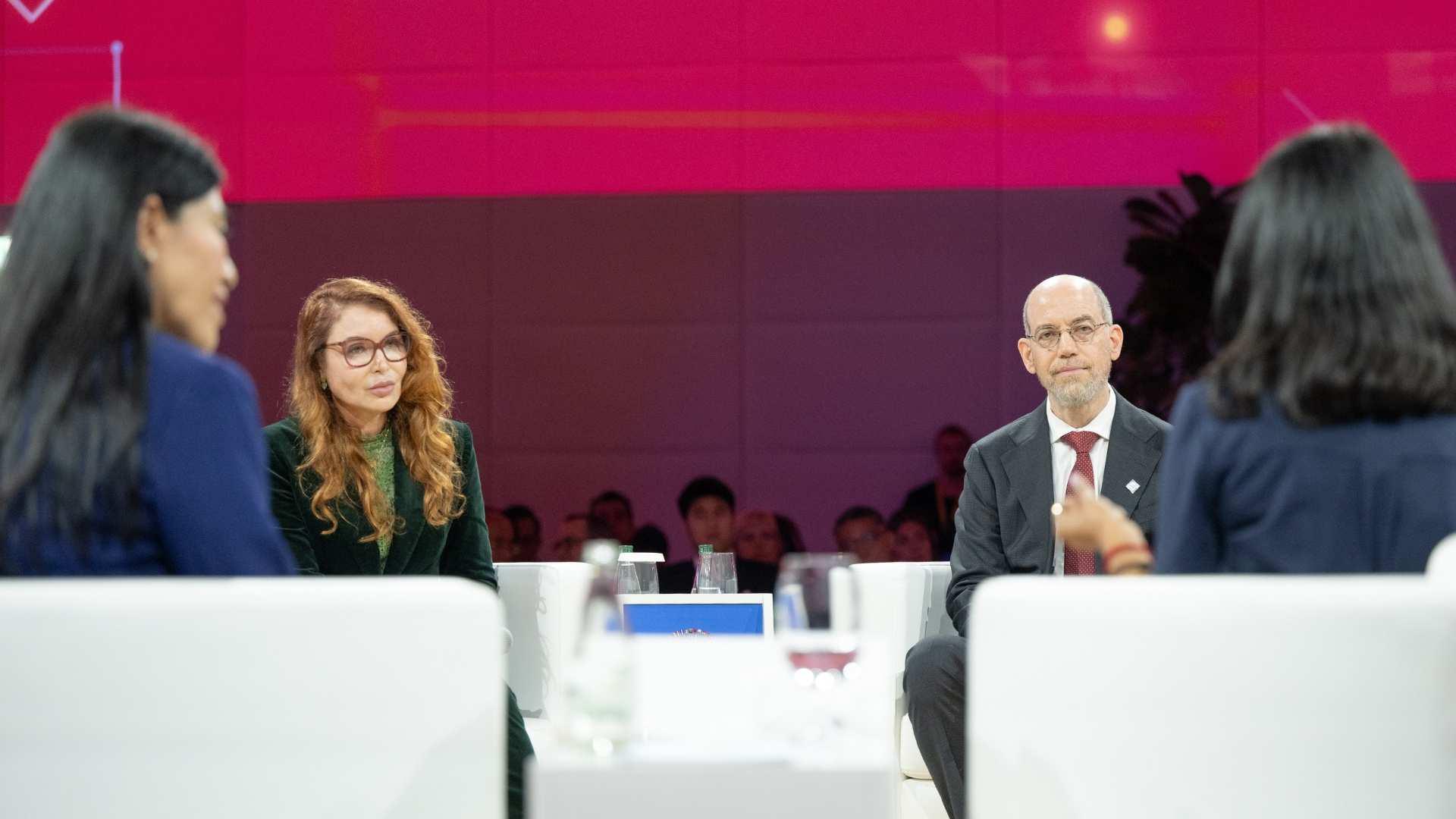
Now let's bring to life what we have just heard about. Let's meet the innovators. Let's talk about how they've scaled their small AI solutions. Let's talk to the policymakers about how they have unlocked growth and jobs or the roadblocks that they are struggling to overcome. Our next panel brings together leaders working on exactly those very questions. Please welcome with me Kate Kallot, the founder and CEO of Amini AI, Hoshik Shin, the CEO of Tridge, and Bosun Tijani, Minister of Communications, Innovation & Digital Economy, of the Federal Republic of Nigeria. Welcome. Please welcome with a big round of applause.
[Audience applause]
[Mark Tetto]
Thank you. Thank you for joining our panel. After President Banga's talk, I think this is a nice follow-up to that as we kind of hear about small AI and how these pilots are moving beyond pilots and being implemented in various countries around the world. With our limited time for the purpose of our talk, I've tried to kind of break it into three sections. First section being what is the proof? What is small AI already doing in the world? And then the second section we'll talk about after is how do you scale? How do you take small AI solutions and scale them more broadly? And then maybe we can wrap up with kind of the call to action as people who are very active in these fields. What is the call to action we can take away? How can we help you going forward? How can the World Bank also help your organizations? How can your organizations help the World Bank? What are the action steps that we can take away from our discussion? Those are the three acts of our panel today. First one, let's talk about the proof. Where is small AI already working and what is it doing? Maybe we can start with Kate. Kate, you built Amini to address the lack of localized reliable data and fit-for-purpose computing power in Africa. How is Amini tackling these two challenges? And can you give us some examples of how this is enabling small AI, and what does it look like on the ground for you?
[Kate Kallot]
Thank you for having me. It's a pleasure to be here. Maybe before I answer the question, it would be great for me to redefine how we see small AI and what it means within our company. It doesn't mean for us that an AI is small in size. It actually means an AI that is fit for purpose, that is localized, and that is enough to execute the job that it's supposed to do really well. Coming from this basis and looking at the constraints into which we're evolving in our markets, whether it's Africa or the rest of the Global South, we have a lot of constraints around compute and energy, around connectivity, and around data. But we built our company to really flip the switch and look at those constraints as our superpower. How can we build an AI that can execute in those constraints but also be useful for the people it's supposed to serve? Now, coming down to the examples, we are working with governments, enabling them to access and digitize their most critical data. When we think about the lack of data, it's not that Africa lacks data, it's that the data right now is sitting in analog systems, in paper format that cannot be read by a machine or an LLM or an AI model. For me, it's actually the richest raw material in the digital economy that's completely untapped. What do we do? First step, we digitize, then we structure that data, and then we unlock the intelligence out of that data, which is then opening market opportunities. We're working with government across both Africa and the Global South. A first example would be Botswana, where we're working to digitize all mineral maps and records dating back decades and decades that the government has been having. What this is opening is intelligence as to where deposits are beyond diamonds, where the country is trying to diversify away from diamond. We're expanding this to Central African Republic, doing the exact same work with the government. Then in Benin, we're actually turning the body of law into a searchable knowledge base that the Office of the President can now use to be able to understand how to draft regulations that always cite previous revisions. And then finally, in Barbados, we've spent the past two years moving the government from analog into AI-native and AI-driven. This has been a lot of work, from deploying small-sized compute to digitizing and structuring data dating back to the 1600s, including handwritten records, all the way up to building applications which are now being used by all civil servants, including the heads of state. She's actually our superuser in the country today. But that really shows you that we need to focus on the fundamentals. And this is really what small AI is about, because it has to be an AI that is usable and that impacts the people that it's supposed to serve. And for us, this is really representing the biggest leapfrog opportunity in the age of AI— moving our countries from analog to digital and helping them leapfrog directly into a world where they can now adopt all these beautiful technologies that are being done.
[Mark Tetto]
And maybe just a quick follow-on to that. I think it's so impressive to hear in perhaps a short time how even in a constrained environment you've taken this idea of small AI and already applied it into so many different verticals and areas. How did you approach that? What was the spark that kind of drove you to that? And how did you identify the first areas that you wanted to work on?
[Kate Kallot]
I spent the past 15 years of my career working for big tech. Mostly in the US, lastly at NVIDIA. I've been really at the center of the AI revolution and how we were building this in the Global North. What I realized quickly is that in the Global North, you look at Europe, you look at the US, we truly have had 20 years of quiet foundation building, point solution over point solution. You think about compute, you think about access to connectivity, phones, you also think about clouds and all the applications that are cloud-based or cloud-native. But our countries haven't had that. So, when I decided to move back to the continent, for me it really came down to how can I help our countries with what I know best, which is AI. And AI needs a couple of things, but the biggest thing is actually data. And that's how we stumbled upon that data problem, and we decided that if we can build that foundation for everyone across Africa and the Global South, it will help us even the playing field for our countries to be able to participate in the AI economy.
[Mark Tetto]
Great, thank you. I think we have some great examples from you already of how this has been implemented successfully and will continue to be implemented. Maybe we could now actually turn our attention also to Nigeria, where AI is also addressing real-world challenges. Minister Tijani, Nigeria is home to one of the most dynamic tech ecosystems on the continent. Can you tell us how Nigeria is also already using AI to solve everyday development challenges, and what does that tell us for what is possible at scale?
[Bosun Tijani]
Thank you so much, Mark, and it's a pleasure to join this conversation. I think for what we're seeing in Nigeria, what excites me the most is in the shape in which artificial intelligence is being applied to everyday reality, particularly around the languages that people speak and also the challenges they face on a daily basis. Let me share a few examples. I think the first of the ones I really like is a company called Intron, and what they've built is literally a tool that helps doctors to transcribe clinical conversations. You can imagine how long that takes, the opportunity for errors in the process. But this tool is actually simplifying that process for most doctors, which I think may fall into what you call small AI, but the impact is quite enormous. The second one, which is quite big, and I think for most parents you probably recognize this in some cases, is Ubenwa. Ubenwa has built a solution that helps with analyzing newborn babies when they cry to detect whether they have a disease at birth that is called asphyxia, which I think is quite exciting as well. But we've also seen in government the use of something called GovGuide, which helps Nigerians to find information about government services and where to go source those services as well. We have something called Awarri, a company that has also built an AI voice studio, which is a studio that is supporting African languages and opening up possibilities for educators, creators, and an institution that just want to connect with their people using technology. These examples are there, but I think government has also then recognized that beyond what we're seeing people build that government has a role to play, which is why we backed the development of what we consider to be the first government-backed large language model on the African continent, which is called N-ATLAS. N-ATLAS is simply an LLM that has 4 of our languages: Yoruba, Hausa, Igbo, but also accented English, which most of the time people don't consider that the world don't speak English the same way. It doesn't mean they're not speaking correct English, but people have their accents and it plays into how they speak English. That LLM, for us, the idea is that we want to encourage more people locally to start to build AI solutions that are relevant. I think the biggest lesson for me in all of this is the idea that what we're learning is the line between what you call adoption and adaptation. I think the World Bank reports on the idea that you move from adoption to adaptation and advancement is one of the best things that I've seen in the last two years on AI, particularly from the context of developing countries. But we also have to be careful that for artificial intelligence, it's not like what we've seen with other technologies where a country can literally buy and consume technology. With AI, the journey between adoption and adaptation can be quite fluid. You don't just say, “We're going to adopt,” because what you see in those cases will be the example of a farmer. You can see a farmer that use their phone to take pictures of their plants, and they can see what is wrong with that plant, and they can take action. That's extremely valuable. But you can also see a farmer that takes historical pictures of their field, that layers that picture on weather condition, that layers that picture on the inputs that has gone into the farm, then AI automatically becomes a tool that they use for the entire management of their farm, and that raises the level of productivity for that farm quite significantly. We've also seen a large company, one of our MNOs, that bought off-the-shelf AI solution that they use for customer service, which works really well, but they then realize that they have better insight about their customers historically. There was a need for them to take their dataset and start to train AI so that AI can better understand. So, you see that there's no world where we as leaders will want to limit many nations to just adoption, because the opportunities with using AI to actually drive large-scale productivity comes in little things like training AI or your reality, feeding it your own data, and getting it to be better. I think that's something that we're paying attention to in Nigeria to say we cannot wait. Whatever we do today must start to think through what capacity are we building, what foundations are we putting in place so that Nigeria will not just consume but also build AI solutions as well.
[Mark Tetto]
Thank you. I think in your remarks we can also already see how each country's constraints may be different, their priorities and what they tackle first might be different with this technology, but we kind of get to see how it's rolling out differently in each place thanks to your insight. And with that in mind, maybe we can turn to a third geography and a third use case that we can learn from. Hoshik, the next question will go to you. Hoshik, you founded Tridge to bring global market information to smaller farmers. Can you tell us how Tridge is helping small farmers in developing countries? And what does a farmer's life actually look like before and after they have access to Tridge?
[Hoshik Shin]
Hi. First of all, thank you very much for inviting me to this great event. It's a big privilege that I can speak to this audience at this Global AI and Digital Summit in Korea. We, as Tridge, built data intelligence platform for food and agriculture industry for the last 11 or 12 years. It's been a quite long journey, and that idea was born even before the AI idea was really introduced to the market. Even back then, 10 years back, we knew the power of accumulating the data. What we did was offer the enterprises data intelligence solutions to large enterprises, not just the small and medium ones. But this is quite counterintuitive. When people think how we can help small and medium enterprises or the small exporters or small farmers, they always go straight to help small farmers, like what software we can offer, what solution we can provide to the small farmers, but it's quite opposite. We try to figure out the great solution for the large corporates, large enterprises, the large buyers. Then this software can be utilized by its procurement managers, by large organizations. Then we have the direct access to those large buyers. Small and medium enterprises or small exporters do not have the capability to build their sales channels on their own. Once the visibility of large enterprises are available, then they can share this wide network and the visibility, and then they can shorten the time. Once they build the confidence in making a plan for their productions and sales, then they go for large productions, they go for highly value-added products. I think the farmers can employ more people. And then we see a lot of the small exporters using our platform to make an export to large buyers. We have the two pillars of services. One is Tridge Eye, which is intelligence service. The other one is Tridge Ark, which is the execution of a transaction and trade. By combining two services, the large enterprises are our main customers, but at the same time, the small and medium and the small exporters are widely using our service. Down the road, we believe agriculture is the first fraction of the market. The food market is like a quite big extension of the agriculture. We believe the food is not just commodity market, it's more of the content business like movie, music, game. In many local markets, they develop their own content and then they can share that content with other markets. We keep building the sort enterprise network globally, and then we can aggregate their volumes, their visibility, and then we can share that visibility with small exporters, small manufacturers, small farmers. That's what we do. Down the road, we believe it can really trigger the inspirations of many small food manufacturers, small farmers, and not just— I mean, rather than residing commodities, they can do more like highly valued food productions. That's how we see the big employment to occur in the future.
[Mark Tetto]
Yeah, thank you. And I think from all of our three panelists, we've got kind of a great idea of how they got started in what they're doing and this kind of initial spark, how can I take these new technologies and start to implement them? I think what President Banga also called pilots, how do we start piloting this in different fields which you've all respectively chosen in facing your respective constraints as well. To move to the next round, the question now is, how do we scale? This seems like the hard challenge. The pilots have started, and as President Banga said, how do we not stop with pilots? How do we move to scale? And so I anticipate that for each of you in your different countries as well, you'll have different challenges of what makes it hard to scale as well. Maybe, Kate, we could come back to you. I think Africa has no shortage of entrepreneurs experimenting with AI, but relatively few locally developed solutions are reaching significant scale yet. What do you see as the biggest barriers preventing African AI companies from moving promising ideas to sustainable, scalable businesses? And what would make the biggest difference to changing that?
[Kate Kallot]
I think before answering the question around scale and the barriers we're facing as entrepreneurs, it's important to remember how AI innovation is driven differently in different parts of the world. If you look at the US, it's mostly big tech and frontier labs who are driving AI innovation. If you look at Europe, it's extremely regulatory driven with regulations such as GDPR or the EU AI Act. If you look at Asia, specifically China, the government is investing a lot in the local industry. And the country we're in today, Korea, the government has done the same, backing local champions and making sure that they prioritize local champions and the local ecosystem when they actually purchase AI technology. Now, coming down to Africa, it's very different. It's a bottom-up innovation that's driven by startups, by developers, by innovators who've been doing this on the ground for many years. When we think about the scale, we have abundance of innovators, we have abundance of startups, and we have abundance of ideas which are becoming pilots. What we are missing to scale is actually procurement. And especially working with government, you realize that when governments are investing hundreds of millions of dollars into adopting and building AI technologies locally, a lot of the procurement systems today are still designed to reward two things: either a big balance sheet and a long track record, or secondly, bodies of people, which when you're a small startup is very difficult. I can give you two very tangible examples where in one country we were applying for a tender in infrastructure, and one of the things we realized is that before we can actually see single dollar of return, we had to advance in bonds and guarantees about $10 million. For a small-scale startup, this is a lot of money to be able to advance just to be able to participate. That's first exclusion. The second one is, from the body standpoint, the procurement systems today are still asking for 30 to 40 people to be able to deploy a system at the government level, which before made sense, but now we're living in a world where there's a lot of automation, there's a lot of companies who are less than 4 years old who have actually done that, and we are not optimizing for outcomes rather than optimizing for bodies and balance sheets. For me, procurement has been the biggest barrier, and for a lot of innovators as well, because that's one of the things we always discuss. It's important to think about how can we reverse the curve and kind of start adapting to enable those innovators to be able to compete and participate at the same level as large-scale companies, be it the large telcos or the foreign companies who are trying to get access to those deals. As long as we will not change the way we're thinking about who can participate, we will not be able to reach the scale locally that we are aspiring to have.
[Mark Tetto]
I think we start to get the sense that even the scale question is going to be very different depending on which country you're situated in and which problems you're trying to tackle. So, it's difficult probably in any country, but it sounds like, as you mentioned, there's some difficulty. It could be in the financing, it could be in the large advance situation that you mentioned, and, you have to come up with solutions specifically tailored to overcome those challenges for you. And maybe with that, we can ask also Minister Tijani. Before entering government, you spent years building Co-creation Hub into one of Africa's most influential innovation ecosystems, and you know what it takes to build something from the ground up. What is Nigeria doing now to unlock AI solutions at scale, and what more still needs to happen in Nigeria?
[Bosun Tijani]
Thank you so much, Mark. Probably one of the most important lessons for me while running CCO across multiple African countries is the role that innovation ecosystems play in helping nations adopt technology. That was something I was exposed to in real time. And for us, that looks like you understand that the researcher who spends time generating the knowledge is contributing to strengthening your ability to adopt, because that same knowledge is what the entrepreneur gets to pick up, build a solution out of it. The solution is what the businesses and institutions adopt. And the role of the civil society, they are questioning whether we have the right guardrails to protect society from it. When you combine all of that together, you start to see that the only path to nations properly adopting AI is to strengthen their innovation ecosystem. That's something we've modeled into how we think through innovation and particularly artificial intelligence in Nigeria. On one hand, we have clarity that we must spend time deepening the foundations that will make AI work. Whether you want to talk about connectivity, where we're deploying 90,000 kilometers of fiber optic network, through a $1.6 billion fund that is led by the World Bank. Or you're talking about talent, where Nigeria has set out to train 3 million technical talent. That's something we've been doing for the last 3 years. Or you talk about things around datasets. I mentioned the large language model that we're building, which is already out there. People are using it. It's open source. Or you talk about compute, where we're working with Gates Foundation to now have a national shared compute in Nigeria. And institutions as well. So, we now have something called the AI Trust in Nigeria, which is a body of trustees that are helping the country ensure that we're prioritizing and putting the right focus on AI. But when you build all those things and you don't have a strong innovation ecosystem, you will struggle to be able to convert that into products and services, which is why what we did in Nigeria was to set up something called the Nigeria AI Collective, which is a community of practice of everyone working in artificial intelligence in Nigeria. That community of practice has been funded by Pierre Omidyar, the guy who started eBay, gave us some money. We gave the money to the community of practice, then we encourage them to animate and find ways to work together to start to build solutions. And that's why you've seen a significant growth in AI activities in Nigeria in the last few years. You see rankings like the Responsible AI ranking from Cambridge University is ranking Nigeria to be number one in responsible AI in Africa. That's not coming from just the work that government is doing. It's based on the fact that there's an active ecosystem that is out there that we're supporting, that is doing the work. And I think government needs to understand that and be able to separate the work. And it's similar to what Kate was talking about earlier as well. There's a clear role for government, which is to invest in foundation, and government must do that. And if we do that properly and we enable the innovation ecosystem, they will naturally build on a lot of our investment. That's what we've seen in Nigeria. We've seen that wave not just in Nigeria but across Africa in financial technologies. Africa now has some of the most advanced financial technology companies in the world because at some point the government came together, built the foundation for financial inclusion, which gave opportunities for innovators to build on top of it. And I think that's what we need to do more, not just in Nigeria but across Africa when it comes to AI as well.
[Mark Tetto]
Right. So, the resources come from government but also from private sector. The Nigeria AI Collective, I believe that you mentioned it, is that a non-governmental resource, or is that—
[Bosun Tijani]
Actually, yes, it is. Government is not involved at all. If the government was part of the process for setting it up with a media network. But we were very intentional about it from start, saying this is us instigating. I think the UK is now doing the same. They just announced something similar a few months ago where government is realizing that you have to empower the innovation ecosystem to do more, because when they do more, that's where the innovation will come from, and that's where AI will get the opportunity to thrive as well.
[Mark Tetto]
So, to overcome the challenge of scale, I think we're continuing to hear that it requires many people, many resources, both from private companies, founders, governments, things like the Nigeria AI Collective that you mentioned as well. And I think the World Bank obviously is an important player in that as well to enable this scale-out and the rollout. Maybe we can come around to Hoshik as well. And I think there's an interesting twist on Hoshik’s story here because so far we've been talking about with the scale issue, how do we scale in a particular country, in a particular environment? Now, you've obviously started here in Korea, but you've scaled in perhaps a different way where your solution— I was very interested as you were introducing it. It sounds like it's being used already in other countries, and you're scaling a startup that is based in Seoul already to kind of a multinational platform across emerging markets. Can you talk about what that journey was like and what are the most critical conditions, the policy infrastructure partnerships that made that possible?
[Hoshik Shin]
From day one, our service was born as a delivery service. The reason was to be able to serve even one customer, we had to have a full coverage of data. Our data covers 300,000 SKUs in agricultural products, 11 million SKUs in food products. So, to be able to serve one enterprise, we already have to come with all the comprehensive coverage, including countries, products, pricing, quality standards, all the suppliers. All the data should be already equipped and ready. Growing globally was very natural for us. In 2022, after ChatGPT was introduced to the market, we also got access to a huge cloud computation. That made us possible to develop more enterprise-friendly software. We believe the data was just back then— Before 2022, from 2015 to 2020, there was not even any definition or structure to be able to accumulate the data in the agricultural market. There's no way to define the spec, there's no way to define the packaging quality standard. We really had to spend almost 5 years to figure it out, how we're going to accumulate that data. So, once we have such a data asset, and then we actually kept that all the assets open in Google and then in public space. We gathered more than a million users in the open space. That became our huge asset. Even nowadays, when we just bring in customers, we don't do any marketing. Just all the already residing users, they are turning over time. And once they become our enterprise customers, then the vivid use cases are more observed. As I said, the like suppliers and then like small exporters, the farmers, have very easy access to the large buyers. That was actually what made me think of this business in the very beginning. I spent almost 10 years in investment banking, private equity, and commodity trading myself. And always, even for some professionals, entering into a new market was super difficult. We thought about building such data platforms and the agent. Then that data platforms can play a role of the sales agent for all the global sellers. And that capacity can be shared with, as largely as possible, as widely as possible with all the small players. What made us possible was we were from the very beginning, it was destinations, and sharing the data asset in the public space, allowed us to gather such many users and the customer base globally.
[Mark Tetto]
Thank you. And with that, I think we want to turn to our last topic of this talk, which is kind of the call to action and how can the World Bank Group and partners work together to unlock small AI, particularly in the projects that all of you are working on. With that, maybe we'll start here with Minister Tijani. As you think about Nigeria's strategy, which pillars of the World Bank Group's new implementation plan matter most to you right now? Expanding access, driving affordability, building out the ecosystem, or strengthening AI readiness? How can the World Bank Group help to drive that impact?
[Bosun Tijani]
Thank you, Mark. Again, just to appreciate the World Bank for the thoughtfulness that has been put into designing out this implementation plan. I think for us, if we look at the different elements of it, we're already doing quite a lot in expanding access and driving affordability. Particularly with the Bank but beyond what we're doing with the Bank, Nigeria is also investing in significant amounts of towers in rural areas. We're investing in new communication satellites. The Government is very focused on that foundational investment. I think the area that seems to have promise for Nigeria, considering that this is a country of close to 230 million people, where the average age is about 16.7 thereabouts. So extremely youthful, energetic people who truly, truly want to build and they want to be part of the AI revolution. I think it will be the ecosystem, building out the ecosystem. We think there's an opportunity there, particularly when you look at talent, the opportunity that Nigeria has to be able to invest in significant amounts of people who can actually build proper AI. I think when we talk about development in AI, we focus too heavily on the technology side. And I think it's two sides. I think it's half talent, logic, it's half technology. People who are smarter can build better models. They will need technology and the hardware to be able to train the model, but you still need logic. And I think that's where Nigeria can do well for itself by growing the local talent but also becoming a net exporter of AI talent as well. I think there's significant opportunity there. We started the 3 Million Technical Talent. The Bank is very aware of this program. We think there's an opportunity to resource that program properly because we've learned a lot about this program in the last 3 years. There's something we should be doing together on that program. The second one is institutions. You can't truly accelerate the growth of AI without strengthening your institutions. I think there's an opportunity there for us to collaborate as well, strengthen local AI institutions, particularly our AI center, but also perhaps thinking of setting up a few AI labs across key regions in Nigeria so that those who want to build have access to resources that they can use to build. I think that will be the area that I see immediate opportunity for collaboration with the Bank.
[Mark Tetto]
Thank you. That's a great call to action, and also for Kate as well, a call to action. What are the greatest challenges that you face in mobilizing investment in compute and data in emerging markets? And how can partners like the World Bank Group help to overcome those constraints?
[Kate Kallot]
I think it's pretty much linked to the previous subject. For me, I would say there are a couple of things where the Bank can really help and is the best-placed organization to support us. The first one is around de-risking or access to be able to be competitive and apply for procurement, government procurement. When I mentioned the $10 million, this is something that the Bank can potentially de-risk, have guarantees supporting local innovators to be able to participate at the same level as the global ones. The second one is around making sure that as we focus on solving the fundamentals, and I think Ajay has talked about it quite a lot around connectivity, around energy, we also add compute to that. The reason is not about building large-scale data centers, gigawatt-level factories, but it's even more simpler than that. I think Minister Tijani has touched on it a little bit, it is because local innovation has to require access to technology to be able to develop itself and scale. Some innovators will choose to adopt models, some innovators will choose to build their own models. There shouldn't be a place where building at home or building from home is not the best option for them. Making sure that we bundle compute and data in the fundamentals becomes quite critical. And then lastly, I think ensuring that portion of the capital that is going into country is reserved for local companies, local or regional, becomes also very critical so that the innovators who are choosing to build are actually able to apply their technology to their countries and able to scale. It's only like this that when we talk about the 1.2 billion young people that will enter the working age in the next 10 to 15 years, we're able to make sure that they have the necessary infrastructure to be able to build technologies and solutions for themselves and for their own countries and for the future of their economy. And that's only like this that we will truly be able to capture the economic value that AI promises to create in every country where we live.
[Mark Tetto]
Like an inspiring call to action for all of us. And Hoshik as well, how can partners enable what you're doing, enable your innovations at Tridge to extend into other developing countries, into more farmers, to open up more markets and ultimately enable more income and jobs? How can partners help you?
[Hoshik Shin]
It's quite pleasing— I can hear that statement, if we can get some help from some organizations. This journey has been so lonely and very bumpy. Probably, many policymakers are very much well aware that the promotion of export of food and agriculture is the area where government is spending in a huge budget, even in Korea, like KOTRA, AT, or the governmental agencies that are spending a big, big budget. And we are witnessing that such capital, such a budget, even though they really try to guide and allocate very wisely, very efficiently, but it's really hard to effectively execute the actual export by government officers' effort to bring in global buyers or sometimes send the companies to attend the exhibitions. It's a long process. It's hard to measure. But our service, as it becomes more widespread, then many small players can have a very direct, measurable, and very short time period kind of the service achievement. I don't want to be promotional, but for the small farmers, small exporters, we really like to have them experience development of new buyers and development of new sales, new exports, which took so much effort and time in the past. But now, due to the help of the AI and our data foundations, and the big network of our user base and then enterprise network, everything related to export development became feasible and very much accelerated. We would like to work with World Bank if possible in terms of a having more farmers, more small and medium enterprises aware that these services exist. And even working with government would be a great idea as we can help them spend their budget more efficiently. And just one more thing is I really believe small AI, this whole agenda is great. The reason is just the world is all talking about LLMs, but the area of small AI is hard to define. Especially, just many small AIs or the sort of like a just wrap-up product of LLMs. Sometimes it's a seemingly AI, but it's not really AI. Then many emerging countries, even a country like Korea, any countries other than the United States and China are having a hard time participating in AI. Then what's the concept of small AI? It's a field that requires tolerance of capital and a team. It might require very high insight into what kind of the business can turn to small AI, especially, in most countries they cannot do their own AIs. Then maybe, this is quite an important agenda we have to really keep thinking through.
[Mark Tetto]
Thank you for the call to action as well, Hoshik. And with our remaining time, which is quickly running out, very quick lightning rounds. And I've noticed in my experiences, these lightning rounds are only fun if you actually stick to one-word answers. So, the key to unlocking small AI for impact in developing countries is— I said one-word answer, but actually, because the panel has all been great, I'll give you up to 3, but 3 is the limit. So yes, the key to unlocking small AI for impact in developing countries is— and we'll start with Minister Tijani.
[Bosun Tijani]
I think the key to unlocking small AI for impact in developing countries is building the capacity to turn local ingenuity into lasting productivity gain.
[Mark Tetto]
Okay, more than 3, but I'll give you a pass. More than 3, but I'll give you a pass. Hoshik, 1 to 3 words.
[Hoshik Shin]
We have to see the real value.
[Mark Tetto]
Real value. Exactly. Great. And Kate, 1 to 3 words.
[Kate Kallot]
I won't stick to 3, but making sure that the people it's supposed to serve are also the people who are allowed to build and own it.
[Mark Tetto]
Great. Thank you. And all insightful answers for our lightning round as well. Thank you to our panelists. And what stands out from this conversation is that the scale and the challenge and the opportunity are all very real. And I like that we were able to cover all of those aspects as well. One billion people to reach with digital and AI, a generation of young people in developing countries who need jobs, and for whom technology done right can help get them there. The World Bank Group's plan launched here in Seoul today is a bet that getting the foundation right— connectivity, affordability, usability, and AI readiness— can get them there. This is how small AI becomes big impact at scale for the people who need it the most. Please join me once again in thanking our panelists who joined us here today. This is the first of many conversations here at the summit. Big round of applause for our panelists.
[Audience applause]
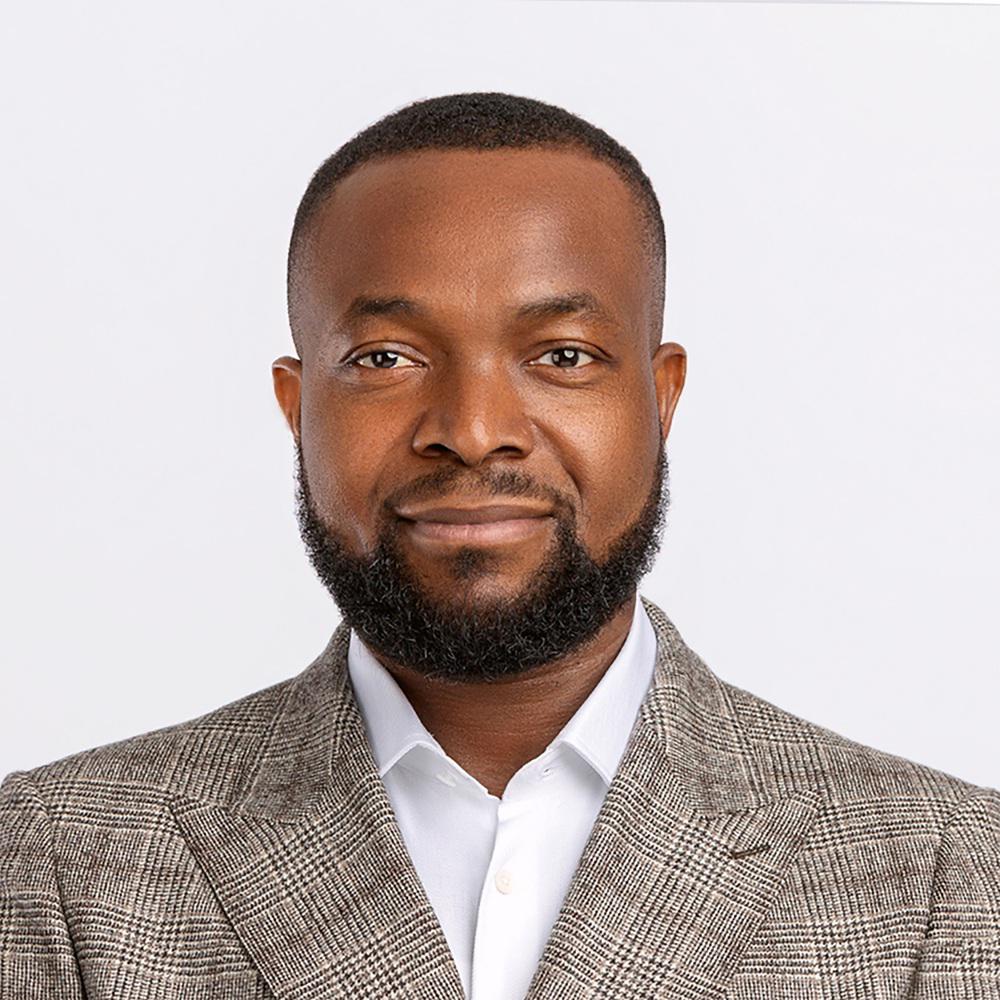
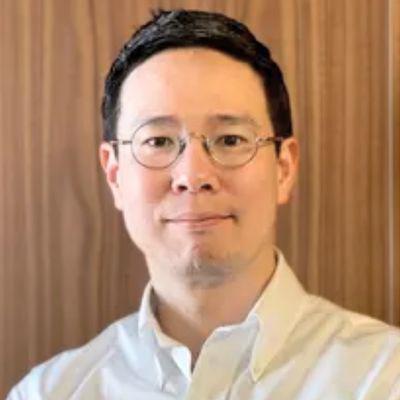
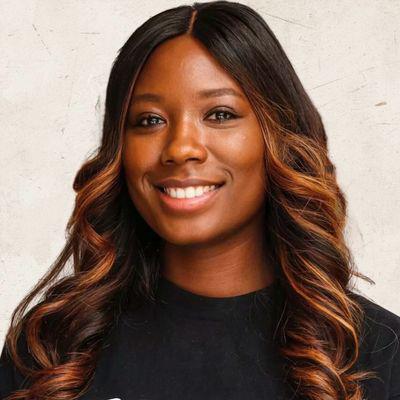
Speakers
-
Ajay Banga
President, World Bank Group
-
Bosun Tijani
Minister of Communications, Innovation & Digital Economy, Federal Republic of Nigeria
-
Hoshik Shin
CEO Tridge, Korea
-
Kate Kallot
Founder & CEO of Amini
Moderator
-
Mark Tetto
Co-CEO, TCK Investments (MC)