EVENT HIGHLIGHTS
"For young lawyers: you are the future architects. Be assertive, be innovative within the law, be bold, and I look forward to a bright future."
—Vivienne Yeda

GO TO SPEAKERS
How can legal professionals adapt their roles to advance solutions that help meet development goals? How can they leverage their unique expertise to be key innovators in the development space?
As the closing event of Law, Justice and Development Week 2025, this panel discussion provided reflections on how legal professionals – whether from the legal departments of multilateral institutions, national judiciaries, or private sector practice – can reinforce the rule of law as the foundation for economic development, while leaning in to new technologies, greater collaboration, and innovative ideas in their work.
Even as the challenges facing the world change or in times of crises, these panelists shared their views for how legal professionals continue to play a key role within development and can use their role to turn creative ideas into impactful realities.
Join the conversation on social media #LJDWeek2025
[David Sullivan]
Thank you very much, Shingi, and welcome all of you to our last session of LJD Week. As you know, the theme of LJD this year is focused on innovation and the link between innovation and a changing world. It brings up the old adage that there is never waste a good crisis, right? It's precisely at these times when we disrupt the status quo that the possibility of innovation becomes much more real for all of us. Innovators among us, this is your time. The five of them are here on stage today, and I'd like to welcome all of them who are extremely distinguished in their fields. Their names are up, but I will just go through them. Vivienne Yeda, the General Counsel and Corporate Secretary for the Africa Finance Corporation. Welcome, Vivienne. Katherine Meighan, General Counsel at the International Fund for Agriculture Development (IFAD). President Christophe Soulard, First President of the French Court de Cassation (Supreme Court). Ambassador Jose Luis Sardon, Permanent Representative of Peru to the OAS, and Jun Jin, newly General Counsel and Director for the United Nations Development Program (UNDP). Welcome to all of you. Over the past three days, we've heard about many ways in which lawyers are being innovative in our systems, whether that be interpretations of our charters that adapt to a changing environment, use of new technologies, or leveraging the sea of data and data analytics to achieve development outcomes. Perhaps the most exciting of these efforts happen when we, lawyers, step outside of our advisory function, when we don't wait to get asked to participate in an initiative or a policy process, but when we see ourselves as the generator or innovator of these ideas and initiatives, when we flip from being advisor to entrepreneur and innovator. The creators of new ideas that, but for us, would not happen. We've seen examples of that in many of our sessions: the initiative of full mutual reliance between the World Bank and the Asian Development Bank, discussed yesterday, the many rule of law initiatives that have come forward that we are giving birth to and the development of new institutional or governance arrangements where our efforts to create a new system of governance may give rise to new substance. It's the classic issue of substance following form. In a profession that can often be seen as passive by some of our clients and policy peers, we can surprise and astound when we take on the role of active innovator, or better yet, agitator. That's where the real magic of lawyering comes to life, when we transform ourselves from advisors to creators. We're going to tease that theme out a bit in several questions that we have for our practitioners and see how some of those on stage have taken that approach by inspiring their own work and their own teams to achieve things that they have initiated on their own. There we have representatives of the in-house council as well as courts, because the same activities can happen in both places. We will come to all of you then with questions that you have for us, but first, we'll have a few questions for the panel. I'm going to kick off the first question and then join you. It's along that theme, which is, how is the role of you and your team changed with the changing nature of the development space? How have you been the initiators and drivers of change in your organizations or in your court systems? So…
[Jun Jin]
Great. Thanks a bunch, Dave. And thanks to Chris and the World Bank for hosting this. Fantastic gathering. And I'm really excited to be a part of this panel in particular, because frankly, I see innovation as part and parcel of what lawyers should do to add value and to support the goals of any organization. For those of you who don't know, because the UN and some of my fellow UN legal colleagues here, we're a bit of the minority in this bunch. For those of you who don't know, the United Nations Development Program is the lead development agency within the UN. Our main mission statement is to help countries end poverty, reduce inequality, and build resilience to better the human condition. I had to look down a little bit because I'm only four months in, and I haven't really memorized that fully yet. It is a wonderful place to practice law because really the sky is the limit, and there are so many complex challenges around the world. We as lawyers, we know where the bodies are buried, we know how the laws and the policies are structured and are uniquely situated to help organizations to accomplish their goals. Now, I must say also there's lawyer jokes that are there for a reason, because we lawyers also get stigmatized in some ways as being a wet blanket, an unnecessary evil, and that legal offices are where dreams go to die. As unfair as that criticism is, I think one thing that's important for us, particularly at this moment, is really to just take a snapshot of where we are. You have these big changes coming that still are unknown in terms of the impact related to AI. We've talked about that all week. We have tens of billions of dollars that have exited the system in official development systems in a very, very short period of time, historically short period of time. We have development actors who are all chasing the same shrinking pool of resources, acting like lions in the Serengeti. We have stakeholders who are increasingly becoming hyper-focused, understandably so, on delivering results in an effective, in an efficient manner. I think it's incumbent upon us as lawyers, whether you're a law student, a newly minted lawyer, or an experienced lawyer, to really ask yourself, what is going to differentiate you in the future from a chatbot? How are you really going to be able to contribute to be a thought leader, to add value, to be a trusted advisor, and to be an indispensable go-to solution provider to address the most complex challenges of our day? I think one thing is, as I look to my career to think about an example of being an innovator and how it's actually advanced the goals of organizations that I've been a part of is thinking about where I and my colleagues had an opportunity to lead on some important initiatives. It wasn't one of those situations where we twiddled our thumbs and wait for an email from a client to say, Hey, I want you to advise me on something. It was really seizing an opportunity, looking at where some of the leadership wanted to go in terms of developing new partnerships with private sector organizations, giving money directly to partner country governments, and working much more with other development partners in space in commingling funds, multi-donor trust funds, and really being a part of the same sandbox instead of operating in parallel. This is where lawyers can come into play to really help demystify some of the rules and the arcane principles about how we can really unlock the framework by which we can deploy sensible solutions to enter into such partnerships in a way that is not going to lead your clients to pull their hair out and say, All right, this is the lawyer's killing another initiative. It was a wonderful opportunity for us to step back and say, All right, this is the way that we can move forward, where there's not something in law that's legally prohibitive. Let's take calculated risks and push forward. I think there are many opportunities where we can look in the mirror and say, All right, we need to really add value here. We can't get by with just offering advice and then stepping back and say, All right, I'm going to stay in my lane. A couple of initial thoughts. Thank you.
[David Sullivan]
Thanks. Ambassador Sardon
[Jose Luis Sardon]
Good afternoon. I am honored to take part in this closing plenary on The Evolving Role of Legal Practitioners in the Development Ecosystem. Thanks the Planning Committee and especially Dr. Nioma Nou for the invitation. Lawyers are often seen as obstacles to innovation, but I believe we can and must be catalyst of development and economic dynamism. To borrow a term from Virginia Postrel, dynamism is the ongoing change in the production and exchange of goods and services. The challenge for us as legal practitioners is to make sure that this dynamism flourishes within a framework of stability and trust, in other words, under the rule of law. The rule of law remains the foundation of programs. It means that clear and consistent norms govern social life, Countering arbitrariness and reducing the risk of human interaction. No society can achieve sustainable development if its people cannot predict how the law will be applied. For this reason, judges and lawyers play a crucial role. Our task is not to repeat the law, according to shifting fashions or political agendas but to apply it faithfully as the people's representative enacted it. As Justice Anthony Scalier reminded us, wars may change their usage over time, but their original meaning endures, and that meaning should guide interpretation. When judges yield to the temptation to improve the law, whether in the name of justice or efficiency, they weaken the very certainty on which liberty and development depend. The challenge has become even greater in the realm of international adjudication. Many international courts deal with treaties, drafted in broad and often indeterminate language. That gives judges wide discretion, and with it, responsibility for judicial restraint, for the virtue that Adam Smith, nearly 250 years ago, call it parsimony, moderation, prudence, and foresight. Parsimony is not only an economic virtue, it is also a moral one. In law, it reminds us that interpretation should not replace legislation, and that authority must always be exercised with humility. As we face complex development challenges from digital transformation to global inequality, the rule of law remains our best instrument to channel human creativity toward shared prosperity. Lawyers can drive change by ensuring innovation occurs within predictable, fair institutions. The most meaningful shift in recent years in this growing awareness is that the law is not a drug on innovation, but it's most reliable a lie. When lawyers secure the rule of law, they, in fact, enable economic dynamism and human progress. Thank you very much.
[David Sullivan]
Thank you, Ambassador Jose Luis. Over to Vivienne.
[Vivienne Yeda]
Thank you for the opportunity. I think that just taking from what has been said before, lawyers probably are seen as a drag on innovation and progress because typically this
[unintelligible]
comes in when there's a transaction that needs to be concluded, and the lawyers obviously need to take the time to look at the law, understand it, understand the framework, the policies, and the guidelines before then giving their advice. And that is seen to be a time-consuming and probably unnecessary exercise. I think from the lawyer's perspective, because we know this is essential, if it's not done upfront, the work will be done later on when the project runs into problems or you end up in litigation or disputes, which could take an interminable time to resolve. The important thing, I think, for lawyers is to upfront and ensure that the stakeholders and the teams understand that the work that the lawyers are doing is not really an impediment to the project. It's actually trying to realize their dreams and their goals and aspirations in a very tangible and sustainable way and making sure that whatever investment or efforts are going to be put in place to secure that program or project will stand the test of time. Lawyers in their role, because they do not generate the business side, they receive business proposals. So, by the time these are received in the legal department on the general counsel's table, this is the first time that you're seeing the transaction. And what we've done at the AFC in order to allay the concerns about the time that it takes to process a project and to ensure that transactions are closed swiftly, and I think we are one of the swiftest institutions in closing transactions, typically within three or six months. We ask to make sure, and we've put in place measures to make sure that we are involved right at the inception of our project. We've worked to ensure that the workflow includes the legal input right from the inception. In that way, we inbuilt whatever legal safeguards or legal requirements, whatever legal due diligence is necessary right from the beginning so that the effort is not incremental. We're moving along with the project team in devising and developing the framework or the structure that will be necessary for the project. And since some of these projects are capital-intensive and have very long lead times, it's important to work alongside the team so that a six-month due diligence doesn't become a 12 or 18-month due diligence process. And we found that that has helped a lot in not just ensuring that the transactions are done on time, but in allaying this perception that the legal team is really not cognizant of the need to close these business transactions in a timely manner. The other issue I wanted to raise and an example I wanted to give in terms of the innovative nature of the legal team is to give an example of a transaction that the AFC concluded in 2024, which was the Inaugural federal government of Nigeria bond, the $2 billion bond facility. This was raising dollars domestically, not a Euro bond. This is raising dollars in the Nigerian market, listed in Nigeria. Now, this transaction was time sensitive, but also turned the usual processes of euro bond raising around because we're now looking to ensure compliance within the local regulatory framework and matching the local regulations with international standards to make sure that investors in the bond, both domestic and international, get the same level of comfort that they would if this bond was listed in Luxembourg or London or somewhere else. And in order to achieve that for the legal teams in-house and the legal teams in the Central Bank of Nigeria and in the regulatory organizations of the country, the lawyers had to work very quickly and under pressure to document and to design documents that that would enable that transaction to take place. I'm pleased to say that the transaction closed on time. The bond was oversubscribed, and that's $2 billion of domestic funding. More importantly, we then created a framework that can be used not only in Nigeria, but can also be used in other countries to raise domestic capital denominated in foreign currency. I believe, not just because I'm a lawyer, but I believe that that transaction would probably not have taken place if it was not for the agility and the innovation of the legal teams involved, both internal and external and their willingness actually to go the extra mile to make sure that this transaction bought fruit.
[Katherine Meighan]
I have a quick question for you.
[Vivienne Yeda]
Sure.
[Katherine Meighan]
At the beginning, you said that you had to build into the procedures that people have to consult the legal team at various elements. After such a successful transaction as this and really showing the role of the lawyers across the life cycle, are you starting to see a change in that, that people are coming to the legal function, not because they have to because it's in the procedures, but because they're starting to see the value add and want to work with you early in the process and not seeing the team like a place of lost dreams, like you said?
[Vivienne Yeda]
Most certainly, actually, what I've seen, and I've not been at the AFC for long, but what I've seen in my time since then is that not just the legal teams, but actually the transaction teams are reaching out much, much earlier and just using us as a sounding board in terms of what they're planning to do or what is in the pipeline and what do you think we need to have ready, or are there long lead time items that we should start working on now? So if we're going to require, say, a governmental approval, which typically would take a long time, we'll start looking at what is necessary to get those approvers much, much earlier, even before we go further to the board and to the other approval committees. So I think it's just important as lawyers to understand where our stakeholders are coming from, and then try as much as possible to meet their concerns and address them within the framework that are available. Another quick example, which is not an AFC one, but is one of common knowledge globally, and certainly in Africa is the M-Pesa, which is a fintech, large fintech based in Kenya, which really was the innovator of the mobile money systems. At the time that M-Pesa started the process of getting the regulatory approvers to actually to run the facility, it was seen as a near impossibility because what was proposed was moving regulated money transactions from regulated banks onto a company, a telco. And that, obviously, I mean, a telco is not regulated by a central bank. And the concern was that how would this work where you have a significant amount of national GDP being invested overnight into a private company. And what would happen if that company collapsed? I mean, that would lead to a social distress. But the lawyers, the legal teams, both in safaricom and in the regulatory company and at the Central Bank of Kenya, where I was a board member at that time, determined that this was a critical innovation that would help in bringing on board millions of unbanked Kenyans who could not afford bank accounts, but certainly could afford a second-hand or a cheap mobile phone. And if they were able to put their money on that phone, they would be able to carry out transactions just like anybody else would be with a bank account. And so we had to work very hard to make sure that we created a regulatory framework that would facilitate the usage of M-Pesa without breaching the laws on without being non-compliant. And it is really testimony to the visionary leadership, of course, of the central bank, but also of the legal teams that were concerned that this transaction happened. And as they said, the rest is history. So just to put it out there, I think we owe ourselves a duty. We are not very good at public relations or any such thing. We don't speak well for ourselves as lawyers. But I think it's about time that we did that and actually communicated that we are here to make things happen. And if we work together, then you get a solution that is actually viable and legally sustainable. Thank you.
[David Sullivan]
Thanks, Vivienne. That's great. Making lawyers less scary and less known as dream killers. But Katie, to you, how have you used the IFAD Legal Department to generate things that nobody told you to do, to become the entities within the entity that kicks out good ideas and changes them, creates your own opportunities, and goes after them?
[Katherine Meighan]
I think that we've heard on the previous panel, and I think it was really great with Diana and Vivienne to talk about lawyers as being in the C-suite, leaning forward heavily into strategy with an urgency that's similar to the business. I think we're able to do that maybe for two reasons or two maybe hidden superpowers of lawyers in organizations. I think one is that we're among the only group that sees the whole life cycle of what the organization does. I see a cliff here. So from the money in that comes in from different sources, replenishment, finance, et cetera, the projects, post-projects, and beyond, the monitoring, reporting, et cetera. So I wanted to just give one example. I was in Nigeria a couple of years ago after devastating floods that had wiped out a lot of the projects that we had invested in. We invest in smallholder farmers in rural areas of the world. They're people making $5 or less, generally, for their household, but really supporting their families and communities, moving from subsistence farming to really making agri-businesses. And it was really devastating to stand there and see what had been a thriving small farm now wiped out by these floods. And we were able to give some grant money to help them rebuild, but it started me thinking, there's so many areas of climate finance out there. And wouldn't it be great if we could tap those other budget resources directly into our replenishment, which means into our capital? And by doing that, you have a multiplier effect. Every dollar that comes in, you can have cofinance and other sources of up to six with IFAD, so taking $1 making it 6 rather than just having that $1 to rebuild. And wouldn't it also be great to do that upfront so that we climate proof the projects? So we build embankments, we build water catchments so that when there're floods, everything's not washed away, but rather you capture the water and you can use it for dry season farming. You could have multiple crop cycles. And in a way that derisks the project and makes smallholder agriculture less risky so people are more willing to invest in it. So I went back to IFAD after this trip and started talking to colleagues and started brainstorming, Couldn't we open a climate window in our replenishment that can take donor loans as well as grants from nontraditional places and donors can count it as OECD funding towards their climate targets? And there was a lot of like, No, we can't do that. It has to come in this way, et cetera. And by talking to people in-house, and especially the project people who were so excited, they were like, So if we did this, we could just have a climate top-up and have this extra money to derisk ahead of time all these projects. That would be great. They were very much on board. And interestingly, some of the naysayers were coming from the climate team who said, “Well, this is great, but this is how we've always done it.” So why would we want to do this? And it's very complicated. We can't change the way we do our replenishments and have this thing. So long story short, we worked with so many divisions in-house, but also with the member states, and came up with a plan that donors liked, that supported IFAD's capital position, that had business model efficiency, and supported the smallholders themselves. For the donors, we just recently got this approved by OECD DAC, who lauded it as one of the most innovative types of financing now in replenishments for IFI and encouraged others to do it. For our capital position, it's much better because the money comes in as core capital equity that then we can leverage with the six times ratio. From the business model, it's super easy because you're just designing the same project and you're just building this climate adaptation up front. For smallholders, of course, it's terrific because it's a one-stop shop. They have the project, and we have that protection built in already. They're prepared early for flood, drought, et cetera. And this was an idea that the legal team came up with and really shopped around all the divisions, including with member states, and during the replenishment, drafting the replenishment documents also so that it wasn't considered tied money, but core available for all projects, which was a tricky needle to thread, but we were able to do it. And the result was great. We got about 25% increase in our replenishment from funds we probably wouldn't have gotten from climate sources. It made a real difference to millions of people on the ground.
[Vivienne Yeda]
So, Kate. Did the Legal Department get recognition for that initiative, or it got lost in the wash?
[Katherine Meighan]
It's a good question. I forget who it was who said, “If I get the result, I'm happy that anyone else takes credit.” Was it Oscar Wild or somebody? He always has great quotes. I can't remember. I think, yes, the President actually wrote us after this happened and specifically said this and said it out loud. But we actually tried to make it a team effort that everyone felt they were part of it, because I think that's how you really can get things moving.
[David Sullivan]
Yes, I think it's the Kennedy quote, which is “Success has a thousand parents, but a failure is an orphan.” But to your point, Katie, it resonated with me because when I first came into this organization and when it was brand new, your comments of your climate clients were exactly the same as I got. I would be in a room with 20-30 people who didn't know who I was because I was new, and an initiative would come up and it was like, “Oh, yeah, but that's not going to get cleared through legal” The perception right out of the box is that lawyers, in fact, were going to kill something, even though lawyers were very open to new ideas. And that's something that demystifying is super, super important, but also super difficult. So, down to President Soulard. Give us a perspective from the bench. What is it that is your greatest challenge is that you believe judges face with the new and changing environment?
[Christophe Soulard]
Thank you. This week, we have discussed great challenges: climate change, AI, sustainable finance, and equitable development. The common thread in all the solutions is a simple but important idea: trust. Success, whether in building a digital economy, protecting our planet, or financing a project, depends on trust. Trust in our institutions, trust in our partners, and trust in the rule of law. Without it, our systems, economies, and societies cannot function. As three French economists wrote, mistrust is at the heart of our problems. To your question, the legal practitioners evolving role is to address the central challenge to the trust. We live in a period of profound doubt, where institutions guaranteeing our stability are questioned. A tide of mistrust is rising, fed by economic anxiety, political scandals, rapid technological change, and social media amplifications of division. In this term, the judiciary often becomes a focal point for antagonism and conspiracies. A dangerous anti-judicial populism rhetoric is gaining ground, portraying judges as an unelected elite or enemies of the people who have
[unintelligible]
power. This false destructive narrative forces legal practitioners to return to basic principles and answer fundamental questions. What is a judge's role in a democracy? From where does our authority really come? My answer is that a judicial trust is not found by seeking popularity or bending to public debate. It is found by courageously protecting the unique nature of judicial legitimacy, the foundation that allows all other development to happen. Our role must evolve to build the trust. The judiciary cannot remain isolated. In France, we are committed to this through modernization. I can mention very briefly, of course, three concrete examples. Open data. We have adopted an open data policy for all courts' decisions, making three million rulings per year available to all citizens. To clear language, excuse me, we are replacing archaic legalese with clear, intelligible, and accessible language. Through enhanced reasoning, we now explain how and why we reach decisions demystifying our work. And communication. We communicate far more using tools like social media. This transparency is a revolution for an institution like ours. We must be transparent, but we must also be careful. Transparency is a means to an end, not the end itself. Thank you.
[Katherine Meighan]
It's interesting. I wonder how you see that also, Dave, with the clear language. I think it's super important, and the communication. And that lawyers, our role is to build trust. I mean, we have heard from the ambassador and the First President, the role of trust. It's critical. And in the legal function, it's also critical. And I really appreciated your comments on the clear communication, because sometimes I feel that lawyers are almost like a chief translation officer. Translating between complex financial language. What does it really mean then to the clients and how you get financing out or other sophisticated things? And having that transparency, that open data and clear communication, I think is one of the roles we have as well.
[Jose Luis Sardon]
I would like to add something about this because I was a member of Peru's Constitutional Court for eight years. I think the role of courts in promoting development is fundamental because the rule of law is the cornerstone of economic freedom. There can be no sustainable development without secure property rights, equality before the law, and predictable dispute resolution. These are responsibilities that fall, above all, on the judiciary. Over the last three decades, Latin American countries have made remarkable progress in macroeconomic stability, controlling inflation, balancing budgets, and opening markets. Yet despite those achievements, they have not converged toward the living standards of the most developed countries in the hemispheres. Why? Because the rule of law remains weak. Investors hesitate when contracts are not enforced and judgments are uncertain. The absence of a reliable judiciary discourages long-term commitments and innovation. The strengthening the administration of justice is, therefore, the next frontier of development. But it is also one of the most difficult tasks because the rule of law is not only a legal structure, it is a cultural and political institution. From the political perspective, experience shows that the most effective judiciaries do not exist in isolation. They function best with imbalanced constitutional systems, where independence is paired with accountability. When courts became detached from democratic oversight, they risked losing legitimacy. When they become too dependent, they risked losing impartiality. The challenge is to sustain both independence and responsibility, a balance that allows courts to protect rights while maintaining public trust. In that sense, political stability and the orderly alternation of power are indispensable. Where politics turns unstable, justice becomes a weapon, a temptation that can arrive even in consolidated democracies. For development to take root, judges must see themselves not as political actors, but as guardians of legal certainty. Their work enables entrepreneurship, investment in the peaceful resolution of conflicts, all preconditions for prosperity. So the court's role in the development ecosystem is not peripheral, is central. When justice is predictable, citizens and investors alike can plan for the future, and that, more than any single policy, is what truly drives development. Thanks.
[David Sullivan]
Thank you very much, Ambassador Sardon, for that commentary. I think you're pitching directly into another legal innovative for our in-house people, which is to look at rule of law development and how fundamentally important it is for strengthening the judiciary to achieve development outcomes. I can tell you in our conversations with finance ministries, your pitch would be great to them because it's very hard for a finance ministry to borrow to fund the court system because they're not looking at the rate of returns. So one of the things that we, and I know other institutions are doing, is looking at data analytics, which is when you talk about securing rights through contractual property rights or otherwise, matching up data of court strengthening with direct economic outcomes and pitching the important data-based, evidence-based rationale to finance ministries to say, This is why you borrow for a court strengthening. And that only comes from lawyers, right? It comes from lawyers working with our data analysts, working with others in our data departments to make that pitch, but without the lawyers to make the link, you don't have it. So it's a perfect example of how we can play a role that nobody else will play within our institutions. I'm going to flip it back to our in-house counsel, folks, which is to look at coordination. We're all from different institutions. But how does coordination and collaboration, which has been a theme over the last couple of days, help us in our efforts to innovate in the legal space? And in particular on something like AI. We've talked about that quite a bit. All of us are struggling with how to unleash the potential of AI, but at the same time, lawyers being the wet blanket to say, yes, you can open up everything to AI, but you then potentially trample on third-party rights, on copyright issues, on other concerns. We lay out the pitfalls, and then we are seen to be the stifler of innovation. How do we share among ourselves the best strategies to balance those things as we move forward? And I guess we will reverse order and go to Vivienne.
[Vivienne Yeda]
Thank you. I think my understanding of AI at this point is a technology that is new and is rapidly evolving, and none of our institutions, I think from the discussions we've had, have quite been able to onboard AI fully. I think at this stage, what would be important is for all of us to collaborate and probably find a framework in which we can work together to see how we can harness the benefits of AI, how we can prepare organizations actually to do so. I say this in the context of the fact that I think in order to get your institution AI-ready and to actually use the resource, your documentation, your analytics, data analytics, as you said, and other information needs to be put into a pristine condition. And then the technology that would go along with it also would probably require significant investments. My thinking is that at this stage, it would be pragmatic to find a way that we can collaborate as institutions that have peculiar needs. As MDBs, we have our immunities, we have our privileges, we have a certain way that we need to safeguard our archives and information that is related to the work that we do. It would be, I think, helpful if we could collaborate more closely in seeing how we can benefit from AI and the innovations that are related to it.
[David Sullivan]
Thanks. Katherine or Jun, you have anything to add?
[Katherine Meighan]
Sure. Within the UN system, a couple of years ago, we actually started looking at the increased use of AI and focused on what's really a responsible use of AI internally, but what's also an equitable use of AI. So how can AI really help the people that we are here to serve, not just ourselves being more efficient, et cetera. We have been working on three main projects that I'd just like to share briefly. One is on a policy level. As you know, Dave, we've been working along with the World Bank and other partners for a policy for the responsible use of AI internally that was just approved last year at the UN CEB Board. And so that's a policy that can be used by any of the entities within the organization to guide this is how we should use AI within our institution, and that's available for others also to look at. That gets to a lot of those issues about AI responsibility. One thing with IFAD, we've been really looking at AI is, how can AI serve the smallholder farmer that were here to invest in and support, not just us internally? There we've been working on a few different things. One is using trace blockchain to help farmers show the origin, the natural origin of projects, all the way through the supply chain, from the product and plant being grown through the traders up to market, which helps them dramatically increase the value they can get for the particular crop because it's shown as organic and the origin is confirmed. We've also used AI for in the field where there is enough satellite connection, being able to take a picture of a plant leaf and know automatically, Okay, the problem with this plant is that there's this disease, this pest, this is the treatment, so to get real-time information there. Those are a couple of examples of how we're using it for farmers. Internally, within the legal department, we started a pilot where we're using AI to do diverse draughts of financing agreements, pulling information from internal documents that has gone through credit committees, to save time internally. Last month, we had a morning hackathon using AI, where in one hour, we had different teams. You need to pull together from our public documents, overviews of projects, and do short presentations on them, like you might do to a member state or a conference. It was really amazing how quickly you could do something very substantive. I would like to say that human judgment and experience, what one of my colleagues calls natural intelligence, I think is not to be understated. We have seen that AI is out there. It can be very helpful, it can be efficient, but lawyers play a really key role in safeguards and in really seeking to find ways that we can use AI responsibly because it's not perfect. As well as really pushing and interrogating for ways that we can use it to help those we serve. I think that's something that's really been not talked about as much as it should be.
[Jun Jin]
I'm glad that Katie talked a little bit about the use of AI that might be a promising development to help with the efficiency and the effectiveness of how we work and what we do as lawyers within, whether it's a large or a small organization. Because I think one thing from this conference that's a takeaway was for those of you who attended the session with Mr. Pierre Hoffman. I think he was the head of the Paris Bar Association. I think there was a law student who asked a question, “Am I going to be irrelevant in the future? Is there any purpose for me continuing my life studies?” It was a question, and he said something which I thought was a very helpful answer. He said that AI is not going to replace lawyers. I think that's hopefully the way that this will turn out. But that lawyers who don't know how to use AI will be replaced by those who do. It was a really compelling way to really put it upon us to say “Right, this isn't one of those flash-in-the-pan fads that we can just bury our heads, and then this will go away.” AI, as far as I can tell, it's here to stay. There's a lot of promise to the technology. There are a lot of pitfalls as well. And we, as lawyers, we owe it to ourselves. We owe it to our stakeholders, whether they be our donors or the countries that we serve, to become much more adept in the technology to pilot it. I love, Katie, the example of you just getting your hands dirty and seeing how this is going to work and how it might actually help lawyers do what they do. These types of fora are incredibly important because you can share best practices by developing these contacts and just listening to what other folks are up to. I had a really interesting conversation with another lawyer within the UN system, and they're pushing the envelope always in terms of thinking about how they can use AI, whether it's writing contract, draughts, or culling through UN dispute and appellate tribunal cases to help with their employment litigation, and just to do even the intake of matters and helping to stay on top of things. There's really a number of promising use cases that may be out there. In my office, I'm still new, but I fully intend to just get our feet wet to see what might work. Obviously, there are issues that you'll have to overcome. But I think it's actually one of those situations where you can't afford to just be risk averse to come up with reasons why you're not going to try to get familiar with the technology. I think a lot of what's behind that actually is self I mean, we're all concerned about our own job security. That's a natural reaction. But I think there are ways that we can definitely deploy AI to our advantage going forward.
[David Sullivan]
Shifting back to the judiciary, President Soulard, you talked about your own use of tools, and it's quite remarkable what's happened in the French judiciary in terms of open data, social media, but you have to be careful. So how are you careful and manage to preserve what makes you special?
[Christophe Soulard]
Thank you. I will try to be careful. Thank you. But of course, your question is very relevant. It's a very important question. Like many other courts, of course, we are using it, which is just what I was saying. We are using modern tools now, social media, podcasts, clear language in our decisions to reach a wider audience. And these innovations make justice less remote, more human, and therefore more understandable and more worthy of trust. But as you mentioned, it can be a danger. Communication must never be coming marketing. When that happens, judges risk becoming public figures, even stars. Perhaps some of them like being stars, but it's not the role of a judge to be a star, and we must resist that temptation. A judge is not an influencer. The goal of justice is not to be popular. Perhaps we should, we prefer to be popular, but it's not the goal. And the goal is to be legally irreproachable. And to hold that balance, we must remember a crucial distinction between political legitimacy and juridical legitimacy. Politician's authority comes from the ballot box, from choice, representation, and a program. Judges legitimacy comes from something very different, from process and from discipline. Justice or legitimacy stands on three strong pillars. First, strict submission to the law, and it was what Ambassador Sardon said just before me. It's very important. Second, a rigorous and adversarial process. And third, total impartiality. This contributes to what we call in France the depersonalization of justice. Citizens don't trust us because they are like us as individuals. They trust the process because it is stable, predictable, and fair. And this is how we can resist to the anti-judicial populism. The dangerous idea that judges are an unelected elite of enemies of the people. The best response is not silence. It is transparent explanation. But explanations that remind dignified, not self-promoting. We must make justice intelligible, not fashionable. And in a world where everyone wants to be visible, the strength of the justice usually lies in our discretion. The authorities of a court comes not from personalities, but from the institution itself. We have some rituals. We have robes in France. We have collegial, very solenne hearings and plenty of traditions that remind us that the decision belongs to the court, not to any single person. They protect impartiality and equality before the law. We, in France, we are not elected, but I think it's a good challenge because we have to find our legitimacy in other sources. And it means that we can't... Yes, we must all ask ourselves every day why can I be a judge? What is my legitimacy? And I think it's a very good... It forces us to be good. I think it's a good thing.
[David Sullivan]
That's super interesting. And I just want to make my own comment, which is that as First President of the French Court de Cassation, do not sell yourself short. You are without question an influencer. Whether you like it or not.
[Laughter]
[David Sullivan]
Ambassador, do you have anything to add to this? To your thing? Okay, great. We're going to move along to sort of lightning round of a short comment from each of you. And my last question is a question that all of you, I hope, are asking yourselves, which is that we come here to these events and we show up, we spend three days communicating with each other, networking, get great things that come out of it. We've had some amazing panels. So, for each of you, what impact has that had on you? What do you take away from this time and from what you have participated in over the last three days that will impact and how you practice law in your organizations? We'll start with you, perhaps, Jun, and go right down the line.
[Jun Jin]
Great. Thanks. I leave this conference wishing that not only there are more lawyers who could attend this conference, particularly in person, But also I wish clients of ours could just be able to witness all the amazing innovations and leadership. It's really about leadership at the end of the day, because in order to innovate, you're not just waiting again for someone to ask you a question. You're identifying, you're sussing out what the problem is to be solved, and you're really rolling up your sleeves to deliver that solution. So really just seeing so many inspirational examples throughout the week of lawyers, not even just lawyers acting as lawyers, but people with law degrees who are solving these really thorny challenges all around the world. It's really just been an inspirational week for me.
[Jose Luis Sardon]
Thank you. Over these past three days, I have been inspired by how legal practitioners from around the world are rethinking their role in promoting development. Looking ahead, I believe that legal practitioners in developing countries will face two main challenges, one internal and one external, that will shape their ability to strengthen the rule of law and foster development. Internally, we must work within increasingly unstable political environments. Social media has replaced traditional media as the main political arena, while this increased citizens' participation, it also fuels polarization and volatility. My own country, Peru, has had seven presidents in eight years, a situation that makes it easy to weaponize the law against political opponents and undermines public trust in the justice system. Externally, we face the growing influence of international judicial activism. In some regions, international courts have moved beyond interpreting treaties to, in practice, creating new norms. This weakens democratic legitimacy and creates uncertainty for governments and investors alike. To confront these two forces in stability at home and overreach from abroad, lawyers must adapt a new mindset, one of institutional responsibility and humility. Our task is not to use the law as a weapon, but to rebuild it as a framework for stability, fairness, and predictability. What I will carry forward from this conference is the conviction that our profession must recover its vocation of service to use the law not for power, but for trust. In the next decade, lawyers must become architects of trust, ensuring that neither politics nor algorithms replace the rule of law as the foundation of freedom and prosperity. That, to me, is both the key takeaway and the path to a more inspired and impactful future. Thank you.
[Vivienne Yeda]
Thank you. I think my takeaway after three days of intensive sharing, collaboration, meetings, and discussions, is just to reiterate and reinforce the fact that the legal profession and the lawyers at this time that we are in remains very, very important and probably would be the basis on which the future engagement, I would say, because diplomacy has somehow taken a beating. So, the future engagement, not just at the sovereign level, but also the business level, will be built. It's important that the lawyers continue to be the steady in hand and also to be the voice of reason and be able to render objective advice in situations of crisis, but also in situations of uncertainty where there are no clear answers. It's also quite apparent that our funding and the sources of funding that we have relied on over the years may change, likely be reduced, and will be called upon as organizations and advise us to organizations to find new ways of ensuring that our mandates still continue being accomplished with limited resources or using resources from different institutions or different places, not what we are accustomed to. I think this calls more than ever for collaboration amongst the lawyers, particularly the MDB lawyers. We have tended to work independently, which sometimes surprises me because our membership is more or less common, right from the UN and all the way to the Bretton Wood Institutions and to the regional MDBs, which are charged with mandates which are quite sensitive because they are the last mile and close to the people. I think going forward, seeing that our resource envelope will be limited and that we will have to maximize those resources, an avenue of more collaboration, complementary work, so that we're not all doing the same thing, but we could share different assignments and end up sharing the same result. And also just being more mindful of the delicate mandate that we are tasked with. For the young lawyers, I say, I think you're the future architects. The future is yours. Be assertive. Since there's a lot of change, it's a time to be innovative, obviously within the law. Be bold and really look forward to a bright future. Thank you.
[Katherine Meighan]
Thanks. I have to say, coming here, it's such a complex time. There's so many different geopolitical tensions, so much difficult news every time you open the newspaper across the world, so many climate shocks, so many just challenging things happen that, frankly, I feel like these few days are like a positive group therapy. I feel so happy to be here with you all. I feel so inspired to sit with these wonderful judges who are so committed to the rule of law ambassador, legal professionals across all these continents, to see all the people here and online. I think you really give me a lot of hope for the future. You give me a lot of desire to have optimism and thinking in a positive way. When we're thinking about innovation, I went back to look at a quote that I remembered when Pope Francis— I'm based in Italy, so we're all about the Pope. Regardless of your faith tradition, if any, I just want to share this one quote that Francis had said when he came to our annual meeting at IFAD in 2019. And he said, “The question to be asked is, how much love do I put into the things that I do?” Those who love use their imagination, and they see solutions where others only see problems. And I think that's really the key of it, is to see this optimism, this positivity, this love of the work, this commitment to our mission. And I see that's what I feel when I've been here these last few days. And I really want to thank you all for sharing that with us.
[Christophe Soulard]
As Mrs. Meighan said, the problem is quite complex. And in this period, I think it's very important to meet. And these three days have shown that we share concerns. We share concerns among different values, practitioners. That it was the most important thing because I'm used to meet other judges, but it's interesting to meet other practitioners and to see that we share the same concerns. But these concerns, they echo what we do in the Court de Cassation. For me, it was a very important thing. In the Court de Cassation, we have established an observatory for judicial litigation. I see that most of the problems that emerge through this observatory have been invoked here. It is very important to share this concern. I want to thank the organizer a lot for these three days. Thank you.
[David Sullivan]
Super. Thank you. We have some time. All of you want to be innovators, others curious to ask questions for our panel, please come up and the mic is yours.
[Pause]
[Mark Sigrist]
Hi, Mark Sigrist Senior Counsel with the World Bank, for Latin America and the Caribbean region. A question for Katie. Can you tell us more about your hackathon? How you did that? What that was like, I feel like it would be fun to try to do that in our units. Thank you.
[Katherine Meighan]
Sure. It was really fun. It was during our legal department retreat, and we had a morning everyone had to bring their computer. We're using Microsoft Copilot, so it's within our internal documents. We got put into teams, so there was no pressure on any one person, such as myself, who might have some limitations in terms of technological competencies. We worked together. Everyone was given a project. And then within our internal documentation, we put together a PowerPoint summary of the project that we would pitch to a client. We also did a short project pitch on it. And it was quite interesting because we were all given different projects, and within one hour, we were able to use those documents, upload them, prepare the PowerPoint, prepare the talking points, and actually do the presentation. It was quite powerful to me to see that type of use of it. We've done other hackathons on different types of things that we see useful, for example, how to, if you're recording a minute, do very brief meeting minutes and how to do it the best, how to go through your emails and get your next steps on what you're doing on which project. We are doing different types of little hackathons like that throughout the year just to bring people together in a fun way to see how can I really use this tool for something that could help me in my daily life just be more efficient?
[Mark Sigrist]
Thank you.
[Félix A. Quintero Vollmer]
Hello. Good afternoon. Félix Quintero, Counsel, World Bank, Vice Presidency work with Mark as well. I have a question for Ambassador Sardon. You mentioned the number of presidents that have been in Peru lately. I was wondering if you could elaborate a bit on the role of the judiciary in this process. Have there been changes in the judiciary as frequent as well? And what has been the role in the judiciary in terms of the rule of law? Thank you.
[Jose Luis Sardon]
Well, the Peruvian Administration of Justice includes both, according to our Constitution, the judicial branch, but also we have the Constitutional Justice. The Constitutional Justice is part of the judicial branch to some extent, but not completely, because the Constitutional Court has nothing to do with the judicial branch. It's above the judicial branch. But in any case, the structure of the judicial system has not been affected, thankfully, by this political complicated process. In fact, I would like to add that we have two very good institutions in Peru. One is the Central Bank. We have no inflation in the last 30 years, and now the Constitutional Court is doing their job very well. Thank you.
[David Sullivan]
We'll take your Central Bankers. Okay, next.
[Claudia Tinoco]
Hi. Hello. Well, thank you for this inspiring conversation. My name is Claudia Tinoco. I'm a lawyer, and I do work here in Washington, DC, in business and corporate law. I think I feel so inspired right now because you have mentioned that actually this is like a session therapy group because we are all here sharing all the challenges that we are facing. And there's something that I like about being a lawyer, and it's that we like challenges, and also we have to find solutions. And I think that's one of the tasks that actually we got. Actually, I think it's part of our nature, I would say, that if there's a problem, we go for the problem and we like to find solutions. And I really love that part, actually. We are in a crisis. We are always in crisis. I've been reading books and we can find it in history. The world is always in crisis, and we are... Yes, we always live in that part. That said, I think that my question is, what is the best soft skills to navigate the current challenges? Because we have talked about maybe some challenges that we are facing as international lawyers in the international arena. But what could be the best soft skills, like a person and also as a lawyer? Thank you.
[Katherine Meighan]
I'm a little worried everyone's looking at me.
[Laughter]
[Katherine Meighan]
I think it's a really great question. Some advice I would give to lawyers, especially younger lawyers starting out your career, is maybe I can think of three things that also go on soft skills. One is develop your network. Being here, meet people, talk to them, follow up with them, not necessarily to ask them something, but to keep in touch. So when you do want to ask them something, they know you and they will respond to you. Fifteen years from now, it's you all are going to be sitting up here telling us who will be retired, what you're doing and the challenges and crises you're facing then. And I'm going to be delighted to be here and listen to that. Don't think of your day as you just have to do all your work. Of course, you need to do that, but take time to build your network. The second thing I'd say is be open to learning new things. You've heard from a lot of us that the lawyer's role is less and less legal, but more of a C-suite strategic advisor. If you're asked, “Hey, do you want to go to the finance team and work there for a year to learn this?” Say yes, because then you're going to understand actually how the capital of your institution works, how the finance works, money in. And that's going to help you in ways you won't even be able to imagine right now, in 10 years from now. And the third thing I'd say is just treat people as you want them to treat you and be always thinking about who's your ultimate client and why are you in this? I think most of us are in this because we're really compelled by a different reason to really serve as the ambassador was saying, the tradition of service. I think that that's something to be really valued and lauded.
[Claudia Tinoco]
Thank you.
[Shingi Masanzu]
Hi there. Oh, sorry. Go ahead.
[Jun Jin]
If I may just add quickly to that. I think Katie gave some great advice that anyone should listen to. I would say also when it comes to learning new skills, is also understanding the business and building rapport with your clients. Because I think oftentimes, you're brought into an organization and you get thrown a big portfolio and you're just learning the hard skills, if you will. Sometimes it's easy to forget, or maybe if you're an introvert, you don't really take the time to invest in building rapport with your clients. A lot of us have clients who are not physically with us, but even if they're thousands of kilometers away, you need to take the time to understand who they are as a human, find out if they have kids or pets or whatever, and just learn a little bit more about them, because when the stuff hits the fan, they'll give you the benefit of the doubt, and you'll have that relationship that you can actually expect that they're going to want to call you and talk to you because you've built that trust. I think I've seen lawyers younger than I who are hard-charging, smartest lawyers around who don't develop that relationship, particularly. Sometimes it's actually an intergenerational thing, where people who are older than them are used to having that face-to-face contact and having that trust built up. I think I do see younger lawyers on occasion; they want to get right to business. It doesn't serve the relationship well. It can lead to miscommunication. It's definitely something not to skip over as you develop a new job and a client base.
[Shingi Masanzu]
Good afternoon. My name is Shingi Masanzu. I am a lawyer in the World Bank's Legal Department. I have a two-part question. The two parts are related. The first is it's absolutely fantastic to see our closing panel be both general counsels, but also judges, ambassadors. I think that's been a theme of this entire week, this entire conference, about building partnerships and collaborating across. The first question is, and building on something Sheila actually said on day one, which is remembering that in our organizations, we're not alone. We're actually part of a broader ecosystem. The first question to you is, what can we do outside of a conference like this? What does it look like to continue this collaboration among legal professionals and different types of organizations and institutions outside of a conference like this? But then, secondly, building on something Chris said throughout the week, actually, is the importance of collaboration with ministers of justice, AGs, with the academy, et cetera. What can we do to actually bring our clients more into these spaces and into these conferences with us? Thank you.
[Laughter]
[Jun Jin]
I'll take a first stab at this. Within the UN, we have a legal advisor network, which has proven helpful to exchange issues that are in common amongst us. That's certainly an avenue by which there's some sharing within the UN system. I don't know if Vikram is around. He mentioned the communities of practice, which I have not become a member of yet, but I intend to. I know there are a number of enterprising lawyer leaders who are trying to make sure that information, knowledge, and best practices are shared, not just every year or two years at LJD Week, but there are other foreign avenues to really establish those partnerships. But this is another opportunity where anyone who's enterprising and has enough energy, I think the water is warm, and lawyers sometimes are so busy doing the day-to-day that we don't think, “Oh, wait, actually, maybe we ought to think more systematically about how we can create a broader network.” So it's a good question.
[David Sullivan]
We have time for one more. But I would just say, Shingi, that there's so many overlapping events like this where there's coordination among various levels. If you don't have one in your particular space, then generate it. This is the innovation part of our work. Create it if it doesn't exist, because either plug into it or generate it. But we have time for one very last question.
[Mely Ann Emerie Cristobal]
Thank you. This will be quick. My name is Mely. I am from the Tax team of IFC. This question is for the speakers, but maybe David can also give his two cents. Since we're coming to the end of the LJD week, I just want to ask, what were your expectations coming to the LJD week? And were those expectations met? Could you tell us some? Thank you.
[David Sullivan]
One of you, please.
[Laughter]
[Katherine Meighan]
My expectations were met. As I said, I feel very positive about things. In response to that question, also a little bit the previous one. It's really interesting what you said, Jun, about intergenerational and things like that. I really think it's incredibly important. I felt this week there's been a lot of magic in the margins, let's say. The discussions are great, but in the coffee breaks and in the lunches and just talking as we come on stage and stuff, you're able to connect in ways that can be very powerful. I know life is incredibly rapid pace and everything, but don't overlook the margins of meetings, right? Make contacts with people. If you meet someone who's doing finance and you're doing finance, get their number and write to them about stuff. You might come up with something and have that contact that way. I think that that's one thing for me that's really positive about the week and exceeded expectations because, like with Tom at ADB, we have a bunch of projects we're going to be doing next year together because of talking in the margins, and they're going to be great, and we'll probably be inviting many of you to them. Take that time to really share personally and just brainstorm, because I think the mind is much more creative when you're just tossing ideas around in an informal setting.
[Vivienne Yeda]
Just to add onto that, given the change and the challenges that we are all facing, I think we'll need to be a lot more intentional about future collaboration at our level, but also at the operational and staff level. It's something that we have to make happen. Just taking from Dave's word, we have to make it happen institutionally. Because whereas the informal networks are good and they should be encouraged, but we need another avenue to collaborate more and harness our limited resources together for the common good. And I think for the speaker, I think there was a question that was asked before. The LJD Week was very successful. But what I'm thinking about is how do we put all these findings and all these discussions together in a place that we can refer to, but also build upon them in our day-to-day work. And that, again, has to be an intentional action on our side. Thank you.
[David Sullivan]
Thanks to all of our panelists. I just want to give one final thought as we wrap, which is that all of us give up a lot to come into these institutions. All of you are skilled, talented lawyers that could walk across the street and make many multiples of your salary, right? So you look here and say, “Why am I here?” “Why am I working in a multilateral development bank or in development finance?” And I think the answer is not just the outcome of the impact you can have on the world, but how you have it. I think I opened up by talking about that what for me moment or that what for me issue. And as we walk out of here with all these amazing innovators, think about that. If you are doing what the institution asks you to do, you're doing your job. When you finish your career, if that's what you've done in your career, you will have done a great job. If you do what the institution asks you to do, but then say, I live on this platform where I can make a dramatic difference. If I come up with a great idea, I chase after it, I find someone that's going to back me on it, and I do it. Then you've done your job, but you've made an impact far beyond what you've been asked to do. And look for that issue along the way. Everyone here on stage has done that. So when you walk out of your career, whenever that happens to be, if you have a bag full of those ideas that you've turned into reality and they've had impact, it's an amazing, amazing opportunity. And you will look back and say, I'm not giving up on an opportunity for financial gain or other types of things, but I've made the most of the opportunity I have. I think that's, for me, the takeaway of working in the Multilateral Development Bank or a finance institution or a court or whatever, which is to find that what for me moment. I want to thank all of our panelists for bringing their moments here to us and to all of you for following along. Without further ado, we will exit the stage and turn it over to the Closing Remarks by the Senior Vice President and General Counsel of the World Bank Group. Thank you.
[Applause]
[Christopher Stephens]
Well, colleagues, we finally reach the closing session. I want to thank all of you for participating, attending, and engaging. I hope you had a great week because what a week it's been. So much interest, enthusiasm, and energy generated. When I opened the conference on Monday, I mentioned three things that I hope you would gain from this week. One is that I hoped you'd get a better understanding of our mission, our priorities, and our work. I'd hope that you'd be inspired what our speakers have to say and the work that they're doing. I hoped you'd be excited by the prospect of working together towards these enormously important shared goals and finding new and creative ways to collaborate with each other and with us to do so. At least according to Katie's comments, it seemed to have accomplished most of that. So thank you for that and congratulations to all of you. The last thing you need at the end of three days in the late afternoon is for me to stand here and blather on. But I do want to say thank you to some groups who have put this together and made this possible. First, our co-sponsors, the American University Washington College of Law, African Finance Corporation, the Government and Judiciary of France, George Washington University School of Law, and all of our speakers and panelists from around the world. Last but not least, and if not inappropriate, actually most, is our team and staff that helped put this event together. We have people who came from all over the world, and I've been working on this, who are from Africa, Europe, Latin America, MENA, Asia, literally all over the world. Too many to mention by name, and if I start, I'll leave someone out, and I'll be in big trouble. But one thing they all have in common is they have a job description that specifically outlines their responsibilities for the work they're supposed to be doing at the World Bank. And none of them, none of those responsibilities include putting together this conference or any other conference. So I'd like to thank them for the extra work they did, literally above and beyond, late nights, weekends, early mornings for seven months to put this together. And I think it's an outstanding success, and I'm deeply grateful to all of you for doing it.
[Applause]
[Christopher Stephens]
Well, if you're still going to clap, I'm going to stay a little longer.
[Laughter]
[Christopher Stephens]
This segment isn't the end. This is just a break. Most of you will have emails in your inbox by the time you get home. Meanwhile, thank you again for coming. Travel safely and remain engaged because we will be calling upon you to carry on. Thanks again and safe journey home.
[Applause]
FREQUENTLY ASKED QUESTIONS
- Where can I find the event program?
The program for the sessions will be posted on this page closer to the event date.
- Do I need to register?
The sessions hosted on this page are public — you do not need to register to watch them.
- What happens if I miss a session?
The recording will be available on this page after each session ends. If you sign up for email reminders, you will receive a notification a few days after the event concludes, inviting you to watch the replay and check out newly added resources.
- Will a transcript be available?
A complete transcript of each session will be posted on this page within 48 hours after the session ends.
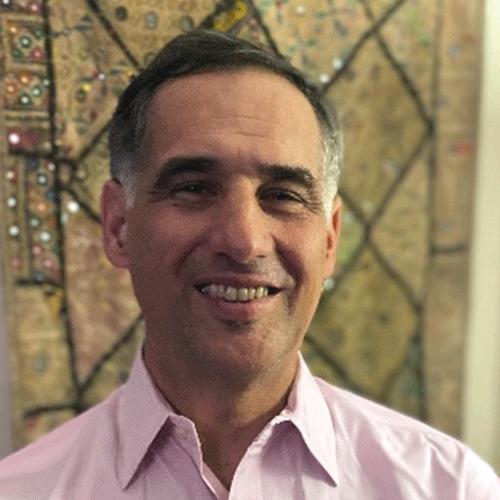
Deputy General Counsel for Institutional Affairs, World Bank Group
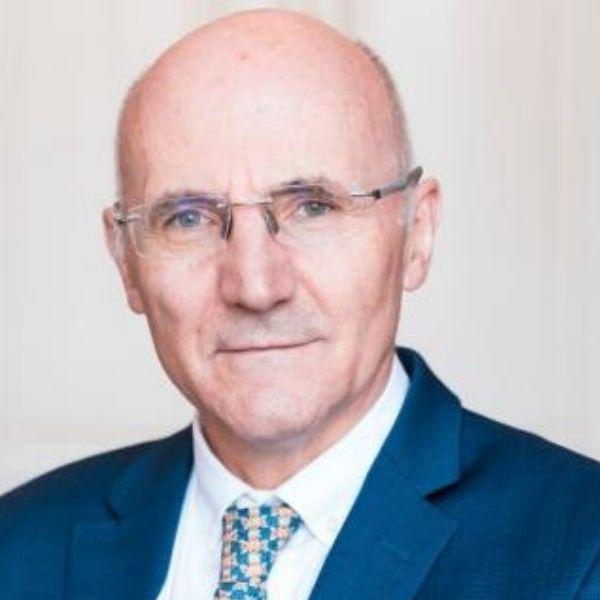
First President, French Court de Cassation (Supreme Court)
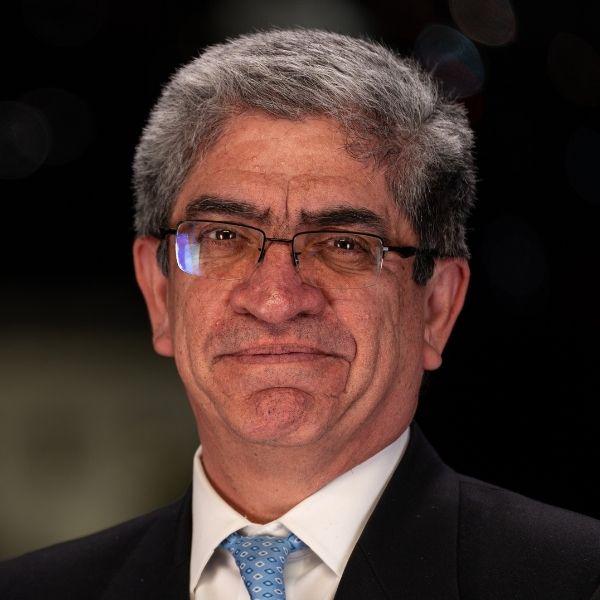
Ambassador, Permanent Representative of Peru to the OAS

General Counsel and Director, United Nations Development Programme (UNDP)
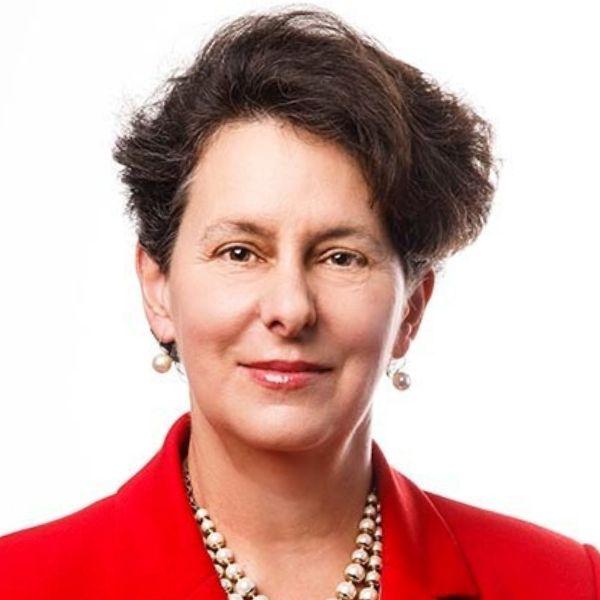
General Counsel, International Fund for Agriculture Development (IFAD)
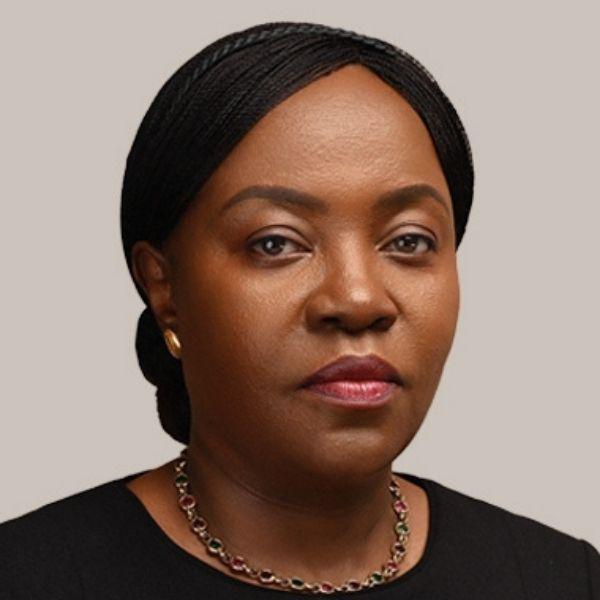
General Counsel and Corporate Secretary, Africa Finance Corporation
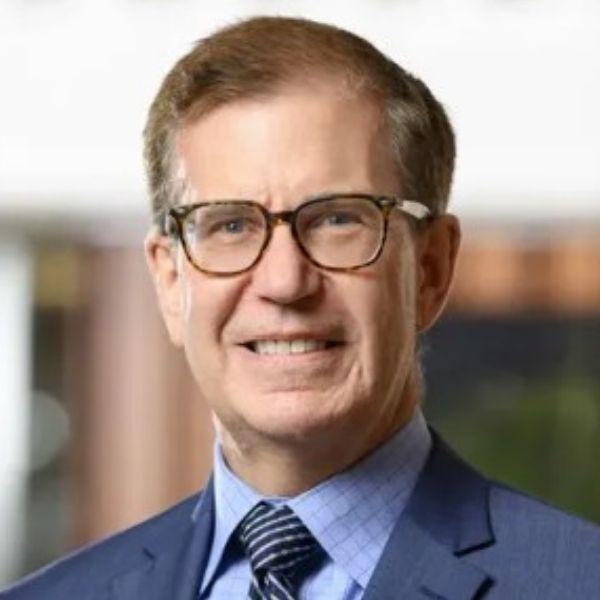
Senior Vice President and General Counsel, World Bank Group
Thank you for requesting an event reminder for email We have just sent you a confirmation.
It looks as though the e-mail address: email is already registered for reminders for this event.
Something went wrong
Cannot subscribe with a pending profile status.